


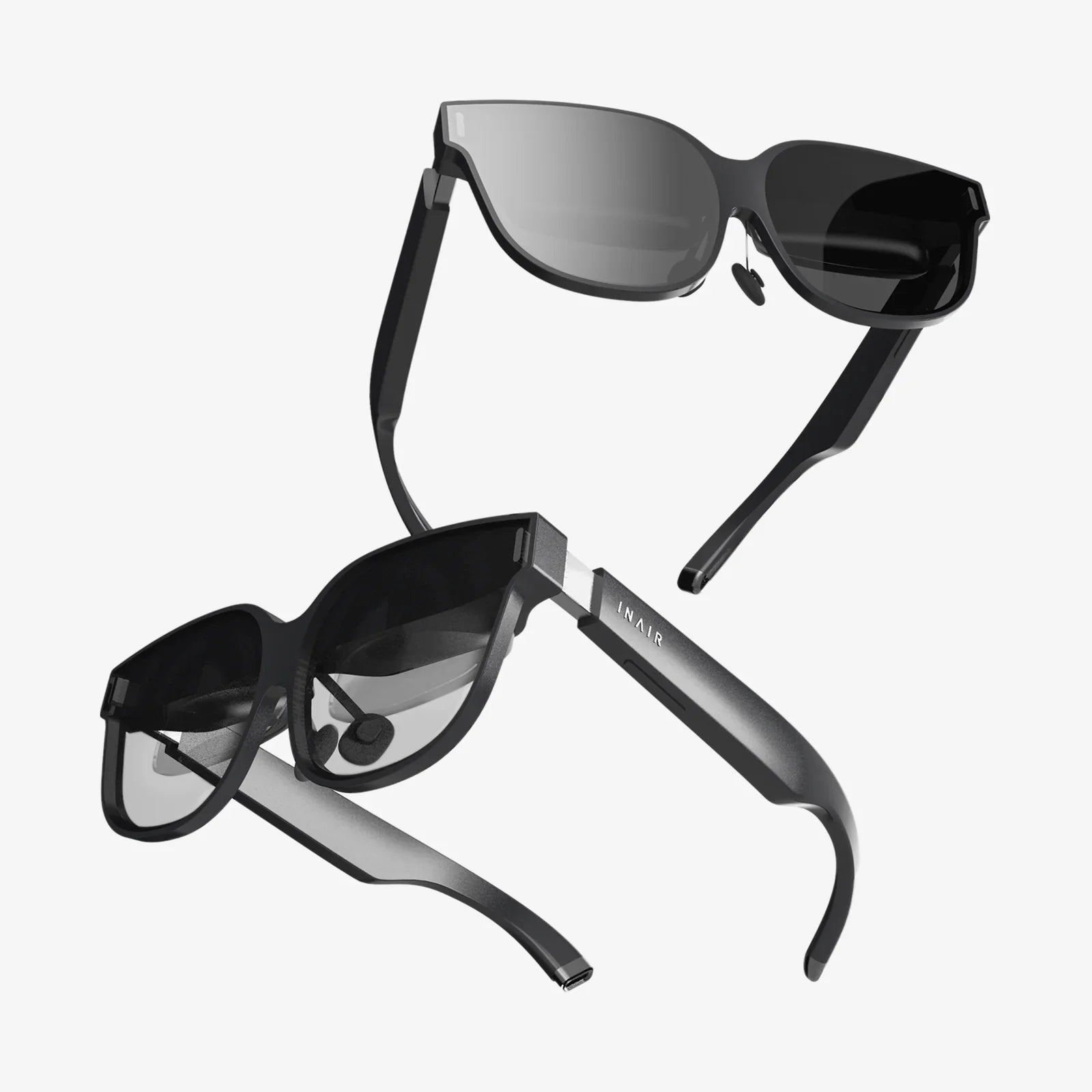
Imagine slipping on a pair of sleek, futuristic glasses and instantly having a symphony of digital information and sound layered perfectly onto your reality. The world around you isn't just seen; it's heard with pinpoint accuracy. A notification pings from your left, a virtual colleague speaks from across the room as if they were truly there, and the gentle hum of a hidden data stream whispers just behind you. This is the promise of augmented reality, a promise that remains hollow without one critical component: exceptional, integrated audio. The quest for visual fidelity in AR headsets often dominates the conversation, but it is the audio that breathes life into the experience, transforming a visual novelty into a truly immersive and believable layer of reality. The choice between headsets is no longer just about display resolution and field of view; it is increasingly a battle of sonic performance, making a thorough AR headsets with built-in audio comparison an essential step for any potential user.
The Foundational Role of Audio in Augmented Reality
To understand why audio is so paramount, one must first appreciate its role in human perception. Vision provides detail and focus, but sound creates context, ambiance, and a 360-degree sense of space. Our brains are hardwired to use auditory cues for situational awareness and emotional response. In AR, where the goal is to seamlessly blend the digital and the physical, subpar audio doesn't just detract from the experience—it shatters the illusion. A visually stunning hologram that emits sound from a generic, mono speaker located in the headset's temple will forever feel disconnected from its environment, an obvious digital impostor in the real world.
High-quality, built-in audio achieves three primary objectives:
- Presence and Immersion: Sound convinces your brain that virtual objects exist within your space. The rustle of virtual leaves must sound like it's coming from a specific tree, not just your headphones.
- Spatial Awareness and Orientation: Audio cues can guide a user's attention, signaling important events happening outside their immediate field of view. This is crucial for productivity applications and immersive games.
- Clear Communication: For enterprise and social applications, crystal-clear voice pickup is non-negotiable. Users need to be heard clearly without being burdened by a separate microphone.
Therefore, an AR headsets with built-in audio comparison must evaluate how effectively a device fulfills these core functions.
Deconstructing the Soundscape: Key Audio Technologies
The approach to delivering audio in AR wearables is not monolithic. Manufacturers employ different technological strategies, each with its own set of advantages and compromises. Understanding these technologies is the first step in any meaningful comparison.
Bone Conduction Audio
This technology bypasses the outer and middle ear entirely. Instead of pushing sound waves through the air into the ear canal, bone conduction transducers vibrate against the user's skull, particularly the temporal bone, sending these vibrations directly to the cochlea. The sound is perceived from within the head.
- Pros: The primary advantage is situational awareness. Because the ear canal remains completely open, users can hear their real-world environment with perfect clarity. This is a significant safety feature for professionals working in dynamic environments like warehouses or on factory floors. It also avoids the discomfort and heat buildup associated with traditional headphones pressed against the ears.
- Cons: The audio fidelity, particularly in the low-frequency (bass) range, is often significantly compromised. The sound can feel thin, tinny, or lacking in richness. Privacy is also a concern, as sound can sometimes leak and be heard by those nearby, especially at higher volumes.
Open-Ear Audio (Directional Speakers)
This is a rapidly advancing and popular method. Tiny speakers are housed in the arms of the headset, positioned near the ear but not covering it. They are designed to beam or project sound directly into the ear canal using techniques like ultrasonic focusing or waveguides.
- Pros: Like bone conduction, this method preserves full environmental awareness. The audio quality, however, is typically far superior, offering a wider frequency range and better overall clarity than bone conduction. It feels more like listening to a high-quality speaker placed near you.
- Cons: This technology is highly sensitive to fit and positioning. If the headset shifts, the audio beam can miss the ear, drastically reducing volume and quality. Performance can also degrade significantly in very noisy environments, as the projected sound must compete with ambient noise without the passive isolation of an earcup.
Integrated Near-Ear Speakers
This approach uses small, traditional speakers housed in cushioned pads that rest lightly on or very close to the ear. They do not fully enclose the ear like over-ear headphones but provide a closer proximity than open-ear designs.
- Pros: This design often delivers the highest potential audio fidelity of the built-in options. The closer proximity allows for richer bass and a more powerful, immersive sound experience. It offers a degree of passive noise reduction, helping to isolate the user from distracting background noises.
- Cons: The major trade-off is a reduction in environmental awareness. The user's hearing is partially occluded, which can be a safety issue in certain settings. It can also lead to sound leakage, disturbing others in quiet spaces. Comfort over long periods can be an issue if the speakers exert too much pressure on the ears.
Beyond the Speaker: The Magic of Spatial Audio and Processing
The physical method of sound delivery is only half the story. The real magic that brings AR audio to life is software-driven: spatial audio processing. This is arguably the most important differentiator in a modern AR headsets with built-in audio comparison.
Spatial audio, often powered by advanced algorithms and head-related transfer functions (HRTF), creates a three-dimensional soundscape. It tricks the brain into perceiving sounds as originating from specific points in 3D space—above, below, behind, or at a distance. This is achieved by meticulously manipulating sound cues like timing, volume, and frequency response differences between the left and right ears.
When combined with head-tracking sensors, this creates a stable audio horizon. A virtual audio source placed on your desk will remain anchored to that spot even if you turn your head. This permanence is what sells the reality of the object. The quality of this implementation varies greatly. A superior system will offer:
- Precise Localization: Can you accurately pinpoint the direction and distance of a sound?
- Stability: Does the sound source stay locked in its virtual position when you move?
- Environmental Modeling: Does the system simulate how sound would behave in the room you're in? For example, does it add subtle reverberation in a large, empty hall?
The Critical Metrics for Your Audio Comparison
When evaluating and comparing the audio capabilities of different AR headsets, move beyond marketing jargon and focus on these tangible metrics:
- Frequency Response: Does the audio output cover a wide range, from deep lows to crisp highs? A limited range makes music, sound effects, and voices sound flat and unnatural.
- Clarity and Distortion: Is the sound clear even at higher volumes, or does it become muddy and distorted? This is crucial for understanding speech and enjoying media.
- Volume and Output Power: Can the speakers get loud enough to be effective in a moderately noisy environment like an office or a living room?
- Microphone Performance: For communication, the quality of the built-in microphones is vital. Look for features like beamforming, which focuses on the user's voice while suppressing background noise, and acoustic echo cancellation (AEC). Test how well you are heard in a call with ambient noise present.
- Battery Impact: High-quality audio processing and powerful speakers consume significant power. A headset with fantastic audio is useless if it depletes the battery in an hour.
The User Experience: Matching Audio to Application
The "best" audio solution is inherently subjective and depends heavily on the primary use case. A one-size-fits-all rating is impossible. A thorough AR headsets with built-in audio comparison must contextualize the technology within the user's world.
- The Enterprise and Industrial User: For a technician repairing complex machinery or a warehouse picker navigating aisles, situational awareness is safety-critical. For them, bone conduction or high-quality open-ear audio is likely the superior choice, even with a potential sacrifice in bass response. Clear voice communication for remote assistance is also a top priority.
- The Office Worker and Designer: For prolonged use in a relatively controlled environment for teleconferencing, CAD visualization, or data manipulation, audio quality and privacy may take precedence. Integrated near-ear speakers might be ideal, offering richer sound for media and better microphone isolation for calls, with less concern about environmental awareness.
- The Media Consumer and Gamer: For watching immersive media or playing spatial games, the highest fidelity and most immersive experience are the goals. This user will likely prioritize headsets with powerful near-ear speakers and the most advanced spatial audio processing, willing to trade off some external awareness for a deeper, more engaging sonic experience.
The Future Sound of Augmented Reality
The evolution of built-in AR audio is moving at a breathtaking pace. We are moving beyond basic spatial audio towards more adaptive and intelligent systems. Future headsets will likely feature advanced computational audio that actively samples the user's environment in real-time to adjust output. They could cancel out specific background noises while preserving important ones like alarms or approaching vehicles, creating an ideal blend of immersion and safety. Personalized HRTF profiles, calibrated via a quick software scan of the user's ears, will become standard, making spatial audio accurate for everyone, not just the average user. The goal is a seamless, personalized, and context-aware soundscape that feels utterly natural.
Choosing an AR headset is a decision that will define your digital interactions for years to come. While the visual specs will inevitably catch your eye, do not let them deafen you to the importance of what you will hear. The audio system is the soul of the device, the invisible thread that stitches the digital dream into the fabric of your reality. It is the difference between observing a new world and truly living within it. Your perfect audio experience is out there, waiting to be heard—the power to find it lies in listening closely to the technology itself.
Share:
Extended Reality Construction: Building the Future Before the First Brick is Laid
Does a VR Headset Need a Computer? The Ultimate Guide to Standalone vs. Tethered VR