


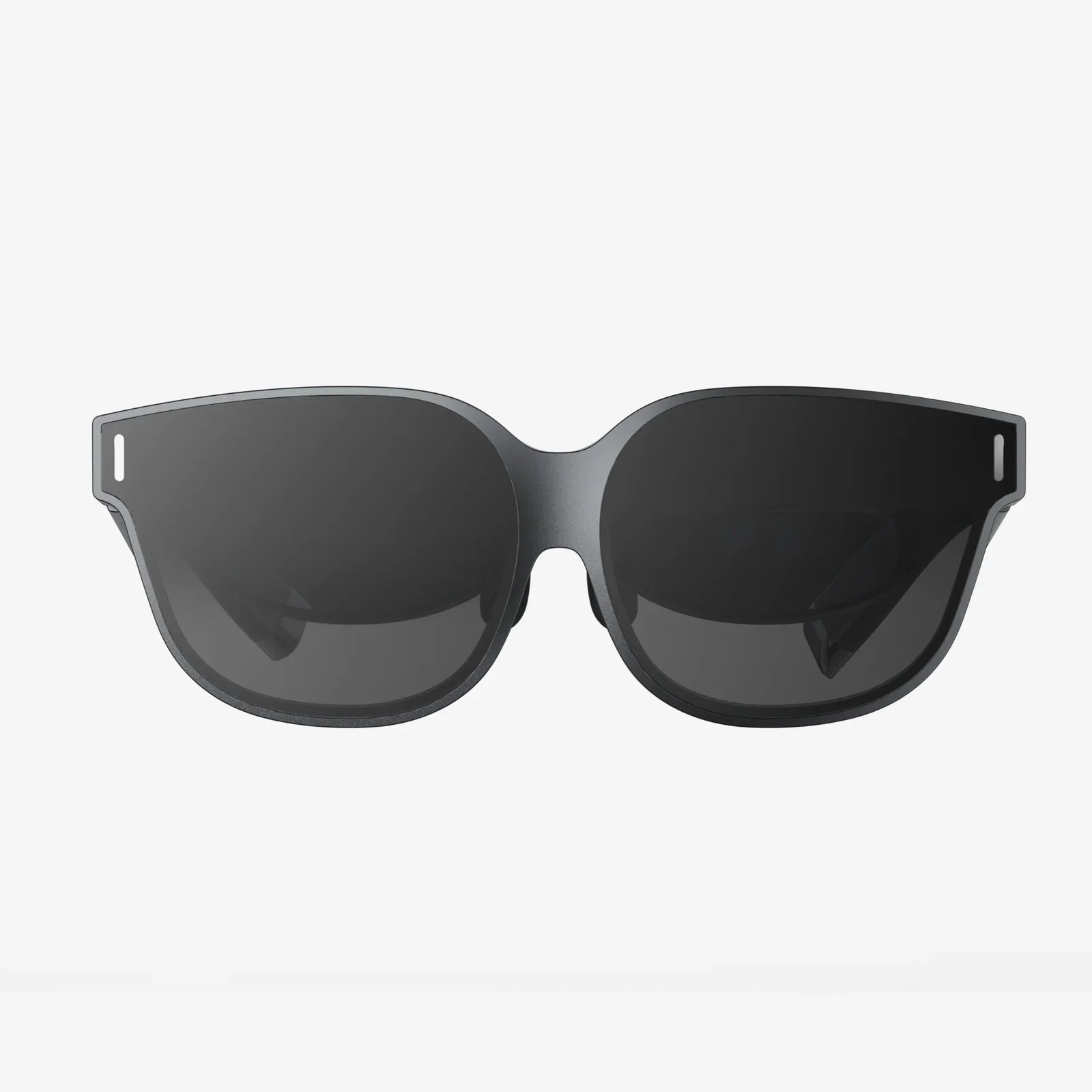
Imagine a digital layer seamlessly interwoven with the fabric of your reality, so crisp and vivid that you can no longer distinguish where the physical world ends and the virtual one begins. This is the promise held by the latest generation of augmented reality headsets, a promise hinging on one critical, groundbreaking feature: the highest resolution displays the industry has ever seen. The race for pixel perfection is more than a spec sheet battle; it's a fundamental quest to make the digital invisible, to create experiences that feel less like looking at a screen and more like an enhancement of human vision itself. The journey toward this visual nirvana is reshaping technology, design, and our very perception of what is possible.
The Unforgiving Physics of Light and Pixels
To understand why resolution is the holy grail of AR, one must first appreciate the unique optical challenges these devices face. Unlike virtual reality, which blocks out the world to create a fully immersive digital environment, AR aims to overlay information onto your real-world view. This requires a complex optical system that must project images from tiny micro-displays, through a series of waveguides, combiners, and lenses, and directly into your eye. Every step in this process can degrade image quality, introduce artifacts, or reduce brightness. A low-resolution display magnified through these optics results in a screen-door effect—where users perceive the gaps between pixels—instantly shattering the illusion of immersion and reminding them they are looking at a manufactured image.
The pursuit of the highest resolution is, therefore, a direct assault on this artificial barrier. By packing an extraordinary number of pixels into a minuscule display panel, engineers aim to push the pixel density beyond the resolving power of the human eye at a typical viewing distance. This creates what is known as a "retina" or "diffraction-limited" display, where the individual pixels are indistinguishable, and the digital content appears as a smooth, continuous image floating in your space. It’s the difference between reading text on a grainy, low-res monitor and reading finely printed text in a high-quality book; one is a task, the other is a natural, effortless experience.
Beyond the Numbers: What Defines a High-Res AR Display?
While specifications like per-eye resolution (e.g., 4K per eye) and pixels-per-degree (PPD) are crucial metrics, they only tell part of the story. A truly high-fidelity visual experience is a symphony of multiple display technologies working in concert.
- Pixel Perfection (PPD and FOV): Pixels-per-degree is arguably the most important metric, measuring the angular density of pixels. The human eye can resolve approximately 60 PPD. Early AR devices struggled to reach 20 PPD, leading to chunky, unrealistic graphics. The latest wave of devices boasting the highest resolution displays are pushing past 40, 50, and even aiming for 60+ PPD, effectively matching human visual acuity. However, this must be balanced against the field of view (FOV). A high PPD is meaningless if the FOV is a tiny, postage-stamp-sized window into the AR world. The ultimate goal is a wide, immersive FOV with a consistently high PPD across the entire view.
- The Color and Contrast Conundrum: Resolution is useless without excellent color reproduction and contrast. A display with a massive number of pixels that can only produce washed-out colors or cannot achieve true blacks will fail to blend digital objects convincingly into a sunlit room or a dimly lit environment. Advanced micro-LED or OLED-on-silicon technologies are often employed to deliver vibrant colors, high dynamic range (HDR), and deep contrast ratios, making virtual objects appear solid and tangible.
- The Battle Against Latency and Ghosting: A high-resolution display generating complex imagery demands immense processing power. Any lag between your head movement and the display updating—a phenomenon known as latency—can cause motion sickness and break presence. Furthermore, in optical see-through systems, managing reflections and "ghosting" (where a faint double image appears) is paramount. The best displays are paired with sophisticated software and hardware pipelines that ensure buttery-smooth, stable imagery locked perfectly in space.
The Engine Room: Powering a Billion Pixels
Driving these ultra-dense displays is a Herculean computational task. We are no longer talking about rendering a complex 3D scene for a stationary monitor but rendering two high-resolution views (one for each eye) that must update in real-time based on precise head and eye tracking to maintain a locked-in-place illusion. This requires a paradigm shift in processing architecture.
Traditional computer graphics pipelines are being augmented with dedicated AI co-processors and specialized display drivers designed for low-latency foveated rendering. This technique uses eye-tracking to determine where the user is looking and renders only the center of their gaze at full resolution, while the peripheral vision—where the eye perceives far less detail—is rendered at a lower resolution. This can reduce the GPU workload by over 70%, making it feasible to drive these pixel-dense displays without a desktop supercomputer strapped to your face. The symbiosis of cutting-edge display hardware and intelligent, efficient software is what makes modern high-res AR possible.
A World Transformed: The Impact of Crystal-Clear AR
The implications of achieving near-perfect visual fidelity in AR are profound, stretching far beyond entertainment and into the core of how we work, learn, and interact.
- Professional and Industrial Revolution: In fields like surgery, engineering, and manufacturing, precision is non-negotiable. A surgeon could overlay a high-resolution, real-time 3D model of a patient's anatomy directly onto their body, seeing a tumor's exact boundaries or the path of a critical blood vessel with perfect clarity. An engineer could examine a full-scale, photorealistic prototype of a jet engine, walking around it and seeing every component in stunning detail, long before any physical parts are manufactured. The lack of visual artifacts or pixelation is critical for these life-and-decision-critical applications.
- Redefining Social Connection and Collaboration: Current video calls feel flat and disconnected. Imagine a meeting where lifelike, high-resolution holograms of your colleagues sit around the same virtual table with you. You can make eye contact, see their subtle expressions, and collaborate on a 3D model that you can all manipulate as if it were physically present. This level of presence requires avatars and environments rendered with extreme detail to capture the nuance of human interaction, something only the highest resolution displays can provide.
- The Invisible Interface: The ultimate goal of AR is for the technology to fade away. High resolution is key to this. Instead of bulky, obstructive text and menus, information can be presented subtly and elegantly within your environment. You could glance at a restaurant and see its reviews materialize faintly on its façade, or look at a complex piece of machinery and have its operational data and instructions appear as ethereal, sharp annotations. When the display is clear enough, the interface becomes ambient and intuitive, not a distracting overlay.
The Road Ahead: Challenges and Future Visions
The path to perfect AR visuals is not without its obstacles. Achieving these incredible pixel densities often involves exotic and expensive materials like silicon wafers for micro-LEDs, making manufacturing complex and costs high. Furthermore, all those pixels require power, creating a constant tension between visual fidelity and battery life. Thermal management is another fierce battle; packing so much processing and display technology into a small, wearable form factor generates heat that must be dissipated efficiently and comfortably for the user.
Yet, the trajectory is clear. Research is ongoing into new light engine technologies, such as laser beam scanning and holographic waveguides, which promise even greater efficiency and clarity. The industry is moving towards a future where a sleek pair of eyeglasses can contain a display that offers a wide field of view with resolution, brightness, and contrast that rivals our natural sight. This will not happen overnight, but each generation of headsets brings us closer to that goal.
We stand on the brink of a new visual era, where the line between our world and the digital realm will blur into irrelevance. The driving force behind this revolution isn't just a quest for more pixels; it's a pursuit of a more natural, intuitive, and powerful way to interact with information. The headsets leading the charge with the highest resolution displays are not merely consumer gadgets—they are the prototypes for the next major computing platform, one that will be judged not by its processor speed, but by its ability to make us believe. The future isn't just bright; it's in stunning, hyper-detailed, perfect focus.
Share:
Advantages of Wearable Technology: A Deep Dive into a Connected Future
What's The Best VR? A Comprehensive Guide to Finding Your Perfect Headset