


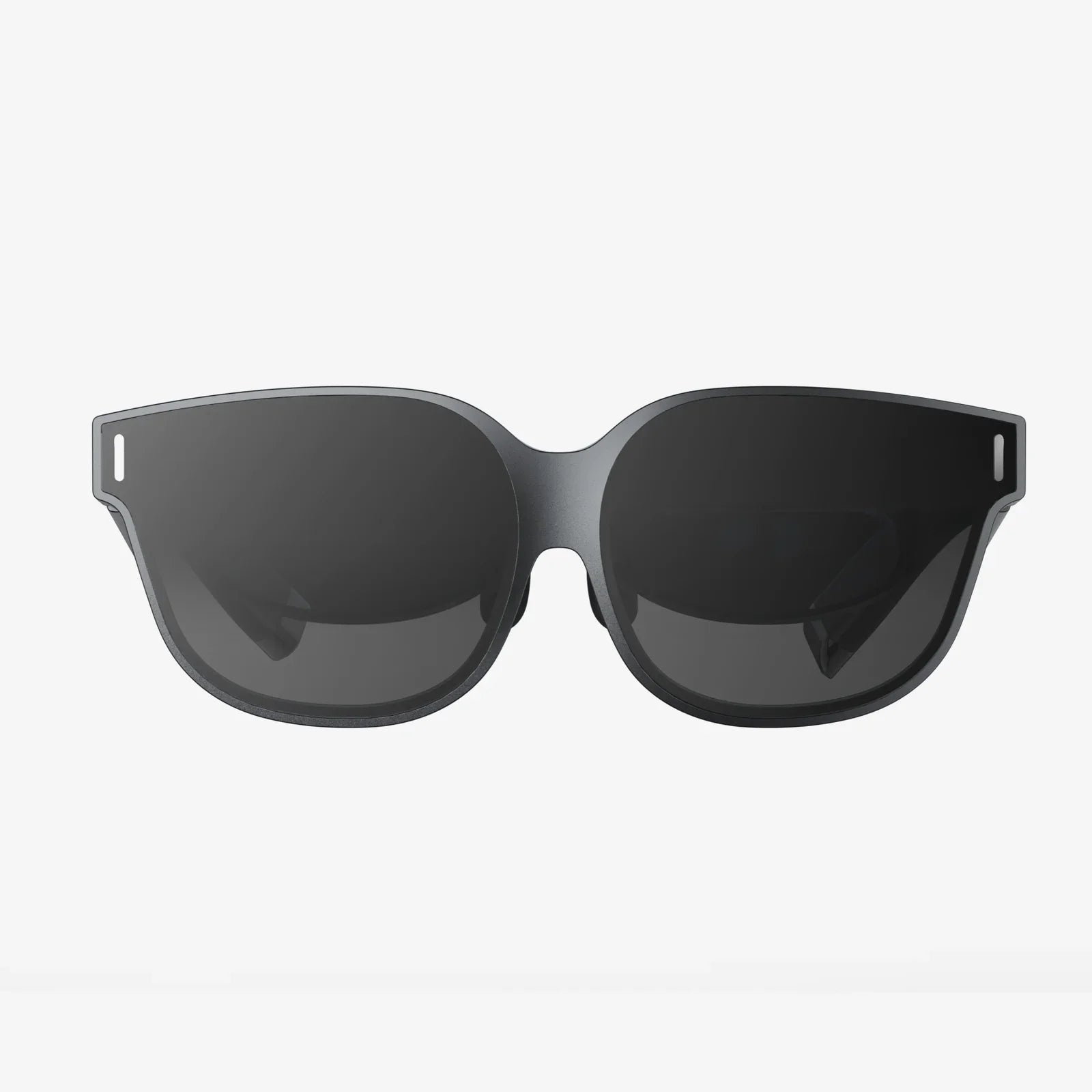
Imagine a world where the line between the digital and the physical doesn't just blur—it vanishes. A world where a medical student can dissect a beating heart, layer by layer, without a single drop of blood, or where a factory technician can see the internal wiring of a malfunctioning machine simply by looking at it. This is not a distant sci-fi fantasy; it is the emerging reality being built today through the power of augmented reality holograms. This technology, once the exclusive domain of blockbuster movies and high-budget concept videos, is now stepping into our daily lives, promising to revolutionize how we work, learn, play, and connect. The transparent future is no longer a concept; it is a canvas waiting for us to paint upon.
Demystifying the Magic: What Exactly is an AR Hologram?
To understand the potential of this technology, we must first strip away the mystique. The term "hologram" often conjures images of Princess Leia pleading for help from Obi-Wan Kenobi—a fully three-dimensional, free-floating image visible from all angles. While an impressive cinematic effect, most current consumer and enterprise technology does not create true volumetric holograms that exist independently in space without a surface. Instead, what we commonly refer to as an "AR hologram" is a sophisticated visual projection integrated into our perception of the real world through a digital lens.
At its core, an AR hologram is a digital object, anchored to a specific point in the user's physical environment. It can be a 3D model, a piece of text, a animated sequence, or a video stream. The "augmented" aspect means this digital information is superimposed onto the user's view of their surroundings in real-time, creating a composite reality. This is achieved not by projecting light into mid-air, but by using a combination of advanced hardware and software to trick the human brain into perceiving the digital object as part of the physical world.
The Engine Behind the Illusion: Core Technologies Powering AR Holography
The creation of a seamless and believable AR holographic experience relies on a symphony of technologies working in perfect harmony. It is a feat of engineering that merges the virtual and the actual.
Sensing and Mapping the World: SLAM
The foundational technology for any AR experience is Simultaneous Localization and Mapping, or SLAM. This is the digital equivalent of human spatial awareness. SLAM algorithms use data from cameras, depth sensors, LiDAR, and inertial measurement units (IMUs) to do two things simultaneously: map the uncharted environment around the device and pinpoint the device's exact location within that map. This allows the AR system to understand the geometry of a room—where the floors, walls, tables, and chairs are. It is this understanding that enables a digital hologram of a dragon to convincingly land on your actual coffee table, knowing precisely where the surface is and how the object should interact with it.
The Window to a New Reality: Display Systems
How the hologram is delivered to your eyes is another critical piece of the puzzle. There are primarily two approaches:
- Optical See-Through (OST): Used in smart glasses and headsets, OST systems employ miniature transparent displays, like waveguides or holographic optical elements (HOE). Light from a micro-display is bent and directed into the user's eye, while natural light from the real world passes through the lens. This blends the digital light with the real light, placing the hologram directly into the user's field of view. The key advantage is that the user sees the real world with their own eyes, with only the digital light being synthetic.
- Video See-Through (VST): Common on smartphones and tablets, VST uses the device's camera to capture a live video feed of the real world. This video is then combined with the digital holographic elements on the device's screen before being presented to the user. While accessible, this method can suffer from latency or a slightly diminished quality of the real-world view.
Bridging the Digital and Physical: Spatial Anchoring
For an AR hologram to be truly useful, it cannot drift away as you move your head. It must stay locked in place, whether on a table, a wall, or a machine part. This is the role of spatial anchoring. The system uses the map created by SLAM to assign a specific, real-world coordinate to the digital object. Advanced systems can even use visual markers or recognize specific objects (like a particular engine model) as anchors, ensuring the hologram persists in the correct location even if the user leaves and returns later.
Beyond Novelty: Transformative Applications Across Industries
The true power of AR holograms is revealed not in isolated demos, but in their practical, world-changing applications. They are moving from a cool trick to a critical tool in numerous professional fields.
Revolutionizing Healthcare and Medicine
The medical field is witnessing one of the most profound adoptions of AR holography. Surgeons are now using it for pre-operative planning, overlaying 3D holographic reconstructions of a patient's CT or MRI scans directly onto their body on the operating table. This provides an X-ray-like vision, allowing for more precise incisions and navigation around critical structures. For medical training, students can interact with life-sized, anatomically correct holograms of organs and systems, practicing procedures and understanding spatial relationships in a way textbooks or 2D screens could never provide. Furthermore, remote experts can project their hands as holographic guides into a less-experienced surgeon's field of view, enabling tele-mentorship on a whole new level.
Supercharging Industry and Manufacturing
On the factory floor, AR holograms are becoming indispensable digital assistants. Technicians performing complex repairs or maintenance can wear glasses that project holographic arrows, diagrams, and instructions directly onto the equipment they are working on. This hands-free guidance reduces errors, speeds up tasks, and drastically lowers training time for new hires. In design and prototyping, engineers can collaborate around a full-scale holographic model of a new product, examining it from every angle, testing virtual fit and function, and making changes in real-time without the cost of physical prototypes. This accelerates development cycles and fosters innovation.
Redefining Education and Training
Education is being transformed from a passive to an active experience. Instead of reading about ancient Rome, history students can walk through a holographic reconstruction of the Forum. Chemistry students can manipulate and combine holographic molecules to see the reactions safely. This immersive, interactive learning leads to dramatically improved retention and understanding. Similarly, vocational training for electricians, plumbers, and welders can be conducted on holographic simulations, allowing for mistake-free practice before working on real, and potentially dangerous, systems.
Creating New Frontiers in Retail and Design
The "try before you buy" concept is being redefined. Furniture retailers allow customers to place true-to-scale holograms of sofas, tables, and chairs into their living rooms to see how they fit and look with their existing décor. Fashion brands are experimenting with virtual fitting rooms. For interior designers and architects, the ability to walk a client through a holographic rendition of their proposed design, making changes on the fly, is a game-changer for client communication and satisfaction.
Navigating the Obstacles: Challenges on the Path to Ubiquity
Despite the incredible progress, the journey to a world filled with AR holograms is not without its significant hurdles. Overcoming these challenges is essential for widespread adoption.
The Hardware Hurdle: Form Factor and Performance
For AR to become an all-day technology, the hardware must become socially acceptable, comfortable, and powerful. Today's most advanced headsets are still often bulky, have limited battery life, and can cause eye strain or "vergence-accommodation conflict"—a discomfort caused by the eyes focusing on a screen close to the face while perceiving holograms at a farther distance. Creating glasses that are as lightweight and stylish as everyday eyewear, while packing enough processing power and battery life, remains a monumental engineering challenge.
The Digital Divide: Connectivity and Compute
Rendering complex, photorealistic 3D holograms in real-time requires immense computational power. Offloading this processing to the cloud is a promising solution, but it demands ultra-low-latency, high-bandwidth connectivity (like 5G/6G) to avoid lag that breaks the illusion of reality. Until this infrastructure is ubiquitous, many experiences will be limited by the processing capabilities of the device itself, creating a digital divide between high-end and consumer-grade applications.
The Invisible Framework: Standards and Interoperability
For a shared holographic future to exist, we need a common language. Currently, a hologram created for one platform or device may not be viewable on another. The development of open standards for file formats, spatial anchors, and user interaction is crucial. Imagine if every website required a different browser; the internet would never have flourished. Similarly, the AR ecosystem needs interoperability to thrive, allowing users to seamlessly share and experience holographic content regardless of their chosen hardware.
The Human Factor: Privacy and Ethical Considerations
Always-on cameras and sensors mapping our every environment raise profound privacy concerns. Who has access to the spatial data collected by these devices? How do we prevent malicious "holographic spam" or even dangerous visual misinformation placed in the real world? Furthermore, the potential for deep immersion presents societal questions about distraction in public spaces and our relationship with reality itself. Establishing ethical guidelines and robust privacy frameworks is not an afterthought; it is a prerequisite for a healthy AR future.
Glimpsing the Horizon: The Future Shaped by AR Holograms
The trajectory of this technology points toward a future where the interface between humans and computers becomes almost invisible. We are moving toward a paradigm of "spatial computing," where information is not confined to rectangles in our pockets or on our desks, but is instead woven into the fabric of our world, accessible through natural gestures and gaze. The ultimate goal is a contextually aware digital assistant that can project the right information at the right time, right where you need it. The next era of human-computer interaction will not be about typing and clicking; it will be about looking, pointing, and speaking to the digital layers that enhance our reality. This will unlock new levels of productivity, creativity, and connection that we are only beginning to imagine.
The coffee table in your living room is no longer just a piece of furniture. It is a stage for a storyteller's digital characters, a canvas for an artist's virtual sculpture, a command center for your smart home, and a conference table for colleagues who are physically continents away. The world itself is becoming the interface, and the only limit is our imagination. We are not just observers of this change; we are the architects, tasked with building a transparent future that is intuitive, empowering, and, most importantly, human. The tools are here. The canvas is all around you. What will you create?
Share:
Best VR Device: A Comprehensive Guide to the Ultimate Virtual Reality Experience
Hologram Sunglasses: The Future of Augmented Reality on Your Face