


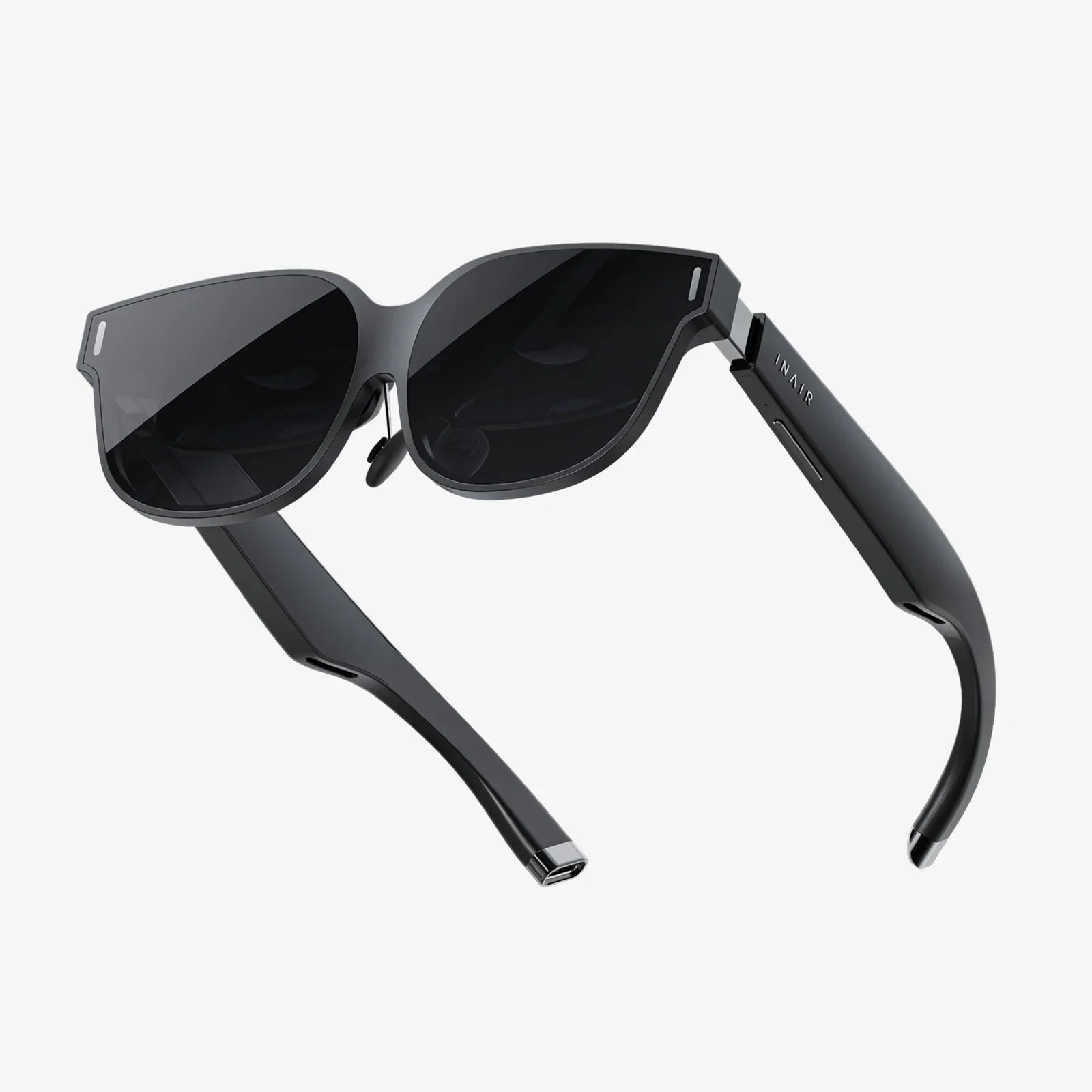
Imagine your car's windshield transforming from a simple pane of glass into a dynamic, intelligent interface, projecting navigation arrows that appear to hover over the road itself, highlighting potential hazards before you consciously perceive them, and displaying critical information seamlessly integrated into your field of vision. This is not a scene from a science fiction film; it is the imminent reality promised by the rapid advancement of the Augmented Reality Head-Up Display (AR HUD) market, a technological revolution set to redefine automotive safety and user experience.
The Genesis and Evolution: From Basic HUD to True AR
The journey to AR HUD began with the humble Head-Up Display (HUD). Initially developed for military aviation to allow pilots to keep their "heads up" and focused on the combat zone, this technology trickled down to automotive applications in the late 20th century. These early systems were simplistic, projecting monochromatic data like speed and RPM onto a small combiner glass, creating a virtual image that appeared to float just above the hood. They were a novelty, often reserved for high-end vehicles.
The pivotal shift occurred with the integration of augmented reality. Unlike a basic HUD, which simply superimposes data onto the windshield, a true AR HUD does something far more profound: it anchors that data to the real world. This requires a complex interplay of hardware and software. Key enabling technologies include:
- High-Brightness Displays: Traditional LCDs are insufficient. Technologies like Digital Light Processing (DLP), Liquid Crystal on Silicon (LCoS), and advanced LEDs are used to generate images bright enough to be visible in direct sunlight.
- Precise Eye Tracking: Cameras monitor the driver's eye position to adjust the projected imagery, ensuring it remains accurately aligned with the real world regardless of the driver's seating position or head movement.
- Advanced Sensor Fusion: The system continuously processes a massive influx of data from GPS, cameras, radar, lidar, and other vehicle sensors. It builds a real-time, detailed understanding of the vehicle's surroundings, position, and trajectory.
- Sophisticated Software Algorithms: This is the true brain of the operation. The software takes the sensor data and the driver's eye position to calculate exactly where and how to project virtual elements so they appear locked onto specific points on the road ahead.
This technological leap transforms the HUD from an information screen into a contextual co-pilot, fundamentally enhancing its utility and safety value.
The Core Value Proposition: Why the Market is Booming
The AR HUD market is experiencing explosive growth, driven by a powerful value proposition that resonates with consumers, automakers, and regulators alike. The benefits are multifaceted and transformative.
Unprecedented Enhancement of Driver Safety
This is the single most significant driver. By projecting critical information directly into the driver's line of sight, AR HUDs drastically reduce the frequency and duration of the driver glancing away from the road to check a central instrument cluster or navigation screen. Studies have shown this "eyes-on-road" technology can significantly reduce reaction times to unexpected events. Concrete safety applications include:
- Contextual Navigation: Instead of following a blue line on a separate screen, drivers see large, glowing arrows projected onto the road surface, indicating the exact lane to be in and the precise spot to turn.
- Advanced Driver Assistance Systems (ADAS) Integration: The HUD can highlight the vehicle detected by adaptive cruise control, draw attention to a pedestrian stepping out from between parked cars, or display a warning path if an unintended lane departure is detected.
- Speed and Adaptive Cruise Control Status: Current speed and set speed are always visible without looking down, and changes can be animated to provide clear feedback.
The In-Car Experience Reimagined
Beyond safety, AR HUDs are central to the modern concept of the "digital cockpit" and the software-defined vehicle. They offer a clean, minimalist, and futuristic interior aesthetic by reducing physical clutter. This creates a more immersive and enjoyable driving environment where information feels like a natural part of the journey, not an interruption. It paves the way for new forms of in-car entertainment and productivity, especially in the context of growing autonomous driving capabilities, where the interior becomes a living space.
A Key Differentiator for Automakers
In a highly competitive market, technology is a primary battleground. A sophisticated AR HUD system is a tangible, impressive feature that can sway consumer purchasing decisions. It serves as a powerful marketing tool, positioning a brand as innovative, technologically advanced, and safety-conscious. As the technology scales and costs decrease, it is rapidly moving from a premium option to a expected feature in mid-range vehicles.
Navigating the Roadblocks: Challenges and Constraints
Despite the immense potential, the path to widespread AR HUD adoption is not without its significant speed bumps. The industry must overcome several formidable challenges.
The Technical Hurdles
Engineering a reliable, high-performance AR HUD is exceptionally complex. A primary challenge is package size. The optical systems required to project a large, distant virtual image have historically been bulky, often occupying significant space within the dashboard, which is already a tightly packed area. Automakers are constantly pushing for smaller, more efficient designs. Furthermore, managing thermal output from the high-power light source and ensuring consistent performance across extreme temperature ranges (-40°C to 85°C) is a critical engineering feat. Finally, achieving perfect registration—ensuring the virtual elements stay precisely aligned with the real world under all driving conditions, including on bumpy roads—requires immense computational power and robust algorithms.
The Cost Conundrum
Currently, the sophisticated components—the high-resolution picture generation units, complex free-form mirrors, and powerful processing chips—make AR HUDs an expensive technology. This cost is a major barrier to mass-market adoption. The industry is engaged in a relentless effort to drive down costs through design innovation, economies of scale, and the development of new, cheaper display technologies without compromising on quality or performance.
Human-Machine Interface (HMI) and Potential for Distraction
There is a delicate balance between providing information and creating clutter. An AR HUD that projects too much data, or presents it in a confusing or overly animated way, could paradoxically become a source of distraction, pulling the driver's attention away from the road to decipher the graphics. Establishing clear and universally accepted HMI principles is crucial. The design must be intuitive, minimalistic, and only present information that is contextually relevant and immediately useful.
The Competitive Landscape: A Battle of Technologies and Titans
The AR HUD market is a dynamic and fiercely competitive arena, featuring a diverse mix of established automotive suppliers and agile technology startups. These entities are not only competing for market share but are also championing different technological approaches to solve the core challenges. The battle between display technologies like DLP, LCoS, and emerging solutions like MEMS-based laser scanning is intense, with each offering different trade-offs in terms of brightness, contrast, resolution, and cost. Furthermore, software is becoming the key differentiator. The algorithms that power the sensor fusion and real-world anchoring are where the true magic happens, and companies are investing heavily in developing proprietary IP in this area. Strategic partnerships between automakers, tier-1 suppliers, and specialized tech firms are common, as the complexity of the system necessitates collaboration across the ecosystem.
Gazing into the Crystal Ball: The Future Trajectory of AR HUD
The evolution of AR HUD is far from complete; in fact, it is accelerating. The next decade will see the technology become more powerful, more integrated, and more personal.
- Full-Windshield Displays: The logical endpoint is the transformation of the entire windshield into a display surface. This would enable applications far beyond navigation and safety warnings, such as displaying a virtual conference call or a movie during fully autonomous driving phases.
- Deep Integration with Autonomous Driving: As vehicles take on more driving tasks, the HUD's role will shift from an assistive tool to the primary interface for communicating the vehicle's intent and awareness to the passenger. It will illustrate what the car "sees" and plans to do, building crucial trust in the automation.
- Personalization and Connectivity: Future systems will learn driver preferences and tailor the information displayed. They will seamlessly integrate with personal devices and smart ecosystems, projecting notifications, calendar appointments, or even points of interest from your social feed directly onto the road.
- Photonics and Holography: Further out, technologies like holographic waveguides—similar to those used in some augmented reality glasses—could revolutionize the form factor, potentially making bulky projector units obsolete and enabling incredibly thin and versatile designs.
The AR HUD is no longer a peripheral feature; it is rapidly becoming the central nervous system of the modern vehicle's user interface. It represents the crucial bridge between the driver and the increasingly complex array of sensors and computers that define contemporary automobiles. By seamlessly blending the digital and physical worlds, it promises to make driving safer, more intuitive, and more connected than ever before. The race to perfect this technology is not just about selling cars; it is about defining the future of human mobility itself.
The horizon is no longer just a view; it's a dashboard. As the AR HUD market accelerates past its early adopter phase, it promises to turn every journey into an interactive experience, fundamentally altering our perception of the road and redefining what it means to be in control behind the wheel. The future of driving will be projected right before your eyes.
Share:
Everyday Digital Interactions: The Unseen Architecture of Modern Life
Augmented Reality Pico Projector Glasses Are Redefining Our Digital Interaction