


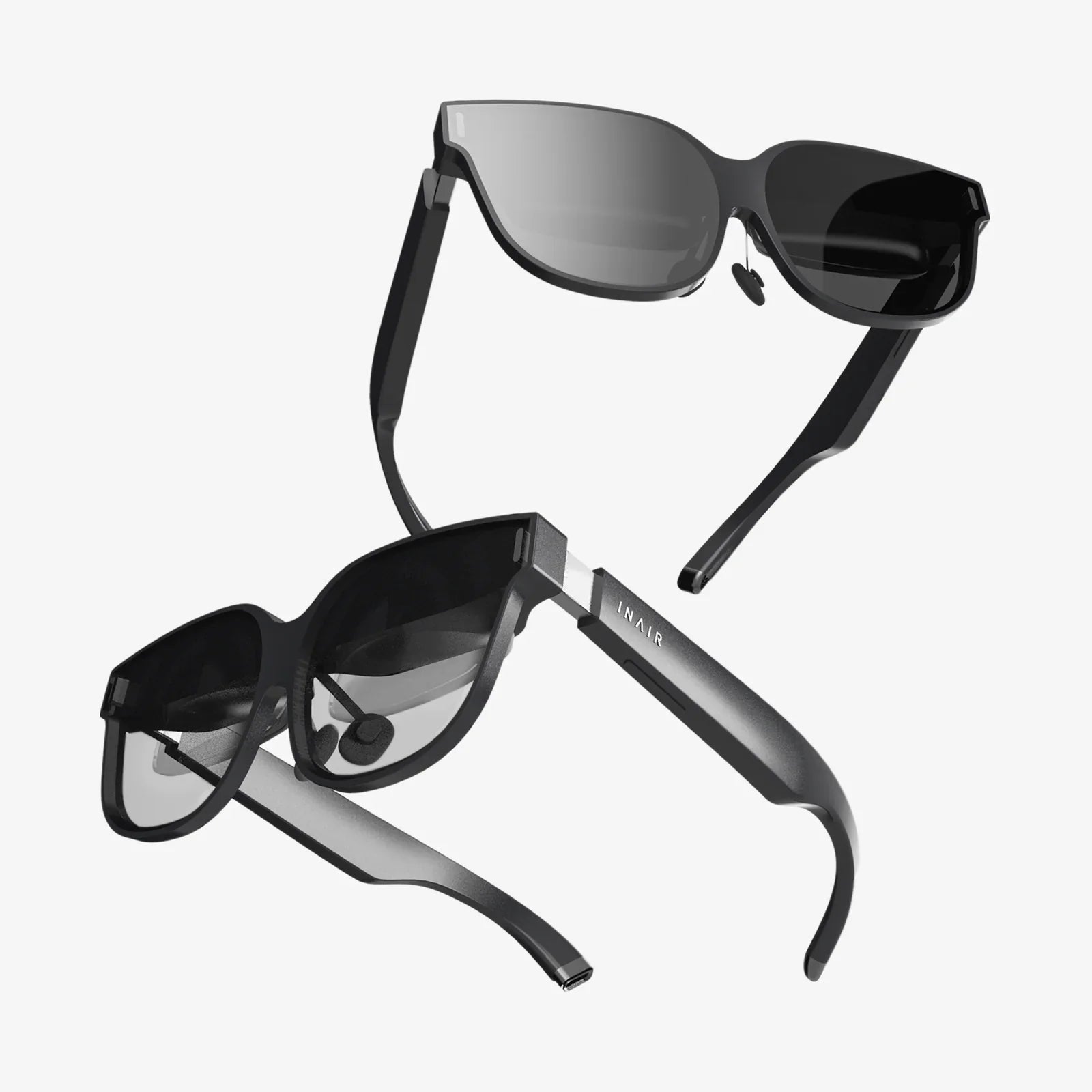
Imagine a world where information floats before your eyes, where digital creatures play on your living room floor, and where complex instructions are overlaid directly onto the task at hand. This is no longer the stuff of science fiction; it is the imminent reality being forged by a revolutionary convergence of technologies known as augmented reality pico projector glasses. This nascent technology promises to untether us from screens, redefine personal computing, and fundamentally alter how we perceive and interact with our environment. We stand on the precipice of a visual revolution, and these sleek, wearable devices are the key that will unlock the door to a seamlessly blended world.
The Architectural Marvel: A Symphony of Miniaturization
At their core, augmented reality pico projector glasses are a breathtaking feat of optical engineering and miniaturization. They represent the successful marriage of two distinct technologies: augmented reality (AR) and pico projection. Understanding how they work is key to appreciating their potential.
Traditional augmented reality often relies on smartphone cameras or bulky headsets to capture the real world and then composite digital images onto a screen. AR pico projector glasses take a more elegant, and arguably more immersive, approach. Instead of placing a screen between your eyes and the world, they project light directly onto your retinas or onto a specially designed transparent waveguide lens in front of your eye.
The magic begins with the pico projector module. These are incredibly small projection systems, often utilizing technologies like LCoS (Liquid Crystal on Silicon) or MEMS (Micro-Electro-Mechanical Systems) lasers. These components are so minute they can be discreetly embedded into the arms of a pair of glasses. They generate a stream of light that contains the digital image.
This light is then directed into a waveguide or a combiner—a clear piece of optical-grade plastic or glass etched with microscopic patterns. As the light travels through this waveguide, these patterns diffract and bend the light, "coupling" it out of the waveguide and directly into the user’s eye. The result is a crisp, bright digital image that appears to hover in space, superimposed over the user’s natural field of view. This allows the wearer to see both the real world and the digital augmentation simultaneously and in focus, creating a truly integrated experience.
Beyond the Novelty: A Spectrum of Transformative Applications
While the initial demos often focus on gaming and entertainment, the true power of AR glasses with integrated pico projectors lies in their utility across a vast spectrum of human activity. Their hands-free, screenless nature makes them a powerful tool for enhancing efficiency, safety, and understanding.
Revolutionizing Professional and Industrial Workflows
In fields where hands-on work is paramount, these glasses are a game-changer. Imagine a surgeon whose vital signs, ultrasound data, or procedural checklist are projected seamlessly into their view, allowing them to maintain focus on the patient without glancing away at a monitor. An engineer performing a complex repair could see schematics, torque specifications, and animated instructions overlaid directly on the machinery they are fixing, drastically reducing errors and training time.
For logistics and warehouse workers, order-picking information and optimal routing paths could be displayed, streamlining operations and improving accuracy. Architects and interior designers could walk through a physical space and see their digital models rendered at full scale, allowing for real-time adjustments and client presentations within the actual environment. The potential to augment human capability in skilled trades is perhaps one of the most immediate and valuable applications of this technology.
Redefining Personal Computing and Navigation
On a personal level, these devices promise to make us more present and connected, rather than less. Instead of constantly looking down at a smartphone, notifications, messages, and incoming calls could be displayed unobtrusively in the periphery of your vision, allowing you to prioritize real-world interactions while staying informed. Turn-by-turn navigation could be projected onto the street in front of you, eliminating the need to hold a phone while walking or cycling and making it intuitively easier to follow directions.
They could act as a real-time translation tool, overlaying subtitles onto a conversation with someone speaking a foreign language or translating street signs instantly. For students and lifelong learners, historical facts could appear when looking at a monument, or complex biological processes could be animated over a textbook. The world itself becomes an interactive, information-rich canvas.
Unleashing New Frontiers in Entertainment and Social Connection
Entertainment will be utterly transformed. Instead of watching a movie on a fixed television screen, you could project a massive, theater-sized display onto any blank wall in your home. Gaming will evolve into a truly mixed-reality experience where digital characters and objects interact with your physical environment. Imagine playing a virtual board game that materializes on your actual coffee table or defending your home from aliens that appear to be climbing your walls.
Socially, this technology could enable new forms of remote presence. Instead of a flat video call on a screen, a photorealistic 3D hologram of a friend or family member could appear sitting on your couch, creating a far more powerful sense of shared space and connection, bridging vast physical distances with a convincing illusion of presence.
The Hurdles on the Path to Ubiquity
Despite the immense promise, the path to mainstream adoption of augmented reality pico projector glasses is fraught with significant technical and social challenges that innovators must overcome.
Technical Limitations: Battery life remains a primary constraint. Driving high-resolution projectors and powerful processors is energy-intensive, and fitting a sufficient battery into the sleek form factor of glasses is difficult. Many early iterations struggle to last a full day of use. Furthermore, achieving bright, high-contrast imagery that is visible in all lighting conditions, especially bright sunlight, is a formidable optical challenge. Display resolution, field of view (how much of your vision the digital image occupies), and managing vergence-accommodation conflict (a visual discomfort that can occur when virtual objects are perceived at different depths) are all active areas of intense research and development.
The Social Hurdle: Perhaps the biggest obstacle is social acceptance. For technology to become ubiquitous, it must be something people want to wear. This means the devices must be lightweight, comfortable, and, crucially, stylish. Early prototypes are often clunky, awkward, and clearly mark the wearer as a "tech enthusiast." For mass adoption, they must evolve to look as normal and desirable as a premium pair of sunglasses or everyday eyewear. The industry must navigate the delicate balance between functionality and fashion.
Privacy and the Ethical Quandary: The always-on, eye-tracking nature of these devices raises profound privacy concerns. The potential for constant recording, facial recognition, and data collection about what a user looks at and for how long is a privacy advocate’s nightmare. Clear, transparent, and user-controlled data policies are not just recommended; they are essential for public trust. Furthermore, the societal impact of a world where people are constantly immersed in a digital overlay—potential distractions, new forms of advertising, and the further blurring of lines between public and private life—must be carefully considered and proactively addressed.
Glimpsing the Horizon: The Future Through an Augmented Lens
The current generation of devices is merely the first step. As the underlying technologies mature, we can expect a rapid evolution. Future iterations will become lighter, more powerful, and seamlessly integrated with other emerging technologies like artificial intelligence and 5G/6G connectivity. AI will act as an intelligent filter, determining what information is relevant to show you at any given moment, transforming the glasses from a passive display into an active, contextual assistant.
We are moving toward a future where your digital world—your apps, your preferences, your work, your connections—will not be locked in a device in your pocket but will instead live in the space around you, accessible with a glance. The concept of the "universal workspace" or "infinite desktop" will become a reality, allowing for productivity and creativity on a scale we can only begin to imagine.
Ultimately, the goal is for the technology to become so refined and intuitive that it fades into the background. The perfect pair of augmented reality glasses won't feel like a computer you are wearing; it will feel like a natural extension of your own perception, enhancing your cognition and capabilities without ever getting in the way. It will be a silent partner, amplifying human potential.
The journey from our current screen-bound reality to this seamlessly augmented world is already underway. While challenges remain, the pace of innovation is relentless. Augmented reality pico projector glasses are not just another gadget; they are the foundational technology for the next great computing platform, one that promises to weave the digital and physical together into a richer, more informative, and more astonishing human experience. The world is about to get a lot more interesting, and it will all be seen through a new lens.
Share:
AR HUD Market The Next Frontier in Automotive Interface Technology
Disadvantages of Virtual Meetings: The Hidden Costs of a Digital Workforce