


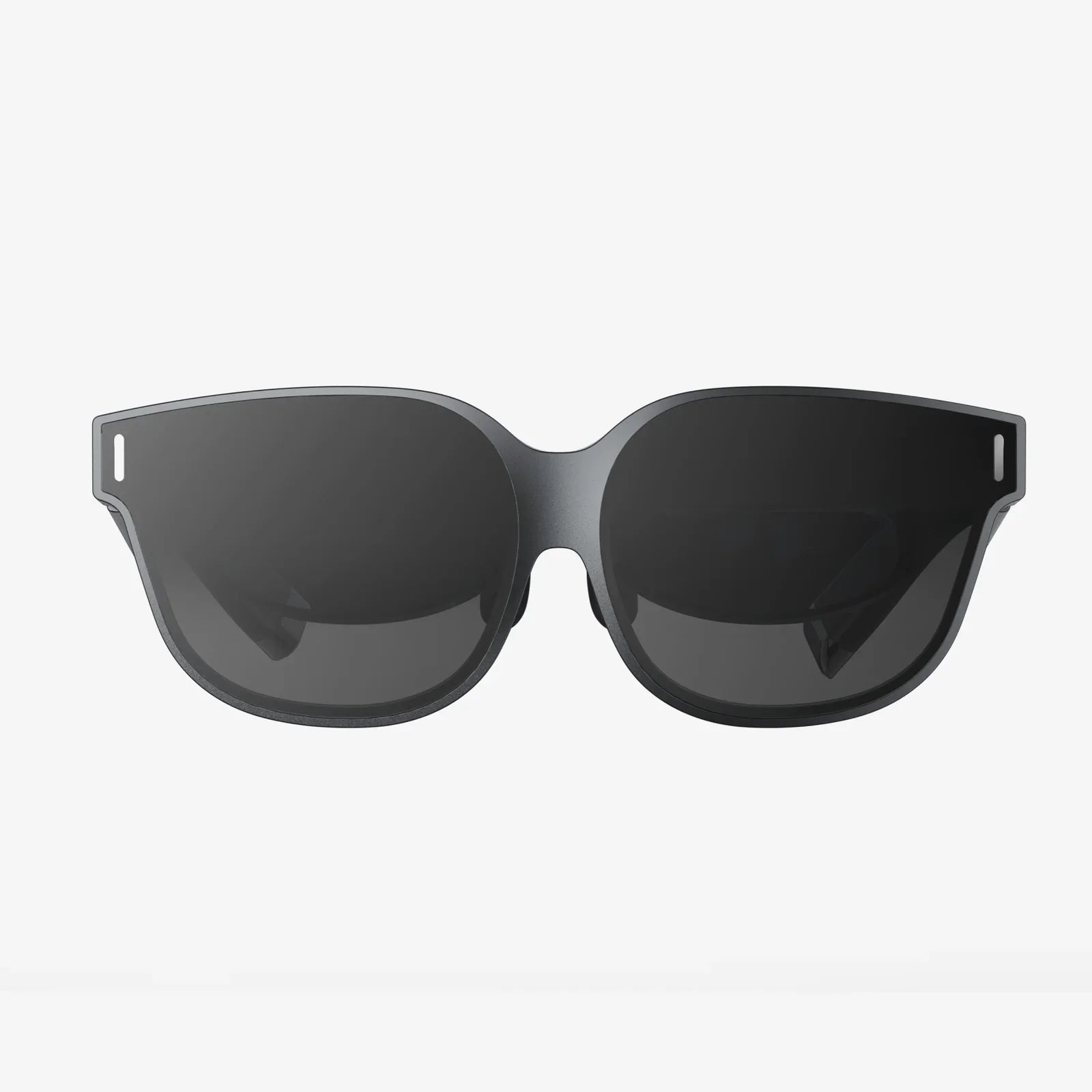
Imagine a world where your wildest ideas can leap off the sketchpad and into your living room, where data isn't confined to screens but painted across the very fabric of reality, and where learning, shopping, and creating are immersive, interactive experiences. This is the promise of Augmented Reality (AR), a technology that is rapidly evolving from a novel gimmick into an indispensable canvas for innovation. The barrier is no longer the technology itself, but the scarcity of truly groundbreaking AR ideas that can harness its full potential. If you're ready to see the world not for what it is, but for what it could be, you're about to embark on a journey through the most compelling and transformative applications of AR that are reshaping our future, today.
The Foundation: Understanding the AR Landscape
Before diving into the myriad of possibilities, it's crucial to understand what AR truly is. At its core, Augmented Reality is a technology that superimposes digital information—be it images, sounds, text, or 3D models—onto the user's view of the real world. Unlike Virtual Reality (VR), which creates a completely artificial environment, AR enhances the real world by adding a digital layer to it. This is achieved through devices like smartphones, tablets, smart glasses, and headsets, which use cameras, sensors, and algorithms to blend the digital and physical realms seamlessly.
The power of AR lies in its contextuality. The digital content is not random; it is anchored to and interacts with the physical environment. This could mean a virtual dinosaur standing on your coffee table, navigation arrows painted onto the road ahead of you, or historical figures reenacting events on the very ground they occurred. This unique ability to provide information and experiences within a specific context is what makes AR such a fertile ground for innovative ideas.
Revolutionizing Retail and E-Commerce
The retail sector has been one of the earliest and most enthusiastic adopters of AR technology, and for good reason. It directly addresses one of the fundamental limitations of online shopping: the inability to try before you buy. This has sparked a wave of AR ideas designed to bridge the gap between the digital and physical shopping experience.
Virtual Try-On and Preview
One of the most popular applications is virtual try-on. Imagine using your smartphone's camera to see how a pair of glasses frames your face, how a shade of lipstick complements your skin tone, or how a new watch looks on your wrist. This extends far beyond apparel and accessories. AR allows customers to project life-sized, 3D models of furniture into their homes, ensuring a new sofa fits the space and matches the décor before purchase. They can see how a new refrigerator would look in their kitchen or how a paint color would transform their living room walls. This "see-it-in-your-space" functionality drastically reduces purchase hesitation and minimizes returns, creating a win-win scenario for both consumers and retailers.
Interactive In-Store Experiences
AR isn't just for online stores. Brick-and-mortar locations are using it to create immersive, interactive experiences that cannot be replicated online. By scanning products, posters, or store landmarks with a smartphone, shoppers can unlock exclusive content, such as detailed product information, demonstration videos, user reviews, or even interactive games that offer discounts and rewards. This transforms passive shopping into an engaging adventure, increasing dwell time and fostering brand loyalty.
Transforming Education and Training
Perhaps one of the most profound areas for AR ideas is in education and professional training. AR has the potential to turn abstract concepts into tangible, interactive experiences, fundamentally changing how we learn and retain information.
Bringing Textbooks to Life
Instead of static images in a textbook, students can point their device at a page to see a 3D model of the human heart beating and rotating in front of them. They can dissect a virtual frog without the ethical concerns or logistical challenges. History students can witness historical battles unfold on their desk, while astronomy students can explore the solar system in their classroom. This kinesthetic learning approach caters to different learning styles and makes complex subjects more accessible and engaging.
Enhanced Professional Skill Development
In fields like medicine, engineering, and manufacturing, AR is revolutionizing training. Medical students can practice complex surgical procedures on detailed holographic patients, receiving real-time feedback without any risk. Field technicians can wear AR glasses that overlay step-by-step repair instructions and schematics directly onto the machinery they are fixing, highlighting specific components and tools needed. This hands-on, guided training accelerates skill acquisition, improves accuracy, and enhances safety across numerous high-stakes industries.
Reimagining Entertainment and Gaming
The success of games that blend gameplay with the real world demonstrated AR's immense potential for entertainment. However, the possibilities extend far beyond catching virtual creatures in local parks.
Immersive Storytelling and Narrative
AR offers a new medium for storytellers. Authors and filmmakers can create immersive narratives where story elements play out in the reader's or viewer's environment. Imagine a mystery novel where clues are hidden as virtual objects in your home, or a short film where characters appear to be sitting in your living room. This level of immersion creates a powerful emotional connection to the content, blurring the line between audience and participant.
Interactive Art and Public Installations
Museums and public spaces are adopting AR to create dynamic exhibits. A static sculpture in a park can, through an AR app, tell its own story, animate, or change form. Museum visitors can point their devices at artifacts to see them restored to their original glory, used in their historical context, or even broken down into their composite parts. This transforms a passive viewing experience into an active exploration, making art and history more accessible and captivating for all ages.
Empowering Industrial and Enterprise Solutions
Behind the consumer-facing applications, AR is driving significant efficiency and safety improvements in industrial and enterprise settings. These AR ideas are often less glamorous but incredibly impactful.
Remote Assistance and Collaboration
An expert engineer located thousands of miles away can see what a field technician sees through AR glasses. The expert can then annotate the technician's real-world view with arrows, circles, and notes, guiding them through a complex repair in real-time. This "see-what-I-see" remote collaboration eliminates miscommunication, reduces travel costs, and resolves issues faster. Similarly, architects and designers in different locations can collaborate on a single, life-sized 3D model of a building or product as if they were in the same room.
Data Visualization and Digital Twins
AR can be used to visualize complex data sets in situ. For a factory manager, walking the production floor while wearing AR glasses could reveal real-time performance data, temperature readouts, or maintenance schedules overlaid directly on the corresponding machinery. This concept of a "digital twin"—a virtual representation of a physical asset—allows for incredible oversight and predictive maintenance, preventing downtime and optimizing operations.
Shaping the Future of Social Interaction and Connectivity
As AR hardware evolves towards more socially acceptable glasses, the way we interact with each other and our environment will be fundamentally altered.
Contextual Social Networking
Future AR platforms could allow users to leave virtual notes, artwork, or memories tagged to specific locations for friends or the public to discover. Navigating a new city could involve following directions left by previous visitors or seeing historical facts pop up as you pass landmarks. Social media could evolve from a feed on a screen to a layer of shared information and experiences overlaid on the world around us, creating a new form of context-aware, location-based connection.
Enhanced Live Events
Attending a concert or sporting event could be transformed with AR. Fans could access real-time stats floating above players, see animated replays from their seat, or choose different camera angles through their glasses. During a live presentation, speakers could pull up 3D graphs and models that appear to everyone in the audience simultaneously, making the shared experience more informative and engaging.
From Idea to Reality: Getting Started with Your AR Concept
Transforming an AR idea into a functional experience may seem daunting, but the process has been democratized by powerful and accessible development platforms. The key is to start with a clear problem or opportunity that is enhanced by spatial context. The best AR ideas are those that are useful, intuitive, and add genuine value rather than just technological novelty.
Begin by storyboarding the user's journey. How do they discover the experience? How does the digital content interact with their environment? What is the core action or takeaway? Prototyping is essential; use simple tools to create a rough version and test it in the intended environment. This iterative process helps refine the idea and ensures the final product is user-centric and effective.
The true potential of AR lies not in replicating existing screen-based experiences, but in creating entirely new ones that were previously impossible. It's about enhancing human capability, enriching our understanding of the world, and adding a layer of magic and utility to our everyday lives. The tools are here, the technology is maturing, and the only limit is the breadth of our imagination.
The digital and physical worlds are on a collision course, and Augmented Reality is the shimmering portal where they merge. The concepts explored here are merely the first brushstrokes on a vast, uncharted canvas. This isn't about waiting for the future to arrive; it's about actively building it. The most transformative AR ideas are still waiting to be conceived, not in a distant lab, but in your mind. What will you create when the only boundary is the edge of your imagination?
Share:
Wearables AR Smart Glasses News Today: The Invisible Revolution Reshaping Reality
Smart Glasses Brands Comparison: A Guide to the Augmented Future