


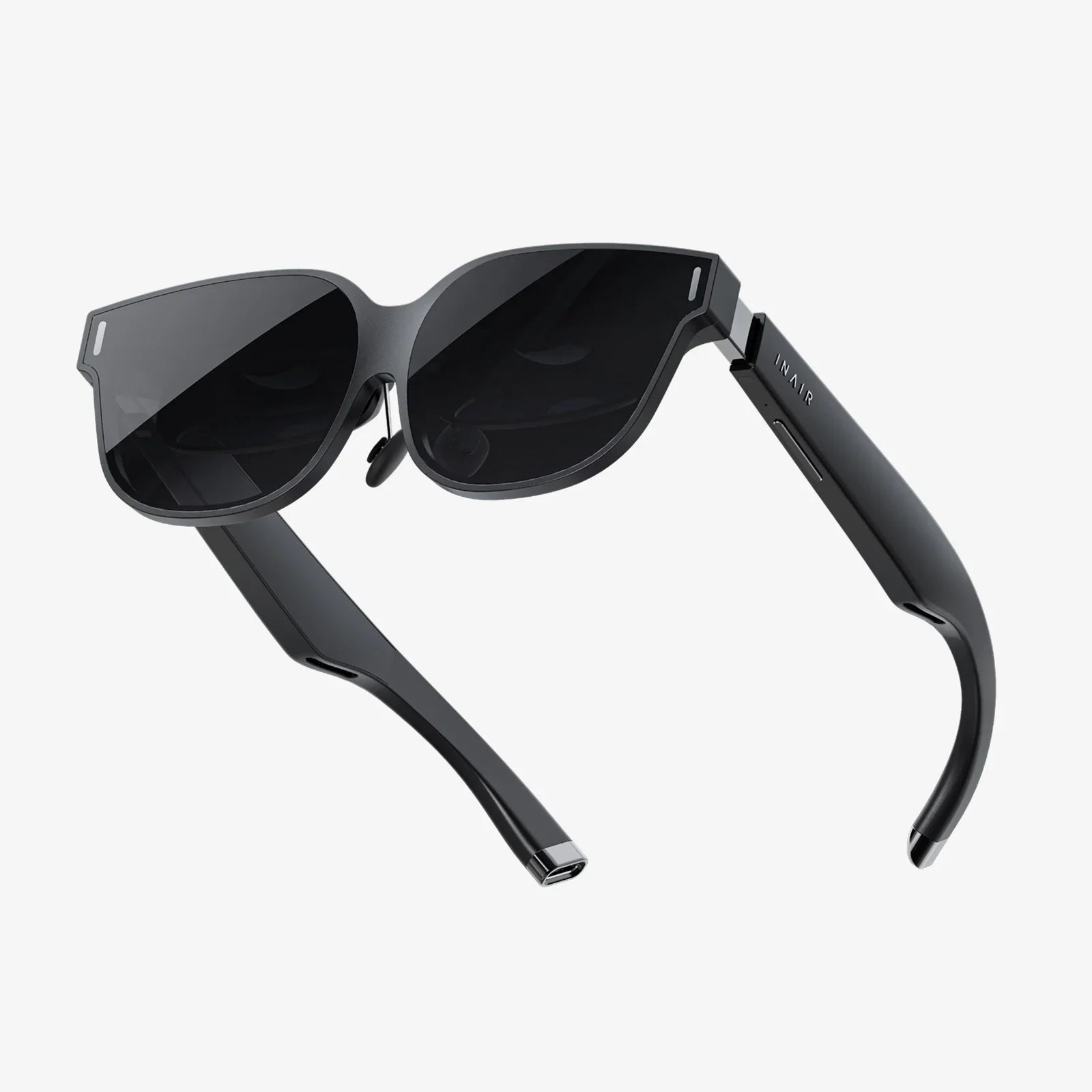
Imagine a world where your surroundings are not just static objects but a dynamic canvas for information, storytelling, and connection. A world where the boundary between what is real and what is digital dissolves into a seamless, interactive tapestry. This is the promise of Augmented Reality interaction, a technological evolution that is quietly moving from science fiction into our daily lives, poised to fundamentally reshape how we perceive, understand, and engage with our environment. It’s not about wearing bulky headsets to see floating dinosaurs; it’s about an invisible interface that enhances human capability, making us more informed, efficient, and connected.
Beyond the Screen: Redefining Human-Computer Interaction
For decades, our primary mode of interacting with digital information has been confined to the screen—a flat, two-dimensional portal we poke at with our fingers or control with a mouse. AR interaction shatters this paradigm. It liberates data from its glass prison and anchors it directly into our physical space. This shift represents the next logical step in the journey of human-computer interaction, from command-line interfaces to graphical user interfaces (GUIs) to what is now being termed reality user interfaces (RUIs) or spatial computing.
The core principle of AR interaction is contextual integration. Instead of requiring a user to open an app and input data, AR seeks to understand the context—where you are, what you’re looking at, what task you’re performing—and present the most relevant information intuitively. It’s the difference between manually searching a repair manual for your car’s engine and simply pointing your device at the engine to see animated instructions overlaid on the specific parts that need attention. This contextual layer turns the entire world into a user interface.
The Technological Pillars Powering Immersive Experiences
Creating a convincing and responsive AR interaction is a complex dance of advanced technologies working in concert. It’s a symphony of hardware and software that must perceive the world as we do.
Computer Vision: The Eyes of AR
At the heart of any AR system is computer vision, the technology that allows a device to see and interpret the world. This involves several key processes. SLAM (Simultaneous Localization and Mapping) is the magical ingredient that enables a device to understand its position in an unknown environment while simultaneously mapping the geometry of that space. This creates a spatial anchor, a digital understanding of the room, allowing virtual objects to persist in a specific location. Object recognition goes a step further, identifying specific items—a chair, a coffee mug, a complex machine component—so the AR system can interact with them meaningfully. Finally, surface detection identifies planes like floors, walls, and tables, ensuring virtual objects don’t float mid-air but sit convincingly on real surfaces.
Input Modalities: How We Talk to the Digital Layer
With information anchored in our space, we need natural ways to interact with it. The clumsy touchscreen tap is often replaced or supplemented by more intuitive methods.
- Gesture Control: Using cameras to track hand and finger movements, users can push, pull, rotate, and select virtual objects with a wave of their hand. This creates a powerful sense of direct manipulation, as if the digital object possesses physical presence.
- Voice Commands: Natural language processing allows users to converse with the AR environment. “Place that model here,” “Show me the internal components,” or “Share this view with Sarah” become powerful commands, keeping hands free and interaction fluid.
- Gaze Tracking: By understanding precisely where a user is looking, an AR system can enable selection or display additional information simply by focusing on an object. A glance at a restaurant menu could trigger reviews, or looking at a historical monument could bring up its history.
- Traditional Input: Even touchscreens and controllers still have a role, often used for precise input or system-level commands, complementing the more spatial modalities.
Hardware: The Portal to Augmented Worlds
The form factor of AR devices directly influences the interaction model. Smartphones democratized AR by putting a capable sensor suite in billions of pockets, using the screen as a magic window. Smart glasses aim to make the experience truly hands-free and always-available, projecting information directly into the user’s field of view, often using waveguide technology. The ultimate goal is a comfortable, socially acceptable pair of glasses that can deliver high-fidelity visuals for hours on end, a challenge that continues to drive innovation in optics, battery technology, and processing power.
Designing for Reality: A New Paradigm for UX
Designing for AR interaction is a radical departure from designing for a rectangular screen. It introduces a new set of principles focused on spatial awareness, user safety, and seamless blending.
- Spatial Design: Designers must think in 3D. Considerations like scale, perspective, occlusion (where real objects block virtual ones), and lighting consistency become paramount. A virtual object must look like it belongs in the real world, reacting to the environment's light and shadows.
- User Safety and Comfort: Placing digital content in a user’s path can be dangerous. Designers must avoid “holographic highway” scenarios where critical information obscures a user’s view while walking or driving. Content should be placed in peripheral areas or activated only when it is safe to do so.
- Minimalism and Context: The potential to fill a user’s entire field of view with data is a temptation that must be resisted. AR UI should be minimal, displaying only the information necessary for the task at hand. The design must be aware of context to avoid overwhelming the user with irrelevant notifications.
- Accessibility: New interaction modes must be inclusive. How do users with limited mobility interact with gestures? How is the experience for those with visual or auditory impairments? These questions must be central to the design process from the very beginning.
Transforming Industries: From Assembly Lines to Living Rooms
The practical applications of AR interaction are already delivering immense value across numerous sectors, moving far beyond gaming and entertainment.
Revolutionizing Enterprise and Manufacturing
This is where AR interaction is having its most immediate impact. Technicians can receive remote expert guidance with annotations directly overlaid on malfunctioning equipment, reducing downtime and errors. Warehouse workers are guided by digital pick-lists that visually highlight the exact shelf and item they need, dramatically increasing fulfillment speed and accuracy. In complex assembly, workers see digital instructions and part locations projected onto their physical workspace, streamlining processes and reducing the need for extensive training.
Redefining Healthcare and Medicine
Surgeons can visualize CT scans and MRI data overlaid directly onto a patient’s body during procedures, providing an X-ray view that improves precision and outcomes. Medical students can interact with detailed, life-size 3D models of human anatomy, peeling back layers and exploring systems in ways textbooks could never allow. AR can also assist in physical therapy by guiding patients through movements with perfect form via animated overlays.
Enhancing Retail and E-Commerce
The try-before-you-buy experience is being redefined. Customers can see how a sofa fits and looks in their actual living room, how a new shade of paint changes the ambiance of a room, or how a pair of glasses fits their face—all from their own home. This level of interactive preview reduces purchase hesitation and minimizes returns, bridging the gap between online and in-store shopping.
Creating New Forms of Storytelling and Social Connection
AR interaction is creating shared experiences in physical spaces. Museums can bring exhibits to life, allowing historical figures to step out of paintings or dinosaurs to roam the halls. Social AR allows friends to play games together in a park, leave digital notes and artwork for each other in specific locations, or simply share an experience as if they are in the same room, despite being miles apart. It adds a persistent, digital layer to our shared reality.
The Challenges on the Horizon: Privacy, Ethics, and the Digital Divide
The path to an AR-ubiquitous future is not without significant hurdles. The very technology that makes AR so powerful—its ability to see and understand our world—also raises profound questions.
The constant capture of a user’s environment is a privacy minefield. The data collected by AR devices—video feeds, spatial maps, gaze direction, and object recognition—is incredibly intimate. Who owns this data? How is it stored and used? Could it be used for pervasive advertising or, more worryingly, surveillance? Robust ethical frameworks and transparent data policies are not optional; they are essential for public trust.
There is also a risk of a new digital divide. Will access to this empowering technology be limited to those who can afford it, creating a class of “augmented” individuals with significant informational advantages over others? Furthermore, the potential for reality blurring is real. If we can effortlessly filter and alter our perception of the world, what are the psychological effects? Could it lead to increased isolation or a diminished shared sense of reality? These societal challenges are as critical to address as the technological ones.
The journey of AR interaction is just beginning. We are moving from clunky demonstrations to truly useful, integrated applications. The next decade will be defined by the refinement of the technology—lighter hardware, longer battery life, more intelligent software—and, more importantly, by our collective choices about how to build this layer atop our reality. It holds the potential to augment not just our reality, but our humanity, making us more knowledgeable, capable, and connected. The invisible interface is coming, and it promises to change everything, one interaction at a time.
Share:
How to Build AI Powered Apps: A Comprehensive Guide for Developers
Description of Wearables: The Silent Revolution on Your Wrist and Beyond