


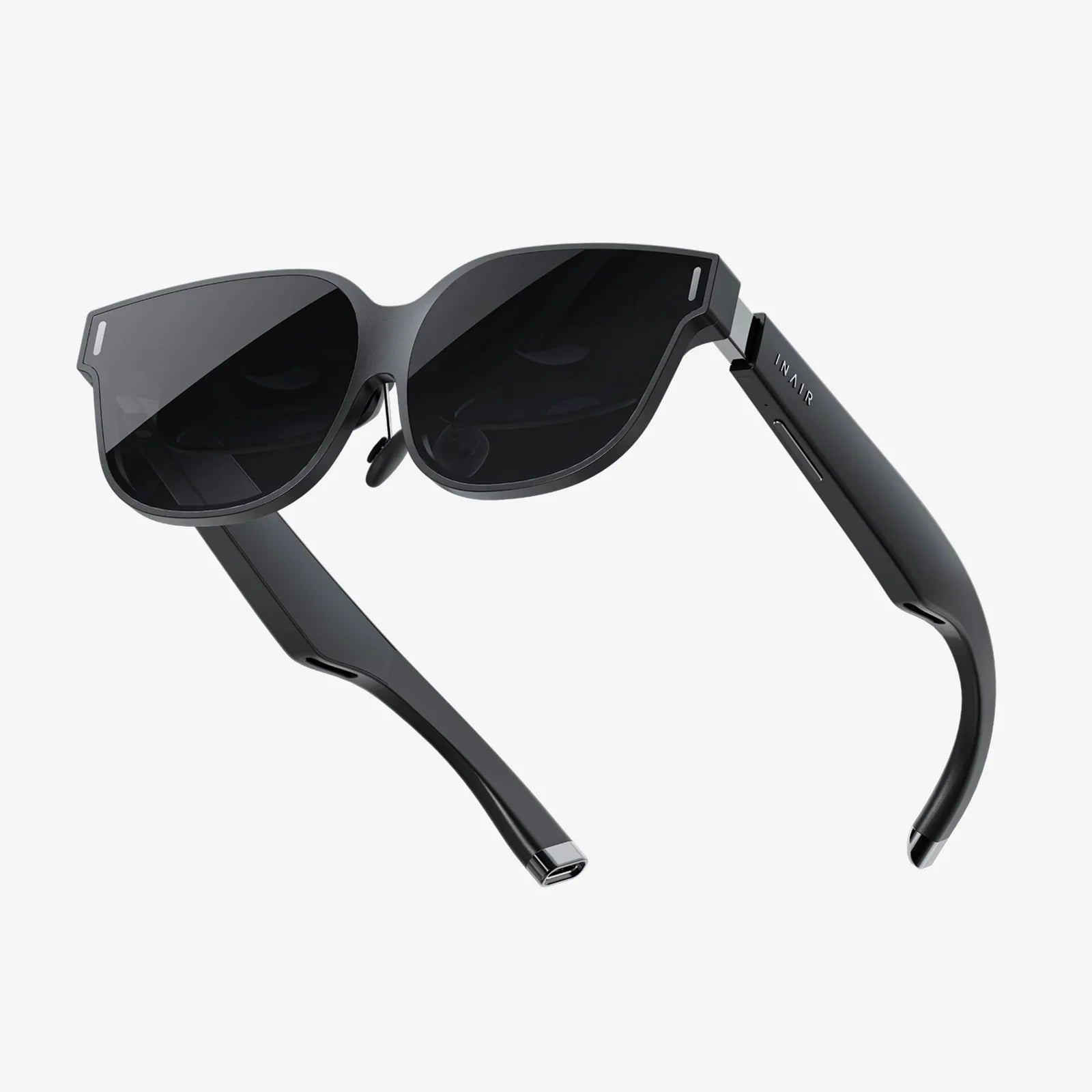
Imagine reaching out and touching a digital object as if it were right in front of you, manipulating complex data with a wave of your hand, or watching a historical figure step out of a textbook to tell their story. This isn't a scene from a science fiction film; it's the tangible, awe-inspiring reality being unlocked today by the advent of the AR interactive screen. This convergence of display technology and spatial computing is poised to redefine our relationship with information, transforming passive observation into active, immersive participation and beckoning us into a new era of human-computer interaction.
The Confluence of Realities: Understanding the Technology
At its core, an AR interactive screen is a sophisticated system designed to seamlessly blend computer-generated perceptual information with the user's real-world environment, all through a display surface that understands and responds to interaction. It's more than just a transparent display; it's a portal that allows the digital and physical to coexist and interoperate.
The magic is woven from several critical technological threads. High-resolution, often transparent, OLED or micro-LED displays form the canvas. Advanced depth-sensing cameras, LiDAR scanners, and motion tracking sensors act as the eyes, continuously mapping the environment and the user's position within it. Powerful onboard processors serve as the brain, interpreting this sensor data in real-time to anchor digital content convincingly onto physical surfaces. Finally, a suite of interaction modalities—from precise hand-tracking and gesture recognition to voice commands and even eye-tracking—completes the loop, creating an intuitive interface that feels like a natural extension of the user's will.
Beyond Novelty: Transformative Applications Across Industries
The true power of this technology is not in its technical specifications but in its profound practical applications, which are already disrupting and enhancing numerous fields.
Revolutionizing Education and Training
The traditional classroom and training manual are being fundamentally reimagined. Imagine a medical student standing before a large AR screen, not just reading about human anatomy, but dissecting a life-sized, holographic human body. They can peel back layers of muscle, isolate the circulatory system, and observe the heart beating in real-time, all through intuitive gestures. This kinesthetic learning approach dramatically improves comprehension and retention.
In corporate and industrial training, the implications are equally staggering. A technician can learn to repair a complex piece of machinery by following animated, step-by-step instructions overlaid directly onto the physical equipment. This "see-what-I-see" guidance reduces errors, slashes training time, and empowers workers with instant, contextual knowledge, making expertise more accessible than ever before.
Redefining Design and Engineering
For architects, engineers, and product designers, the AR interactive screen is becoming an indispensable tool. It erases the costly and time-consuming gap between concept and prototype. A team of designers can gather around a screen to interact with a full-scale 3D model of a new building, walking through virtual hallways, testing sightlines, and manipulating materials and structures in real-time with their hands.
This collaborative, immersive design process allows for rapid iteration and identifies potential flaws long before ground is ever broken. It transforms abstract blueprints into tangible experiences, enabling stakeholders to truly understand and contribute to a project in ways that were previously impossible.
The Future of Retail and Commerce
The retail experience is on the cusp of a massive shift. An AR interactive screen in a storefront or within a showroom can serve as an infinitely adaptable digital salesperson. A customer can see how a new sofa would look in their living room, customizing its fabric and color on the spot. A fashion retailer can allow shoppers to "try on" dozens of outfits in minutes without ever entering a changing room.
This technology bridges the gap between the convenience of online shopping and the confidence of physical inspection, reducing purchase anxiety and creating engaging, memorable brand experiences that drive sales and customer loyalty.
Enhancing Enterprise and Data Visualization
In the corporate world, data is the new currency, but spreadsheets and 2D graphs often fail to convey its true story. An AR interactive screen can transform complex data sets into immersive, three-dimensional landscapes. A financial analyst could literally walk through a visualization of global market trends, grabbing and examining specific data points. A logistics manager could oversee a supply chain network, watching real-time updates flow across a interactive global map.
This spatial data interaction allows for the recognition of patterns, correlations, and outliers that are easily missed on a traditional screen, leading to faster, more insightful decision-making.
The Human Factor: Intuition and Accessibility
A key differentiator of AR interactive screens is their move towards more natural user interfaces (NUIs). By leveraging gesture, gaze, and voice, they lower the barrier to technology. There is no mouse or keyboard to learn; interaction is based on innate human behaviors. This has significant implications for accessibility, allowing individuals with different physical abilities to engage with digital content in ways that suit them best. It democratizes interaction, making powerful digital tools usable by a much broader audience.
Navigating the Challenges: The Path to Ubiquity
Despite its immense potential, the path to widespread adoption of AR interactive screens is not without obstacles. The computational power required for real-time rendering and sensor processing remains significant, though it is rapidly becoming more affordable and efficient. Creating a truly convincing and lag-free augmented experience demands incredibly precise calibration between the display, sensors, and software—a challenge that continues to push the boundaries of engineering.
Furthermore, the development of content and applications for this new medium requires a new design philosophy. User experience (UX) designers must think in three dimensions, considering spatial relationships, occlusion, and physical context, which is a paradigm shift from traditional 2D screen design.
The Horizon: What Lies Ahead
The evolution of this technology is accelerating. We are moving towards screens with higher resolutions, wider fields of view, and even greater transparency. The integration of Artificial Intelligence will make these systems predictive and contextual, anticipating user needs and automating complex tasks. Haptic feedback technology will evolve to allow users to not just see but also feel digital objects, adding a crucial tactile dimension to the experience.
As the technology matures and converges with advancements in 5G/6G connectivity and the Internet of Things (IoT), the AR interactive screen will cease to be a standalone device and become the central hub for our smart environments—the primary interface through which we manage our homes, cities, and digital lives.
The shimmering potential of the AR interactive screen is no longer a distant promise on the horizon; it's a present-day revolution quietly unfolding in labs, classrooms, boardrooms, and stores around the globe. It represents a fundamental shift from consuming information to living within it, offering a glimpse of a future where our digital and physical selves are no longer separate. The screen is no longer a barrier but a gateway, and stepping through it promises to change everything we know about work, learning, and play.
Share:
Powerful AI Apps Are Reshaping Our Digital Experience and Redefining Productivity
Digital Electronics Products: The Unseen Revolution Reshaping Our Daily Lives