


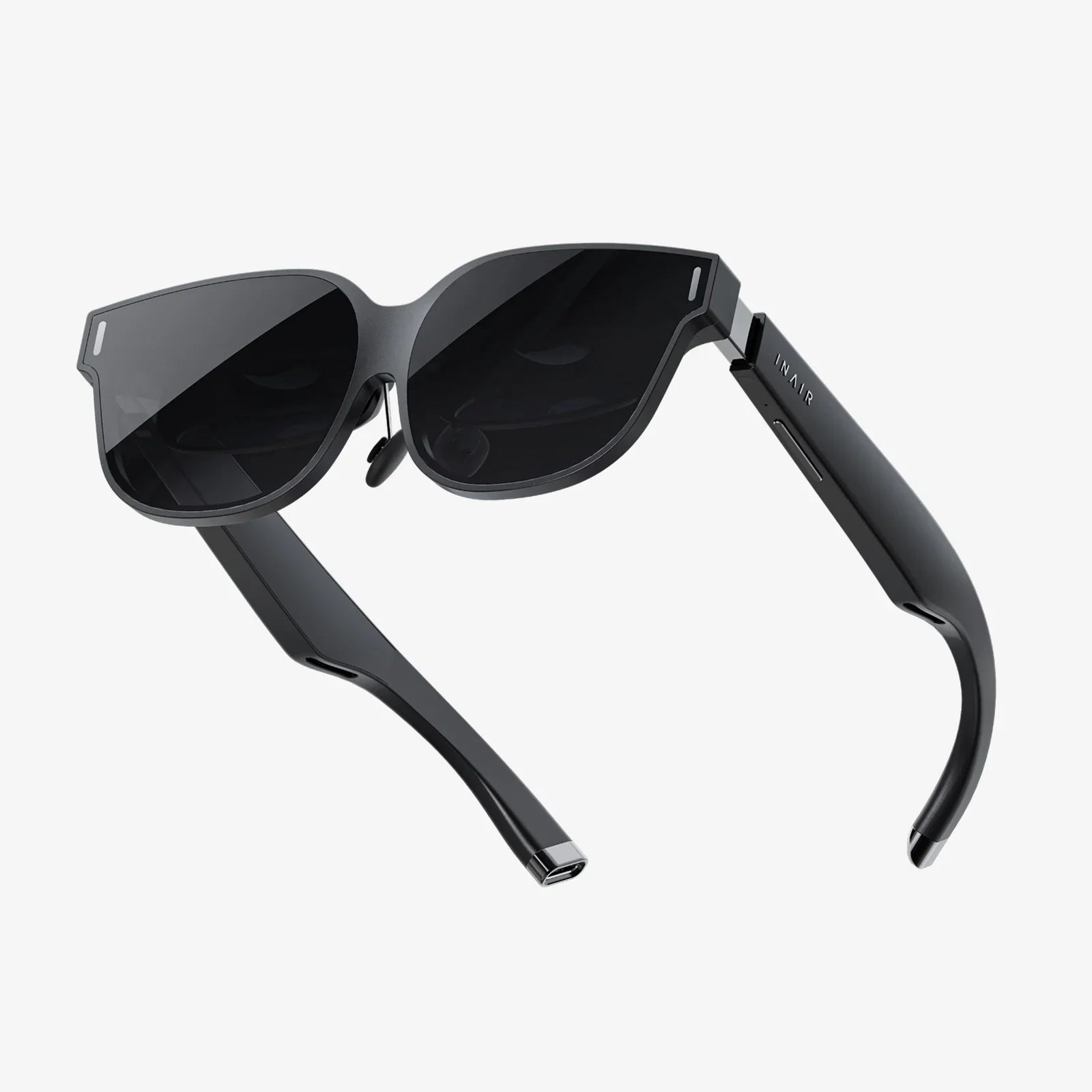
- by wangfred
AR Intuitive Interaction The Future of Human-Computer Engagement
- by wangfred
Imagine reaching out and turning a virtual knob to adjust the thermostat, or assembling a complex piece of furniture with digital arrows guiding your every move, projected directly onto the physical components. This isn't science fiction; it's the emerging reality of AR intuitive interaction, a paradigm shift that promises to dissolve the barriers between the digital and the physical, making our engagement with technology as natural as breathing. This evolution moves us beyond the clumsy tap-and-swipe gestures of a glowing rectangle in our hands, towards a world where information responds to our gaze, our voice, and our touch in the very space we inhabit.
To understand AR intuitive interaction, we must first deconstruct the term. Intuitive interaction refers to a user interface that feels natural, obvious, and easy to use, often leveraging skills and knowledge we have acquired from interacting with the real world. It’s about reducing cognitive load—the mental effort required to operate a system—so that the technology becomes an extension of ourselves, not an obstacle to be conquered.
When this principle is applied to Augmented Reality, the result is transformative. AR intuitive interaction is the seamless blending of digital content and information with the user's physical environment in a way that feels immediate and instinctive. It leverages our innate understanding of spatial relationships, physics, and body language. Instead of learning a new software language, the environment learns to speak ours. The core pillars of this interaction are:
The genius of intuitive AR lies in its mimicry of human intuition. From infancy, we learn about our world through direct manipulation: we push, pull, twist, and throw objects. We understand that to make something happen, we perform an action. Traditional computing abstracted this away, forcing us to translate our intent into mouse clicks and keyboard shortcuts. AR intuitive interaction brings us full circle.
Consider the simple act of turning a page in a book. Your brain doesn't consciously process the complex motor functions required; you just do it. Now, imagine performing a pinching motion in the air to grab a floating digital document and flicking your wrist to turn its page. The action is directly mapped to the intended outcome, leveraging a lifetime of learned physical behavior. This is the essence of embodied cognition—the theory that our cognition is shaped by our bodily experiences. AR interfaces that tap into this, such as using a two-finger pinch to select or a throwing gesture to dismiss a window, feel instantly familiar because they are built upon a foundation of pre-existing knowledge.
Creating this seamless experience requires a symphony of advanced technologies working in concert. It’s a complex dance of hardware and software that must occur in real-time to avoid breaking the user's sense of immersion.
The eyes of an AR system are a combination of cameras, LiDAR (Light Detection and Ranging), radar, and other depth sensors. These components work together to create a high-fidelity 3D map of the environment. They detect planes (floors, walls, tables), understand lighting conditions, and track the position and orientation of the device and the user within the space. This precise environmental understanding is the canvas upon which intuitive interactions are painted.
Raw sensor data is useless without interpretation. This is where computer vision and machine learning take center stage. Algorithms analyze the sensor feed to identify objects—is that a couch, a coffee mug, or a person? More importantly, they track the user's hands with remarkable accuracy, discerning between a pointed finger, an open palm, or a thumbs-up. Machine learning models, trained on vast datasets of human gestures, can predict intent, distinguishing between a deliberate command and an incidental movement. This allows the system to understand that a user is pointing at a virtual button to press it, rather than just scratching their head.
All this data processing—environment mapping, gesture recognition, rendering complex 3D graphics—must happen with imperceptible latency. A delay of even a few milliseconds between a user's hand movement and the digital response can shatter the illusion and feel jarring. This demands immense processing power, handled by specialized chips designed for parallel processing of AI and computer vision tasks, often split between the device itself and cloud computing resources.
The theoretical promise of intuitive AR is already being realized in practical, impactful ways across numerous industries.
Imagine a medical student practicing a complex surgical procedure. Instead of watching a video on a screen, they don AR glasses and see a holographic human anatomy model floating before them. Using intuitive hand gestures, they can rotate the model, peel back layers of muscle and tissue, and even simulate incisions, receiving haptic feedback. This kinesthetic learning—learning by doing—is profoundly more effective than passive observation. Similarly, a mechanic could see repair instructions overlaid directly on the engine they are working on, with arrows showing exactly which bolt to turn and how much torque to apply.
In architecture and interior design, intuitive AR is a game-changer. Designers can walk through a full-scale 3D model of a building before the foundation is even poured. They can use gestures to instantly change the color of a wall, move a virtual couch to a different corner of the room, or see how sunlight will filter through the windows at different times of day. This direct manipulation of the design within the context of the physical space allows for rapid iteration and a deeper understanding of the project that a 2D screen could never provide.
The frustrating guesswork of online shopping—Will this couch fit in my living room? Does this shade of blue match my curtains?—is eliminated with AR. Users can place true-to-size 3D models of products into their own homes simply by pointing their device's camera. The interaction is intuitive: you walk around the virtual product, view it from different angles, and even open the doors of a virtual wardrobe. This bridges the gap between the digital catalog and the physical experience, building consumer confidence and reducing return rates.
AR intuitive interaction makes physical distance irrelevant for collaborative tasks. A senior engineer located across the globe can see what a field technician sees through their AR glasses. The expert can then draw arrows, highlight components, and place 3D diagrams directly into the technician's field of view, guiding their hands with precision. They are not just talking about the problem; they are virtually standing side-by-side, interacting with the same physical machinery through a shared digital layer.
Despite its immense potential, the path to perfect, ubiquitous AR intuitive interaction is fraught with challenges. Technical hurdles like achieving all-day battery life in sleek, socially acceptable glasses, ensuring robust tracking in all lighting conditions, and processing data with zero latency remain significant. Beyond hardware, there is the critical challenge of designing universal interaction paradigms. While a pinch gesture might feel intuitive to many, cultural differences in gestures and body language could lead to confusion. Establishing a common, accessible language for AR interaction that feels natural to a global audience is a monumental design task. Furthermore, the constant blending of the digital and physical raises profound questions about privacy, data security, and digital addiction that society must urgently address.
As the technology matures, the ultimate goal is for the interface to become invisible. We won't think about interacting with AR; we will simply interact with our world, and the digital layer will be there to assist us. It will be a silent partner, anticipating our needs and providing information through subtle visual, auditory, and even haptic cues. This will move beyond consumer applications into a fundamental infrastructure that augments human capability in every field, from healthcare and scientific research to urban planning and art.
The journey from the command line to the graphical user interface was a revolution in accessibility. The move from the GUI to the touchscreen placed computing directly in our hands. Now, AR intuitive interaction is poised to be the next great leap, taking information off the screen and weaving it into the very fabric of our reality. It promises a future where technology doesn't demand our attention but enhances our perception, where our intentions are understood without a uttered word or a tapped icon, creating a world that is not just smarter, but more understandable, more manageable, and profoundly more human.