


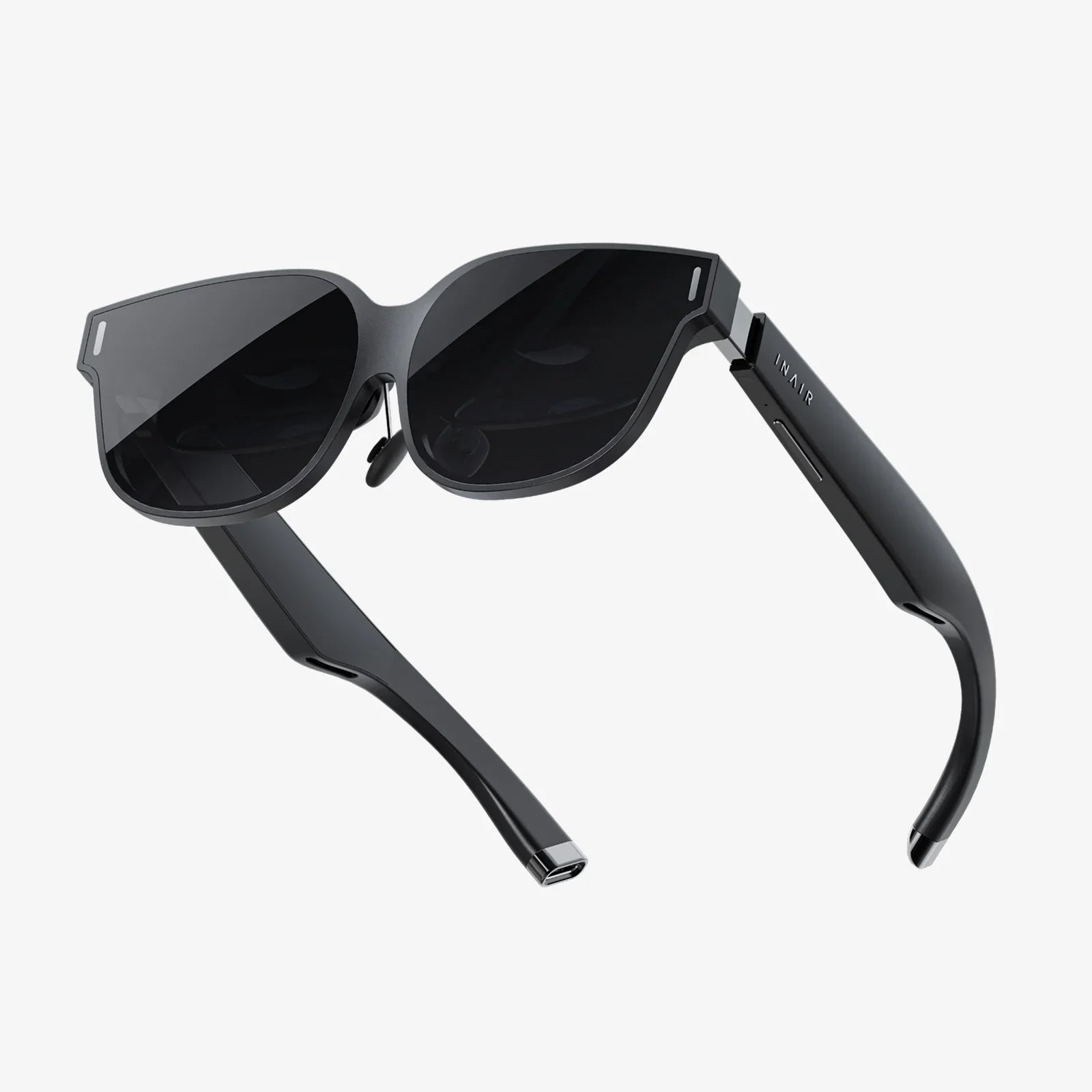
Imagine a world where your morning run is guided by a virtual coach floating beside you, where the recipe for dinner hovers over the mixing bowl, and where a distant colleague can point to a 3D model on your table as if they were right there in the room. This isn't a distant sci-fi fantasy; it’s the imminent future being crafted by a revolutionary class of wearable technology, best embodied by the concept of AR Joy Glasses. These are not mere gadgets; they are portals, promising to layer a rich, interactive digital skin over our physical reality, transforming how we work, learn, play, and connect. The era of staring down at a slab of glass in our hands is fading, and the age of looking up and out into an augmented world is dawning.
The Architectural Marvel: How AR Joy Glasses Create Magic
At their core, AR Joy Glasses are a symphony of advanced technologies working in perfect harmony to create the illusion of digital objects coexisting with the real world. The magic lies in their ability to understand the environment and project light directly into the user's eyes.
Seeing the World: Sensors and Cameras
The first critical component is perception. An array of sophisticated sensors, including cameras, LiDAR scanners, depth sensors, and inertial measurement units (IMUs), constantly scans the environment. These act as the glasses' eyes, building a real-time, three-dimensional map of the surrounding space. They understand the geometry of a room, the texture of a wall, the distance to a table, and even the position of your hands. This spatial awareness is the foundational canvas upon which digital content is precisely painted.
Projecting the Dream: Waveguide Optics and Microdisplays
This is where the true wizardry happens. Unlike virtual reality headsets that block out the world with opaque screens, AR glasses must be transparent. The dominant solution for achieving this is waveguide technology. Tiny projectors, or microdisplays, generate the digital image. This light is then coupled into a thin, transparent piece of glass or plastic (the waveguide) etched with nanoscale precision.
The light travels through this waveguide, bouncing off its internal surfaces via a process called total internal reflection, until it is directed out towards the user's eye. The result is a bright, sharp digital image that appears to be out in the world, all while allowing the user to see their natural surroundings clearly. This complex optical system is the reason these devices can be sleek and glasses-like rather than bulky and helmet-like.
Thinking in Real-Time: The Onboard Brain
Processing the immense amount of sensor data and rendering complex, interactive graphics requires serious computational power. Early prototypes relied on a wired connection to a powerful external computer, but the true goal is untethered freedom. This is achieved through miniaturized, highly efficient systems-on-a-chip (SoCs) packed with specialized processors for AI, computer vision, and graphics rendering. This onboard brain performs trillions of operations per second to align the digital and physical worlds without perceptible lag, a phenomenon known as registration error, which can break immersion and cause discomfort.
Beyond Novelty: The Transformative Applications
The promise of AR Joy Glasses extends far beyond flashy filters and gaming. They are poised to become indispensable tools across every facet of human endeavor.
Revolutionizing the Professional Landscape
In fields like manufacturing, engineering, and medicine, the implications are staggering. A technician repairing a complex machine can see animated instructions overlaid directly on the equipment, highlighting the exact bolt to turn and the torque to apply. A surgeon could have vital signs, MRI data, or critical guidance visualized directly over their patient during a procedure. Architects and interior designers can walk clients through full-scale, interactive 3D models of their designs within the actual physical space. This hands-free, context-aware information delivery dramatically increases efficiency, reduces errors, and unlocks new levels of expertise.
Redefining Social Connection and Communication
Communication will evolve from flat video calls into shared spatial experiences. Imagine a virtual meeting where participants from around the globe appear as lifelike avatars or holograms in your living room, able to collaborate on a virtual 3D model that you can all walk around and manipulate. Distance will become less of a barrier to meaningful, interactive collaboration. Social media could transition from feeds on a screen to shared AR experiences in a park, where friends leave digital messages and artwork for each other to discover.
Unleashing a New Paradigm for Entertainment
This is the "Joy" in AR Joy Glasses. Entertainment will escape the confines of rectangular screens and become an environmental experience. A board game could come to life on your table, with animated characters battling it out between the dice and cards. Sports fans could watch a game live on their wall, with real-time stats and player information floating beside the action. Storytelling will become immersive narratives that unfold in your own home, blurring the line between audience and participant. The potential for location-based entertainment, from museum guides to interactive city-wide games, is limitless.
Augmenting Daily Life and Personal Assistance
On a more personal level, these glasses will serve as an ultimate contextual assistant. Navigation arrows can be painted onto the sidewalk in front of you. You could look at a restaurant and instantly see its reviews and menu highlights. Forget someone's name? The glasses could subtly display it next to their face (with appropriate privacy safeguards, of course). They could translate foreign language signs in real-time, identify constellations in the night sky, or help you learn a new skill like playing the piano by projecting which keys to press.
Navigating the Obstacle Course: Challenges on the Path to Adoption
For all their potential, the path to mainstream adoption of AR Joy Glasses is fraught with significant technological, social, and ethical hurdles that must be overcome.
The Form Factor Conundrum
The ultimate design goal is a pair of glasses that are indistinguishable from today's fashionable eyewear—lightweight, comfortable, and with all-day battery life. Current technology often forces a compromise between performance and aesthetics. Fitting powerful processors, batteries, and advanced optics into a slim frame is the paramount engineering challenge of the industry. Battery life remains a key constraint, as driving high-resolution displays and constant environmental processing is incredibly power-intensive.
The Privacy Paradox
This is perhaps the most profound societal challenge. Devices equipped with always-on cameras and microphones, constantly scanning and recording the environment, represent a privacy nightmare if not handled with extreme care. The concept of "consent" becomes murky when recording public spaces. How do we prevent unauthorized facial recognition or data collection? Robust, transparent, and user-centric privacy frameworks must be built directly into the hardware and software, likely requiring new laws and social norms. The idea of a society where everyone is potentially recording everything is a disconcerting one that must be addressed head-on.
The Social Acceptance Hurdle
Even if the technology becomes perfect, will people want to wear them? Social acceptance is a major barrier. Interacting with someone wearing opaque VR headsets is isolating because you can't see their eyes. While AR glasses are transparent, there will still be a period of social awkwardness. Is it rude to wear them during a conversation? Will they create a new digital divide between those who can afford them and those who cannot? Normalizing their use in a way that enhances, rather than detracts from, human interaction will be a gradual process.
The Invisible Interface: A World Transformed
The long-term trajectory of AR Joy Glasses points toward them becoming the primary computing interface, eventually replacing smartphones, watches, and even desktop monitors. They represent the culmination of a decades-long trend in computing: the move toward more natural, intuitive, and contextual interaction. We moved from command lines to graphical user interfaces to touchscreens. The next logical step is the invisible interface—one where we interact with digital information using our gaze, voice, and gestures, as naturally as we interact with the physical world.
This shift will be as profound as the advent of the smartphone. It will spawn entirely new industries, redefine existing ones, and change the fundamental fabric of our daily routines. The physical world itself will become clickable, editable, and infinitely customizable. Our reality will become a hybrid space, a blend of the immutable atoms of our environment and the dynamic bits of the digital realm, all viewed through a pair of lenses that grant us a new way of seeing.
The journey to perfect, ubiquitous AR glasses is a marathon, not a sprint. But with each passing year, the technology gets lighter, the batteries last longer, and the software grows more intelligent. We are standing at the precipice of a new sensory experience, one that will amplify human potential and redefine the very nature of reality. The question is no longer if this future will arrive, but how quickly we will adapt to the incredible, joyful possibilities waiting just on the other side of the lens.
Share:
System Windows Interactivity: The Unseen Dialogue Between User and Machine
How to Create 3D Hologram Video: A Comprehensive Guide to Crafting Your Own Holographic Content