


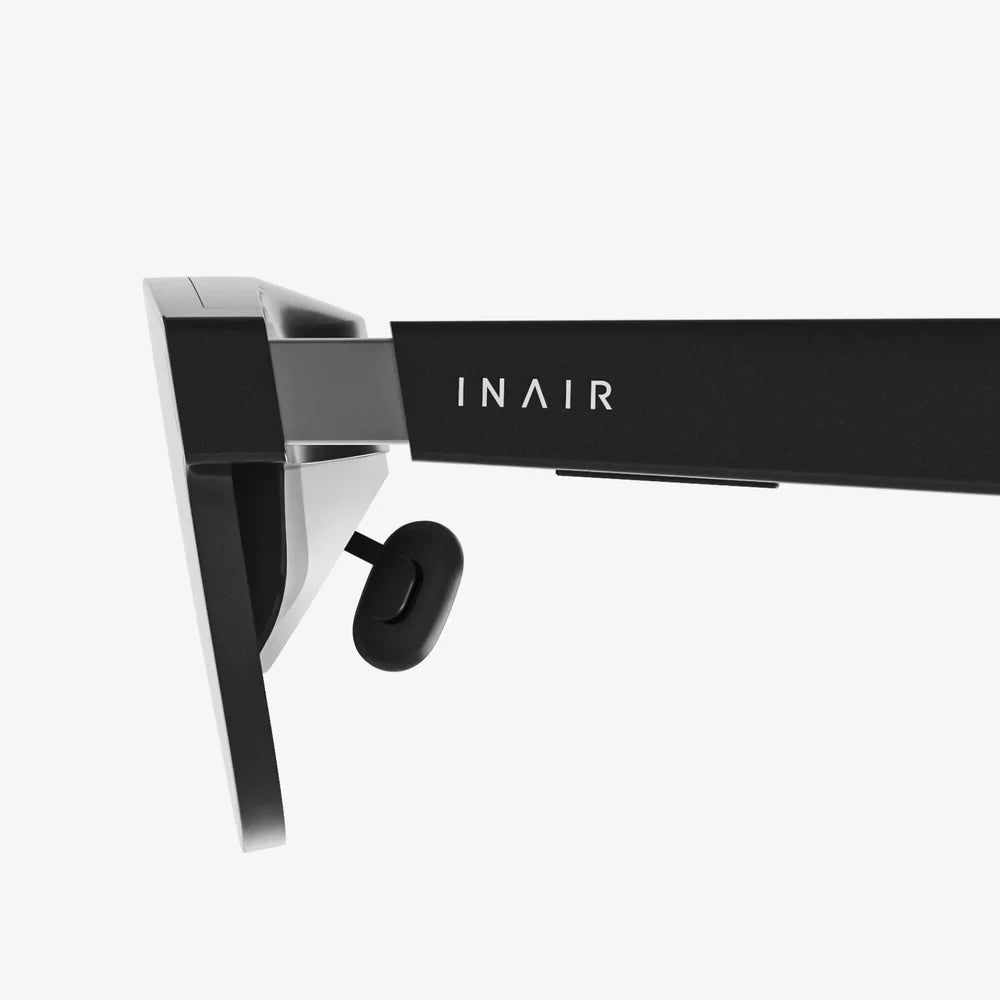
Have you ever wondered how much it truly costs to see the world through a digital lens, to overlay information onto reality, and to step into the future of computing? The price of augmented reality lenses is more than just a number on a sticker; it's a complex equation of cutting-edge technology, ambitious engineering, and market-defining strategies. Whether you're a curious consumer, a developer, or an enterprise planner, understanding the factors that drive AR lenses cost is the first step to unlocking their potential. This journey into the economics of augmented sight will reveal why these devices are priced the way they are and what you can expect to get for your investment.
The Anatomy of an AR Lens: Where the Money Goes
To understand the cost, one must first appreciate what's inside these sophisticated pieces of technology. An AR lens is not merely a piece of glass; it's a compact system that integrates displays, sensors, processors, and optics into a often stylish form factor.
The Optical Engine: The Heart of the Experience
The core of any AR lens is its optical system, responsible for projecting digital images onto the user's retina and seamlessly blending them with the real world. This is where a significant portion of the research, development, and manufacturing cost is concentrated. Advanced solutions like waveguides, which use microscopic gratings to bend light into the eye, are incredibly complex and expensive to design and produce with high yields. Alternative systems, such as birdbath optics or free-form prisms, also require precision engineering and exotic materials, all contributing to the final price tag. The field of view (FOV), a critical metric for immersion, is directly tied to cost—wider FOVs demand more advanced and expensive optical solutions.
Display Technology: Painting with Light
The micro-display is the source of the digital light. Technologies like MicroLED are favored for their high brightness and efficiency, essential for use in various lighting conditions, but they are currently challenging and costly to manufacture at small scales. Liquid Crystal on Silicon (LCoS) and other laser beam scanning systems are other options, each with its own cost-performance trade-offs. The resolution, brightness, and power efficiency of these displays are major cost drivers, as achieving high pixel density on a minuscule screen is a formidable technical challenge.
Processing Power and Sensors: The Digital Brain
For AR lenses to understand and interact with their environment, they require a suite of sensors—cameras, inertial measurement units (IMUs), depth sensors, and sometimes eye-tracking modules. This sensor data must be processed in real-time by an onboard processor or via a tether to a companion device. The computational power needed for simultaneous localization and mapping (SLAM)—the process that allows the device to understand its position in space—is substantial. Integrating a powerful, energy-efficient system-on-a-chip (SoC) into the tight confines of a lens frame adds significant expense, both in component cost and thermal management design.
Battery Life and Form Factor: The Great Compromise
Perhaps the most visible trade-off is between performance, battery life, and aesthetics. Consumers demand sleek, lightweight glasses that look like ordinary eyewear. However, high-performance components consume power, requiring larger batteries. Engineering a long-lasting battery into a small, comfortable form factor is a huge challenge that often increases development and material costs. This struggle between miniaturization and capability is a fundamental tension that directly impacts AR lenses cost.
Key Factors That Dictate the Final Price Tag
Beyond the bill of materials, numerous other elements influence how much you pay for a pair of AR lenses.
Research and Development (R&D)
The path to creating a functional and market-ready AR device is long and paved with immense R&D expenditure. Companies invest billions of dollars over many years into fundamental research, optical design, software development, and user experience studies. This massive upfront investment must be recouped over the product's lifecycle, a factor that is amortized into the price of each unit sold, especially for early-generation products.
Manufacturing Scale and Yields
Unlike mature consumer electronics, the manufacturing processes for AR-specific components, particularly waveguides, are not yet optimized for mass production. Low production volumes mean higher per-unit costs, as the fixed costs of factory setup and tooling are spread across fewer devices. Furthermore, low yields—the percentage of manufactured components that meet quality standards—can drastically increase cost. A complex waveguide with a 20% yield is effectively five times more expensive to produce than one with a 100% yield.
Software and Ecosystem
The value of AR lenses is not just in the hardware but in the software that brings them to life. The cost of developing a robust operating system, SDKs for developers, and compelling applications is enormous. A device with a rich ecosystem of apps and services can command a higher price, as the total value proposition is greater. Some business models may subsidize the hardware cost to build a larger user base for software and services.
Market Segment and Intended Use
Is the device designed for enterprise or consumer use? Enterprise-grade AR lenses are built for durability, reliability, and specific industrial use cases (e.g., complex assembly, remote assistance, training). They often feature more robust sensors, longer battery life, and specialized software, justifying a premium price point that businesses are willing to pay for a return on investment. Consumer devices, aiming for mass adoption, face intense pressure to hit lower price points, often sacrificing some performance for affordability.
Navigating the Current Market: A Price Spectrum
The market for AR lenses is diverse, with prices reflecting the target audience and capability.
The Enterprise Tier: Power at a Premium
At the high end of the spectrum, professional and enterprise-focused AR lenses can cost several thousand dollars. This price buys industrial-grade durability, a wide field of view, high-resolution displays, advanced hand and object tracking, and software tailored for logistics, manufacturing, and field service. For companies, this is a capital investment aimed at improving efficiency, reducing errors, and enabling new capabilities, and the cost is evaluated against the potential savings and productivity gains.
The Prosumer and Developer Middle Ground
Some devices target developers, enthusiasts, and "prosumers"—users who want high-end features but aren't deploying at an enterprise scale. These devices often sit in the mid-range, costing more than a premium smartphone but less than a full enterprise setup. They represent a balance of performance and cost, serving as a platform for innovation and early adoption.
The Budding Consumer Market
The holy grail for the industry is affordable, stylish AR glasses for everyday use. Early attempts in this space have often been limited, offering basic notifications and simple AR effects rather than full spatial computing. These devices are typically priced similarly to high-end sunglasses or headphones. The industry is relentlessly driving toward this segment, with the goal of eventually offering powerful capabilities at a mainstream consumer price point.
The Future of AR Lenses Cost: A Trajectory Towards Affordability
History has shown that the cost of technology tends to fall over time, and AR is expected to follow a similar path.
Technological Advancements and Innovation
Breakthroughs in optical design, such as holographic optics or novel surface relief gratings, promise to make waveguides cheaper and easier to manufacture. The maturation of MicroLED display production will drive down costs while improving performance. As components become smaller, more efficient, and more integrated, the bill of materials will gradually decrease.
Economies of Scale
As the market grows and consumer adoption increases, manufacturing will shift from low-volume, high-cost operations to high-volume, low-cost production. Higher yields and optimized supply chains will exert significant downward pressure on prices, making advanced AR technology accessible to a much broader audience.
Evolving Business Models
The ultimate cost to the user may also be transformed by new business models. It's conceivable that the hardware could be subsidized or even offered at a minimal cost in exchange for subscription-based access to cloud services, AI assistants, or exclusive content, much like smartphones are often sold with service contracts.
Ultimately, the question of AR lenses cost is a window into the very engine of technological progress. The high prices of today are a direct reflection of the monumental effort to bend physics and computation to our will, packing a supercomputer into a pair of glasses. But as with all transformative technologies, from the personal computer to the smartphone, the arc of innovation bends toward accessibility. The journey from multi-thousand-dollar enterprise gear to affordable consumer eyewear is not a matter of if, but when. Those first steps into an augmented world may come with a premium, but the view of the future they offer is, for many, already priceless.
Share:
How to Use AI for Virtual Meeting Presentations: A Complete Guide to Captivating Your Remote Audience
US Augmented Reality Market: Reshaping Reality and Redefining Industries