


- by wangfred
AR Lenses Glasses: The Invisible Computer Revolutionizing Our Daily Lives
- by wangfred
Imagine a world where information floats effortlessly before your eyes, where digital assistants appear as holograms in your living room, and your entire workspace exists not on a desk, but in the space around you. This isn't a scene from a science fiction film; it's the imminent future being built today, and it’s all happening through a pair of seemingly ordinary AR lenses glasses. This transformative technology promises to fundamentally alter our relationship with information, each other, and the world itself, moving computing from our pockets directly into our field of vision.
At its heart, Augmented Reality (AR) is the seamless integration of digital information with the user's real-world environment. Unlike Virtual Reality (VR), which creates a completely artificial digital world, AR enhances the real world by superimposing computer-generated perceptual information onto it. AR lenses glasses are the physical embodiment of this technology, a wearable computer for your face.
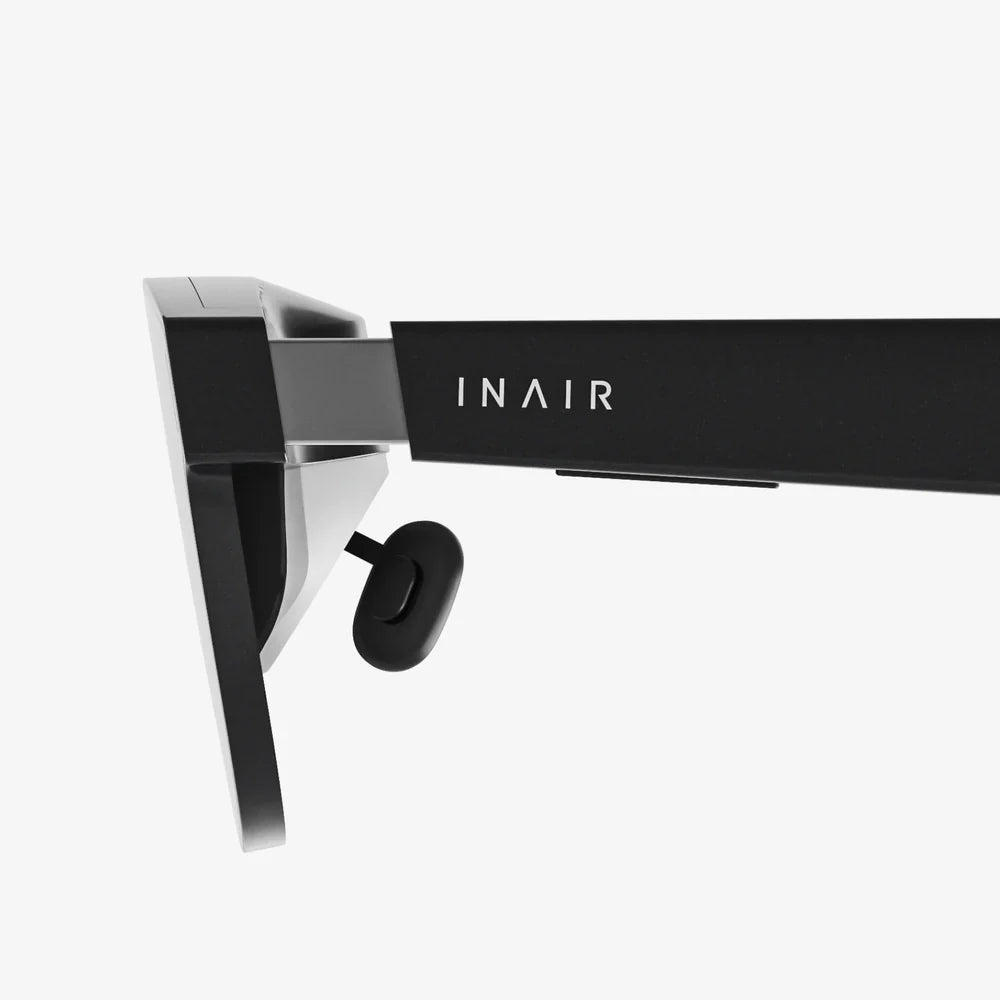
The magic of these devices lies in a sophisticated combination of hardware components working in perfect harmony. Tiny, high-resolution micro-displays, often using technologies like Waveguide or MicroLED, project images directly towards the user's eyes. These complex optical systems then bend and shape this light, overlaying the digital imagery onto the real world without obstructing the user's natural vision. This is the true marvel—maintaining a clear view of reality while enriching it with a digital layer.
This is all powered by a miniature computer, complete with a processor, memory, and wireless connectivity chips, elegantly packaged within the eyeglass frame. A suite of advanced sensors acts as the device's eyes and ears. Cameras track the environment, inertial measurement units (IMUs) understand the head's position and movement, and depth sensors map the world in three dimensions. This constant stream of data allows the device to understand its surroundings and anchor digital objects persistently in the real world, making a virtual pet sit convincingly on your actual couch or navigation arrows appear to be painted on the road ahead.
The potential applications for AR lenses glasses are as vast as human endeavor itself. We are moving beyond simple novelty apps into realms where this technology solves real-world problems and creates entirely new experiences.
In industrial and field service settings, AR glasses are becoming indispensable tools. A technician repairing a complex piece of machinery can have schematics, step-by-step instructions, and live video feeds from a remote expert superimposed directly onto the equipment they are working on. Their hands remain free, their focus remains on the task, and their efficiency and accuracy soar. Similarly, in logistics and warehousing, workers can see optimal picking routes and inventory information displayed over the shelves, drastically reducing errors and speeding up fulfillment processes.
Education will be utterly transformed. Instead of staring at a static diagram in a textbook, medical students could don a pair of AR glasses to explore a life-sized, interactive, and holographic human heart, watching it beat and understanding its anatomy from every angle. History students could walk through ancient Roman ruins and see them rebuilt to their former glory right before their eyes. This shift from abstract learning to experiential, contextual learning will deepen understanding and retention in profound ways.
The way we connect and play is also poised for a shift. Imagine a video call where the other person appears as a realistic hologram sitting across the table from you, able to share 3D models and data visualizations as naturally as passing a salt shaker. In the realm of entertainment, AR glasses could turn your entire living room into a game board for a strategy game or allow you to watch a sports game with live stats and player information floating above the action on your actual television.
For the general consumer, navigation will become intuitive. Instead of glancing down at a phone, directions will be overlaid onto the sidewalk, with arrows guiding you to your destination. For individuals with visual or hearing impairments, the technology holds incredible promise, offering real-time captioning of conversations, highlighting obstacles on a path, or amplifying specific sounds in the environment.
For all its promise, the path to ubiquitous AR glasses is fraught with significant technological and social challenges that must be overcome.
The ultimate goal is a device that is indistinguishable from regular eyewear—lightweight, comfortable, stylish, and with all-day battery life. Current technology often forces a trade-off between performance and aesthetics. Fitting powerful computing, bright displays, and a full suite of sensors into a package that people actually want to wear all day remains the industry's greatest engineering puzzle. Battery technology, in particular, needs a leap forward to support continuous, high-performance use without becoming a heavy, burdensome accessory.
Perhaps the most significant hurdle is the societal one. A device with always-on cameras and microphones worn on one's face raises profound privacy concerns for both the user and those around them. The potential for unauthorized recording and data collection is a serious issue. Navigating this will require not just clear and transparent privacy controls and ethical guidelines from manufacturers, but also a broader public conversation and potentially new social norms and laws governing the use of such pervasive technology in public spaces.
As with any transformative technology, there is a risk that AR glasses could exacerbate existing inequalities. If they become essential for work, education, and social participation, ensuring they are affordable and accessible to all, not just a privileged few, will be a critical challenge for policymakers and developers alike.
The trajectory of AR lenses glasses points toward a future where they become as commonplace and essential as the smartphone is today. We are moving toward a contextually aware, AI-powered interface that anticipates our needs and provides information before we even have to ask for it.
Future iterations will likely move beyond simple visual overlays to include other senses. Haptic feedback could allow you to "feel" a digital button press, and spatial audio will make digital sounds seem as if they are emanating from specific points in the room. The line between what is real and what is digitally augmented will become increasingly blurred, giving rise to new forms of art, storytelling, and human-computer interaction that we can only begin to imagine.
The development of a robust "digital twin" of the real world—a persistent, shared, and detailed 1:1 model of our physical environment—will allow for AR experiences that are consistent and collaborative across millions of users. This will unlock applications in urban planning, live events, and shared virtual workspaces on an unprecedented scale.
The journey of AR lenses glasses is just beginning. From their humble beginnings as clunky prototypes to the sleek, powerful devices on the horizon, they represent a fundamental shift in our technological paradigm. They promise to unlock human potential, break down barriers to information, and redefine our very reality. The world is about to get a major upgrade, and it will all be seen through a new pair of lenses.
We stand at the precipice of a new era, one where the digital and physical universes cease to be separate realms and instead coalesce into a single, enhanced experience. The promise of having a knowledgeable guide, a creative studio, and a global communication portal seamlessly integrated into your perception of reality is no longer a futuristic fantasy—it's the next chapter in human-computer interaction, waiting just beyond your field of view. The real question isn't if you'll eventually wear a pair of AR lenses glasses, but how profoundly they will reshape your world once you do.
Share:
VR Goggles Price - A Comprehensive Guide to Understanding the Cost of Virtual Reality
Console VR: The Living Room Gateway to Virtual Worlds