


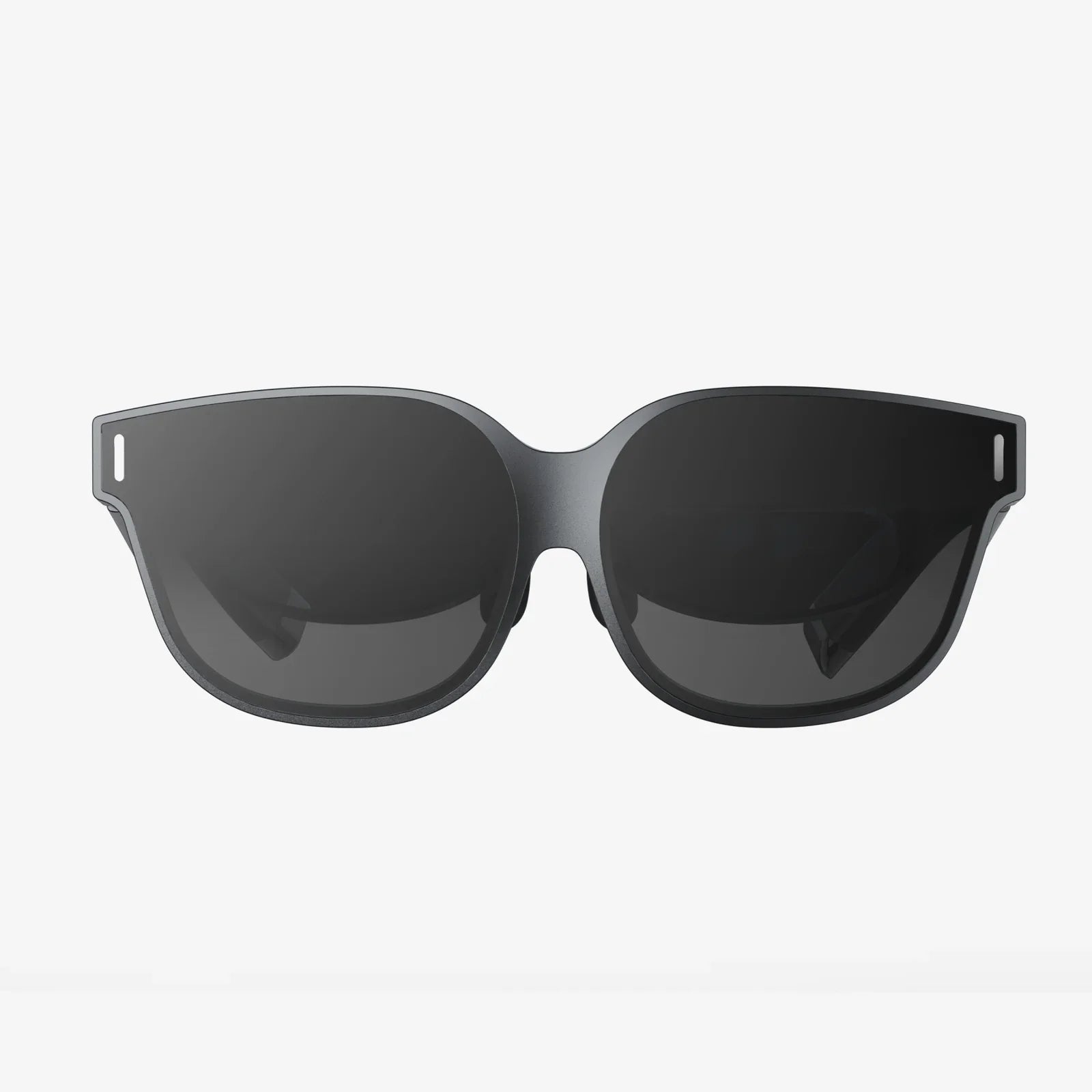
Imagine pointing your phone at a blank wall and watching a masterpiece materialize, or holding up your tablet to see a dinosaur stomp through your living room. This is no longer the stuff of science fiction; it’s the accessible reality being built by a new generation of creators known as AR makers. The power to overlay digital information onto our physical world has moved from the domain of specialized labs and massive budgets into the hands of artists, educators, marketers, and hobbyists. The barrier to entry has crumbled, inviting anyone with a spark of creativity to become an architect of the blended reality that is defining our future. The revolution is here, and it’s being coded, designed, and imagined by AR makers everywhere.
Demystifying the Magic: What Exactly is an AR Maker?
At its core, an AR maker is not a single piece of software but a concept. It refers to any platform, toolkit, or software suite that empowers individuals to create augmented reality experiences without needing to write complex code from scratch. These tools provide a user-friendly interface, often drag-and-drop, that abstracts the underlying technical complexities of computer vision, 3D rendering, and spatial tracking. An AR maker platform typically provides the essential framework to define the "when" and "where" of digital content appearance. The "when" is triggered by a recognition event, such as scanning a image target or detecting a flat surface. The "where" is the precise anchoring of a 3D model, video, or text in the real world. By handling these core functionalities, these platforms allow the creator to focus purely on the creative and experiential aspects of their project, making the technology accessible to a vastly wider audience.
The Engine Room: Core Technologies Powering AR Creation
While the interfaces are simplified, the technology working behind the scenes is incredibly sophisticated. Understanding these components helps appreciate the power an AR maker wields.
1. Tracking and Recognition
This is the foundation of any AR experience. The device must understand its environment and know where to place digital objects. Different methods are employed:
- Marker-based (Image Target) Tracking: Uses a predefined image (a QR code, poster, or specific photograph) as a anchor point. The software recognizes the unique patterns in the image and uses it to position and orient the digital content.
- Markerless (Surface) Tracking: More advanced, this uses the device's camera and sensors to detect horizontal planes (like floors and tables) or vertical planes (walls) without a predefined marker. This enables experiences where content can be placed on any suitable surface.
- Geolocation (GPS) Tracking: Anchors content to specific geographic coordinates. This is the technology behind location-based games and historical information overlays when you point your phone at a city street.
2. Rendering and Visualization
Once the location is set, the digital assets must be drawn onto the screen in a believable way. This involves realistic lighting, accurate scaling, and proper occlusion (where real-world objects pass in front of digital ones). Modern AR makers integrate powerful rendering engines that handle these calculations in real-time, ensuring the virtual object doesn’t look like a flat, poorly pasted graphic but a part of the real world.
3. Authoring Environment
This is the user-facing heart of the AR maker—the canvas where the experience is built. A good authoring environment provides a visual timeline for animations, a library of usable assets, properties panels to adjust behaviors, and a built-in simulator to preview the work without constantly deploying to a device.
The AR Maker's Toolkit: A Spectrum of Platforms
The landscape of creation tools is diverse, catering to different skill levels and project requirements.
For the Beginner: Drag-and-Drop Simplicity
These platforms are designed for absolute beginners, often operating directly within a web browser or as a simple mobile app. They emphasize ease of use, allowing users to upload an image trigger and choose a 3D model from a library or upload a video. The process is intuitive: select, place, and publish. These are perfect for quick prototypes, educational projects, or simple marketing materials where custom interactivity is not a primary concern. They prove that anyone can make AR in a matter of minutes.
For the Prosumer and Professional: Comprehensive Studios
This category represents the most powerful and popular AR makers. They are typically desktop applications that offer a much deeper feature set. They support complex scripting for interactivity (often using simplified visual scripting or common languages like C#), advanced animation sequencing, multi-target experiences, and robust cloud management for publishing and analyzing AR campaigns. They strike a crucial balance, offering profound depth for professional developers while remaining accessible enough for dedicated designers and students to learn and create impressive, professional-grade work.
For the Coder: Software Development Kits (SDKs)
While not "makers" in the strictest sense, AR SDKs are the foundational building blocks upon which many maker platforms are themselves built. They are libraries of code that developers integrate into native mobile apps using languages like Java, Swift, or C++. They offer the maximum possible power, flexibility, and performance, allowing for completely custom AR applications tailored to specific industrial, medical, or enterprise needs. Using an SDK is a full-on software development process, but it represents the unlimited ceiling of what is possible in augmented reality.
The Creative Process: From Idea to Immersion
Building an AR experience follows a structured workflow, regardless of the chosen tool.
- Conceptualization: Defining the goal. Is it to educate, entertain, market, or instruct? Storyboarding the user's journey is crucial here.
- Asset Creation & Curation: Gathering the digital components. This includes creating or sourcing 3D models, animations, videos, audio files, and any 2D image targets needed for triggering.
- Authoring: This is the core building phase within the AR maker platform. It involves importing assets, setting up triggers, positioning content, programming interactions (if any), and defining animations.
- Testing & Iteration: Relentlessly testing the experience on target devices in various real-world environments is non-negotiable. Lighting, surface textures, and device performance can drastically affect the experience.
- Publishing & Distribution: How will users access it? Many makers allow publishing to a cloud, generating a simple URL or QR code. Others require building a standalone app for distribution through app stores.
Transforming Industries: The Impact of Democratized AR
The proliferation of accessible AR makers is not just a technical novelty; it's driving tangible change across sectors.
Retail and E-Commerce
Shopping is being redefined. Customers can now point their phones at a product in a catalog or at an empty space in their home to see a life-size, 3D rendering of a piece of furniture, a appliance, or even a pair of sneakers. This "try before you buy" digital capability drastically reduces purchase uncertainty and lowers return rates, creating a more confident and engaging customer journey.
Education and Training
Textbooks become interactive portals. Students can dissect a frog, explore the solar system, or walk through an ancient Roman settlement from their classroom or home. Complex mechanical procedures can be overlayed onto physical equipment, providing step-by-step visual guidance for technicians and surgeons, reducing errors and improving learning retention.
Marketing and Advertising
Static print ads and posters are transformed into dynamic video experiences. A movie poster can come alive with a trailer. A drink can label can trigger a immersive brand story. AR campaigns create memorable, interactive moments that foster deeper brand engagement and generate valuable social shares, cutting through the noise of traditional advertising.
Art and Museum Exhibits
Artists are using AR to create dynamic public installations that exist only when viewed through a screen, adding a digital layer of storytelling to physical spaces. Museums are using it to resurrect extinct animals, reconstruct ruins, and provide additional context and animations alongside artifacts, making history and art more accessible and captivating for all ages.
Gazing into the Crystal Ball: The Future of AR Creation
The evolution of AR maker tools is accelerating, driven by advancements in hardware and AI. We are moving towards a future where creation is even more intuitive and immersive.
- AI-Powered Generation: Imagine describing an experience in natural language: "Create a cartoon dragon that sits on my shoulder and breathes confetti." AI could generate the 3D model, rig it for animation, and code the behavior automatically, dramatically speeding up the asset creation bottleneck.
- No-Code Interactivity: Tools will move beyond simple animations to offer pre-built, customizable blocks of complex logic for game mechanics, data visualization, and multi-user collaboration, all without writing a single line of code.
- Cross-Platform Publishing: The headache of building separate experiences for iOS and Android will fade. AR makers will increasingly offer single-button publishing to all major platforms and AR glasses, ensuring creators reach the widest possible audience.
- AR Glasses Integration: As consumer AR glasses become prevalent, AR makers will evolve to create experiences for this hands-free, always-available format, shifting from screen-based augmentation to true spatial computing creation.
The door to a layered world is wide open, waiting for you to step through. The tools are on the web, many of them free to start, inviting you to experiment and play. That business idea you have, that educational concept you want to bring to life, that piece of interactive art you envision—it no longer requires a permission slip from a team of engineers. You have the invitation. You have the potential. You can be the one to augment reality, to leave a digital mark on the physical world, and to shape how we all see, learn, and interact with everything around us. The only question that remains is not if you can do it, but what you will create first.
Share:
Best Virtual Reality Headset to Watch Movies: Your Ultimate Guide to Cinematic Immersion
Best VR Companies Shaping Our Digital Future