


- by wangfred
AR Marketplace: The Ultimate Guide to the Future of Shopping
- by wangfred
Imagine trying on a new watch, seeing how a sofa fits in your living room, or test-driving a virtual car before you ever click ‘add to cart.’ This is no longer the stuff of science fiction; it’s the rapidly evolving, immersive reality of the AR marketplace, a technological revolution that is fundamentally reshaping the landscape of retail and consumer engagement. This convergence of the digital and physical worlds is creating a shopping experience that is not only more informative and convenient but also profoundly more personal and engaging, promising to solve some of the most persistent challenges of online commerce.
At its core, an AR marketplace is an e-commerce platform or environment that integrates augmented reality technology to enhance the online shopping journey. Unlike virtual reality, which creates a completely artificial digital world, augmented reality overlays computer-generated imagery, information, and interactive elements onto the user's real-world view, typically through the camera on a smartphone, tablet, or AR glasses.
This technology transforms a static product image into a dynamic, scalable, and interactive object that a user can project into their immediate surroundings. It bridges the critical 'imagination gap' that has long plagued online shopping. Customers no longer have to guess if a new coffee table will match their décor or if a pair of sunglasses will suit their face shape; they can see it for themselves, in real-time and in context, with stunning accuracy.
The journey of AR in retail began with simple, often novelty-focused applications. Early filters and games introduced the masses to the concept of digital overlays but did little to demonstrate serious commercial utility. However, as smartphone cameras and processing power advanced exponentially, so did the potential for more sophisticated and practical applications.
The shift occurred when forward-thinking retailers and technology developers began to see AR not as a marketing gimmick, but as a powerful tool to solve genuine customer pain points. The inability to visualize size, scale, and fit was a primary driver of product returns and abandoned carts. The AR marketplace emerged as the definitive solution, turning abstract product data into tangible, experiential understanding. This evolution has been accelerated by improved 3D modeling, faster mobile networks, and a growing consumer appetite for immersive digital experiences.
The magic of placing a virtual object in your room seems instantaneous, but it is powered by a complex and sophisticated technological stack working in harmony.
It begins with high-fidelity 3D product models. These are not simple images but detailed digital twins of physical products, created using photogrammetry, 3D scanning, or professional modeling software. These models contain information about dimensions, materials, textures, and reflectivity to ensure they look realistic in different lighting conditions.
The next critical component is the AR engine, often powered by advanced algorithms and machine learning. This software uses the device's camera to understand the environment. It identifies flat surfaces like floors and tables, detects edges, and measures depth and lighting. This process, known as simultaneous localization and mapping (SLAM), allows the digital model to be anchored securely and realistically in the physical space.
Finally, the user interface (UI) and experience (UX) design are paramount. The best AR marketplace integrations are intuitive, responsive, and provide clear instructions, ensuring the technology enhances the shopping journey rather than complicating it.
The applications for an AR marketplace are vast and span nearly every retail category, each addressing specific consumer needs.
One of the most popular uses is in fashion. Shoppers can virtually try on clothes, shoes, accessories, and makeup. Using their device's camera, they can see how a garment fits and moves on their body, experiment with different sizes, and mix and match items from a digital wardrobe. This application drastically reduces sizing uncertainty and the hassle of returns, building greater confidence in online apparel purchases.
This is arguably the category where AR has had the most immediate and dramatic impact. Customers can place true-to-scale 3D models of sofas, lamps, rugs, and art directly into their living spaces. They can walk around the item, view it from different angles, and ensure it fits both the physical dimensions and the aesthetic of the room. This eliminates the dreaded disappointment of a product that looked perfect online but feels all wrong in person.
Car manufacturers allow potential buyers to project a life-size model of a new vehicle into their driveway, explore different color options, and even peek inside the virtual interior. Similarly, industrial suppliers use AR to allow engineers to visualize complex machinery or parts within a factory layout before procurement, ensuring compatibility and optimizing space.
The adoption of an AR marketplace is not driven by hype alone; it delivers measurable value to both sides of the transaction.
Shoppers gain an unprecedented level of confidence in their purchasing decisions. The anxiety of the unknown is replaced by the certainty of seeing a product in their own environment. This leads to greater satisfaction and a deeper emotional connection to the products they are considering. Furthermore, AR turns shopping from a transactional chore into an engaging and entertaining experience, increasing enjoyment and brand recall.
For retailers, the business case is compelling. Studies consistently show that products with AR experiences see a significant lift in conversion rates and a dramatic reduction in return rates. This directly improves the bottom line. Additionally, by offering a cutting-edge experience, brands differentiate themselves, increase customer engagement, and foster stronger brand loyalty. The data generated from user interactions with AR models is also incredibly valuable, providing insights into consumer preferences and behavior that were previously impossible to gather.
Despite its potential, the widespread implementation of the AR marketplace faces several hurdles.
The cost and effort of creating high-quality 3D content for entire product catalogs can be prohibitive for some businesses, especially smaller ones. There is also a technical barrier; the user experience must be seamless across a fragmented device ecosystem with varying capabilities. Furthermore, while the technology is advancing quickly, achieving perfect photorealism and physics in all environments remains a challenge. Finally, there is a need for consumer education to move AR from a 'cool feature' to a standard and expected part of the online shopping toolkit.
The current state of AR commerce is just the beginning. The future points toward even more seamless and integrated experiences.
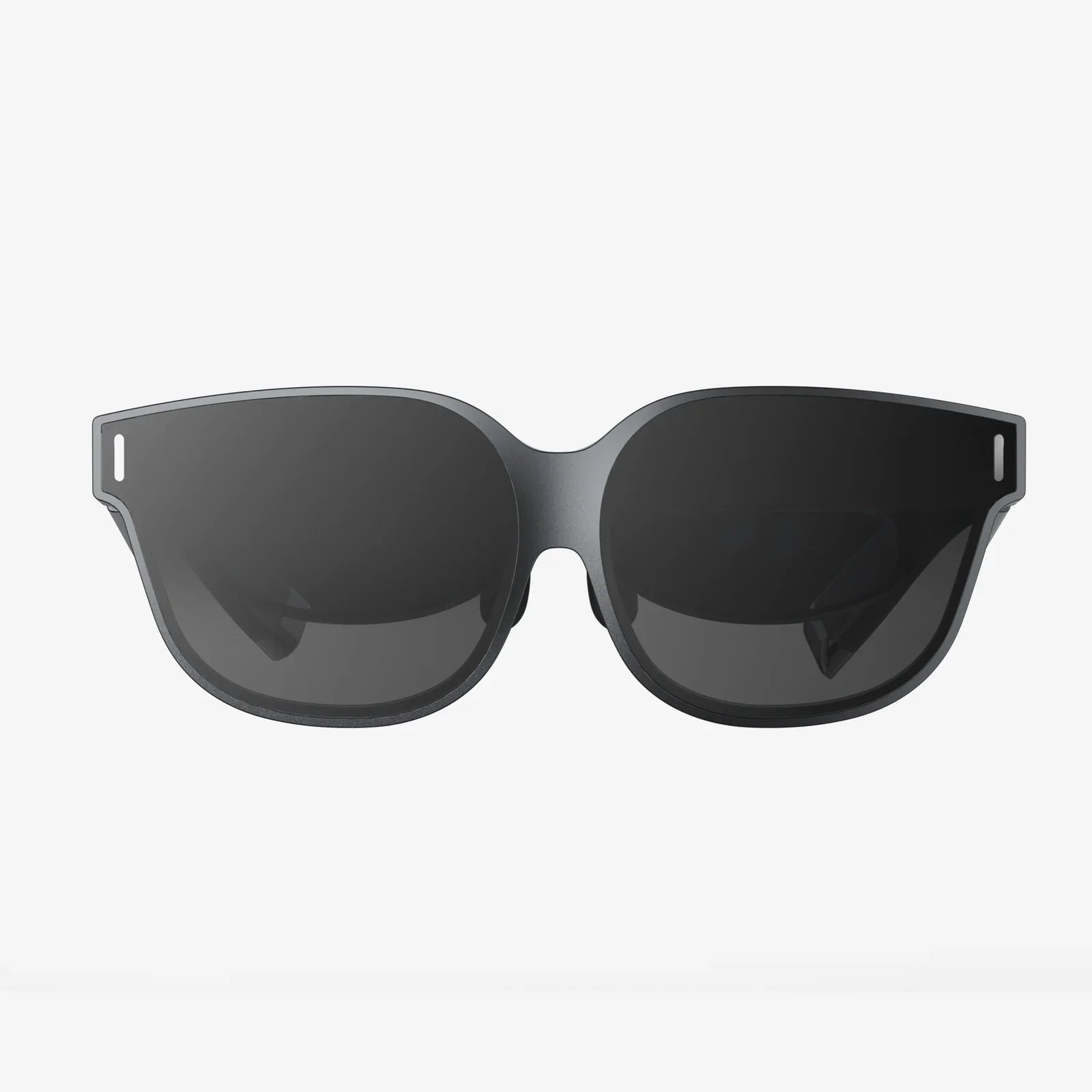
The advent of lightweight, stylish AR glasses will eventually free the experience from the handheld screen, allowing for hands-free shopping and persistent digital overlays in the physical world. The integration of AI will enable hyper-personalized recommendations within these AR environments. Imagine walking through your home, and your AR device suggests a new lamp that perfectly complements your style and fits the empty space on your desk, complete with a virtual preview.
We are also moving toward the concept of the 'metaverse,' a persistent network of interconnected virtual spaces. In this future, AR marketplaces could exist as digital storefronts accessible from anywhere, where your digital avatar can try on clothes for your physical body or furnish a virtual home that mirrors your real one.
For businesses looking to explore the AR marketplace, a thoughtful approach is key. Start with a pilot program focused on products where visualization has the highest impact—typically furniture, décor, apparel, or high-consideration items. Prioritize creating a frictionless user experience; the technology should feel like a natural helper, not a complex obstacle. Invest in the highest-quality 3D assets you can afford, as realism is the cornerstone of consumer trust. Most importantly, integrate the AR experience directly into the existing product page and purchase funnel, making it an essential step in the decision-making process rather than a isolated novelty.
The screen you're reading this on is about to become a window—a portal to a world where every digital product has a physical presence and every shopping decision is informed by experience, not just expectation. The AR marketplace is unlocking a new dimension of commerce, one immersive interaction at a time, and it’s an evolution every shopper and retailer needs to see to believe.