


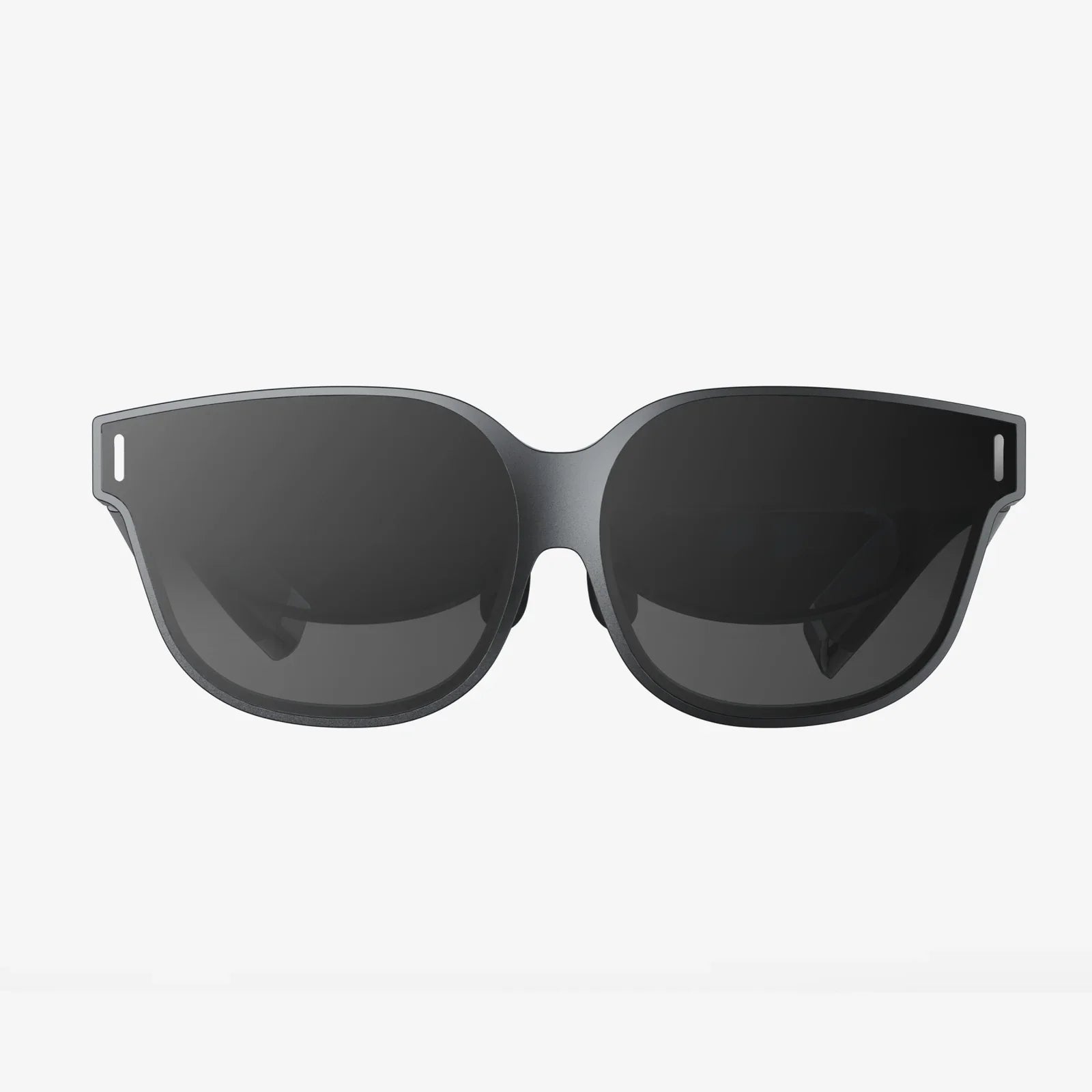
Imagine a world where digital information doesn’t just live on a screen in your hand but is seamlessly woven into the fabric of your reality. Where instructions for assembling a complex machine float in your field of view, a navigational path is painted onto the street before you, and a historical figure stands beside you, recounting tales of the very ground you stand on. This is not a distant science fiction fantasy; it is the imminent future being unlocked today by a revolutionary class of wearable technology: AR mixed reality glasses. This technology promises to fundamentally alter our perception of and interaction with the world, merging the boundless potential of the digital realm with the tangible richness of the physical one in ways we are only beginning to comprehend.
The Spectrum of Reality: Defining the Experience
To understand mixed reality glasses, one must first navigate the often-conflated terms that describe this new visual computing landscape. It exists on a spectrum, often referred to as the reality-virtuality continuum.
On one end, we have Augmented Reality (AR). This technology superimposes digital elements—images, text, data—onto the user’s view of the real world. Think of smartphone filters that place cartoon ears on your head or apps that show how a new piece of furniture would look in your living room. The real world remains the primary stage, with digital content layered on top as an enhancement.
On the far opposite end is Virtual Reality (VR). VR is an immersive, fully digital experience that completely occludes the user’s view of the physical world. By wearing a headset, you are transported to a computer-generated environment, whether it's a game world, a simulated training ground, or a virtual meeting space.
Occupying the crucial middle ground is Mixed Reality (MR). This is where AR mixed reality glasses truly reside. MR doesn’t just layer digital content onto the real world; it enables that digital content to interact with it intelligently and spatially. A virtual character in MR can walk behind your real-world sofa and disappear from view. A digital tennis ball can bounce off your actual wall and rebound back to you. This interaction requires a sophisticated understanding of the environment, achieved through a suite of advanced sensors, cameras, and algorithms. MR is the seamless blending and coexistence of real and virtual worlds where both can react to each other.
The Technological Marvel Within: How They Work
The magic of AR mixed reality glasses is enabled by a complex symphony of hardware and software components working in perfect harmony.
Sensing the World: Cameras and Sensors
These devices are the eyes of the system. An array of cameras performs several critical functions:
- Depth Sensing: Using technologies like structured light or time-of-flight sensors, the glasses map the environment in three dimensions, calculating the distance to every surface. This creates a precise depth map of the room.
- Spatial Mapping: This process uses the depth data to construct a understanding of the environment’s geometry—where the floors, walls, ceilings, and key objects are located. This digital twin of the physical space allows virtual objects to be placed and occluded correctly.
- Inside-Out Tracking: Unlike early VR systems that required external sensors, modern MR glasses use cameras to track their own position and orientation within the mapped space. This is known as inside-out tracking, and it grants the user complete freedom of movement.
- Hand Tracking: Specialized cameras focus on the user’s hands, translating their gestures into commands. This allows for intuitive interaction without the need for physical controllers, making the digital interface feel like a natural extension of the user’s body.
Displaying the Digital: Waveguides and Optical Engines
Projecting a bright, clear digital image onto transparent lenses that also allow the real world to be seen is the central optical challenge. The predominant solution is waveguide technology. Tiny projectors, or optical engines, shoot light containing the digital image into a transparent glass or plastic lens. This light bounces internally through the lens via a process called total internal reflection until it is directed toward the user’s eye by a sophisticated diffraction grating. The result is a crisp digital hologram that appears to exist in the world at a comfortable focal distance, overlaying reality without blocking it.
The Brain: Processing Power and Software
All the data from the sensors is processed in real-time by a powerful onboard computer or, in some designs, streamed from a connected processing unit. This requires immense computational power to handle simultaneous spatial mapping, object recognition, and rendering complex 3D graphics. The software stack, including the operating system and development platforms, provides the tools and frameworks for creators to build experiences that understand and respect the physics of the user’s environment.
Transforming Industries: The Practical Applications
The potential of AR mixed reality glasses extends far beyond entertainment, poised to revolutionize how we work, learn, and connect.
Enterprise and Industrial Design
This is perhaps the most immediate and impactful arena. Engineers and designers can visualize and interact with 3D prototypes at full scale before a single physical part is manufactured, drastically reducing development time and cost. On factory floors, technicians can receive hands-free, step-by-step instructions and diagrams overlaid directly on the machinery they are repairing, improving accuracy and efficiency. Architects and construction managers can walk through a building’s digital blueprint superimposed onto the physical construction site, identifying potential clashes and issues long before they become costly problems.
Healthcare and Medicine
In healthcare, the implications are profound. Surgeons can have vital patient data, such as MRI scans or ultrasound imagery, projected directly into their field of view during procedures, eliminating the need to look away at a monitor. This can enhance precision and safety. Medical students can practice complex procedures on detailed anatomical holograms, gaining valuable experience in a risk-free environment. Furthermore, these tools can aid in physical therapy by guiding patients through movements with perfect digital form.
Education and Remote Collaboration
Education can evolve from passive learning to active exploration. Instead of reading about ancient Rome, students can walk through a digitally reconstructed Forum Romanum. Chemistry students can manipulate complex molecular structures with their hands. Perhaps most powerfully, MR glasses enable a new form of remote collaboration often called "telepresence." A remote expert can see what a local technician sees and can draw arrows, circles, or instructions directly into their reality, as if they were standing side-by-side. This dissolves geographical barriers for knowledge sharing and problem-solving.
Everyday Life and Social Connection
While the enterprise market leads the way, the eventual consumer applications are staggering. Navigation will become intuitive, with arrows and directions laid onto the street. Language barriers could crumble as real-time translation is displayed over street signs and conversations. Social interaction could be redefined, allowing friends and families separated by distance to share a virtual space as photorealistic holograms, playing games or watching movies together as if they were in the same room.
Navigating the Obstacles: Challenges on the Horizon
For all its promise, the path to ubiquitous AR mixed reality glasses is fraught with significant technological and social hurdles that must be overcome.
The Hardware Conundrum: Form Factor and Battery Life
The ultimate goal is a device that is as socially acceptable and comfortable to wear as a pair of everyday eyeglasses. Current technology, while advancing rapidly, still often results in devices that are too bulky, too heavy, or have too limited a field of view for all-day use. The "holy grail" of transparency, brightness, and compactness remains a formidable engineering challenge. Closely tied to this is the issue of battery life. The immense processing power required for high-fidelity MR experiences is a significant drain, and fitting a battery capable of all-day use into a glasses-like form factor is a major obstacle.
The Software Imperative: The Killer App and Ecosystem
Every revolutionary platform needs its "killer app"—the compelling experience that drives mass adoption. For MR, this might be a revolutionary social platform, an indispensable productivity tool, or a genre-defining game. Furthermore, a robust ecosystem of developers creating a wide array of useful and engaging applications is essential. Building this ecosystem takes time and requires clear tools and a large enough user base to be financially viable for creators.
The Social and Ethical Dimension: Privacy and the Digital Divide
Perhaps the most profound challenges are not technical but social. Devices with always-on cameras and microphones scanning our environments raise serious questions about privacy, data ownership, and surveillance. The concept of "attention theft" also emerges—if everyone is constantly surrounded by personalized digital stimuli, will we lose our shared connection to the immediate physical world and the people in it? Furthermore, there is a risk of a new digital divide, where access to this enhancing technology becomes a marker of socio-economic privilege.
We are standing at the precipice of a new era of computing, one that promises to move us beyond the confines of the screen and into a world where our digital and physical lives are inextricably and intelligently linked. AR mixed reality glasses are the key to this transformation, offering a glimpse into a future where information is contextual, assistance is ambient, and connection is spatial. The journey from novel gadget to indispensable tool is underway, and its destination will redefine what it means to see, to learn, to work, and to be human in a technologically augmented world.
Share:
Image to 3D Tool: Transforming Flat Photos into Immersive Digital Worlds
Interactive Virtual Experience: The Next Frontier in Human Connection and Digital Engagement