


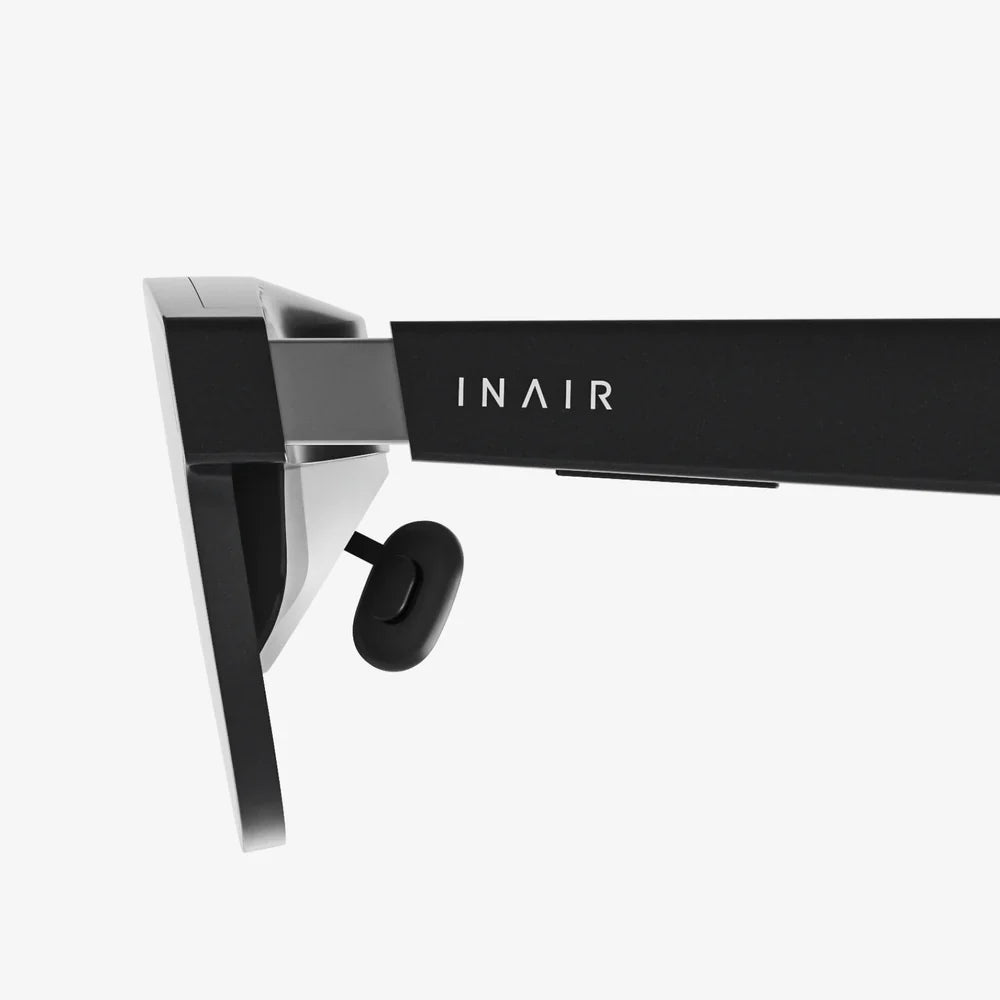
Imagine a world where digital information doesn’t live on a screen in your hand but is seamlessly woven into the fabric of your everyday life, where your surroundings become an interactive canvas for work, play, and connection. This is no longer the stuff of science fiction; it is the rapidly evolving reality being built today in the fields of Augmented Reality (AR) and Mixed Reality (MR). The pace of innovation is staggering, with new developments emerging weekly that push the boundaries of what’s possible. Keeping up with AR MR news today is not just about tracking technology; it’s about glimpsing the future of human-computer interaction.
The Foundational Divide: Understanding AR vs. MR
While often used interchangeably, AR and MR represent distinct points on a spectrum of immersive technology. Grasping this difference is key to understanding the news shaping this sector.
Augmented Reality (AR) overlays digital content—images, text, animations—onto the user’s real-world environment. This is most commonly experienced through smartphone cameras, with filters and interactive game elements being prime examples. The digital objects coexist with the real world but do not interact with it in a spatially aware way; they are essentially superimposed.
Mixed Reality (MR) is the more advanced evolution of AR. It not only overlays digital content but anchors it to and allows interaction with the physical world. In a true MR experience, a digital robot can hide behind your real sofa, a virtual screen can be pinned to your wall, and your hands can manipulate a holographic engine model. This requires sophisticated sensors, cameras, and algorithms to continuously map and understand the environment, a technology often referred to as spatial computing.
The line between high-fidelity AR and true MR is constantly blurring, which is why the combined term "AR MR" is so prevalent in today's news, representing the entire journey from simple overlays to a deeply integrated digital-physical fusion.
Headlines from the Frontlines: Key AR MR News Today
The current landscape is buzzing with activity across several critical fronts. The news cycle is dominated by a few major themes.
The Enterprise Arena: Where MR is Proving Its Value
While consumer applications capture the imagination, the most significant and tangible adoption of AR MR is happening within enterprises. Today's headlines are filled with success stories across industries:
- Manufacturing & Design: Engineers and designers are using MR headsets to visualize and interact with full-scale 3D prototypes before a single physical part is made. They can walk around a virtual model of a new jet engine, inspecting components and running simulations, which dramatically reduces development time and costs.
- Field Service & Repair: Technicians repairing complex machinery, from wind turbines to medical imaging devices, can receive remote expert guidance through AR smart glasses. An expert thousands of miles away can see what the technician sees and annotate the real world with arrows, diagrams, and instructions, drastically improving first-time fix rates and reducing travel expenses.
- Healthcare & Surgery: Surgeons are overlaying patient scan data (like CT or MRI) directly onto their field of view during procedures, effectively giving them "X-ray vision" to see critical structures beneath the surface. Medical students are also using MR for immersive anatomy lessons, dissecting virtual cadavers that are layered onto mannequins or even their own bodies.
- Retail & Logistics: Warehouse workers equipped with AR glasses are guided on the most efficient picking routes with digital arrows overlaying their path, and item information is displayed instantly, reducing errors and speeding up fulfillment. In retail, customers can use AR on their phones to see how furniture would look in their home or how clothes might fit before buying.
This enterprise focus is a clear indicator that the technology has moved beyond a novelty and is delivering measurable Return on Investment (ROI), fueling further investment and innovation.
The Consumer Conundrum: The Quest for the Killer App
The consumer side of AR MR news today is a story of immense potential searching for its defining moment. The success of a major mobile AR game several years ago proved the mass-market appeal of the concept. However, the transition to all-day, wearable AR glasses for the average person remains the industry's holy grail.
The challenges are significant:
- Form Factor: For consumers to adopt wearable AR/MR, the devices need to be socially acceptable—meaning they must look like regular glasses. Current technology struggles to pack the necessary processing power, battery life, and display systems into a slim, lightweight form.
- Battery Life: High-end MR headsets are power-hungry, often limiting usage to a few hours. All-day computing requires a breakthrough in battery efficiency.
- The "Killer App": Beyond gaming and niche applications, what is the compelling, everyday use case that will convince millions to wear a computer on their face? This remains an open question that every tech giant is trying to answer.
Despite these hurdles, progress is relentless. News often highlights advancements in micro-LED displays, waveguide optics, and ultra-low-power chips that are slowly but surely paving the way for the sleek, consumer-ready AR glasses of tomorrow.
The AI Catalyst: Supercharging Spatial Computing
Perhaps the most transformative development in recent AR MR news is the powerful convergence with Artificial Intelligence, particularly generative AI and computer vision. AI is the missing brain that makes spatial computing truly intelligent.
- Scene Understanding: AI algorithms can now parse a room in real-time, identifying objects (a chair, a table, a monitor), understanding their properties, and determining spatial relationships. This allows digital content to interact with the physical world in believable ways.
- Gesture and Gaze Control: Advanced AI enables more natural user interfaces. Instead of controllers, users can manipulate holograms with precise hand gestures. Eye-tracking can tell where a user is looking, allowing for intuitive selection and context-aware menus.
- Generative Content: This is the true game-changer. Imagine using voice commands to ask your AR glasses, "Create a 3D model of a dragon fighting a knight on my dining table." Generative AI models could create this scene on the fly, crafting a unique and persistent MR experience. This capability turns every user into a creator and could finally unlock the "killer app" for consumer AR MR.
The fusion of AI and AR MR is creating a new paradigm of contextual and ambient computing, where technology understands our environment and intentions to deliver information and experiences precisely when and where we need them.
Beyond the Hype: The Challenges and Considerations
As the technology advances, so do the important discussions about its implications. Responsible AR MR news today must cover not just the possibilities but also the pitfalls.
- Privacy and Security: Always-on cameras and microphones mapping our homes and workplaces raise profound privacy questions. The data collected—what we look at, how we live, who we interact with—is incredibly sensitive. Robust data ownership policies and on-device processing will be critical for consumer trust.
- Digital Divide and Accessibility: Will this new reality become a luxury, creating a chasm between those who can afford it and those who cannot? Furthermore, designing interfaces that are accessible to people with different abilities is a paramount challenge that must be addressed from the outset.
- Social and Psychological Impact: How will perpetual digital overlays affect our perception of reality, our attention spans, and our social interactions? The potential for new forms of addiction, distraction, and misinformation is real and requires careful study and ethical design frameworks.
The Road Ahead: What to Watch For
The trajectory of AR MR is set for exponential growth. To stay informed, watch for news on these key areas in the coming months and years:
- The Form Factor Revolution: Breakthroughs in optics and miniaturization that will lead to glasses we'll actually want to wear all day.
- The Rise of the Spatial Web: The development of open standards and platforms that will allow digital content to be persistently anchored to locations in the real world, creating a shared AR layer over our cities.
- AI Integration Deepens: More sophisticated and personal AI agents that live in our AR glasses, acting as a guide and concierge to both the digital and physical worlds.
- Regulation and Standards: How governments and international bodies move to create rules of the road for this new medium, particularly concerning privacy and safety.
The narrative of AR MR is still being written. It’s a story unfolding in research labs, on factory floors, in operating rooms, and in the imaginations of developers worldwide. It’s a convergence of the physical and digital that promises to redefine our reality in ways we are only beginning to comprehend. This isn't just a technological shift; it's a fundamental change in how we will work, learn, play, and connect. The future is not something we will watch on a screen; it is something we will step into and help create.
Share:
How to Use Android Phone as VR Headset for PC: The Ultimate Guide to Immersive Gaming on a Budget
Why Does a VR Headset Need Storage: The Unseen Engine of Immersion