


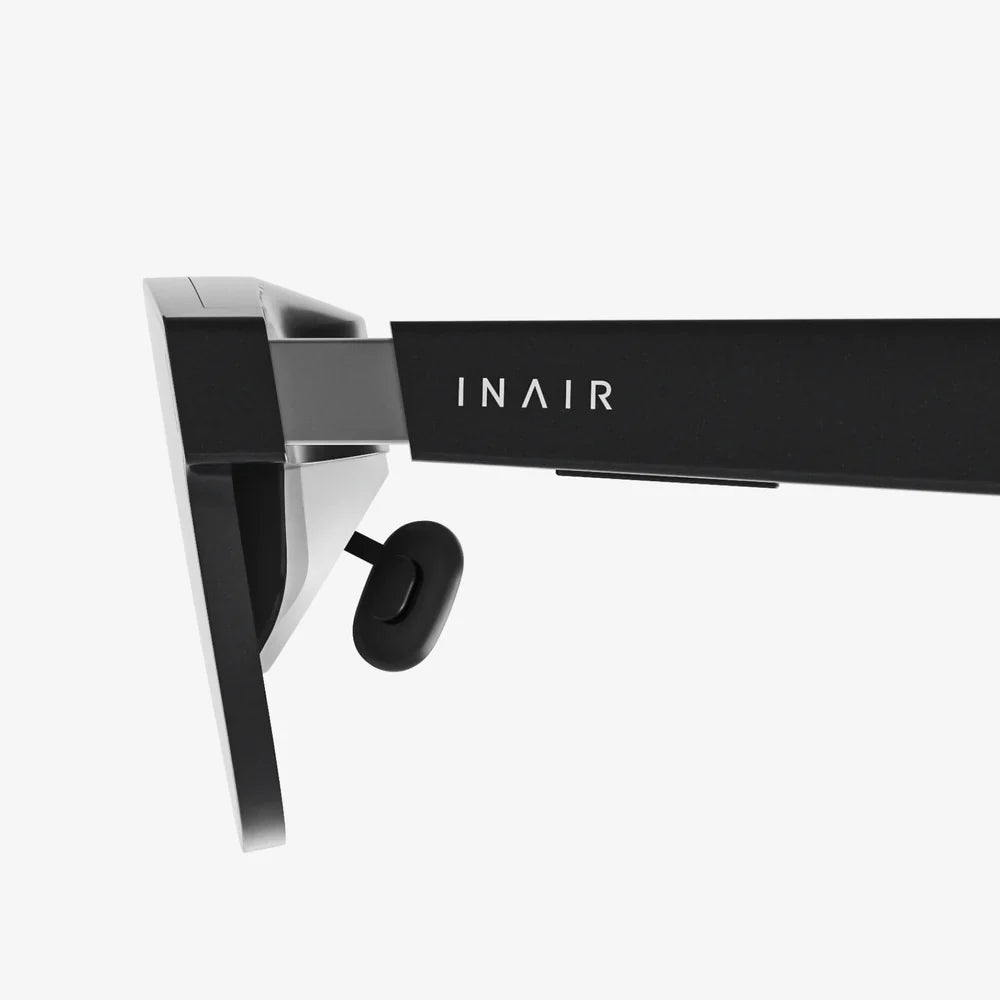
Imagine a world where your digital life doesn’t end at the edge of a screen. Where information, entertainment, and connection are woven into the very fabric of your physical environment, accessible with a glance, a gesture, or a spoken word. This is no longer the realm of science fiction; it is the burgeoning reality being built today by a new class of immersive technology. At the forefront of this revolution are AR MR series devices, sophisticated systems that are not just changing how we interact with technology, but how we perceive and interact with reality itself. The line between what is real and what is digitally rendered is blurring, and these devices are the paintbrushes with which we are redrawing it.
The Spectrum of Immersion: Defining AR and MR
To understand the significance of AR MR series devices, one must first navigate the often-conflated terminology. The landscape exists on a spectrum, often referred to as the reality-virtuality continuum.
Augmented Reality (AR) overlays digital information—be it images, text, or 3D models—onto the user's view of the real world. The key differentiator is that the real world remains the primary focus, with digital elements serving as a supplementary layer. This is most commonly experienced today through smartphone cameras, which can project navigation arrows onto a street view or show how a new piece of furniture might look in your living room.
Mixed Reality (MR), however, represents a more advanced and immersive evolution. MR doesn't just overlay digital content; it anchors it to the physical world, allowing for real-time interaction between the user, the digital objects, and the physical environment. A digital character in MR can walk behind your real-world sofa, knowing it's there. You can manipulate a holographic engine model with your hands, and it will respond as if it has physical presence. This requires a profound understanding of the user's environment, achieved through advanced sensors, cameras, and spatial mapping technologies that are hallmarks of modern AR MR series devices.
The term "AR MR series devices" itself has become an industry shorthand for this new generation of head-worn computers that are capable of delivering experiences across this entire spectrum, from simple AR annotations to deeply immersive MR simulations.
Under the Hood: The Technological Marvels Powering the Experience
The magic of these devices is not magic at all, but the result of staggering engineering innovation. Several core technologies converge to create a seamless mixed reality experience.
Spatial Mapping and Scene Understanding
This is the foundational technology. Using a combination of depth-sensing cameras, infrared projectors, and inertial measurement units (IMUs), the device continuously scans its surroundings. It creates a precise, real-time 3D map of the room, identifying floors, walls, ceilings, and objects. This digital twin of the environment allows virtual objects to understand and interact with the physical space, enabling them to occlude correctly (e.g., a virtual ball rolling under a real table) and remain persistently in place.
Advanced Display Systems
There are two primary display methodologies. Optical See-Through uses waveguides or holographic lenses to project light representing digital imagery directly into the user's eyes, while still allowing them to see the real world naturally through the lenses. Video See-Through uses outward-facing cameras to capture the real world, digitally composite the virtual elements onto the video feed, and present the combined image on internal displays. Each method has trade-offs in terms of resolution, field of view, and latency, but both aim for the same goal: a perfect blend of real and virtual.
Precise Tracking and Input
For interaction to feel natural, tracking must be sub-millimeter precise and low-latency. Inside-out tracking, where sensors on the headset itself track its position in space without external beacons, is now standard. For input, modern systems employ a combination of:
- Hand Tracking: Cameras recognize and model the user's hands, allowing for direct manipulation of holograms through gestures like pinching, dragging, and pushing.
- Eye Tracking: This enables foveated rendering (dynamically allocating processing power to where the user is looking, drastically improving performance) and intuitive menu navigation.
- Voice Commands: Providing a hands-free way to issue commands and input data.
- Controllers: Optional controllers can provide haptic feedback and precise pointer control for specific applications.
Computational Power and Connectivity
Processing the immense data from sensors and rendering complex 3D graphics in real-time requires immense computational power. High-end devices often leverage powerful onboard processors, while others may tether to or stream from a powerful external computer. The advent of 5G and edge computing promises to offload this processing to the cloud, enabling thinner, lighter devices without sacrificing capability.
Transforming Industries: The Practical Applications of AR MR
While consumer applications like gaming are often the most visible, the most profound impact of AR MR series devices is happening in enterprise and professional fields, where they are solving real-world problems and delivering tangible ROI.
Design, Manufacturing, and Prototyping
Engineers and designers are using MR to visualize and interact with 3D models at full scale before a single physical part is manufactured. Teams spread across the globe can collaborate within the same holographic model, making design changes in real-time. On the factory floor, assembly line workers receive holographic instructions overlaid directly onto the machinery they are assembling, reducing errors and training time dramatically.
Healthcare and Medicine
The applications in medicine are nothing short of revolutionary. Surgeons use MR to visualize complex patient anatomy, such as CT scans and MRI data, projected directly onto the patient's body before making an incision. This provides an X-ray vision-like capability, improving surgical precision and outcomes. Medical students can practice procedures on detailed holographic cadavers, and physical therapists can use guided holographic exercises to aid patient rehabilitation.
Remote Assistance and Collaboration
An expert engineer can be virtually transported to a remote offshore wind turbine or a manufacturing plant floor thousands of miles away. Using AR MR devices, the on-site worker sees the expert's annotations and instructions overlaid on the faulty equipment, and the expert can see what the worker sees. This "see what I see" capability slashes travel costs, reduces downtime, and empowers less experienced workers to perform complex tasks.
Training and Education
Instead of reading about ancient Rome, history students can walk through a holographic recreation of the Forum. Mechanics-in-training can practice disassembling a complex transmission hologram, with each part labeled and instructional cues guiding them. This experiential learning leads to significantly higher knowledge retention and engagement compared to traditional methods.
The Human Factor: Challenges and Considerations
For all their potential, the path to ubiquitous adoption of AR MR series devices is not without significant hurdles.
Social Acceptance and Privacy
The concept of wearing a camera on one's face in public and in private spaces raises legitimate privacy concerns. The extensive data collected by these devices about our environments, behaviors, and even eye movements is incredibly sensitive. Establishing clear ethical guidelines, data ownership rules, and privacy-first design principles is paramount to earning public trust.
The Hardware Conundrum
The ideal device is powerful yet has all-day battery life, has a wide field of view yet is as small and lightweight as a pair of everyday glasses, and is socially acceptable to wear. We are still years away from this ideal. Current devices often face trade-offs between performance, comfort, and cost, which can limit their use to specific professional scenarios rather than all-day, everyday wear.
Digital Divide and Accessibility
There is a risk that these powerful tools could exacerbate existing inequalities. If crucial information, education, and services begin to migrate into spatial computing, those without access to the required technology could be left behind. Ensuring the development of accessible and affordable solutions is a critical challenge for the industry.
Glimpsing the Future: Where Do We Go From Here?
The current state of AR MR is impressive, but it is merely the foundation for a far more integrated future. We are moving towards a world of ambient computing, where technology recedes into the background of our lives. AR MR series devices are the likely gateway to this future—the primary interface for a digital layer that is always present, context-aware, and instantly accessible.
Future iterations will become increasingly indistinguishable from regular eyewear. Breakthroughs in photonics, battery technology, and AI will be necessary to get there. We can anticipate a shift from devices we consciously "use" to persistent companions that enhance our perception, memory, and abilities without conscious effort. The concept of the "metaverse"—a persistent network of interconnected virtual spaces—will likely be accessed and experienced primarily through these lightweight, always-on glasses, transforming them from a product into a portal.
The journey ahead is as much about crafting compelling human experiences as it is about technological breakthroughs. It’s about designing an interface with reality that feels less like using a computer and more like an extension of our own minds. The potential is limitless, from curing diseases and mitigating climate change to creating entirely new forms of art and storytelling. The devices themselves are the key, but the true revolution lies in what we, as humans, choose to build with them.
The world is on the cusp of a perceptual shift, and it’s being viewed through a new lens. AR MR series devices are quietly moving from research labs and niche industrial applications into the mainstream, promising a future where our physical and digital realities are not just connected, but cohesively intertwined. The question is no longer if this future will arrive, but how quickly we will adapt to a world where the only limit is the imagination of the person wearing the headset.
Share:
How to Be VR Without Headset: A Guide to Immersive Alternatives
How Could Accenture's Relationship to Extended Reality Reshape the Enterprise World?