


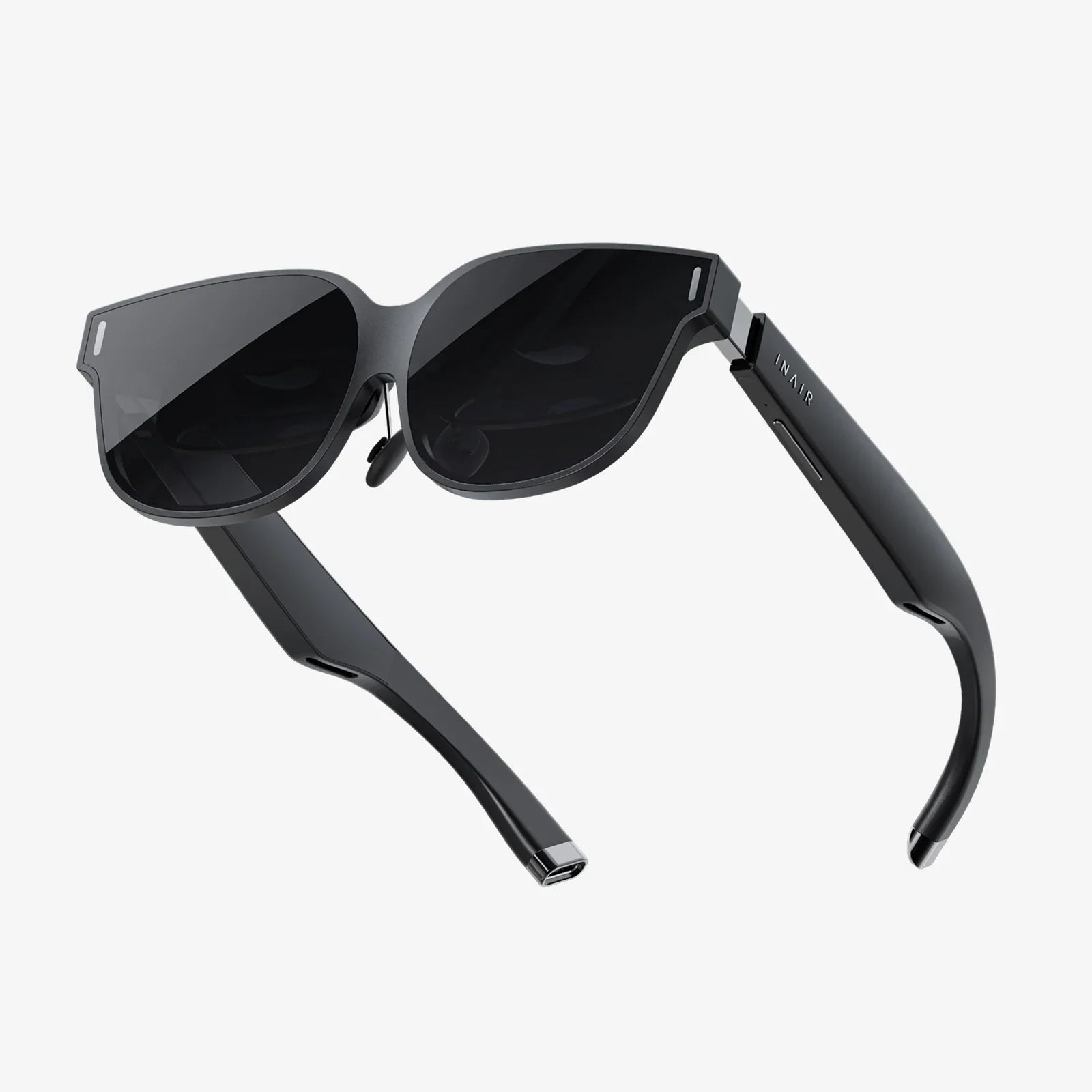
Imagine standing on a factory floor, not with a clipboard and a stack of schematics, but with x-ray vision. With a simple wearable device, you can see the real-time throughput of every conveyor belt superimposed over the machinery, identify a thermal anomaly in a motor before it fails, and watch a digital twin of the entire production line simulate the impact of a proposed change. This is no longer science fiction; this is the emerging reality of AR-powered decisions, where augmented reality is transforming raw data into actionable intelligence, fundamentally altering how we perceive, understand, and act upon our physical environment.
The Evolution of Data Consumption: From Dashboards to Reality
For decades, the pinnacle of data-driven decision-making has been the dashboard. Executives and operators alike have stared at screens filled with charts, graphs, and key performance indicators, attempting to translate these abstract representations into an understanding of a complex, physical world. This process creates a cognitive gap—a disconnect between the data on the screen and the reality on the ground. A manager might see a dip in efficiency metrics but must then physically walk the floor, interview staff, and inspect equipment to diagnose the root cause. This delay can be costly.
Augmented reality bridges this gap by collapsing the distance between data and context. Instead of pulling information out of the world and onto a screen, AR pushes information back into the world, precisely where it is most relevant. This contextual overlay is the fundamental shift. It moves us from a paradigm of data interpretation to one of situational awareness. The decision-maker is no longer a analyst in a separate room; they are an empowered operator immersed in the data-rich environment itself.
The Core Mechanics of AR-Powered Insight
How does this work in practice? AR-powered decision systems typically integrate several key technologies:
- Spatial Mapping: The device understands the physical space, mapping surfaces, objects, and dimensions to create a digital canvas onto which information can be anchored.
- Computer Vision: Advanced algorithms allow the system to recognize specific equipment, components, or locations, triggering the display of relevant data associated with that object.
- IoT and Real-Time Data Integration: The true power of AR is unlocked by connecting it to the vast networks of sensors and data streams that constitute the Internet of Things. Live data on temperature, pressure, flow rates, and energy consumption can be visualized directly on the assets they measure.
- Cloud Computing: The immense processing power required for complex simulations and data analytics happens in the cloud, with the results streamed seamlessly to the AR device, enabling lightweight wearables to deliver heavyweight insights.
This technological synergy creates a continuous feedback loop between the physical and digital worlds. A change in the physical world is instantly measured, analyzed, and visualized, enabling a human to make an informed decision that then alters the physical world once more.
Transforming Industries with Contextual Intelligence
The applications for AR-powered decisions are vast and are already delivering tangible value across numerous sectors.
Manufacturing and Industrial Maintenance
This is perhaps the most mature application. Technicians wearing AR glasses can see step-by-step repair instructions overlaid onto the complex machinery they are servicing, highlighting exactly which bolt to turn and which wire to check. They can see a historical log of past maintenance performed on that specific unit. More strategically, plant managers can walk through facilities and see real-time Overall Equipment Effectiveness (OEE) values floating above each station, instantly identifying bottlenecks. They can visualize the planned layout for a new production cell within the actual empty space, making design decisions with confidence before spending a single dollar on physical infrastructure.
Logistics and Warehouse Management
In massive distribution centers, AR is dramatically accelerating order fulfillment. Pickers are guided by visual cues through their smart glasses that display the most efficient route, highlighting the exact shelf and bin number. A digital arrow points to the item, and the system can even confirm the pick using computer vision, reducing errors to near zero. For managers, AR can visualize the entire warehouse's activity, showing hotspots of congestion, the live location of all forklifts, and simulating the impact of different inventory stocking strategies on picker travel time.
Field Service and Repair
Complex repair jobs, from wind turbines to medical imaging devices, often require a rare combination of expertise. AR allows a remote senior expert to see exactly what a on-site junior technician sees. The expert can then annotate the technician's live field of view with arrows, circles, and notes, guiding them through the procedure hands-free. This see-what-I-see collaboration empowers less experienced staff to perform complex tasks, reduces travel costs for experts, and drastically cuts resolution times.
Retail and Consumer Experience
While often associated with virtual try-ons, the strategic decision-making power of AR in retail is profound. Store managers can use AR to analyze customer flow patterns, overlaying heatmaps of traffic onto the shop floor to optimize product placement and minimize congestion. During inventory counts, data on stock levels can be visualized directly on the shelves, instantly flagging items that are understocked. Furthermore, AR can simulate in-store promotions or complete layout changes, allowing retailers to A/B test store designs in the real world before committing to a physical overhaul.
Urban Planning and Architecture
City planners and architects are using AR to make critical decisions about future projects. By overlaying a proposed digital building model onto the actual physical site, they can assess visual impact, sun and shadow patterns throughout the day, and how the structure will fit within the existing skyline. This allows for collaborative decision-making with stakeholders in real-time, on-location, ensuring designs are contextually appropriate and sustainable before the first foundation is poured.
The Human Factor: Augmenting Intelligence, Not Replacing It
A critical aspect of AR-powered decisions is that the technology is designed to augment human intelligence, not replace it. The goal is not to create autonomous systems that act without human input, but to create symbiotic partnerships where technology handles data processing and visualization, and humans provide judgment, intuition, and ethical reasoning.
This augmentation reduces cognitive load. By offloading the tasks of searching for information, cross-referencing manuals, and mentally translating 2D plans into 3D space, AR frees up the user's cognitive resources to focus on higher-order problem-solving, creative thinking, and strategic analysis. The machine provides the what and the where; the human provides the why and the how. This partnership leads to not only more efficient decisions but also more innovative and robust ones, as it combines the computational power of machines with the nuanced understanding of humans.
Overcoming Barriers to Adoption
Despite its potential, widespread adoption of AR for decision-making faces hurdles. Concerns around data security and privacy are paramount, as these systems often require access to sensitive operational data. The cost of hardware and software integration, while decreasing, remains a significant investment for many organizations. User experience is another critical factor; clunky interfaces, device fatigue, and laggy visuals can quickly erode user trust and adoption. Furthermore, developing a clear ROI narrative can be challenging for a technology that enhances intuition and prevents problems, as these benefits are often harder to quantify than pure cost savings.
Overcoming these challenges requires a strategic approach: starting with pilot programs focused on high-value use cases, ensuring robust cybersecurity integration from the outset, and prioritizing user-centric design to create intuitive and comfortable experiences.
The Future: From Assisted Reality to Predictive Reality
The trajectory of AR-powered decisions points toward an even more integrated and predictive future. We are moving from systems that show what is to systems that predict what could be. By integrating artificial intelligence and machine learning, future AR systems will not only overlay real-time data but will also run continuous simulations of potential outcomes.
Imagine a surgeon seeing not just a patient's current anatomy, but a predictive overlay of how a tumor is likely to progress based on millions of similar cases. An energy grid operator could look at a transformer and see a prediction of its likely failure date based on current load and historical performance data, enabling pre-emptive maintenance. This shift from descriptive and diagnostic AR to predictive and prescriptive AR will represent the ultimate maturation of the technology, transforming it into an indispensable crystal ball for strategic planning and risk mitigation.
The era of staring at screens to understand our world is drawing to a close. The next frontier of productivity and innovation lies in looking directly at the world itself, but through a lens enriched with the intelligence we have worked so hard to create. AR-powered decisions are not just about seeing data; they are about understanding reality in a deeper, more profound way, enabling us to build, maintain, and manage our world with a wisdom that was previously impossible. The power to make perfect decisions is no longer a abstract concept—it's being built, layer by digital layer, right before our eyes.
Share:
Main Difference Between Augmented Reality AR and Virtual Reality VR Explained
Main Difference Between Augmented Reality AR and Virtual Reality VR Explained