


- by wangfred
AR Processing: The Invisible Engine Powering Our Augmented Reality Future
- by wangfred
Imagine pointing your device at a city street and seeing historical figures reenact events before your eyes, or looking at a complex engine and having repair instructions hover over each component. This is the magic promised by augmented reality, a magic made possible not by wands and spells, but by the relentless, complex, and astonishingly powerful engine known as AR processing. This behind-the-scenes technological symphony is what transforms a simple camera view into a window to a layered universe of information and experience. It is the unsung hero, the digital brain that makes the augmented world feel immediate, intuitive, and real. The journey of a single digital object from a server to a perfectly anchored overlay in your living room is a monumental feat of modern computing, and understanding it reveals the incredible future we are building.
Before any digital dragon can land on your coffee table, the AR system must first understand the world it is looking at. This is the primary and most critical task of AR processing. It begins with data acquisition through a suite of sensors—primarily cameras, but often supplemented by LiDAR scanners, depth sensors, inertial measurement units (IMUs), and more. This raw data is a chaotic stream of pixels and numbers; the first job of the processing unit is to bring order to this chaos.
The core of this perception is a technology called simultaneous localization and mapping (SLAM). SLAM algorithms are the cartographers of the AR world. In real-time, they perform two incredible tasks at once: they map the unknown environment by identifying feature points, planes, and objects, and they simultaneously localize the device within that newly created map. This process involves complex mathematical models like sensor fusion, where data from the camera is combined with data from the gyroscope and accelerometer to accurately track the device's position and orientation in six degrees of freedom (6DoF). This creates a stable digital twin of the physical space, a necessary anchor for all subsequent digital content.
Another crucial perceptual task is scene understanding. It's not enough to know where the walls and floor are; advanced AR processing now aims to understand what those objects are. Using machine learning models for object recognition and semantic segmentation, the system can identify a chair, a table, a television, or a person. This allows for more intelligent interactions—a virtual character can realistically sit on the recognized chair, or a virtual screen can be placed on a recognized empty wall, respecting the geometry and semantics of the real world.
Once the world is understood, the next monumental task for AR processing is to convincingly render and integrate digital content. This is where the graphical processing power comes into play, but with a unique and demanding constraint: everything must happen in real-time, at a high frame rate, with imperceptible latency. Any lag or misalignment between the digital and physical—a virtual ball stuttering as it rolls across a real table—instantly shatters the illusion of immersion.
Rendering for AR is far more demanding than rendering for a fully virtual environment. In VR, the system controls every pixel. In AR, the digital imagery must compete with the dynamic and unpredictable lighting conditions of the real world. The processing pipeline must account for occlusion (ensuring a real object can hide a virtual one behind it), light estimation (analyzing the real-world light sources to cast accurate shadows and highlights on virtual objects), and reflectivity. This requires sophisticated shaders and rendering techniques that constantly adapt to the live video feed.
The result of this intense processing is what is known as visual coherence. The human eye is exceptionally good at detecting inconsistencies. AR processing strives to achieve a seamless blend where the virtual object appears to have weight, texture, and a physical presence in the world. It’s not just about overlaying an image; it’s about simulating physics and light interaction to trick the brain into accepting the digital as real.
True immersion is a multi-sensory experience. Advanced AR processing extends beyond the visual to incorporate spatial audio and haptic feedback. Spatial audio processing calculates how sound should emanate from a virtual object and reach the user's ears, changing dynamically as the user moves their head. This means a virtual bee buzzing around your head will sound like it's actually moving in 3D space, enhancing the realism profoundly.
Similarly, haptic feedback processors can trigger vibrations in a handheld controller or wearable device to simulate the tactile sensation of touching a virtual surface. This multi-modal processing—combining visuals, audio, and touch—creates a far richer and more believable experience than visuals alone, engaging more of the user's senses to sell the illusion.
A central challenge in AR is where this immense processing load should occur. There are two main paradigms, each with significant trade-offs.
On-Device Processing: Here, all the complex computations for SLAM, rendering, and tracking happen locally on the user's hardware, whether it's a headset or a smartphone. The colossal advantage is low latency. Since data doesn't need to travel to a remote server and back, the response is instantaneous, which is critical for maintaining immersion and user comfort. It also offers greater privacy and reliability, functioning without a network connection. The trade-off is that it requires incredibly powerful, compact, and energy-efficient processors, which pushes the limits of hardware design and can lead to devices that are expensive, bulky, and have limited battery life.
Cloud-Based Processing: This model offloads the heavy computational lifting to powerful remote servers. The user's device acts primarily as a camera and display, streaming data to the cloud and receiving the composited AR view back. This approach allows for far more complex simulations and photorealistic graphics that wouldn't be possible on mobile hardware. It also enables persistent, shared AR experiences that multiple users can interact with simultaneously. The crippling drawback is latency. The round-trip delay, even on a fast 5G connection, can be enough to cause a noticeable lag, breaking the sense of presence. Network reliability also becomes a single point of failure.
The most promising path forward is a hybrid approach. Critical tasks requiring the lowest latency, like positional tracking and basic rendering, are handled on-device. More complex, non-time-sensitive tasks, like downloading high-resolution 3D models or running elaborate AI simulations, are managed in the cloud. This distributed processing model aims to deliver the best of both worlds, but it requires sophisticated software to seamlessly manage the workflow between local and remote resources.
It is impossible to discuss modern AR processing without highlighting the role of artificial intelligence and machine learning. AI is the catalyst that is pushing AR from a simple novelty to a powerful, context-aware tool.
AI doesn't just improve AR processing; it is becoming fundamental to its very operation, making it smarter, faster, and more adaptive to each individual user and situation.
The implications of robust AR processing extend far beyond gaming and entertainment. This technology is poised to revolutionize how we work, learn, and interact with information.
In manufacturing and field service, technicians wearing AR headsets can see schematics overlaid on machinery, receive guided instructions for complex repairs, and remotely collaborate with experts who can see their view and annotate the real world. This drastically reduces errors, training time, and downtime.
In healthcare, surgeons can visualize patient anatomy, such as CT scans, projected directly onto the surgical site, improving precision and outcomes. Medical students can practice procedures on detailed holographic models.
In retail and design, customers can visualize how furniture will look and fit in their home before buying, and architects can walk clients through full-scale holographic models of unbuilt structures.
In education, abstract concepts from history to astrophysics can be brought to life, allowing students to explore ancient Rome or walk on the surface of Mars from their classroom. Each of these applications is utterly dependent on the flawless, real-time execution of the AR processing pipeline.
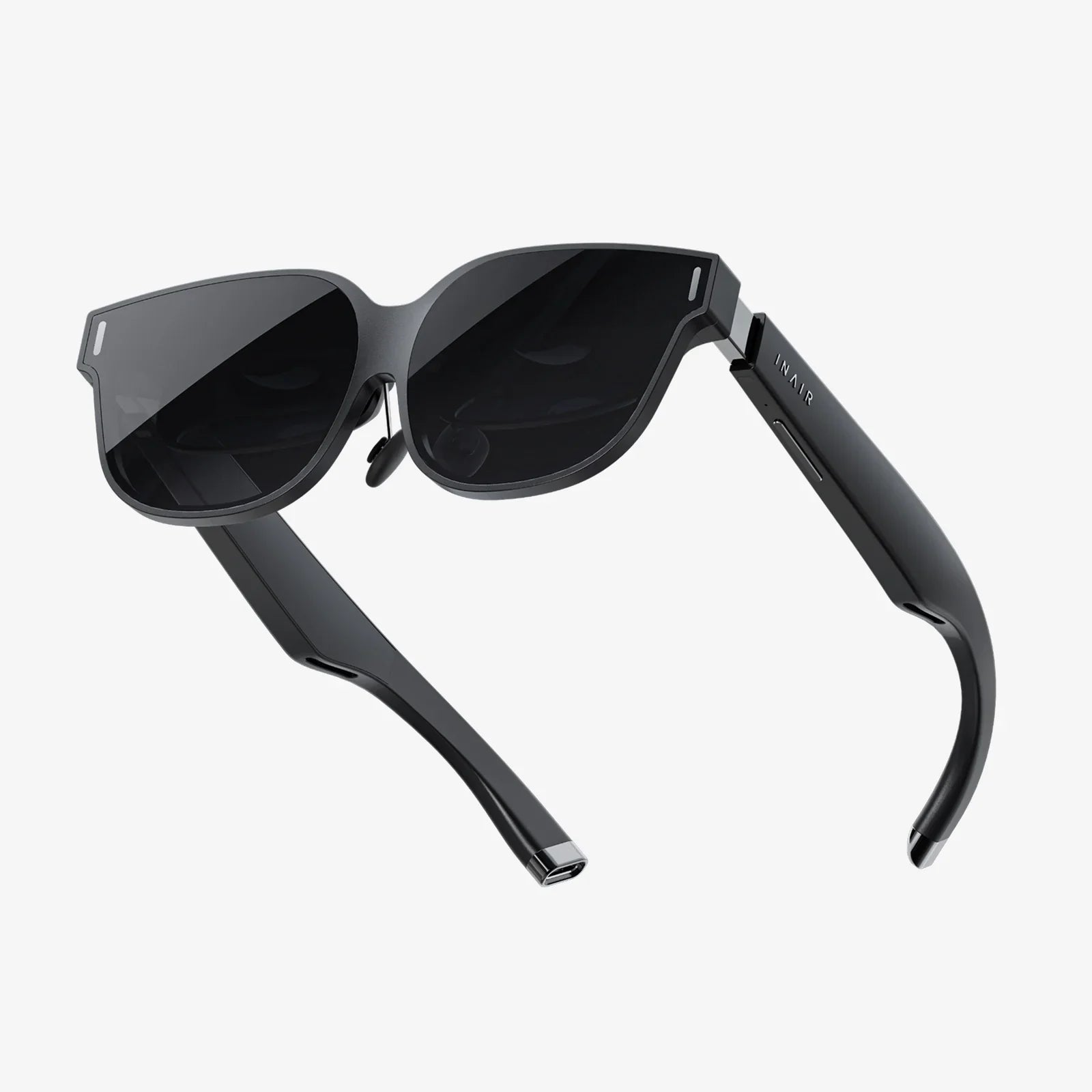
The future of AR processing is heading towards a state of invisibility. The goal is to miniaturize the hardware to the form factor of ordinary eyeglasses while simultaneously expanding computational capabilities. This will require breakthroughs in areas like:
The ultimate destination is a world where AR is always available, contextually aware, and so seamlessly integrated into our perception that the technology itself fades into the background. We will stop thinking about "using AR" and simply experience an enhanced layer of reality as a natural part of our daily lives.
The next time you witness a hologram dance across your room or get directions painted onto the sidewalk, remember the silent, furious calculation happening in the blink of an eye. AR processing is the bridge between our world and the infinite possibilities of the digital realm, and we are only just beginning to cross it. The devices may get smaller and the graphics more photorealistic, but it is the relentless evolution of this hidden engine that will truly unlock a future where the digital and physical are one.