


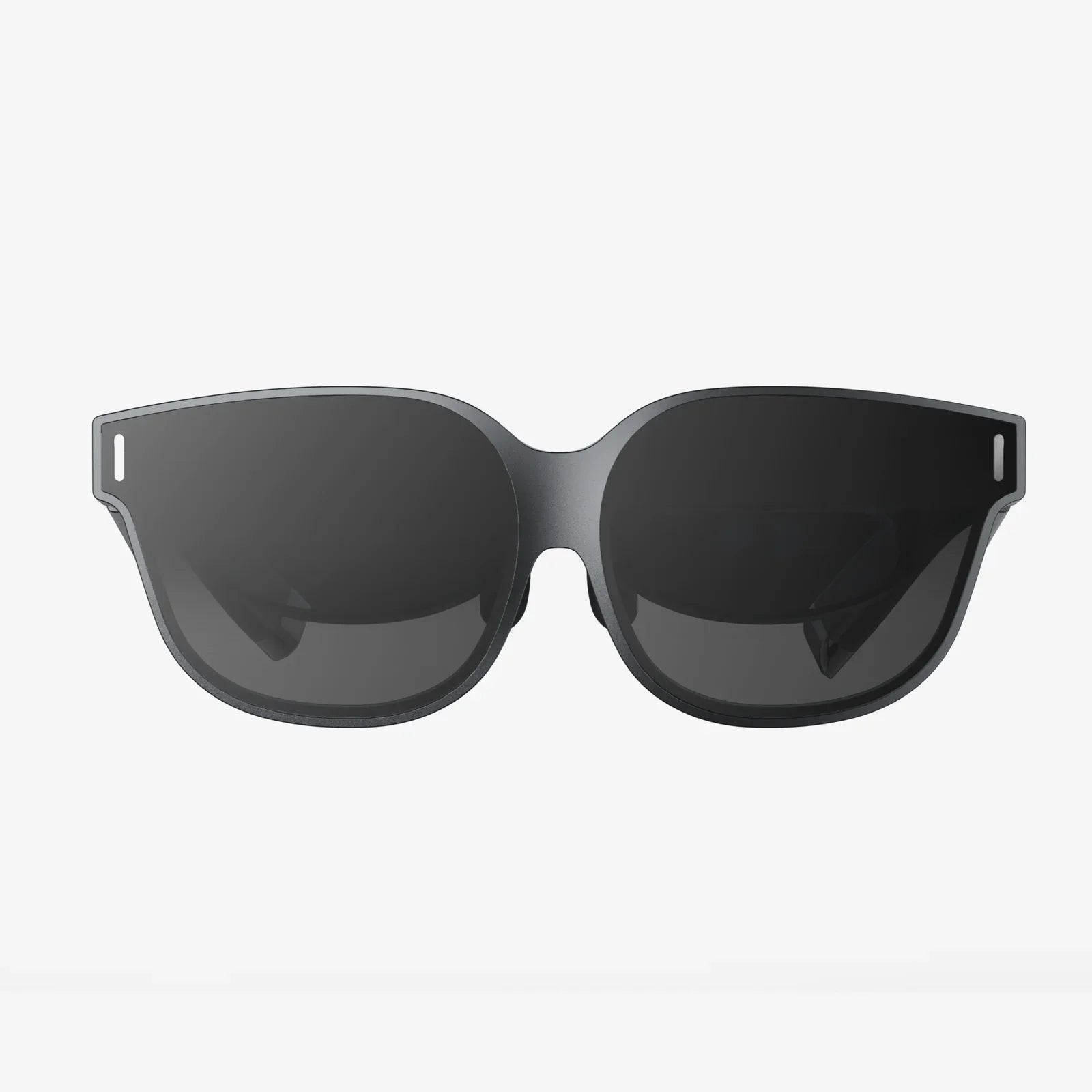
- by wangfred
AR Projection: The Invisible Interface Reshaping Our Reality
- by wangfred
Imagine a world where your entire living room transforms into a strategic war room with a flick of the wrist, where repair manuals materialize directly onto the engine you're fixing, and where a teacher can dissect a virtual frog on every student's desk simultaneously. This is not a distant sci-fi fantasy; it is the imminent future being built today through the revolutionary power of AR projection. This technology, which seamlessly merges the digital and the physical, is poised to become the most intuitive and pervasive interface humanity has ever known, rendering the screens we are tethered to today obsolete relics of a bygone era.
At its core, Augmented Reality (AR) projection is a sophisticated dance of light, sensors, and processing power designed to convince your eyes that digital content is part of your real-world environment. Unlike its cousin, Virtual Reality (VR), which seeks to replace your reality entirely, AR projection enhances it, layering contextually relevant information and stunning visuals onto the physical space around you.
The process begins with a sophisticated understanding of the environment. This is achieved through a suite of sensors, including:
This sensor data is fed into a powerful onboard processor running complex simultaneous localization and mapping (SLAM) algorithms. SLAM is the true brains of the operation; it continuously analyzes the sensor input to simultaneously construct a map of the unknown environment while tracking the device's location within that map. This allows the system to understand exactly where it is in relation to every wall, table, and chair, and to keep the digital projections locked firmly in place even as the device moves.
Finally, we have the projection unit itself. Using advanced micro-mirror arrays or laser scanning systems, it casts light onto the pre-mapped surfaces. But this is not a simple, static image like an old-school film projector. The system uses the environmental data to perform real-time geometric correction, warping the projected image to compensate for uneven or angled surfaces, making a curved wall or a round table appear as a flawless, flat canvas. It can also perform radiometric compensation, adjusting the color and intensity of the light to account for the color of the surface it's projecting onto, ensuring a bright white virtual screen appears truly white whether it's on a beige wall or a brown wooden desk.
The theoretical potential of AR projection is vast, but its true power is revealed in its practical, real-world applications that are already solving complex problems and creating new paradigms for work and play.
In industrial settings, AR projection is a game-changer for efficiency and accuracy. On assembly lines, workers no longer need to glance back and forth between a complex wiring diagram and the task at hand. Instead, guidelines and instructions are projected directly onto the chassis of a car or the circuit board of a device, showing exactly where each component should be placed, which bolts to tighten, and in what sequence. This reduces errors by over 90% and dramatically accelerates training times for new employees.
For designers and architects, the technology enables life-size prototyping. Instead of reviewing a new car's dashboard on a computer monitor, they can project a full-scale, interactive version onto a physical mock-up, allowing them to walk around it, assess sightlines, and rearrange virtual elements with a touch. This immersive design review process catches ergonomic and aesthetic issues early, saving millions in prototyping costs.
In the medical field, AR projection is literally providing surgeons with X-ray vision. By integrating with pre-operative scans like CT or MRI, a system can project a 3D visualization of a patient's internal anatomy—their bones, tumors, or blood vessels—directly onto their skin before the first incision is made. This provides an unparalleled surgical roadmap, enhancing precision and minimizing invasiveness. For medical training, students can practice procedures on a hybrid model where physical mannequins are augmented with dynamic, projected physiological responses.
The retail experience is being reimagined through interactive fitting rooms and virtual showrooms. Shoppers can see how a piece of furniture would look in their actual living room, projected in its exact dimensions and true-to-life color, or try on dozens of outfits virtually without ever changing clothes. This merges the convenience of online shopping with the confidence of an in-store experience.
In the realm of entertainment, AR projection is creating deeply immersive narrative experiences. Museums can bring historical figures to life, having them walk and talk beside their own artifacts. Theme parks can transform a simple queue area into an enchanted forest, and home entertainment systems can turn an entire wall into a dynamic extension of the movie being watched, with environments that shift and change with the story.
Despite its promise, AR projection technology must overcome significant technical and societal hurdles before it can achieve widespread adoption.
The most formidable challenge is ambient light. Today's systems often struggle in brightly lit environments, as the projected light must compete with the sun or overhead lighting, washing out the image and diminishing the illusion. Solutions involve developing brighter, more energy-efficient projectors and smarter algorithms that can more aggressively compensate for challenging lighting conditions.
There is also the issue of interactivity. For the interface to feel truly magical, users need to be able to reach out and manipulate the projected images with natural gestures. This requires extremely low-latency hand-tracking technology that can distinguish between an intentional command and a casual movement. Haptic feedback remains another frontier; researchers are exploring using targeted ultrasound to create the sensation of touch in mid-air.
Beyond the hardware, the software ecosystem needs to mature. Developers require robust tools and SDKs to create applications that are intuitive, useful, and can run across different hardware platforms. The creation of a universal "AR cloud"—a shared, persistent digital layer over the world—is a monumental task that requires collaboration between tech giants on a global scale.
Finally, the specter of privacy and digital addiction looms large. Always-on cameras mapping our homes and offices raise valid security concerns. Furthermore, if this technology becomes as ubiquitous as smartphones, the potential for it to further blur the lines between our digital and physical lives, leading to new forms of distraction and overload, is a serious societal consideration that must be addressed through thoughtful design and transparent ethics.
The widespread adoption of AR projection will ripple through society, changing not just how we perform tasks, but how we perceive reality itself. It promises to democratize information by making it contextual and immediate—a mechanic in a remote village could receive expert guidance projected onto a broken generator, and a student anywhere in the world could have a world-class chemistry lab projected onto their kitchen table.
It could lead to a new aesthetic for our cities and homes, where digital art is ephemeral and our environments are constantly re-skinable. Your apartment walls could change color and artwork with your mood, and public spaces could host dynamic, collaborative art installations that passersby can interact with.
However, this also presents a risk of a new digital divide—between those who can afford this enhanced reality and those who cannot. There is also the potential for a new form of advertising, where sponsored content is not confined to a billboard but could be projected onto any surface, turning our entire world into a potential ad space. Navigating these challenges will require a public conversation about the digital rights and the kind of augmented world we collectively want to build.
The journey of AR projection is just beginning, but its trajectory is clear. It is moving us from a world of isolated screens to one of integrated, contextual, and intelligent interfaces. It is a technology that doesn't ask us to look down at a device, but to look up and engage with our world in a deeper, more informed, and more magical way. The canvas of reality itself is waiting, and we are only just starting to paint on it.