


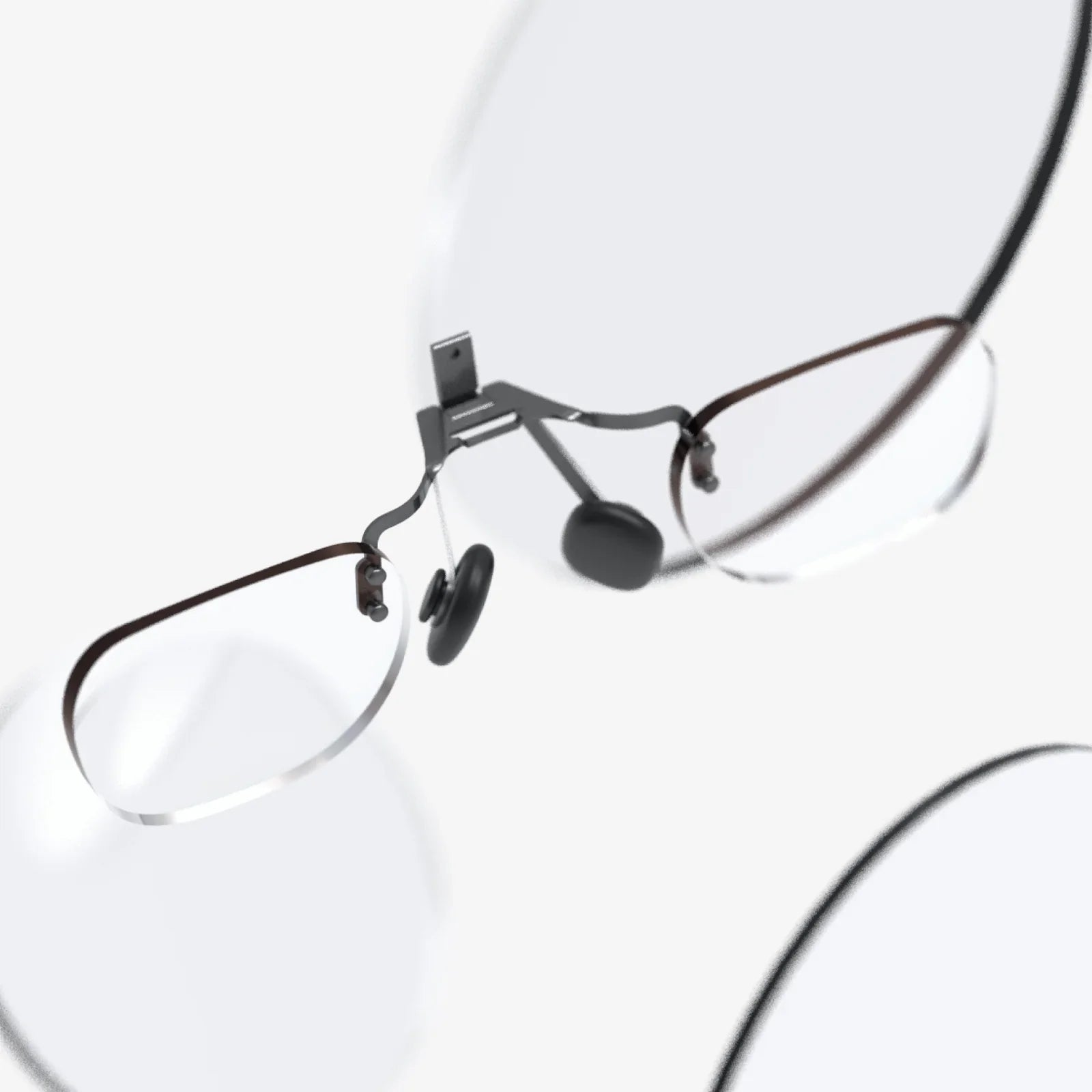
Imagine a world where the digital and the physical are no longer separate realms, but a single, unified experience. Where information doesn't just live on a screen but is painted onto the world itself, accessible with a glance and interactive with a gesture. This isn't a distant sci-fi fantasy; it's the burgeoning reality being forged within the vast and intricate AR range. This concept, far more profound than any single device, represents the entire spectrum of augmented reality's capabilities, limitations, and transformative potential. It's the invisible field where bits meet atoms, and it's poised to fundamentally alter how we work, learn, play, and connect. The journey into this expanded reality starts not with a power button, but with an understanding of the immense scope of what is possible.
Defining the Spectrum: More Than Meets the Eye
The term AR range can be deconstructed into two complementary interpretations. First, it refers to the technical and functional scope of AR systems—the distance and area within which they can effectively operate, track the environment, and anchor digital content. This is the measurable, quantitative aspect. Second, and more significantly, it describes the spectrum of applications and experiences that AR enables, from simple informational overlays to complex, interactive simulations that blend with our physical surroundings. This range is constantly expanding, pushed forward by breakthroughs in hardware, software, and spatial understanding.
The Technical Pillars: What Extends the AR Range?
The ability to project a persistent digital object into your living room or provide precise navigation arrows on the street is not magic; it's the result of several sophisticated technologies working in concert. The effective AR range of any system is dictated by the capabilities and limitations of these core pillars.
Spatial Mapping and Environmental Understanding
At the heart of any convincing AR experience is the device's ability to understand the world around it. This is achieved through a combination of cameras, sensors, and powerful algorithms. Simultaneous Localization and Mapping (SLAM) technology allows a device to both map an unknown environment and track its own position within that environment in real-time. This process creates a digital mesh or point cloud of the space, identifying floors, walls, tables, and other surfaces. The precision and speed of this mapping directly influence the AR range. A system that can quickly and accurately map a large warehouse has a much greater functional range than one designed for a tabletop. Advancements in LiDAR (Light Detection and Ranging), which uses laser pulses to measure distances and create high-fidelity 3D maps, have dramatically increased this range and accuracy, especially in varying lighting conditions.
Tracking and Persistence: Making Digital Things "Real"
Once the environment is understood, the next challenge is anchoring digital content so it appears stable and persistent. This involves precise tracking, which can be marker-based (using a specific image or object as a anchor point), markerless (using the mapped environment itself), or a hybrid approach. The AR range here is tested by movement and occlusion. Can the digital object stay locked in place if you walk around it? Does it get occluded (hidden) correctly if a real-world object passes in front of it? High-range systems handle these complexities seamlessly, creating the illusion that the digital object is truly part of the physical world. Furthermore, cloud-based anchoring is beginning to allow for shared, persistent experiences across multiple devices and sessions, effectively creating a digital layer over reality that anyone with the right device can see and interact with, vastly expanding the collaborative range of AR.
Display Technology: The Window to the Blend
How the digital information is presented to the user is a critical factor in the experiential AR range. Current mainstream systems primarily use video pass-through (where cameras capture the real world and display it on a screen with AR elements overlayed) or optical pass-through (where the user looks directly at the real world through transparent lenses that project light onto them). Each has trade-offs. Optical pass-through, often seen in smart glasses, offers a more natural view but can struggle with contrast and displaying dark colors. Video pass-through, common in VR headsets used for AR, can offer richer digital visuals but can introduce latency or a sense of detachment from the real world. The holy grail remains true holographic displays that can seamlessly blend full-color, high-resolution 3D graphics directly into the user's field of view without bulky hardware. The evolution of display tech is directly expanding the comfort, immersion, and practical application range of AR.
The Expansive Application Range: Transforming Industries
The true power of the AR range is revealed not in labs, but in its real-world applications. Its versatility is disrupting and enhancing fields from the factory floor to the operating room.
Revolutionizing Enterprise and Industrial Work
Perhaps the most mature and impactful use of AR today is in enterprise. The AR range here is measured in increased efficiency, reduced errors, and enhanced safety. Technicians performing complex repairs can have schematic diagrams, torque specifications, and animated instructions overlaid directly onto the machinery they are servicing, freeing them from cumbersome paper manuals or tablet screens. Warehouse workers equipped with smart glasses can receive real-time picking and packing instructions, with navigation arrows guiding them to the exact shelf and digital highlights identifying the correct item, dramatically speeding up logistics. Architects and engineers can walk through full-scale 3D models of their designs before a single brick is laid, identifying spatial conflicts and design flaws that would be costly to fix later. The range of AR in these settings is fundamentally about augmenting human capability with instantaneous, context-aware information.
Redefining Retail and E-Commerce
The retail sector is leveraging AR's range to bridge the gap between online shopping and the physical experience. "Try before you buy" takes on a new meaning when you can use your smartphone or webcam to see how a new sofa fits in your living room, how a watch looks on your wrist, or how a shade of lipstick complements your skin tone. This virtual try-on capability reduces purchase hesitation and minimizes returns, creating a more confident and engaging shopping experience. Furniture retailers now allow customers to place true-to-scale 3D models of products in their homes, letting them evaluate not just style but fit and placement within their existing decor. This application dramatically extends the retailer's reach into the customer's personal space, closing the imagination gap that has long plagued online commerce.
Advancing Healthcare and Medicine
In healthcare, the AR range can be a matter of life and death. Medical students are using AR to explore detailed, interactive 3D models of the human body, gaining an understanding of anatomy that goes far beyond textbooks. Surgeons are using AR for pre-operative planning, overlaying CT scans and MRI data directly onto a patient's body to visualize the precise location of tumors, blood vessels, or bones before making an incision. This can lead to smaller incisions, reduced surgery time, and improved patient outcomes. Furthermore, AR can provide remote guidance, where a specialist miles away can see what a first responder or local doctor sees and annotate their field of view with instructions, effectively teleporting expertise to where it is needed most.
Enhancing Education and Training
Education is being transformed from a passive to an active experience through AR. History lessons can come alive with historical figures and events reenacted in the classroom. Astronomy students can explore the solar system with planets orbiting around them. Chemistry students can manipulate virtual molecules to see how they interact, without the cost or danger of a physical lab. The AR range in education is the range of imagination it unlocks, making abstract concepts tangible and deeply engaging. In corporate training, from learning complex assembly line tasks to practicing public speaking with a virtual audience, AR provides a safe, repeatable, and cost-effective environment to build muscle memory and skills.
Challenges and Limitations: The Boundaries of the Range
For all its promise, the current AR range is not infinite. Significant hurdles remain before AR becomes an ubiquitous, all-day technology.
Hardware Constraints: The Form Factor Dilemma
There is a fundamental tension between performance and wearability. High-end systems that offer a wide field of view, powerful processing, and all-day battery life are often bulky, heavy, and tethered. Conversely, lightweight smart glasses that are comfortable to wear for extended periods often have a limited field of view, reduced processing power, and shorter battery life. Overcoming this dilemma is the single biggest challenge for hardware developers. The goal is to create a device that is as socially acceptable and comfortable as a pair of everyday glasses but with the computational power of a high-end smartphone. Until this is achieved, the practical, all-day AR range for consumers will remain constrained.
The Social and Ethical Dimension
The expansion of the AR range raises profound social and ethical questions that society is only beginning to grapple with. How do we manage privacy in a world where people can potentially record video, take pictures, and pull up personal data about others simply by looking at them through AR glasses? What are the etiquette rules for using AR in social situations? How do we prevent the creation of a "digital divide" between those who can afford this new technology and those who cannot? Furthermore, the potential for misinformation and malicious attacks is alarming—imagine graffitiing digital hate speech on a real-world building or creating an AR experience that deliberately leads people into danger. Establishing norms, regulations, and digital safeguards is crucial for ensuring the AR range develops as a force for good.
The Future Horizon: Where is the AR Range Heading?
The trajectory of AR points toward a future where the technology becomes increasingly invisible, contextual, and intelligent. We are moving toward a world of the perceptual interface, where we will interact with technology not through screens and keyboards, but through natural gestures, voice commands, and even eye movements. The AR range will expand to encompass our entire visual field, with 5G and edge computing providing the low-latency, high-bandwidth connection needed to stream complex AR experiences from the cloud. Artificial Intelligence will act as the brain of this system, understanding our intentions, anticipating our needs, and filtering the vast digital layer to show us only what is relevant and helpful in any given moment. This will evolve from Augmented Reality into what some call Ambient Computing or Ubiquitous Computing—a world where technology is woven into the fabric of our environment, always available but never intrusive.
The boundaries of our reality are not fixed; they are a canvas, and the brush is in our hands. The ever-expanding AR range is not just about better graphics or cooler games; it's about fundamentally rearchitecting the human experience. It promises a world where knowledge is superimposed on ignorance, where expertise is available on demand, and where our digital tools enhance our reality instead of distracting us from it. The journey into this blended world has already begun, and its ultimate range is limited only by our imagination and our wisdom in guiding its development. The next time you look at the world around you, remember: you're not just seeing what is, but the blank slate for what could be.
Share:
Most Popular Wearables: The Ultimate Guide to the Tech on Your Wrist and Beyond
Smart Glasses with Video Playback: The Future of Personal Viewing is Here