


Imagine a world where your morning run is guided by a digital coach floating beside you, where historical figures narrate their stories as you walk past monuments, and where complex engine repairs are visualized through a pair of glasses, with step-by-step instructions overlaid onto the machinery itself. This is no longer the realm of science fiction; it is the burgeoning reality made possible by Augmented Reality (AR), and it all begins with one crucial piece of technology: the AR Ready Device. These are the gateways, the lenses through which our physical world is enhanced, annotated, and reimagined. But what exactly makes a device "AR Ready"? It's more than just a marketing buzzword; it's a specific set of capabilities that unlock a universe of interactive experiences, and understanding them is the first step into this new dimension.
The Core Anatomy of an AR Ready Device
At its heart, an AR experience is a complex ballet of hardware and software working in perfect, real-time harmony. A device cannot simply display a 3D model; it must understand the world around it to place that model convincingly. This requires a sophisticated suite of components.
The Brain: Processing Power (SoC)
The System on a Chip (SoC) is the central nervous system of any AR Ready Device. It's a powerhouse that must handle immense computational loads simultaneously. It processes high-resolution video feeds from multiple cameras in real-time, runs complex simultaneous localization and mapping (SLAM) algorithms to understand the environment, renders high-fidelity 3D graphics, and manages sensor fusion data—all without a perceptible lag. A powerful GPU (Graphics Processing Unit) is non-negotiable for rendering detailed digital objects, while a robust CPU (Central Processing Unit) handles the logic and tracking. Furthermore, a dedicated NPU (Neural Processing Unit) is increasingly vital for handling the machine learning tasks required for advanced object recognition and depth sensing, ensuring the digital overlay interacts with the real world intelligently and seamlessly.
The Eyes: Sensors and Cameras
If the SoC is the brain, the sensors are the eyes and the vestibular system. A basic RGB camera is just the starting point. True AR readiness involves a sophisticated array of sensors:
- Depth-Sensing Cameras (Time-of-Flight or Structured Light): These sensors project thousands of invisible points onto a scene and measure the time it takes for the light to return or how the pattern deforms. This creates a precise depth map of the environment, allowing the device to understand the geometry of a room, the shape of a table, or the contours of a face. This is critical for occlusion, where digital objects can realistically hide behind real-world ones.
- LiDAR (Light Detection and Ranging): More common in higher-end devices, LiDAR scanners use laser pulses to measure distances and create a highly accurate 3D map of the surroundings incredibly quickly. This drastically improves spatial awareness and accelerates the AR initialization process, making experiences feel instant and rock-solid.
- High-Resolution RGB Cameras: Essential for capturing the visual texture of the world for video passthrough AR and for marker-based recognition.
- IMUs (Inertial Measurement Units): This combination of accelerometers, gyroscopes, and magnetometers tracks the device's movement, orientation, and rotation with extreme precision. This ensures that as you move your device or your head, the digital content remains locked in place, preventing jitter and drift that break the illusion of immersion.
The Window: Display Technology
How the digital world is presented to the user is paramount. There are two primary methods:
- Optical See-Through: Used by dedicated AR glasses and smart glasses, this method uses waveguides, holographic lenses, or semi-transparent mirrors to project light containing digital imagery directly into the user's eyes while allowing them to see the real world through the lens. This offers a more natural and comfortable experience as it doesn't block the user's view.
- Video See-Through: Used by smartphones, tablets, and some VR/AR headsets, this method uses outward-facing cameras to capture a live video feed of the real world. This feed is then combined with digital elements on the device's standard screen before being presented to the user. While effective, it can sometimes introduce a slight latency or a "looking through a window" feeling.
The Voice: Connectivity and Positional Tracking
Seamless AR often requires a constant, high-bandwidth connection. 5G connectivity is becoming a key feature for next-generation AR Ready Devices, enabling the streaming of complex, data-heavy AR models and experiences without the need for bulky onboard storage. Cloud-based AR processing, where the heavy computation is offloaded to remote servers, also relies on ultra-low latency connections. Furthermore, precise GPS and other location services are crucial for large-scale outdoor AR experiences, like city-wide games or navigation overlays.
The Spectrum of AR Ready Devices: From Pockets to Faces
AR readiness isn't confined to a single form factor. It exists on a spectrum, from the devices already in our pockets to the specialized wearables of the future.
The Ubiquitous Gateway: Smartphones and Tablets
For the vast majority of people, their first and only experience with AR comes from their smartphone. Modern mid-range and flagship handhelds are often equipped with the necessary sensors (advanced IMUs, depth-sensing cameras, powerful SoCs) to deliver compelling AR experiences. They serve as a perfect introduction to the technology, powering everything from social media filters and interactive games to practical measuring tools and furniture preview apps. Their strength lies in their ubiquity and accessibility, but their limitation is the form factor itself—you must hold them up, obstructing your natural view and interaction with the world.
The Dedicated Vision: AR Glasses and Smart Glasses
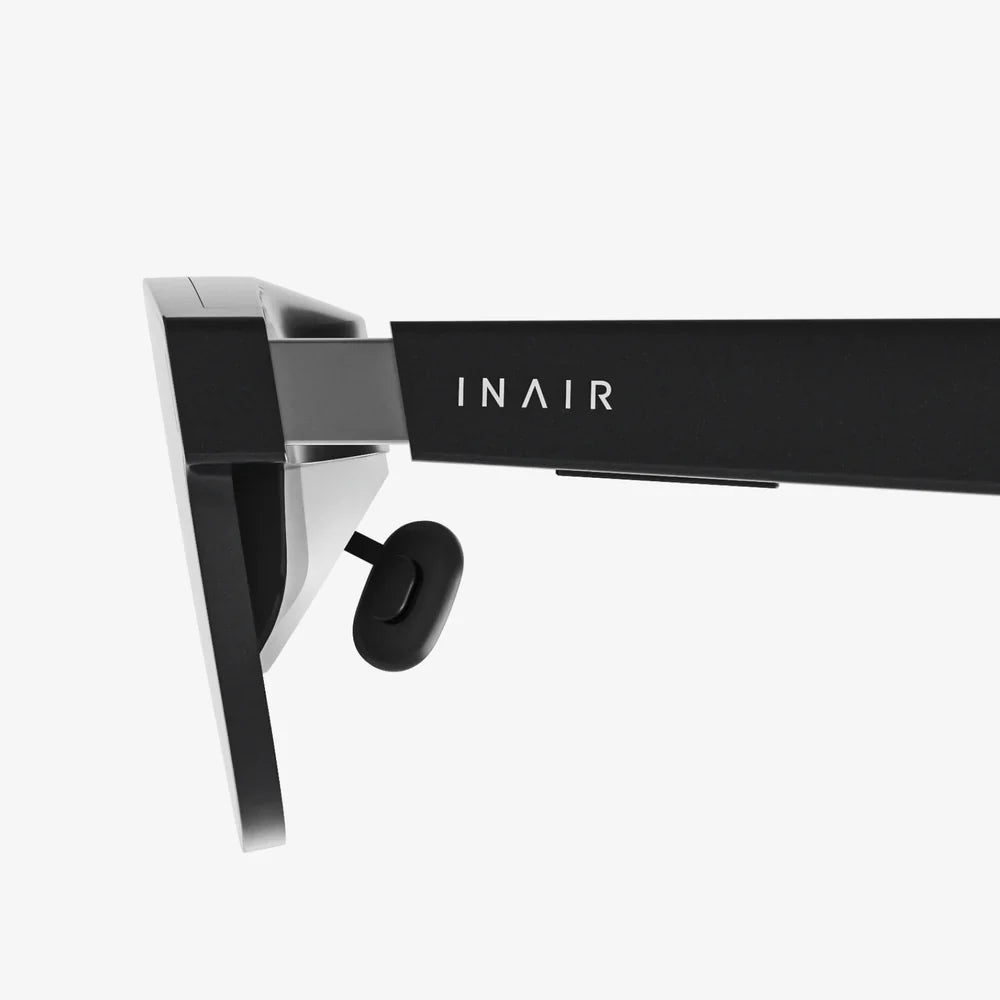
This category represents the ideal form factor for AR: wearable, hands-free, and always-on. True AR glasses use optical see-through displays to blend digital content seamlessly with the real world. They contain all the advanced components mentioned above—LiDAR, depth sensors, powerful processors—packaged into a glasses-like form factor. While the technology to make these devices lightweight, powerful, and affordable for consumers is still evolving, they represent the future of the industry. Current iterations are finding immense value in enterprise and industrial settings, revolutionizing fields like manufacturing, logistics, and medicine.
The Immersive Powerhouse: VR/AR Headsets
Many modern virtual reality headsets have evolved into hybrid devices capable of high-fidelity Augmented Reality through their video see-through cameras. These devices, often referred to as Mixed Reality (MR) headsets, boast the most powerful processing capabilities and the most advanced sensor arrays available in a consumer package. They are designed for immersive, room-scale experiences where users can interact with both real and virtual objects. While less mobile than glasses, they offer a glimpse into the most sophisticated and immersive AR experiences possible today.
Software: The Invisible Architect
Hardware is nothing without the software that brings it to life. The operating system and software development kits (SDKs) are the invisible architects that enable AR. Major platforms provide robust AR frameworks that handle the complex tasks of environmental tracking, surface detection, light estimation, and asset rendering. These platforms give developers the tools to create consistent, high-performance AR experiences that can run across a wide range of AR Ready Devices, ensuring a stable foundation for innovation. They provide the crucial layers of understanding, from detecting horizontal planes like floors and tables to recognizing specific images or objects as triggers for digital content.
The Transformative Impact: More Than Just Games
The applications for AR extend far beyond entertainment, seeping into the very fabric of industries and daily life.
- Education: Textbooks become interactive 3D models; students can dissect a virtual frog or walk through ancient Rome.
- Healthcare: Surgeons can visualize patient scans overlaid directly on the operating field; medical students can practice procedures on detailed anatomical holograms.
- Retail & E-Commerce: Customers can "try on" clothes, glasses, or makeup virtually or see how a new sofa would look in their living room before buying.
- Industrial & Manufacturing: Technicians receive real-time, hands-free instructions and diagrams overlaid on complex equipment, reducing errors and training time.
- Navigation: Arrow directions are painted onto the road through your windshield or smartphone screen, making urban exploration intuitive.
Choosing Your Portal: What to Look For
As you consider stepping into the AR arena, evaluating a device's readiness is key. Look for specifications that highlight a powerful modern processor, a high-quality camera system that includes depth-sensing or LiDAR capabilities (for more advanced experiences), and a high-resolution, high-refresh-rate display. Crucially, check for compatibility with major AR platforms, as this is a strong indicator of the device's support within the developer community. The best device for you depends on your primary use case: convenience and accessibility point to a smartphone, while immersion and power suggest a dedicated headset, and the ultimate goal remains a sleek pair of AR glasses.
The Future is Overlaid
The trajectory of AR Ready Devices is clear: they are becoming more powerful, more compact, and more integrated into our lives. We are moving towards a future of always-on ambient computing, where intelligent glasses will become as commonplace as smartphones, providing contextual information and digital assistance without ever requiring us to look down at a screen. Advances in battery technology, display miniaturization (like microLEDs), and neural interface controls will dissolve the barriers between ourselves and our digital augmentations. The device itself will fade into the background, leaving only the magic of an enhanced reality.
The journey into this augmented age is already underway, hidden in plain sight within the technology we use every day. That smartphone in your pocket is more than a communication tool; it's a key to a hidden layer of reality, waiting to be unlocked. The race to perfect the ultimate AR Ready Device—a pair of unassuming glasses—will redefine our relationship with technology altogether, moving us from users to active participants in a seamlessly blended world. The question is no longer if this future will arrive, but how soon you will choose to see it for yourself.
Share:
Best VR for Watching Movies: Your Ultimate Guide to Cinematic Immersion
Headset for Portable Phone: The Ultimate Guide to Unlocking Mobile Freedom