


Imagine pointing your device at a starry night sky and seeing the constellations traced out before your eyes, their names and mythologies unfolding in real-time. Envision walking through a foreign city where directional arrows and historical facts are painted onto the very streets you tread, or learning to repair a complex engine with digital instructions overlaid perfectly onto the physical components. This is no longer the stuff of science fiction; it is the tangible, exhilarating reality of augmented reality on the Android platform, a technological symphony that is turning every smartphone into a window to a blended world.
The Foundation: Understanding the AR Android Ecosystem
At its core, augmented reality is the art of superimposing computer-generated sensory input—be it sound, video, graphics, or GPS data—onto our perception of the real world. Unlike its cousin, Virtual Reality (VR), which seeks to create a completely immersive digital environment, AR enhances reality by adding a layer of useful, interactive information. The Android operating system, with its open-source nature and massive global install base, has become the most democratic and widespread canvas for this technology. The magic of AR on an Android device is a complex dance of hardware and software. It begins with the camera, which acts as the eyes, continuously capturing the real world. This visual data is then processed in real-time by powerful processors and dedicated machine learning cores. The true genius lies in the software's ability to understand what it's seeing. This is achieved through a combination of:
- Visual Inertial Odometry (VIO): This technology fuses camera data with inputs from the device's inertial measurement unit (IMU)—the gyroscope and accelerometer—to precisely track the device's position and orientation in space without needing any external markers.
- Environmental Understanding: The software detects horizontal planes (like floors and tables) and vertical planes (like walls), a process known as plane detection. It can also perform mesh tracking, creating a rough 3D map of the surroundings, and perform light estimation to match the lighting and shadows of virtual objects to their real-world environment.
- Anchor Points: Virtual objects are tethered to specific points in the real world, allowing users to move around them and interact with them as if they were physically present.
This entire sophisticated process is made accessible to developers through robust software development kits (SDKs) provided by major technology companies. These toolkits handle the heavy lifting of environmental understanding and tracking, allowing creators to focus on building immersive experiences.
From Novelty to Necessity: The Evolution of AR on Android
The journey of AR on Android has been one of rapid maturation. Early applications were often gimmicky, relying on marker-based tracking where a specific image or QR code was needed to trigger a simple animation. While impressive for its time, this limited the technology's potential. The watershed moment came with the development and widespread adoption of markerless AR, powered by the aforementioned VIO and environmental understanding. This shift meant AR could happen anywhere, anytime, unlocking a universe of practical applications. The hardware evolution within the Android ecosystem has been just as critical. The proliferation of high-resolution cameras, faster GPUs, and, crucially, dedicated AI processors has transformed mid-range and flagship devices into capable AR portals. Furthermore, the development of depth-sensing technologies, such as time-of-flight (ToF) sensors, added another layer of precision, enabling more realistic object occlusion—where a virtual character can convincingly hide behind a real-world couch.
Transforming Industries: The Practical Power of AR
The true value of any technology is measured by its impact, and AR on Android is revolutionizing fields far beyond entertainment.
Retail and E-Commerce
Shopping has been utterly transformed. Consumers can now preview furniture in their own living room at true-to-life scale, seeing how a new sofa fits with their existing décor before clicking "buy." Fashion retailers allow users to "try on" glasses, watches, and makeup through their smartphone screens. This "try before you buy" capability directly from a personal device is drastically reducing purchase uncertainty and return rates, creating a more confident and satisfying consumer experience.
Education and Training
AR is turning abstract concepts into tangible, interactive models. Students can dissect a virtual frog, explore the human circulatory system in 3D, or witness historical events play out on their classroom desk. For industrial training, the implications are profound. Technicians can receive step-by-step visual instructions overlaid directly onto the machinery they are repairing, improving accuracy and reducing training time. Medical students can practice procedures on detailed anatomical models, accelerating their learning curve in a risk-free environment.
Navigation and Wayfinding
Forget the static, top-down map. AR navigation apps use the smartphone's camera to display arrows, directions, and points of interest directly onto the real-world view. This makes navigating complex environments like airports, university campuses, or large shopping malls intuitive and effortless. You simply raise your phone and follow the path laid out in front of you, blending digital guidance with physical landmarks.
Gaming and Social Interaction
The phenomenon of location-based AR games demonstrated the mass-market appeal of this technology, encouraging millions to explore their neighborhoods in a new way. Social media platforms on Android have integrated AR filters and effects, allowing users to augment their videos and selfies with playful, dynamic elements. This has created a new language of digital expression and connection, making AR a staple of daily digital interaction.
Challenges and Considerations on the Android Platform
Despite its progress, the AR experience on Android is not without its challenges. The fragmented nature of the Android ecosystem, with its vast array of devices from numerous manufacturers, presents a significant hurdle. An AR experience that runs smoothly on a latest-generation flagship device may stutter or be completely unavailable on an older or less powerful model. This variability makes it difficult for developers to create consistent experiences for all users. Privacy is another paramount concern. AR applications require access to a device's camera and location data, raising legitimate questions about how this sensitive information is used, stored, and protected. Users must be vigilant about permissions, and developers must prioritize transparent data practices to build and maintain trust. Furthermore, the current user interface paradigms for AR are still evolving. Interacting with floating menus and virtual objects using a touchscreen can sometimes feel clunky or unintuitive. The industry is actively exploring solutions, including voice commands and gesture controls, to create more seamless and immersive interactions.
The Future is Augmented: What Lies Ahead
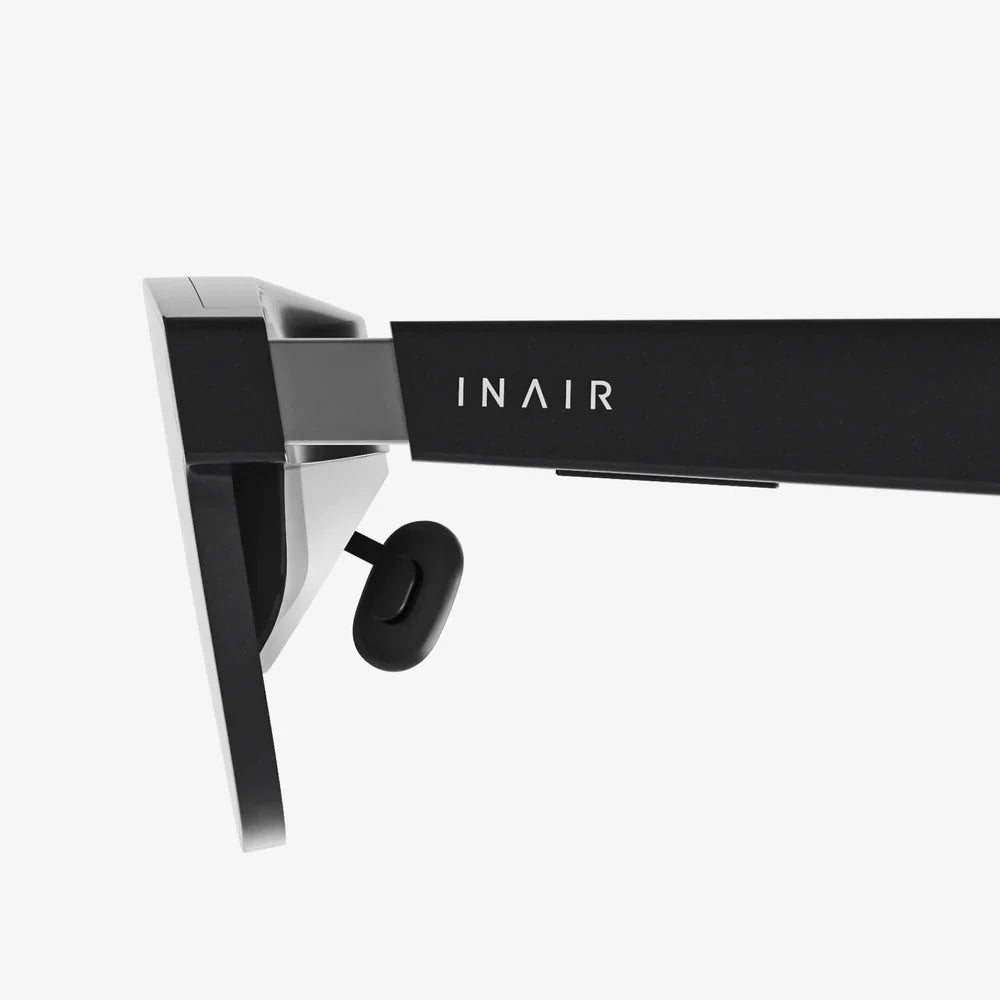
The trajectory of AR on Android points toward an even more integrated and powerful future. The next logical step is a move beyond the smartphone screen to wearable form factors. While dedicated AR glasses are still in their relative infancy, they represent the endgame—a future where digital information is permanently and seamlessly integrated into our field of view, hands-free. The development of 5G connectivity will be a massive accelerant, offering the high bandwidth and low latency required to stream complex AR experiences from the cloud, potentially offloading processing from the device itself and making high-end AR accessible to a broader range of hardware. Advancements in artificial intelligence will make AR contexts smarter and more predictive. Imagine an AR system that not only translates a menu in real-time but also highlights the most popular dish or warns you of allergens based on your personal health profile. The convergence of AR with other technologies, such as the Internet of Things (IoT), will create powerful new use cases. You could point your device at a smart thermostat and see a virtual control panel, or view the real-time energy consumption of your appliances overlaid on top of them.
The fusion of AR reality and Android is more than a feature; it's a fundamental shift in how we compute. It moves technology out of a separate screen and into our lived environment, making it a contextual, ambient partner in our daily lives. This powerful combination, residing in the pocket of over a billion people, is democratizing access to a layer of digital intelligence that enhances our perception, amplifies our abilities, and deepens our understanding of the world around us. The door to this blended reality is open, and it’s waiting for you to look through it.
Share:
Meta Glasses Competitors: The Race to Own Your Face and the Future of Reality
What Is The Best Virtual Headset - A Guide To Finding Your Perfect Match