


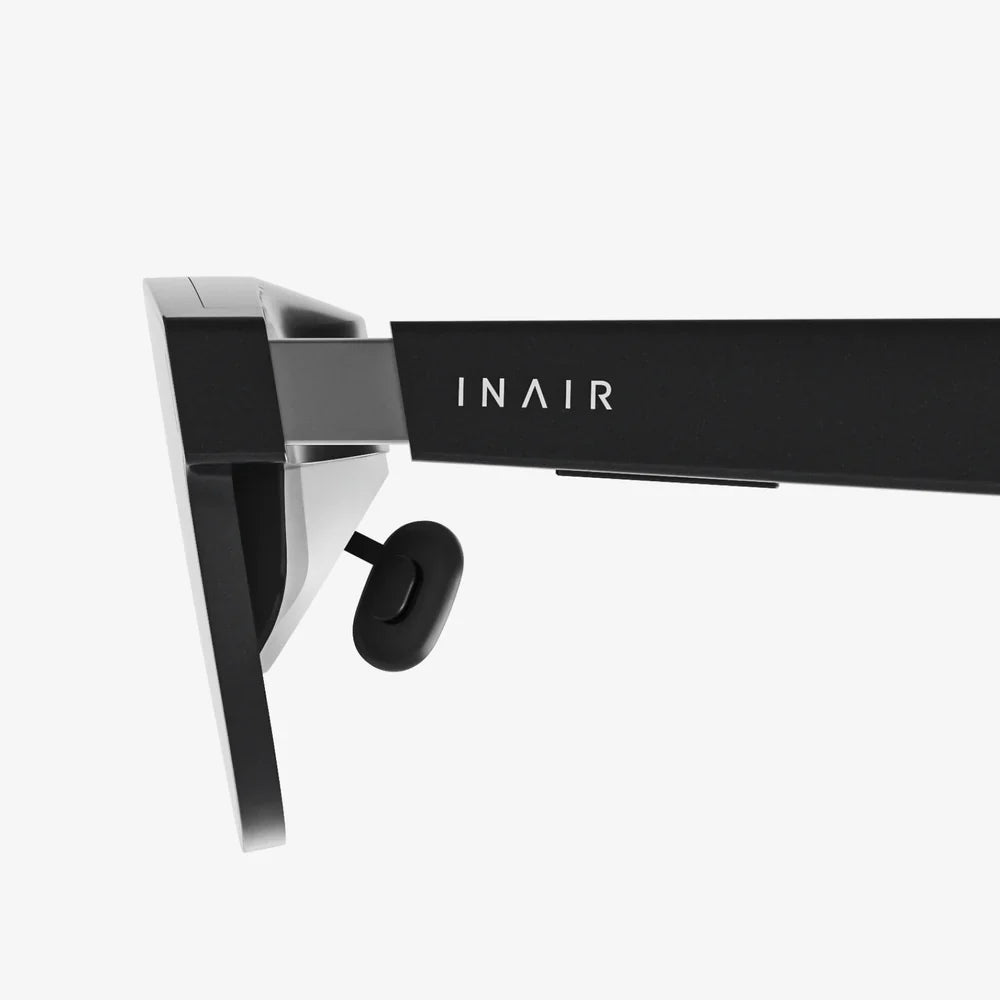
Imagine a world where digital information doesn't just live on a screen but is woven seamlessly into the fabric of your reality, a world where your entire field of view becomes a canvas for computation, and the power to manipulate your environment rests not in your pocket, but in your perception. This is the promise that has tantalized technologists for decades, and now, a new generation of hardware is emerging that finally has the raw power to make it a tangible, transformative part of our daily lives. The next chapter in personal computing is being written not on our desks, but on our faces, and it declares one thing with absolute certainty: the AR headset is next, and it is coming with serious power.
The Evolutionary Leap: From Prototype to Powerhouse
The journey of augmented reality wearables has been one of gradual, often frustrating, refinement. Early iterations were plagued by a fundamental trilemma: they were either too bulky, too underpowered, or possessed a field of view so narrow that the "augmentation" felt more like peeking through a keyhole. They were, for the most part, impressive proofs of concept that failed to justify their existence outside of niche industrial applications or as expensive novelties.
This era of compromise is rapidly closing. The core thesis for the next wave is a complete inversion of previous design philosophies. Instead of asking, "What can we build with available mobile components?" engineers are now asking, "What power is necessary to create a truly immersive and useful spatial experience?" The answer has catalyzed a hardware revolution. We are witnessing the convergence of several critical technological advancements that are finally breaking the trilemma.
At the heart of this new generation is a shift from borrowed mobile architecture to bespoke, purpose-built silicon. These are not repurposed smartphone processors; they are systems-on-a-chip (SoCs) designed from the ground up for the unique demands of spatial computing. This means dedicated processing units for a relentless barrage of tasks: real-time world mapping, persistent scene understanding, advanced hand and eye tracking, and the rendering of high-fidelity holograms that convincingly anchor to the real world.
Deconstructing the Power: What Makes This Generation Different?
The term "power" in this context is multifaceted. It's not merely a measure of gigahertz and core counts; it's a holistic measure of a system's ability to perceive, understand, and augment the world in real-time without latency—the ultimate destroyer of immersion.
Computational Power: The Engine Room
The primary processor is the central brain, but the real magic happens in the specialized co-processors. A powerful GPU is essential, but it must be incredibly power-efficient to manage thermal output in a device worn on the head. More importantly, Neural Processing Units (NPUs) have become non-negotiable. These accelerators are uniquely adept at handling the trillions of operations required for machine learning and computer vision algorithms. They are the workhorses that enable the headset to instantly recognize surfaces, classify objects (is that a table, a wall, or a person?), and understand spatial geometry. This constant, silent analysis of the environment is what allows digital objects to behave like physical ones—sitting convincingly on a real table and occluding correctly behind a real chair.
Sensory Power: The Eyes and Ears
A powerful computer is useless without rich data to compute. Next-generation headsets are equipped with a sophisticated array of sensors that act as their eyes and ears. This typically includes high-resolution RGB cameras for pass-through video, depth sensors (like LiDAR or structured light) to precisely map the environment in 3D, and inertial measurement units (IMUs) for tracking head movement with extreme precision. This sensor fusion—combining the data from all these sources—creates a comprehensive and dynamic 3D model of the user's surroundings. The sheer volume of data these sensors generate is staggering, requiring immense and immediate processing power to be useful.
Perceptual Power: The Intuitive Interface
Perhaps the most significant power upgrade is in the user interface. The clumsy controllers of the past are giving way to the most natural input devices we possess: our eyes and hands. Advanced eye-tracking cameras, capable of sub-millimeter precision, allow for intuitive navigation (just look at a button to select it) and enable foveated rendering. This revolutionary technique uses eye-tracking to render the exact spot where the user is looking in high resolution, while subtly reducing the detail in their peripheral vision. This reduces the graphical processing load by an order of magnitude, a critical efficiency gain that allows for stunning visuals without melting the device.
Complementing this is robust hand-tracking. Using the onboard cameras and AI, the headset can understand intricate hand gestures, allowing users to pinch, grab, resize, and manipulate digital content directly. This creates a profound sense of agency and immersion, eliminating the abstraction of a controller and making the digital world feel tactile.
The Ripple Effect: How Powerful AR Reshapes Industries
With this newfound power, AR headsets transition from a cool gadget to an indispensable professional tool and a revolutionary medium for creativity and connection.
Revolutionizing the Workspace
Imagine an architect walking through a construction site, seeing the digital blueprints overlaid perfectly onto the unfinished steel girders, instantly identifying clashes or deviations. Envision a surgeon having vital signs, ultrasound data, or procedural guides visually pinned to their field of view during an operation, keeping their focus entirely on the patient. Think of a field engineer repairing a complex machine, with animated instructions and diagnostic data superimposed directly onto the components they are working on.
This is the promise for enterprise. Powerful AR provides a hands-free, context-aware information system that can dramatically increase efficiency, reduce errors, and enhance training. The ability to collaborate with remote experts who can see your view and draw annotations into your space makes physical distance irrelevant.
Redefining Social Connection and Entertainment
Beyond the office, the implications for social interaction and play are profound. Social media will evolve from a feed on a phone to a shared experience in your living room. Instead of just video calling, you could share a virtual sofa with a friend who lives across the globe, watching a movie on a virtual screen that you both see, or playing a board game on your actual coffee table.
Gaming will cease to be confined to a television. Your entire home could become a dungeon to explore, or a virtual pet could interact with your real-world furniture. The line between the game world and the physical world will blur in ways previously only possible in science fiction, all powered by the headset's ability to understand and respect your environment.
Unleashing Creativity
For artists and designers, this technology offers a truly spatial canvas. Sculptors can mold virtual clay in mid-air, interior designers can place and resize virtual furniture within a room to perfect a layout, and musicians could compose by manipulating virtual instruments and sound waves in three dimensions. The headset becomes a portal to a studio limited only by imagination, not by physical tools or space.
The Challenges on the Horizon
Despite the exciting progress, significant hurdles remain. Battery life is a persistent challenge; immense processing power demands immense energy. Solutions include efficient processors, swappable battery packs, and the potential for a companion compute puck that handles the heaviest tasks. Form factor, while improving, must continue to shrink toward the ultimate goal: a pair of stylish, lightweight glasses that offer full AR capability.
Furthermore, the software ecosystem is still in its infancy. Developers need powerful and intuitive tools to build these immersive spatial experiences. Finally, and most crucially, there are profound questions about privacy, data security, and the societal impact of perpetually recording and analyzing our environments. Establishing clear norms and ethical guidelines will be as important as the technology itself.
The message from the industry is clear and unequivocal. This is not a incremental update; it is a foundational shift. The components are aligning, the software is maturing, and the vision is crystallizing. We are standing at the precipice of a new era of computing, one that promises to demote the handheld rectangle from the center of our digital lives and replace it with something far more intuitive, powerful, and integrated. The next headset isn't just another device; it's a gateway, and its arrival is imminent.
Share:
AI Glasses vs Smart Glasses: The Ultimate Guide to the Future on Your Face
How to Use iPhone VR on PC: A Complete Guide to Cross-Platform Immersion