


Imagine controlling your devices without touching them, navigating a city with arrows painted on the pavement only you can see, or learning to repair a complex engine with holographic instructions overlaid on the machinery itself. This isn't a glimpse into a distant sci-fi future; it is the emerging reality being built today through the revolutionary technology of AR screen projection. This transformative approach to human-computer interaction is poised to dissolve the barriers between the digital and the physical, turning the very world around us into a dynamic, responsive, and infinitely large screen.
Beyond the Glass Rectangle: Defining the New Paradigm
For decades, our primary window to the digital world has been a glowing, flat rectangle—first the monitor, then the television, and now the smartphone. We are conditioned to peer into these devices, our interactions confined to their physical boundaries. Augmented Reality (AR) began to challenge this by superimposing digital images onto our view of the real world, typically through the lens of a smartphone camera or a dedicated headset. However, this often still felt like looking at a screen, just one that was transparent.
AR screen projection shatters this paradigm entirely. Instead of confining information to a display, it projects light directly onto the real-world surfaces around us, effectively turning any table, wall, or even your own hand into an interactive interface. This creates a seamless blend where digital elements appear to be physically present in your environment, co-existing with tangible objects without the mediating layer of a traditional screen. It’s the difference between watching a video of a fire and feeling its warmth; one is a representation, the other is an experience.
How the Magic is Woven: The Technology Behind the Illusion
The creation of this seemingly magical experience rests on a sophisticated convergence of hardware and software, a symphony of light, processing power, and precise tracking.
The Projection Core: Microdisplay Engines
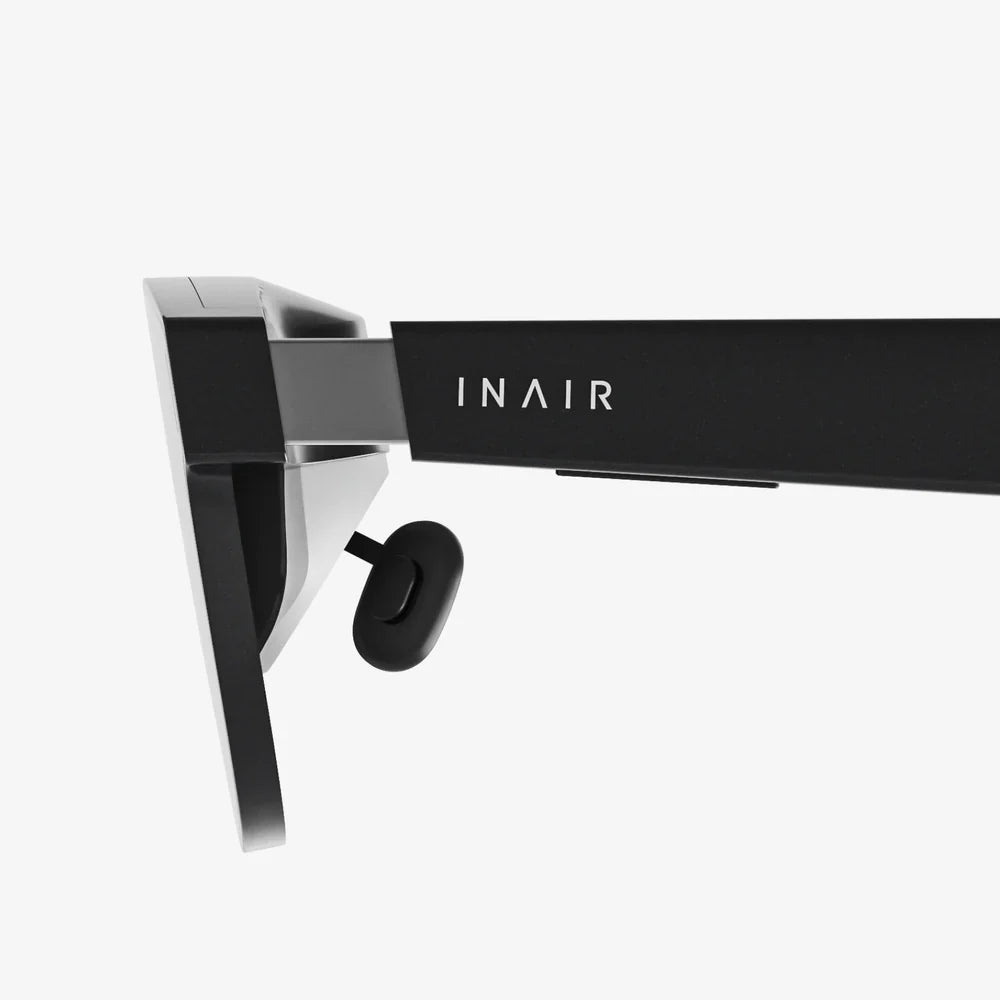
At the heart of any projection system is the microdisplay—the tiny, powerful engine that generates the image. Unlike the projectors found in conference rooms, these are miniaturized to an extraordinary degree, often small enough to be integrated into the arms of a pair of glasses or a compact wearable device. Different technologies are employed, including LCoS (Liquid Crystal on Silicon), DLP (Digital Light Processing), and laser beam scanning (LBS), each with its own advantages in terms of brightness, contrast, power efficiency, and form factor. These microdisplays are responsible for generating the crisp, bright images necessary to be visible even in well-lit environments.
The Eyes of the System: Sensors and Spatial Mapping
A projector by itself is blind. It can throw an image, but it doesn't know what it's projecting onto. This is where a sophisticated array of sensors comes into play. Depth-sensing cameras, LiDAR scanners, and standard RGB cameras work in concert to constantly scan the environment. They create a real-time, three-dimensional map of the space, identifying surfaces, measuring distances, and recognizing objects. This spatial understanding is absolutely critical. It allows the system to adapt the projected image—warping and distorting it to correct for the angle and curvature of a surface, ensuring that a rectangle projected onto a curved wall still appears as a perfect rectangle to the user.
The Brain: Processing and Computer Vision
The raw data from the sensors is meaningless without immense computational power. Onboard processors running advanced computer vision algorithms interpret the sensor data. They perform tasks like simultaneous localization and mapping (SLAM), which allows the device to understand its own position within the environment while building a map of it. These algorithms also handle gesture recognition, interpreting hand movements as commands to tap, swipe, or pinch the projected interface. This low-latency processing is what makes the interaction feel instantaneous and natural, rather than laggy and frustrating.
Interaction: Beyond Touch to a World of Gestures
With the interface now living out in the world, traditional input methods like a mouse or keyboard are obsolete. Interaction is achieved through a combination of modalities. Fine-motor hand and finger gestures allow for precise control, much like using a touchscreen, but without the need to make physical contact. Voice commands offer a hands-free way to launch apps or perform searches. Some systems are even exploring EMG (electromyography), which detects the subtle electrical signals generated by muscles before movement occurs, enabling even more intuitive and anticipatory control. This multimodal approach makes the technology accessible and adaptable to various contexts and user preferences.
A World Transformed: The Expansive Applications
The potential use cases for AR screen projection are as vast as the environments it can transform. Its impact will be felt across nearly every industry and facet of daily life.
Revolutionizing the Professional Workspace
The concept of the office is ripe for disruption. Imagine a designer who can project their entire toolkit—palettes, brushes, menus—onto their desk, freeing their monitor to display only the canvas. A surgeon could have a patient's vital statistics and MRI scans projected directly onto their body during a procedure, eliminating the need to look away at a separate screen. Architects and engineers could gather around a physical scale model and project dynamic data, structural simulations, or aesthetic changes onto it, blending the tangible with the digital in collaborative design reviews. This technology can turn any surface into a multi-monitor setup, vastly increasing productivity and contextual understanding.
The Future of Learning and Skill Development
Learning complex physical tasks, from playing an instrument to repairing an engine, could be dramatically accelerated. A projected interface could overlay finger placements on a guitar fretboard, animate the flow of fuel through an engine block, or provide step-by-step assembly instructions directly onto the components. This "see-through manual" approach reduces cognitive load, minimizes errors, and creates a more immersive and effective learning experience by anchoring information directly to the relevant objects.
Seamless Navigation and Contextual Information
Gone are the days of clumsily holding up a phone to follow a map. AR screen projection can paint navigation lines directly onto the pavement, highlight the entrance to a subway station, or indicate the correct hallway turn inside a large airport. In a retail setting, it could project product information, reviews, or comparison guides onto the shelf right next to the items. In a museum, it could bring exhibits to life, projecting historical scenes around artifacts or translating ancient text. Information becomes ambient, contextual, and instantly available without ever needing to unlock a device.
Redefining Home Entertainment and Social Connection
The living room entertainment system could evolve into an immersive environment. Project a massive, theater-sized screen onto any blank wall without the physical hardware. Play a board game where the board comes to life with animated characters and effects. During a video call, it could feel as if the person is sitting across the table from you, their life-sized image projected onto an empty chair, creating a powerful sense of presence that a small screen cannot match.
Navigating the Hurdles: Challenges on the Path to Adoption
Despite its immense promise, the path to ubiquitous AR screen projection is fraught with significant technical and social challenges that must be overcome.
The Tyranny of Ambient Light
The single greatest technical challenge is ambient light. A projector fights a constant battle against the sun or bright indoor lighting. To create a vivid, clear image, projection systems require extremely high brightness (measured in lumens), which demands significant power and generates heat—two major constraints for wearable, battery-powered devices. Advancements in laser technology and light-efficient waveguides are crucial to winning this battle.
The Form Factor Conundrum
For the technology to become mainstream, the hardware must become socially acceptable. The ideal form factor—a pair of stylish, lightweight glasses that can be worn all day—is incredibly difficult to engineer. It requires packing powerful projectors, batteries, sensors, and processors into a frame that doesn't feel heavy, look absurd, or overheat. Achieving this balance is the holy grail for engineers in this field.
The Privacy Imperative
A device that constantly scans and records its surroundings raises profound privacy questions. The same cameras that map a room for projection could, in theory, be misused to collect sensitive data without consent. Establishing clear, transparent, and robust privacy frameworks—with on-device processing and user-controlled data—is not just a feature but a prerequisite for public trust and adoption.
Designing for a New Reality
We have decades of experience designing interfaces for rectangular screens. Designing for a dynamic, three-dimensional, and infinite canvas is a completely new discipline. UI/UX designers must rethink fundamental principles: How do menus work when they float in the air? How is information hierarchy established? How do we avoid overwhelming users with a constant stream of visual data? Creating intuitive, elegant, and non-intrusive interfaces is a monumental design challenge.
The Invisible Future: Where Do We Go From Here?
The evolution of AR screen projection is inextricably linked to progress in several adjacent fields. The rollout of high-bandwidth, low-latency 5G and future 6G networks will allow for complex processing to be offloaded to the cloud, reducing the hardware burden on the wearable device itself. Advances in Artificial Intelligence will make these systems more predictive and contextual, understanding user intent and serving up information before it's even requested. And breakthroughs in battery technology are essential to providing the all-day power these systems demand.
We are moving toward a future where technology retreats from the foreground of our attention and becomes ambient. The goal is not to create more distracting devices, but to create tools that enhance our perception of and interaction with the world, rather than separating us from it. AR screen projection is a fundamental step toward this goal—the final step in the journey of the computer, from room-sized machine to desktop appliance to pocketable rectangle, and finally, to an invisible layer woven seamlessly into the fabric of our reality.
The day is approaching when the question won't be which screen to look at, but simply what you want to do, with the digital world effortlessly appearing around you to make it happen. The world itself will be your interface, limited only by your imagination.
Share:
Performing AR: The Invisible Revolution Reshaping Live Entertainment and Storytelling
Best Wearables for Productivity: The Ultimate Guide to Optimizing Your Workday