


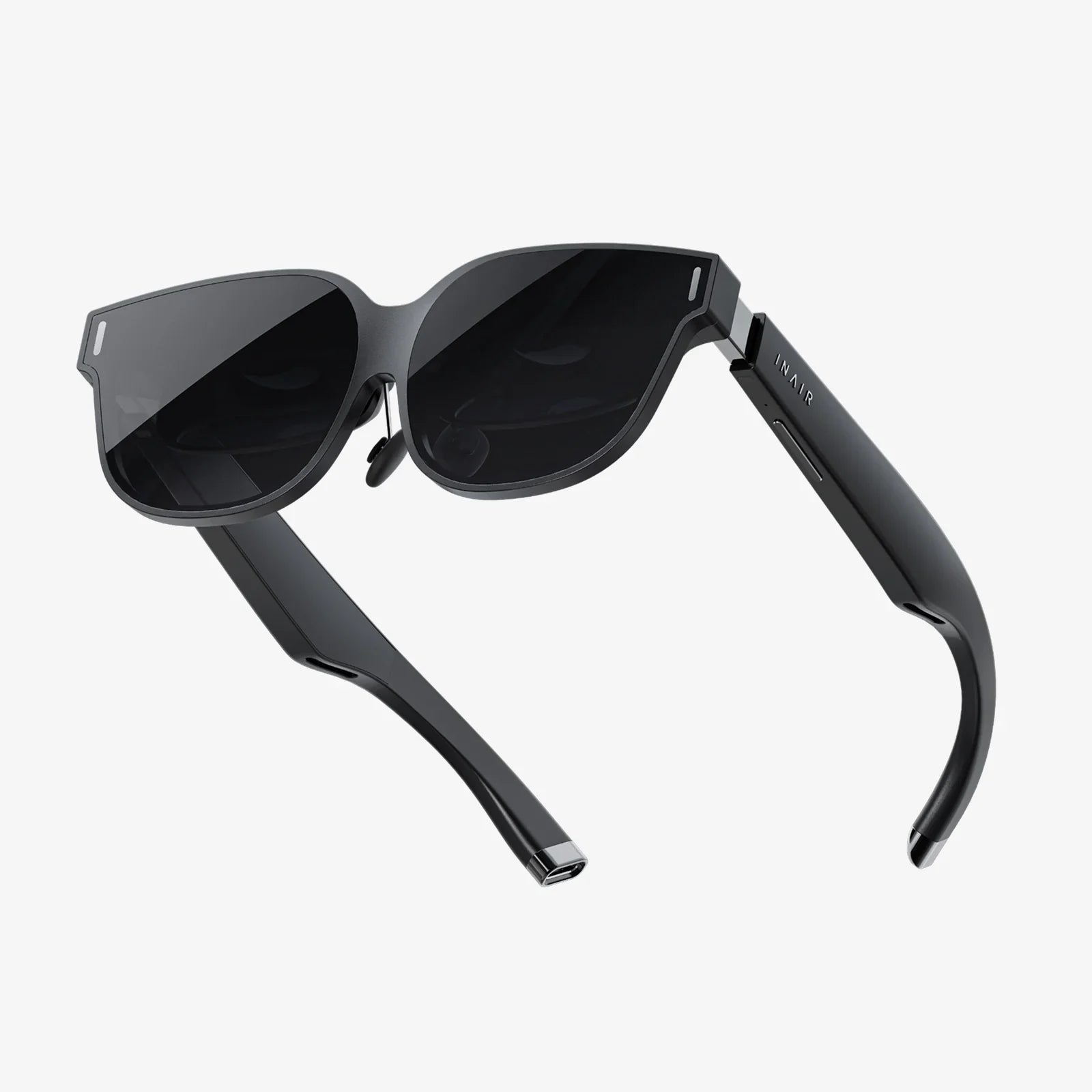
Imagine a world where digital information doesn’t live on a screen in your hand, but is seamlessly woven into the fabric of your reality. Directions float on the pavement ahead of you, a colleague’s avatar helps you fix a complex engine from across the globe, and your favorite novel’s characters act out scenes on your coffee table. This is the promise of augmented reality, and 2025 has become the year this future finally, tangibly, arrives on the bridge of your nose. The market is no longer a sparse landscape of prototypes and developer kits; it’s a bustling arena of sophisticated eyewear vying for a place in your life. But with great choice comes great complexity. How do you possibly choose? This definitive AR smart glasses comparison for 2025 is your essential map to navigate this exciting new frontier, separating the revolutionary from the merely evolutionary.
The 2025 AR Landscape: Beyond the Hype
The AR smart glasses market in 2025 is characterized by a decisive and critical bifurcation. We are no longer waiting for a single, mythical device that does everything for everyone. Instead, the industry has matured into two distinct, powerful camps, each with a clear vision for how AR integrates into our lives.
The Form-First, Consumer-Centric Segment
This category prioritizes wearability and social acceptance above all else. The mantra here is discreet empowerment. The goal is to create glasses that people would willingly wear all day, every day, not because they are a powerful computer, but because they are a desirable accessory that happens to be smart.
- Design Philosophy: These devices look strikingly similar to high-end prescription glasses or fashionable sunglasses. They are lightweight, often weighing less than 80 grams, and feature slimmed-down arms (temples) that hide miniaturized electronics. A variety of frame shapes, lens colors, and customizations are available.
- Core Functionality: The focus is on micro-interactions with your digital life. Think real-time notifications, translation overlays, discreet navigation cues, hands-free calls and music, and quick photo/video capture. The processing is often a hybrid model, leveraging a powerful companion device in your pocket for heavy lifting.
- The Trade-off: To achieve this form factor, these glasses typically employ less immersive display technologies like birdbath optics, which project a smaller, fixed screen into your field of view. The field of view (FoV) is often narrower, creating a experience more akin to a floating smartwatch than an all-encompassing virtual canvas.
The Function-First, Enterprise & Prosumer Segment
This category is built for capability, immersion, and performance. The primary user isn’t a consumer on the street, but a surgeon in an operating room, an engineer on a factory floor, or a designer in a virtual studio.
- Design Philosophy: These are unapologetically technological devices. They are often heavier, sturdier, and designed for durability in demanding environments. While design has improved significantly, their form factor clearly communicates their advanced capabilities.
- Core Functionality: This is where you find true spatial computing. High-resolution, wide FoV displays (often using waveguide technology) allow for complex 3D models to be placed and manipulated in real space. Advanced depth sensors, LiDAR, and high-fidelity cameras enable precise environmental understanding and interaction. They are frequently standalone devices with powerful onboard processors.
- The Trade-off: The pursuit of maximum power and immersion means these devices are larger, have shorter battery life (often requiring a wired battery pack), and are not yet designed for all-day social wear. They are tools, first and foremost.
Key Comparison Metrics for 2025
Cutting through the marketing speak requires a focus on the technical specifications that truly define the user experience. Here’s what to scrutinize in any 2025 AR smart glasses comparison.
Display & Visual Fidelity: The Window to AR
This is arguably the most critical differentiator. The technology used directly impacts the quality, immersion, and practicality of the AR experience.
- Field of View (FoV): Measured diagonally in degrees, this is the angular size of the digital canvas you see. In 2025, consumer glasses range from a modest 20° to a more immersive 50°. Enterprise devices can push beyond 70°, offering a much more convincing blend of digital and physical. A wider FoV is essential for viewing large virtual screens or life-sized digital objects.
- Resolution and Brightness: High resolution (often quoted per eye, e.g., 1920x1080) is crucial for reading text and seeing sharp graphics. Perhaps more important is nits of brightness. To be visible in sunny outdoor conditions, displays need to exceed 2000 nits, a benchmark several 2025 models now meet. Dim displays become useless the moment you step outside.
-
Display Technology:
- Waveguide: The gold standard for sleek designs. Light is piped through a flat, transparent glass lens. It allows for see-through optics and a relatively normal glasses design but can suffer from limited FoV and occasional visual artifacts like rainbow effects.
- BirdBath: Common in consumer devices. Uses a combiner (a half-mirror) to reflect the image from a micro-OLED screen into your eye. It can offer great color and contrast but often results in a smaller, less immersive image that appears to float in front of you.
- MicroLED (Emerging): The holy grail. Offers incredible brightness, efficiency, and contrast. While still in its infancy for mass production, it promises to solve the brightness and power consumption issues of other technologies.
Processing Power & Connectivity: The Brain of the Operation
How the glasses compute is a fundamental architectural choice.
- Standalone vs. Tethered: Standalone glasses have all processing onboard, offering complete freedom of movement—a key feature for enterprise applications. Tethered (or companion) models rely on a wired or wireless connection to a smartphone or a dedicated compute puck, leveraging its processor and battery to keep the glasses light and cool.
- Dedicated AR Chipsets: 2025 has seen the rise of chipsets designed specifically for AR workloads. These processors are optimized for low power consumption, spatial tracking, computer vision, and AI inference, enabling more complex experiences without overheating or draining the battery in minutes.
Audio: The Forgotten Sense
Immersive AR isn’t just visual. Spatial audio is a game-changer, making a digital object sound like it’s actually in your room. Most high-end glasses now use bone conduction or miniature beam-forming speakers that direct sound into your ears without headphones, allowing you to stay aware of your real-world environment—a critical feature for safety and social interaction.
Battery Life & Form Factor: The Practical Reality
Battery life is the great limiter. Claims vary wildly based on usage. Consumer glasses using companion processing can often last a full day on a charge with typical use (notifications, occasional photos). Powerful standalone enterprise devices might only last 2-3 hours under heavy load, necessitating hot-swappable batteries. The placement of the battery—in the arms, in a separate pack, or on a strap—directly affects weight distribution and comfort.
The Software Ecosystem: It’s What You Do With It
The most powerful hardware is useless without compelling software. The ecosystem battle is fierce in 2025.
- Operating Systems: Some manufacturers use a forked version of Android, while others are building proprietary spatial OS platforms designed from the ground up for contextual, hands-free interaction.
- App Stores & Developer Support: The breadth and quality of available applications make or break a platform. Look for established tools for productivity (virtual monitors, 3D design), entertainment (AR games, immersive video players), and utilities (navigation, measurement).
- AI Integration: This is the standout software feature of 2025. AI assistants are no longer just voice-activated; they are vision-activated. Point your glasses at a monument to get its history, look at your fridge to get recipe suggestions based on its contents, or have a real-time transcript of a conversation displayed subtly in your periphery. The glasses’ cameras and microphones act as the senses for a powerful, contextual AI that understands what you see and hear.
Privacy, Ethics, and the Social Contract
As these devices, equipped with always-on cameras and microphones, become more prevalent, the conversation around privacy has intensified. 2025 models have addressed this with hardware solutions like physical camera shutters and recording indicator LEDs that cannot be disabled by software. Furthermore, new ethical frameworks and potential “AR etiquette” norms are emerging, questioning when it’s appropriate to record and how to signal to others that you are an AR user. Choosing a brand that is transparent about its data handling practices is more important than ever.
Making Your Choice: A User-Centric Guide
So, which path is right for you? Let’s break it down by user profile.
For the Everyday Pioneer & Style-Conscious User
If your priority is to subtly enhance your daily life without becoming a cyborg, focus on the Form-First consumer segment. Prioritize style, weight, and all-day comfort. Your use cases are likely communication, light navigation, media consumption, and quick information access. A narrower FoV is a acceptable trade-off for a device you’ll actually want to wear. Ensure it works flawlessly with your existing phone ecosystem.
For the Developer, Creator, and Power User
If you are building the future, experimenting with spatial computing, or require powerful AR for design, modeling, or complex data visualization, you need a device from the Function-First segment. Prioritize a wide FoV, high resolution, robust tracking capabilities, and a full-featured SDK (Software Development Kit). Battery life and design will be secondary to raw performance and capability.
For the Enterprise and Industrial User
For remote assistance, digital work instructions, training, and complex fieldwork, reliability and performance are non-negotiable. Choose a standalone, enterprise-grade device with industrial durability, best-in-class tracking, and a proven software partner for your industry-specific applications. Long-term support, security, and device management tools are just as important as the hardware specs.
The future we were promised is finally in view, and it’s being shaped by the choices we make today. This isn’t about finding a single perfect pair of glasses; it’s about finding the perfect pair for you—for your life, your work, and your vision of reality. The best device is the one that feels less like technology you have to manage and more like an intuitive extension of your own capabilities, quietly unlocking a world of possibility right before your eyes.
Share:
Artificial Intelligence Wearable Device: The Next Evolution in Personal Technology
List of Wearables: The Ultimate Guide to the Tech on Your Wrist and Beyond