


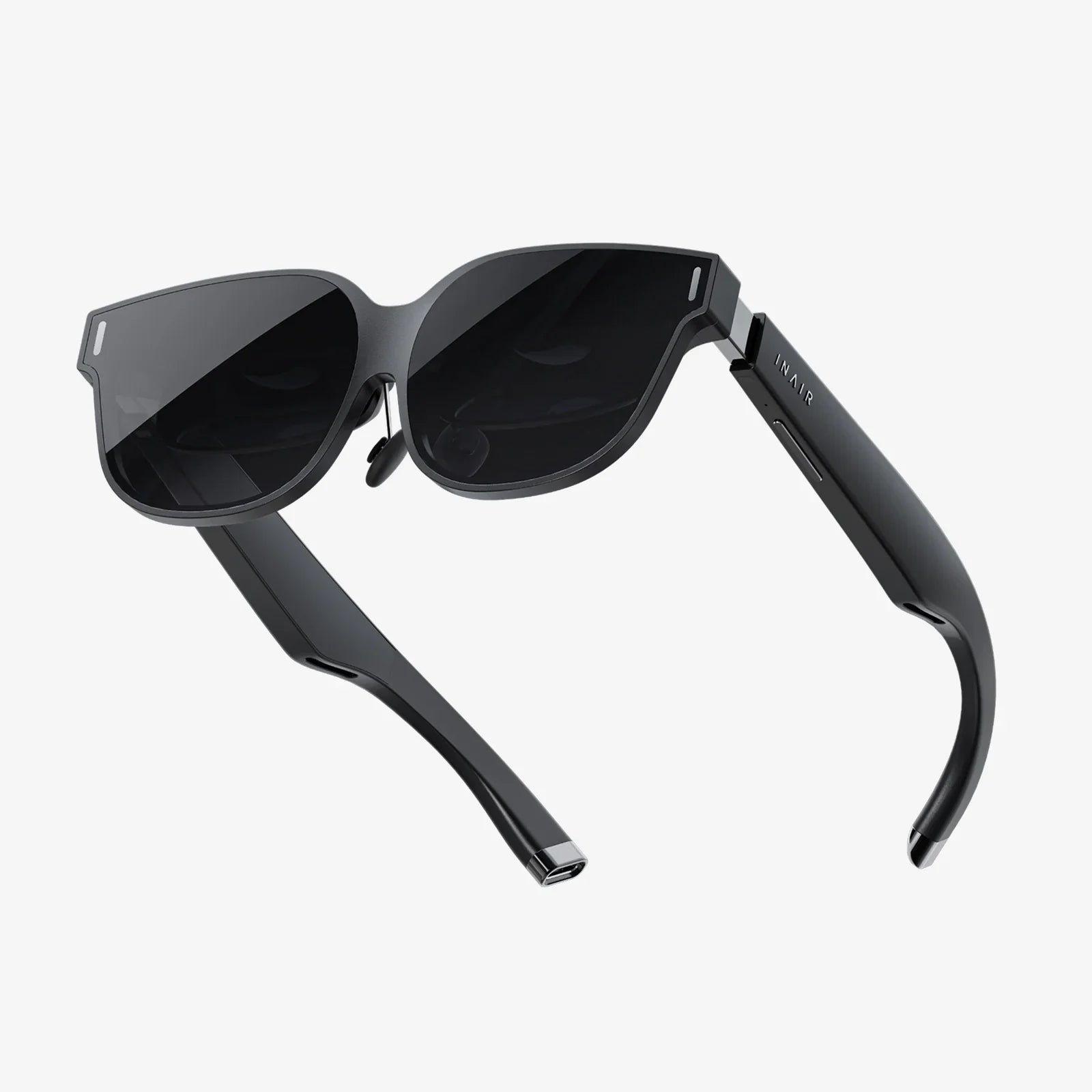
- by wangfred
AR Smart Glasses News Updates: The Future is Now and It's Transparent
- by wangfred
Imagine a world where digital information doesn’t live on a screen in your hand, but floats seamlessly in the air around you, interacting with your environment and enhancing your perception of reality. This isn’t a scene from a science fiction film; it’s the rapidly approaching future being built today in research labs and manufacturing facilities around the globe. The pace of innovation in augmented reality smart glasses is accelerating at a breathtaking rate, promising to fundamentally reshape how we work, connect, learn, and play. The buzz surrounding this technology is louder than ever, and for good reason—we are on the cusp of a transition from clunky prototypes to devices that could become as ubiquitous as the smartphone. Staying informed with the latest AR smart glasses news updates is no longer just for tech enthusiasts; it’s for anyone curious about the next great leap in human-computer interaction.
While consumer-focused devices often grab the headlines, the most significant and tangible progress in AR smart glasses has undeniably occurred within the enterprise and industrial sectors. Here, the value proposition is clear, immediate, and measurable, leading to widespread adoption.
On factory floors, warehouse logistics centers, and remote field service sites, AR glasses are becoming indispensable tools. The latest news updates from this sector highlight incredible efficiency gains. Technicians performing intricate repairs can have schematic diagrams, instruction manuals, and live video feeds from remote experts superimposed directly onto their field of view, freeing their hands and drastically reducing errors. Warehouse pickers are guided by digital waypoints that hover over the exact shelf and bin they need, optimizing their path and speeding up fulfillment times exponentially. For these applications, the ROI is so compelling that slightly bulkier form factors are an acceptable trade-off for ruggedness, long battery life, and superior functionality.
Beyond simple instructions, enterprise AR is evolving into a platform for the "spatial workforce." New updates showcase software platforms that allow for the creation of complex digital work instructions that are tied to physical objects. A trainee on an assembly line can see a 3D animation demonstrating the exact torque sequence for a bolt, or a highlight indicating which wire to connect next. This contextual, hands-free guidance is revolutionizing training, slashing the time required to onboard new employees and ensuring unprecedented levels of consistency and quality control. Major players in aerospace, automotive, and heavy industry are now running global rollouts of these technologies, signaling a mature and rapidly scaling market.
The holy grail for the industry remains a pair of AR smart glasses for the average consumer—something stylish, lightweight, socially acceptable, powerful, and affordable. Recent news has been a whirlwind of tantalizing prototypes, ambitious roadmap announcements, and sobering realities.
The single biggest challenge is miniaturization. Packing a powerful processor, batteries, cameras, spatial sensors, speakers, and waveguide displays into a package that resembles everyday eyewear is a monumental feat of engineering. News from display technology companies reveals constant innovation in micro-LEDs and holographic waveguides, which are crucial for creating bright, high-resolution images in a thin lens. We are seeing prototypes that are getting closer to the desired form factor, but mass production of these advanced components remains a significant hurdle. The industry is grappling with the fundamental trade-off: launch a limited-functionality device that looks good now, or wait for the technology to mature for a more immersive experience?
Hardware is only one piece of the puzzle. The history of technology is littered with well-designed devices that failed because they lacked a compelling reason to exist. The search for the "killer app" for consumer AR is ongoing. Will it be immersive turn-by-turn navigation that paints arrows onto the street? Contextual information about restaurants and landmarks as you walk through a new city? Revolutionary new social experiences where digital avatars can sit on your real-world couch? Or a fundamental reimagining of media consumption, with massive virtual screens available anywhere? Recent developer conferences and SDK updates suggest a strong bet is being placed on a blend of all the above, with a heavy emphasis on creating a new spatial web that seamlessly overlays the physical world.
The steady stream of AR smart glasses news updates is fueled by underlying advancements across several critical technological domains.
For AR glasses to convincingly blend digital content with the real world, they must understand that world in exquisite detail. This is achieved through sophisticated computer vision algorithms and a process called Simultaneous Localization and Mapping (SLAM). The latest updates in this field involve on-device AI processors that can perform real-time 3D mapping, object recognition, and occlusion (where digital objects can convincingly hide behind physical ones). This allows for incredibly stable and realistic interactions, making the digital elements feel truly anchored in your environment.
Power consumption remains a formidable obstacle. High-resolution displays and constant environmental processing are incredibly energy-intensive. News from the battery tech sector is crucial here. Developments in solid-state batteries, more efficient chip architectures, and innovative power management techniques are all being closely watched. Some rumored approaches involve splitting the compute load between the glasses and a companion device, like a smartphone or a small wearable computer, to preserve all-day wearability.
As with any transformative technology, AR glasses bring a host of societal and ethical questions that are increasingly part of the news cycle. The ability to record video and audio discreetly, coupled with facial recognition capabilities, presents a profound privacy challenge. How do we prevent these devices from becoming the ultimate surveillance tool? Recent discussions among policymakers and tech ethicists have centered on building privacy into the core of the technology—concepts like on-device processing that doesn’t stream raw data to the cloud, clear visual indicators when recording is active, and robust digital consent frameworks. The industry is aware that public trust is its most valuable currency and losing it could stifle innovation before it even begins.
The race to dominate the AR platform is shaping up to be one of the most significant battles in tech history. While specific brands are omitted, it's clear from recent patent filings, acquisitions, and hiring trends that tech giants and ambitious startups are all-in. This competition is a key driver of the rapid news cycle. We see one company acquiring a pioneering waveguide manufacturer, another announcing a strategic partnership with a major lens maker, and yet another unveiling a groundbreaking depth-sensing camera. This flurry of activity points to a future where the AR landscape will be diverse, with different players potentially dominating specific segments like enterprise, gaming, or general consumer use.
So, what can we expect from the next wave of AR smart glasses news updates? In the short term, expect more iterative enterprise devices with improved comfort, field of view, and battery life. For consumers, we will likely see more developer-focused kits and perhaps the first generation of "lifestyle" devices that prioritize a specific function, like navigation or fitness, within a socially acceptable design. The long-term vision, however, is far more ambitious. The goal is a persistent, ubiquitous computing overlay on our reality—a world where the line between physical and digital is forever blurred in a useful and magical way.
The next time you see a headline about a new partnership, a breakthrough in display tech, or a patent for a novel interface, remember that you’re not just reading about a new gadget. You’re getting a front-row seat to the creation of a new sense, a new medium, and potentially the most intimate and powerful technology humanity has ever devised. The journey from our current reality to an augmented one is being written now, one news update at a time, and its story is more compelling than any fiction.
Share:
Autostereoscopic Display: The Future of Glasses-Free 3D is Here
Mr. Reality: The Unseen Architect of Our Digital Lives