Imagine a world where digital information doesn’t live on a screen in your hand but is seamlessly woven into the fabric of your reality, accessible with a mere glance. This is the promise of augmented reality smart glasses, a technology perpetually on the cusp of mass adoption. For years, the narrative has been one of ‘almost there,’ but recent AR smart glasses updates suggest we are navigating the final, complex turns before this technology truly arrives. The pace of innovation is accelerating, moving beyond clunky prototypes and niche enterprise applications toward sleek, powerful, and intuitive devices poised to redefine human-computer interaction. This isn't just about a new gadget; it's about a fundamental shift in how we perceive and interact with the world around us. The revolution is being built, update by update, in labs and manufacturing facilities right now, and its impact will be profound.
The Core Hardware Evolution: Seeing the World Anew
The most significant barriers to widespread AR glasses adoption have always been hardware: how to project bright, high-resolution images onto transparent lenses in a package that is socially acceptable, comfortable to wear for extended periods, and powered for a full day's use. Recent updates indicate massive strides on all these fronts.
Display Technology Breakthroughs
The heart of any AR glasses experience is the display system, known as the optical engine. The classic battle between waveguide and birdbath optics continues, but new entrants are refining the playbook. Advancements in microLED technology are a game-changer. These microscopic LEDs offer unparalleled brightness and color saturation while consuming a fraction of the power of traditional OLEDs. This means displays can remain visible even in direct sunlight without draining the battery in minutes. Furthermore, innovations in holographic and diffractive waveguides are creating thinner, lighter lenses with a significantly larger field of view (FOV), moving the experience from a small, floating window to a more immersive canvas.
The Form Factor Conundrum
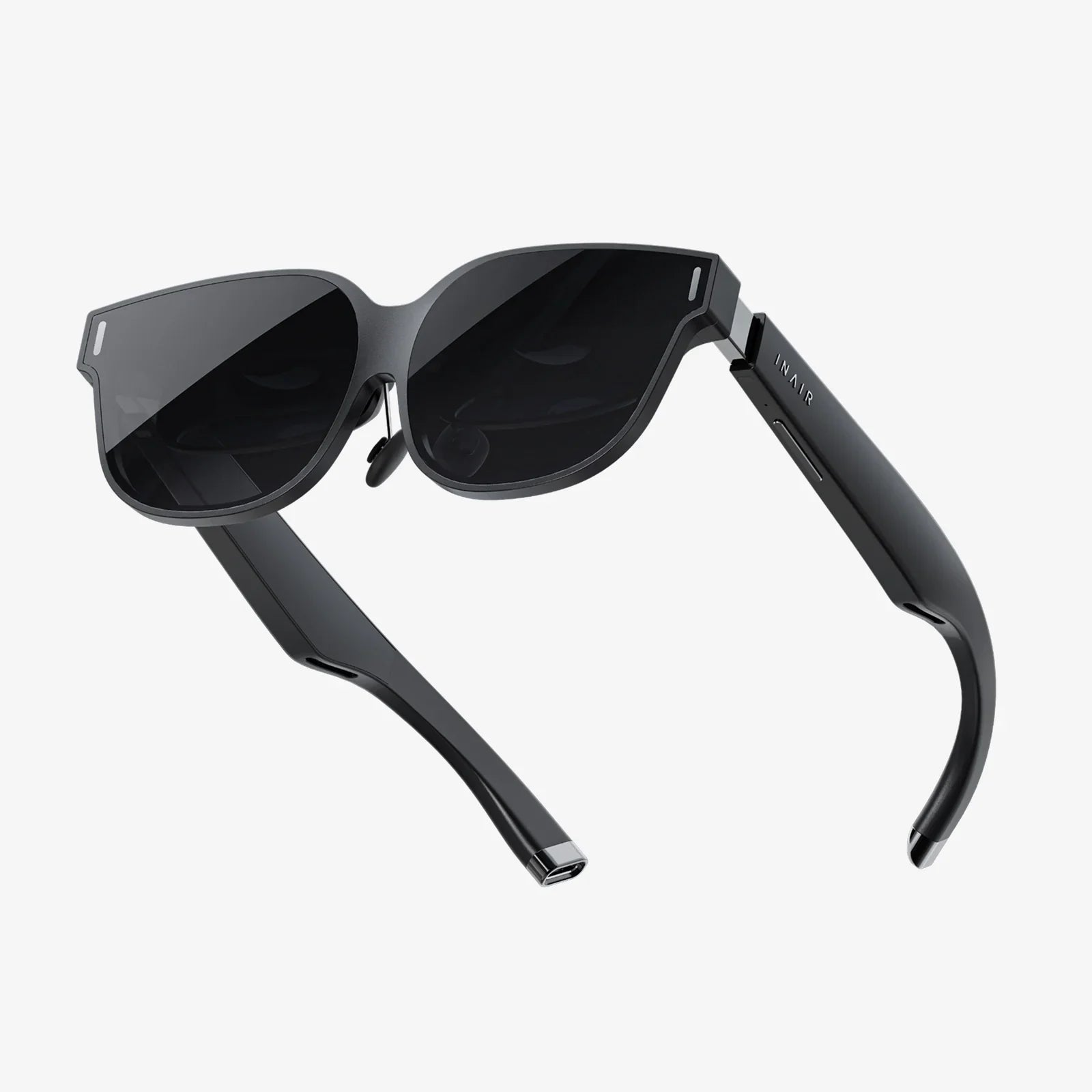
Gone are the days of accepting a bulky, obtrusive design as a necessary evil for advanced functionality. The latest prototypes and releases showcase a concerted push toward normalization. We are seeing designs that closely resemble premium eyewear, with compute units and batteries elegantly integrated into the temples. The use of advanced, lightweight composites is becoming standard. Some developers are even exploring a modular approach, where a powerful processing unit can be tethered wirelessly or housed in a user's pocket, allowing the glasses themselves to remain ultra-lightweight and fashionable. This focus on aesthetics is a critical update, acknowledging that for consumer adoption, the technology must first pass the ‘face test.’
Sensory Expansion
Modern AR glasses are becoming sensory powerhouses. They are no longer just about overlaying visuals. Updates include the integration of high-fidelity spatial audio speakers and microphones, enabling immersive soundscapes and clear voice interactions without the need for headphones. Advanced sensor arrays are now standard: high-resolution RGB cameras for video capture and world understanding, depth sensors for precise spatial mapping, and eye-tracking cameras that are becoming faster and more accurate. This last feature is particularly vital, enabling intuitive gaze-based controls and dynamic focus (vergence-accommodation) that reduces the visual strain of viewing virtual objects at different depths.
The Software and AI Symphony: Making Sense of It All
Powerful hardware is meaningless without intelligent software to orchestrate it. The software and AI stacks driving the latest AR glasses are where the magic truly happens, transforming raw sensor data into a coherent and helpful experience.
Spatial Computing and Scene Understanding
The term ‘spatial computing’ has moved from jargon to a core tenet of AR development. The latest operating systems for AR glasses are built from the ground up to understand and interact with the user's environment in real-time. Through a combination of simultaneous localization and mapping (SLAM) algorithms and machine learning, these devices can now map a room, identify surfaces (floors, walls, tables), and recognize objects with startling accuracy. This allows digital content to not just float in space but to interact with the physical world—a virtual pet running around your coffee table or a recipe interface pinned neatly to your kitchen cabinet.
The AI Co-pilot Integration
The most transformative software update is the deep integration of powerful AI assistants. These are not simple voice commands; they are contextual, multimodal agents. Imagine looking at a complex monument and quietly asking your glasses for its history. Or having a real-time translation of a foreign language menu overlay the text itself. During a technical repair, an AI could recognize the components you're looking at and overlay step-by-step instructions. This AI isn't just an app; it's the central nervous system of the device, leveraging everything it sees and hears to provide proactive, context-aware assistance. This shifts the paradigm from a tool you actively use to a companion that actively helps.
Developer Tools and Ecosystem Growth
Recognizing that content is king, platform holders are aggressively updating their software development kits (SDKs) and creator tools. These toolkits are becoming more accessible, powerful, and cross-platform, lowering the barrier for entry for developers to build AR experiences. The emergence of web-based AR frameworks means users might not even need to install a dedicated app to access an AR feature. This focus on building a robust ecosystem is crucial for creating the killer apps that will drive consumer demand, moving beyond novelty demos to truly useful everyday applications in navigation, productivity, education, and social connection.
Enterprise: Where the Foundation is Solidified
While consumer applications capture the imagination, the enterprise sector remains the primary driver of innovation and revenue for AR smart glasses. Here, the value proposition is clear and the return on investment is easily measured, leading to rapid adoption and iterative updates.
Remote Assistance and Knowledge Transfer
One of the most mature and impactful use cases is remote expert guidance. A field technician facing a complex problem can stream their first-person view to an expert thousands of miles away. The expert can then annotate the technician's real-world view with arrows, notes, and diagrams, guiding them through the repair process hands-free. This dramatically reduces downtime, travel costs, and error rates. Recent updates have focused on making these systems more robust, with better low-light performance, object recognition to automatically pull up relevant manuals, and improved bandwidth compression for use in areas with poor connectivity.
Digital Workflows and Logistics
In warehouses and on factory floors, AR glasses are revolutionizing logistics. Workers equipped with glasses can see digital pick lists overlaid directly on physical bins, navigate large facilities with AR pathfinding, and verify orders hands-free using built-in scanners. Updates in this domain are focused on ruggedization, longer battery life for full-shift use, and integration with backend enterprise resource planning (ERP) systems for real-time data synchronization. This creates a ‘connected worker’ ecosystem that boosts accuracy and efficiency to unprecedented levels.
The Path to Mainstream: Navigating the Remaining Challenges
Despite the breathtaking progress, the journey to a world where everyone wears AR glasses is not without its hurdles. The latest updates also reflect a industry keenly aware of the challenges that remain.
Battery Life and Thermal Management
The quest for all-day battery life continues to be a holy grail. Powering bright displays, multiple sensors, wireless radios, and powerful processors is incredibly demanding. Innovations are happening on multiple fronts: more efficient optical systems like microLEDs, low-power co-processors for always-on contextual awareness, and sophisticated power management software that intelligently allocates resources. Thermal management is intrinsically linked to this; generating less heat allows for a more comfortable user experience and more compact designs.
Social Acceptance and Privacy
Perhaps the greatest non-technical challenge is social acceptance. The concept of cameras and sensors always being present on someone's face raises legitimate privacy concerns for both wearers and non-wearers. The industry is addressing this through clear hardware indicators like recording lights, robust privacy controls that give users ownership of their data, and the development of ethical guidelines. Designing devices that look like ordinary glasses is a major part of this effort, normalizing the technology and making it less intimidating.
The Search for the Killer App
Finally, the question remains: what will be the undeniable, must-have application that drives every consumer to want a pair? For smartphones, it was a combination of the phone, internet browser, camera, and later, the app store. For AR glasses, it might be the seamless integration of an AI assistant, a revolutionary new social media paradigm, or a form of entertainment we haven't yet imagined. The current strategy is one of proliferation—enabling a thousand use cases to bloom across industries in the hope that several will achieve critical mass and converge into a compelling consumer proposition.
The whispers from tech conferences and R&D labs are no longer about if AR smart glasses will become a cornerstone of our daily lives, but how soon and in what form. The relentless stream of hardware refinements, AI-powered software breakthroughs, and growing enterprise validation are creating a powerful flywheel effect. We are moving from an era of speculation to one of tangible, iterative progress. The next time you see someone wearing a pair of seemingly ordinary glasses, look closer. The future they are seeing is already being updated, in real-time, right before their eyes—and sooner than you think, it will be right before yours too.


Share:
4K Glasses Monitor: The Ultimate Guide to Comfortable High-Resolution Viewing
Different Types of Digital Media: A Comprehensive Guide to the Modern Ecosystem