


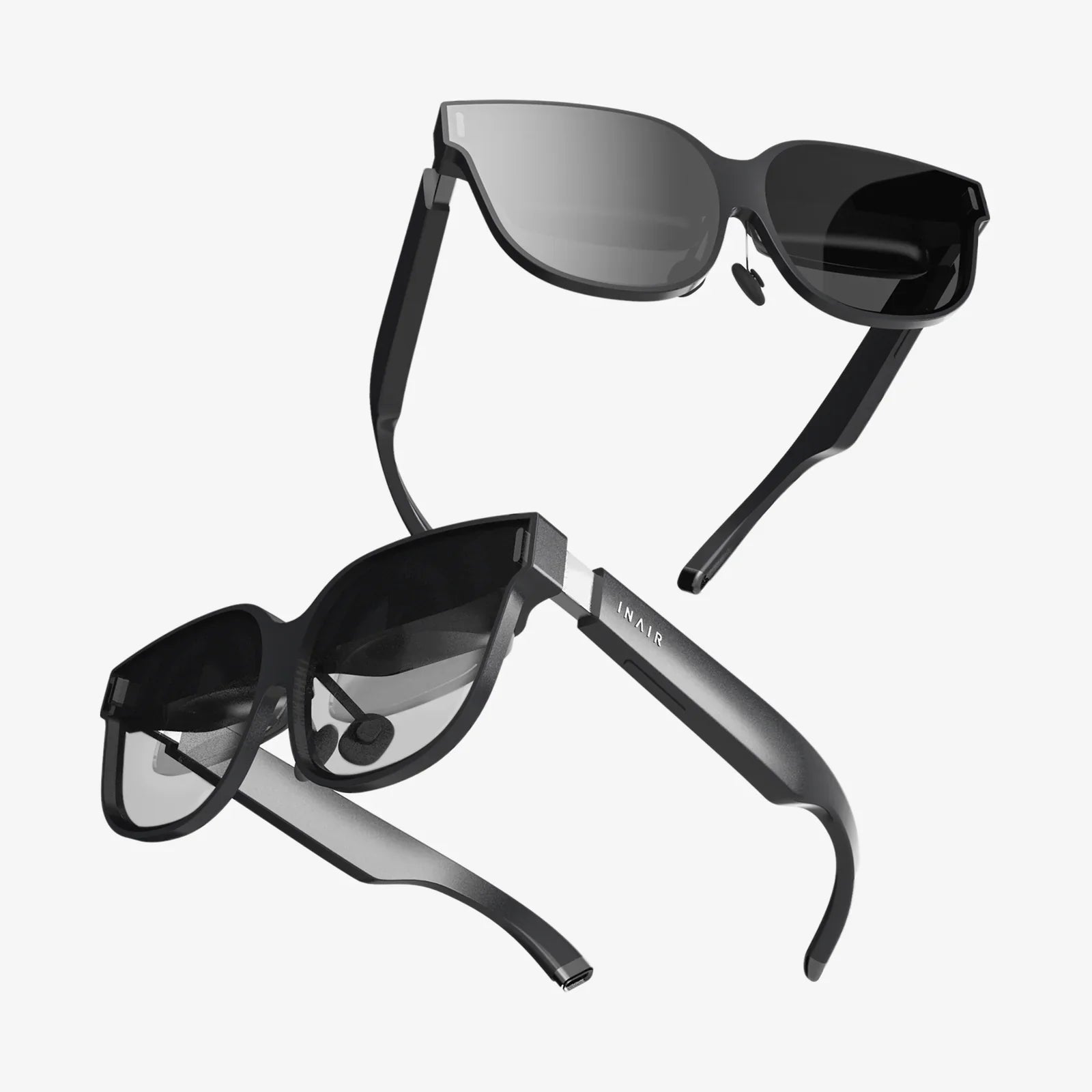
Imagine a world where digital information doesn’t just live on a screen in your hand or on your desk, but is seamlessly woven into the very fabric of your physical reality. Where instructions appear overlaid on a complex machine you’re repairing, a translated menu floats beside a foreign street sign, and a colleague’s avatar can point to a component thousands of miles away as if they were standing right next to you. This is the promise of Augmented Reality smart glasses, a technology poised to fundamentally alter how we work, learn, connect, and interact with our environment. While the concept might still evoke science fiction for some, the practical, powerful, and profit-driving AR smart glasses use cases are already here, transforming entire industries from the ground up.
The Engine of Industry: Revolutionizing Hands-On Work
Perhaps the most mature and immediately valuable applications for AR smart glasses are found in industrial and enterprise settings. Here, the technology solves concrete problems, boosting efficiency, accuracy, and safety in profound ways.
Precision Assembly and Complex Manufacturing
On factory floors and in assembly plants, the margin for error is often minuscule. Traditional work instructions—paper manuals, PDFs on a tablet, or a stationary monitor—require workers to constantly look away from their task, breaking concentration and increasing the risk of mistakes. AR smart glasses eliminate this context-switching. Digital work instructions can be projected directly into the worker's field of view, superimposed onto the physical product they are assembling. A technician building a intricate circuit board might see numbered indicators showing exactly which component goes where, with torque specifications and wiring diagrams anchored to the board itself. For complex machinery assembly, animated 3D models can demonstrate the exact sequence of steps, reducing training time for new employees and ensuring veteran assemblers adhere to the most current procedures. This visual guidance drastically reduces errors, slashes assembly time, and improves overall quality control.
Empowering the Modern Field Technician
When critical equipment fails in the field—whether it’s a wind turbine, an MRI machine, or a telecommunications tower—downtime is incredibly costly. Companies often dispatch their most experienced, and therefore most expensive, specialists to diagnose and fix the problem. AR smart glasses are democratizing this expertise. A less-experienced local technician can wear the glasses, providing a first-person view of the situation to a remote expert sitting in a central office. This expert can then annotate the technician's live view, drawing arrows, circling components, and pulling up schematics, all of which are pinned to the physical world for the on-site technician to see. They can guide the local technician through complex diagnostic and repair procedures with pinpoint accuracy, as if they were looking over their shoulder. This "see-what-I-see" remote assistance eliminates costly and time-consuming travel for specialists, empowers local teams, and resolves issues faster, maximizing equipment uptime.
Streamlined Warehousing and Logistics
The frantic environment of a distribution center is a perfect candidate for augmentation. Order pickers are under constant pressure to fulfill orders quickly and accurately. Instead of juggling a handheld scanner and a paper pick list, workers equipped with smart glasses can have the most optimal pick path displayed before their eyes. As they approach the correct bin, the item needed can be highlighted with a digital marker, and the required quantity can be shown. They can then confirm the pick with a voice command or a simple hand gesture, keeping their hands free to handle goods. This heads-up, hands-free approach significantly increases picking speed and accuracy, reduces training time, and minimizes physical strain. Furthermore, the technology can be used for inventory management, allowing workers to quickly scan shelves and automatically check stock levels against the digital database without ever touching a device.
A New Dimension of Care: Healthcare and Medicine
The stakes in healthcare are the highest imaginable, and AR smart glasses are emerging as powerful tools to enhance patient care, improve surgical outcomes, and streamline medical training.
The Augmented Surgeon
In the operating room, surgeons must integrate a vast amount of data—pre-operative scans, vital signs, anatomical guidance—while performing delicate tasks. Traditionally, this requires looking away from the patient to view monitors around the room. AR glasses can project crucial patient information, such as MRI or CT scan data, directly into the surgeon’s perspective, aligned with the patient's anatomy. A surgeon performing a tumor resection could see the precise boundaries of the tumor highlighted within the patient's body, or a surgeon placing a spinal screw could see the optimal trajectory and depth overlaid on the vertebrae. This provides an unparalleled level of spatial awareness and precision, potentially leading to smaller incisions, less tissue damage, shorter operation times, and improved patient outcomes. It also allows for more effective tele-mentoring, where a renowned specialist can guide a less experienced surgeon through a novel procedure from anywhere in the world.
Enhancing Patient Consultations and Diagnostics
Beyond the OR, these devices are improving the patient experience. A doctor can use AR glasses during a consultation to pull up a patient’s records or X-rays without turning away to type on a computer, fostering a more personal and connected interaction. Medical students can use them to learn anatomy through interactive 3D holograms of the human body, exploring systems in ways that textbooks or even cadavers cannot provide. For first responders, glasses could instantly display a patient's medical history, allergies, or emergency contacts, accessed through a secure database, enabling more informed and faster treatment in critical situations.
Bridging the Physical and Digital: Retail and Consumer Experiences
While enterprise leads the charge, the consumer and retail world is experimenting with innovative AR smart glasses use cases that blend commerce with immersive experience.
Try Before You Buy, Literally
The concept of "virtual try-on" is being supercharged. Imagine walking through a furniture store and using AR glasses to see how a new sofa would look in your living room, at perfect scale and in the correct lighting, before you make a purchase. In a fashion boutique, you could see how an outfit looks on you without ever entering a changing room, or virtually try on different styles of eyewear. For cosmetics, shoppers could experiment with different shades of lipstick or eyeshadow applied digitally to their reflection in a mirror. This not only creates a fun and engaging shopping experience but also drastically reduces purchase hesitation and the rate of returns, a major cost for retailers.
Interactive Navigation and Personalized Promotions
Large retail environments like supermarkets or department stores can be overwhelming. AR glasses could provide indoor navigation, guiding shoppers directly to the aisle and shelf where their desired product is located. As they walk through the store, personalized promotions and product information—such as ingredient lists, allergy warnings, or customer reviews—could pop up next to the relevant items based on their purchase history and preferences. This transforms a mundane chore into a curated, efficient, and highly personalized experience.
Learning by Seeing: Education and Training
AR smart glasses have the potential to move education from passive learning to active, experiential discovery, making abstract concepts tangible.
Immersive Historical and Scientific Exploration
History lessons can be transformed from reading about ancient Rome to walking through a digitally reconstructed Roman forum, with virtual citizens going about their day. Biology students can dissect a virtual frog or explore a beating human heart from all angles, understanding spatial relationships in a way a 2D diagram cannot convey. Mechanics-in-training can practice disassembling and reassembling a complex engine with virtual guidance, making mistakes without costly consequences. This learning-by-doing approach in a rich, contextual environment dramatically improves knowledge retention and engagement.
The Future of Connection: Remote Collaboration and Telepresence
The shift to remote and hybrid work has revealed the limitations of video conferencing. AR smart glasses offer the next evolutionary step: spatial collaboration.
The Holistic Workspace
Instead of being confined to a small rectangle on a screen, remote colleagues can be represented as photorealistic avatars or holograms within your physical space. An architect in one city and an engineer in another can stand around a holographic 3D model of a new building, making changes in real-time that both can see. A designer can prototype a physical product with a digital model, and a remote team member can annotate it with suggested changes directly on the prototype. This creates a profound sense of shared presence and context that flat screens cannot replicate, making complex, creative collaboration across distances feel natural and effective.
Overcoming Hurdles on the Path to Adoption
Despite the incredible potential, the widespread adoption of AR smart glasses faces significant challenges. For years, the technology has been hampered by the "holy trinity" of problems: making devices that are socially acceptable, technically powerful, and affordable. Early devices were often bulky, had limited battery life, and suffered from narrow fields of view. There are also serious concerns regarding user privacy, data security, and the potential for digital distraction in the real world—so-called "attention theft." The industry is actively working to solve these issues, developing more stylish form factors that resemble traditional eyewear, improving battery technology and display clarity, and establishing robust ethical frameworks for data usage. The journey to a day where AR glasses are as commonplace as smartphones is ongoing, but the trajectory is clear.
The true power of AR smart glasses lies not in replacing reality, but in enhancing it. They act as a seamless portal, allowing us to interact with the digital layer of our world without being sucked into a screen. From guiding a surgeon's hand to saving a company millions in downtime, from transforming a classroom to creating a magical retail experience, the use cases are moving from theoretical to essential. This isn't just about a new gadget; it's about a fundamental shift in our relationship with technology, unlocking human potential by providing the right information at the right time, right before our eyes. The augmented future is not a distant dream—it’s being built, one use case at a time, and it’s arriving clearer every day.
Share:
VR Features: The Core Technologies Powering the Virtual Revolution
High Tech Sunglasses: The Future of Eyewear is Here and It's Smarter Than You Think