


- by wangfred
AR Spatial Glasses Are Redefining Reality and Reshaping Our Digital Future
- by wangfred
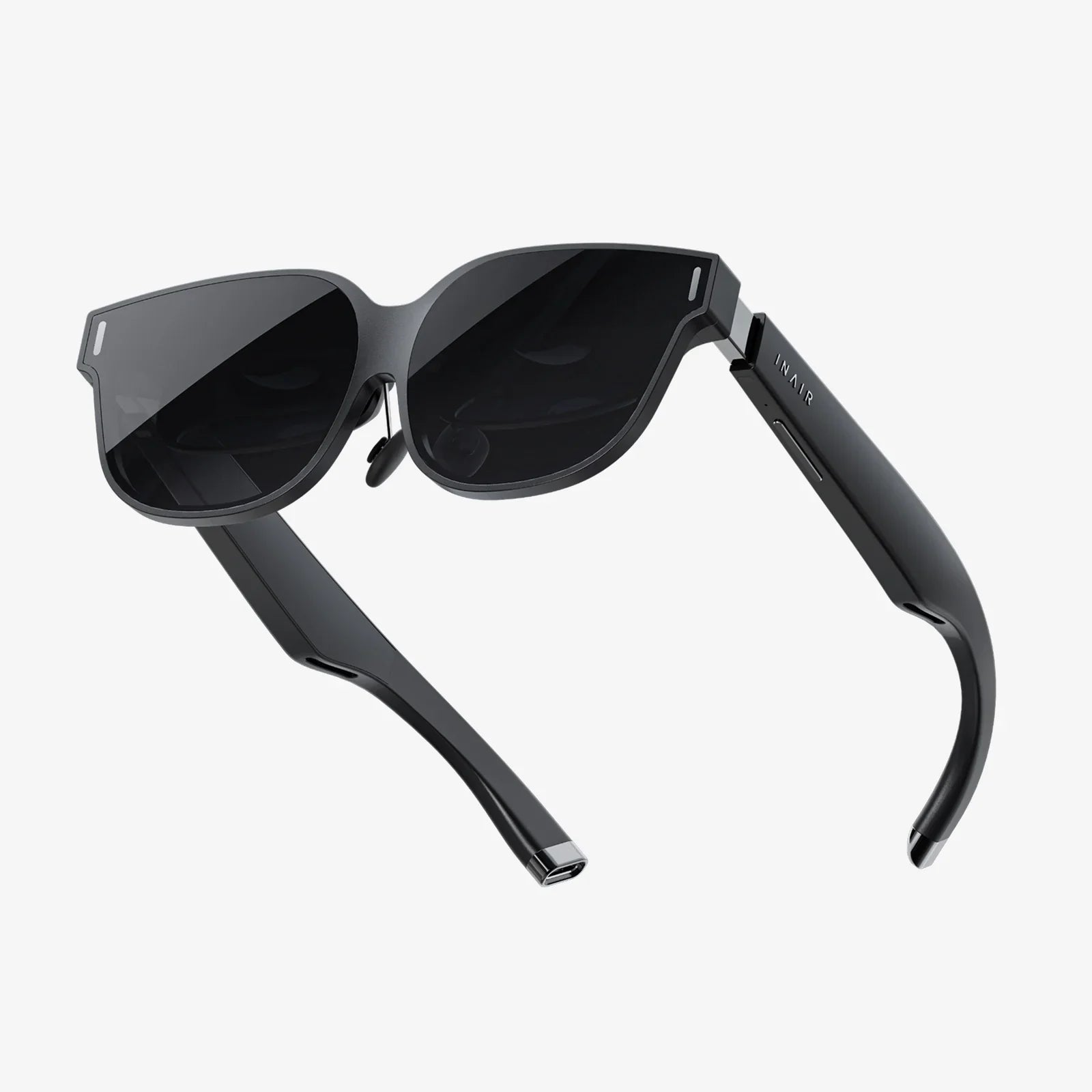
Imagine a world where information doesn’t just live on a screen in your hand but is elegantly woven into the very fabric of your reality. Where directions appear as a glowing path on the sidewalk before you, where the history of a monument unfolds before your eyes as you gaze upon it, and where a colleague from across the globe can stand beside you as a photorealistic hologram, pointing to a 3D model only the two of you can see. This is the promise, and increasingly the reality, of AR spatial glasses—a technology poised to unlock a new dimension of human-computer interaction and redefine our relationship with the digital world.
At their core, AR spatial glasses are a symphony of advanced hardware and sophisticated software working in perfect harmony to create a convincing and useful augmented reality. Unlike virtual reality, which seeks to replace your world, augmented reality aims to enhance it. This requires the device to have an intimate understanding of its surroundings, a capability known as spatial computing.
The foundation of this understanding is built by a suite of sensors. High-resolution cameras continuously scan the environment, while depth sensors, often using technologies like LiDAR (Light Detection and Ranging), project invisible dots of light to measure the precise distance to every surface in view. This creates a rich, real-time 3D map of the room, hallway, or outdoor space you are occupying. Inertial Measurement Units (IMUs)—tiny chips containing accelerometers and gyroscopes—track the precise movement and rotation of your head with millimetric accuracy, ensuring the digital content remains locked in place, whether it’s a virtual screen on your wall or a digital sculpture on your coffee table.
All this raw data is processed by powerful onboard chipsets specifically designed for simultaneous localization and mapping (SLAM). This is the magic trick: the glasses are not only mapping the environment but also pinpointing their exact position within it, all in real-time. This complex spatial awareness is what allows for digital objects to exhibit realistic occlusion (hiding behind real-world objects) and interact with the physics of your space, making the illusion of their presence utterly convincing.
Mapping the world is only half the battle. The other, equally formidable challenge is painting the digital content onto your field of view with clarity, brightness, and comfort. This is achieved through advanced display systems that are a radical departure from traditional screens.
Most modern AR spatial glasses utilize waveguide technology. These are transparent glass or plastic lenses etched with microscopic patterns. A micro-display projector, typically a tiny LCD or OLED screen or a laser beam scanning system, generates the image. This light is then coupled into the edge of the waveguide. Through a process of diffraction and reflection, the light bounces through the waveguide until it is finally directed out towards the user’s eye. The result is a bright, sharp image that appears to be floating in the world beyond the lenses, all while allowing the user to see their natural environment perfectly.
The pursuit of a perfect visual experience is relentless. The goal is a combination of a wide field of view (so digital objects don’t feel confined to a small box), high resolution (to avoid pixelation and screen-door effects), and high dynamic range for vibrant colors. Furthermore, these displays must be capable of dimming dynamically to ensure digital content remains visible even in bright sunlight, a significant technical hurdle that is now being overcome.
While the initial excitement for AR often centers on gaming and entertainment—imagine battling aliens that swarm through your living room or watching a movie on a screen the size of your wall—the true transformative power of AR spatial glasses lies in their professional and practical applications.
The concept of the office is being dismantled. AR spatial glasses are the key to building a new, distributed, and infinitely more flexible paradigm. Instead of being tethered to physical monitors, knowledge workers can summon and arrange multiple virtual screens in their home office, library, or café. These screens persist in space, allowing for a focus that traditional laptops cannot match.
Collaboration undergoes its most significant shift since the invention of video conferencing. With spatial glasses, remote participants are not just faces in a grid on a screen; they are present as volumetric avatars or even lifelike holograms. They can point to specific parts of a 3D model, leave virtual sticky notes on a shared digital blueprint, and interact with data in a natural, intuitive way that fosters a genuine sense of co-presence, dramatically reducing the friction of remote work.
On factory floors, in operating rooms, and at construction sites, AR spatial glasses are moving from experimental pilots to essential tools. For a technician repairing a complex piece of machinery, animated step-by-step instructions can be overlaid directly onto the equipment, highlighting which bolt to turn next. An architect can walk through a building still under construction, visualizing the finished structure and identifying potential clashes before they become costly errors.
In medicine, the implications are profound. A surgeon could have vital signs and 3D scans of a patient’s anatomy projected directly into their view, eliminating the need to look away at distant monitors during a critical procedure. Medical students can practice complex procedures on detailed holographic patients, and a specialist could guide a general practitioner through a rare examination from thousands of miles away, seeing exactly what they see.
On a more personal level, AR spatial glasses promise to change how we connect with each other and navigate our cities. Imagine walking through a historic district and seeing it restored to its former glory, with historical figures recounting events that happened on the very spot you stand. Or attending a live sports event where real-time stats and player information hover above the action.
Navigation becomes an immersive experience. Instead of staring at a phone, a path of light or a trail of digital breadcrumbs can guide you seamlessly through a complex airport terminal or a network of hiking trails, all while keeping your head up and engaged with the world around you.
For all their potential, the path to ubiquitous AR spatial glasses is fraught with significant challenges that extend far beyond mere technical hurdles.
A device that sees everything you see and maps your personal spaces raises monumental privacy concerns. The data collected by these glasses—continuous video and depth scans of your home, office, and the people you interact with—is incredibly sensitive. The question of who owns this data, how it is stored, and how it might be used (or misused) by corporations or governments is perhaps the single biggest barrier to mainstream adoption. Robust, transparent, and user-centric data governance frameworks will be non-negotiable.
How will we interact in public spaces when some people are immersed in a digital layer invisible to others? Social norms will need to evolve. Concerns about recording in public, distracted walking, and the general etiquette of wearing such devices will need to be addressed. Furthermore, the cost of early technology risks creating a new digital divide—a chasm between those who can afford to augment their reality and those who cannot, potentially exacerbating existing social and economic inequalities.
Ultimately, for AR spatial glasses to become as commonplace as smartphones, they must overcome the final frontier: fashion and comfort. They need to be lightweight, have all-day battery life, and, crucially, look like a pair of glasses someone would willingly wear, not a bulky piece of technical headgear. The convergence of advanced micro-optics, more efficient processors, and new battery technologies is steadily driving us toward this goal, but it remains the holy grail for device makers.
The journey into this spatially aware future is already underway, and it’s a path illuminated not by the cold glow of a handheld screen, but by a seamless blend of atoms and bits, of the world we know and the digital universe we are only beginning to imagine. The next time you put on a pair of glasses, you might not just be correcting your vision—you might be unlocking an entirely new one.