


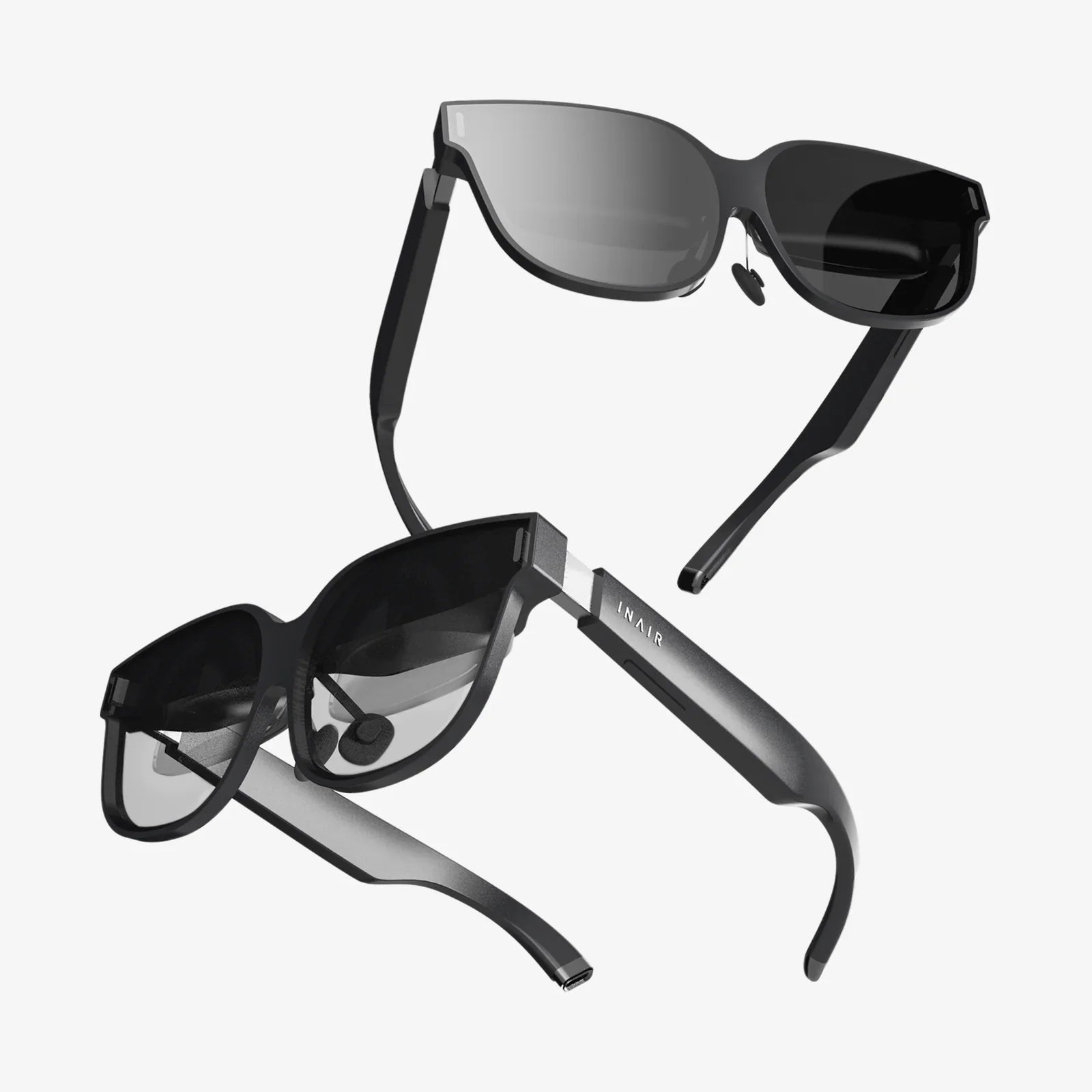
Imagine a world where the line between the digital and the physical doesn't just blur—it disappears. Where the information you seek overlays your immediate reality, where expert guidance materializes before your eyes as you work, and where the stories of history play out on the very streets you walk. This is not a distant sci-fi dream; it is the burgeoning reality being built today through the power of AR technologie. This invisible revolution is poised to touch every facet of our lives, from how we work and learn to how we connect and perceive the world around us, and it’s happening faster than most of us realize.
Demystifying the Magic: How AR Technologie Actually Works
At its core, AR technologie is a sophisticated suite of hardware and software designed to superimpose computer-generated perceptual information onto the real world. Unlike Virtual Reality (VR), which creates a completely immersive digital environment, AR enhances the real world by adding to it. The magic happens through a complex, real-time process that can be broken down into a few critical steps.
The first step is for the device to understand its environment. This is achieved through a process called simultaneous localization and mapping (SLAM). SLAM algorithms use data from cameras, sensors like gyroscopes and accelerometers, and often depth sensors or LiDAR to scan the surroundings, create a 3D map of the space, and precisely locate the device within that map in real-time. This digital twin of the environment is crucial for placing virtual objects in a way that they appear stable and anchored to the real world.
Next comes tracking and registration. As the user moves their device or their head, the system must continuously track this movement and adjust the perspective of the digital overlay accordingly. This ensures that a virtual character will appear to stand on your actual coffee table, and if you walk around it, you will see it from different angles, maintaining the illusion of its physical presence. Advanced computer vision techniques, including object recognition, are often employed to identify specific surfaces (like a floor or wall) or objects (like a product package or a machine part) to serve as anchors for the digital content.
Finally, the system must render and display the digital content seamlessly. The virtual models, animations, or data visualizations are rendered in real-time and composited onto the live video feed or the user's direct view of the world through transparent lenses. The precision of this rendering—getting the lighting, shadows, and occlusion (where real objects pass in front of virtual ones) correct—is what sells the illusion and creates a convincing, immersive experience.
Beyond Gaming: The Expansive Universe of AR Applications
While popularized by mobile games that let you capture creatures in your local park, the true potential of AR technologie extends far beyond entertainment. Its ability to provide contextual information and visual guidance is revolutionizing numerous industries.
Transforming Enterprise and Industrial Fields
In manufacturing and complex fields, AR is a game-changer for efficiency and accuracy. Technicians wearing AR smart glasses can see schematics, animated assembly instructions, or safety information overlaid directly onto the machinery they are repairing. Remote experts can see what a field worker sees and draw digital annotations into their field of view, guiding them through complex procedures without needing to be physically present. This reduces errors, slashes training time, and minimizes downtime, leading to massive operational savings.
Revolutionizing Retail and E-Commerce
The retail sector is being reshaped by AR. Customers can now use their smartphones to see how a new sofa would look in their living room, how a pair of glasses fits their face, or how a shade of paint appears on their wall at different times of day. This "try before you buy" capability drastically reduces purchase uncertainty and product return rates. In physical stores, AR can enable interactive displays, provide additional product information when a phone is pointed at an item, and create immersive brand experiences that deepen customer engagement.
Advancing Healthcare and Medicine
In healthcare, the stakes are high and the benefits of AR are profound. Surgeons can use AR overlays to visualize a patient's anatomy, such as the precise location of tumors or blood vessels, directly on the patient's body during procedures, improving precision and safety. Medical students can learn anatomy through interactive 3D models that they can walk around and dissect virtually. AR can also assist in physical therapy by guiding patients through exercises with proper form and providing motivational feedback.
Enhancing Education and Training
Education is becoming more interactive and engaging through AR. Textbooks can come alive with 3D models of historical artifacts, solar systems, or complex biological processes. History lessons can transform into virtual field trips to ancient ruins, and chemistry students can safely conduct virtual experiments. This hands-on, visual learning approach caters to different learning styles and helps students grasp abstract concepts by making them tangible.
The Pillars of AR: Hardware and Software Synergy
The AR experience is delivered through a spectrum of devices, each with its own strengths and trade-offs between mobility, immersion, and computational power.
The Hardware Spectrum
Smartphone-Based AR: This is the most accessible form of AR, leveraging the powerful cameras and sensors already in billions of pockets. It uses the screen as a viewport to the augmented world. While convenient, it lacks hands-free functionality and full immersion.
Smart Glasses and Headsets: These wearable devices represent the next evolution, offering a more natural, hands-free experience. They project images onto transparent lenses (optical see-through) or use cameras and screens (video see-through) to blend digital content with the real world. Current challenges include balancing field of view, battery life, form factor, and cost to achieve mass consumer adoption.
Specialized AR Systems: In enterprise and medical settings, more robust and specialized headsets are used. These often include advanced depth-sensing capabilities, superior tracking accuracy, and are designed for specific tasks like complex assembly or surgical guidance.
The Software Foundation
Powering these devices are sophisticated software development kits (SDKs) and platforms that provide developers with the essential tools: SLAM algorithms, environmental understanding, surface detection, and rendering engines. These platforms handle the heavy lifting of spatial computing, allowing creators to focus on building compelling content and applications. Furthermore, cloud-based AR services are emerging, offloading intensive processing tasks to remote servers, which could enable more complex experiences on less powerful devices.
The Human Factor: Ethical and Societal Considerations
As with any transformative technology, the rise of AR brings a host of ethical and societal questions that我们必须 proactively address.
Privacy and Data Security: AR devices, by their very nature, are data collection powerhouses. They have constant cameras and sensors scanning everything in their environment. This raises immense privacy concerns. Who owns the spatial data of your home that gets mapped? How is this incredibly intimate data stored, secured, and used? The potential for surveillance, both corporate and governmental, is unprecedented. Clear regulations and transparent data policies are imperative to build public trust.
The Attention Economy and Reality Divide: If we thought smartphones were distracting, AR presents a new frontier for the battle for our attention. With notifications and digital content persistently layered onto our vision, the risk of information overload and constant distraction is real. Furthermore, if AR experiences become curated and personalized, could we see a "reality divide" where individuals experience the same physical space in vastly different ways, potentially fragmenting shared social experiences?
Accessibility and the Digital Divide: Will AR technologie become a great equalizer, providing information and assistance to those with disabilities? Or will it exacerbate the digital divide, creating a new class of haves and have-nots based on who can afford the latest hardware and access premium digital layers? Ensuring equitable access and designing for inclusivity from the outset is critical.
The Future is Augmented: What Lies on the Horizon
The trajectory of AR technologie points toward a future where it becomes as ubiquitous and indispensable as the smartphone is today. We are moving toward smaller, more powerful, and socially acceptable wearable devices—eventually evolving toward contact lenses or neural interfaces. The concept of the spatial web or metaverse is intrinsically linked to AR: a persistent, shared digital layer over the entire physical world that we can all interact with.
Advancements in 5G and edge computing will enable complex, multi-user AR experiences with low latency. Artificial Intelligence will play a massive role, moving from simple object recognition to truly understanding context and intent, allowing AR systems to anticipate our needs and provide information before we even ask. The convergence of AR with other technologies like Internet of Things (IoT) will mean we can see and interact with the data from smart devices all around us.
The ultimate promise of AR technologie is to create a symbiotic relationship between humans and computers, one where technology enhances our natural capabilities without isolating us from each other or the world around us. It has the potential to make us more knowledgeable, efficient, and creative by seamlessly connecting us to the vast wealth of human knowledge and digital power, right at the moment and place we need it most.
We are standing at the precipice of a new era of human-computer interaction, one where the digital world ceases to be confined behind a screen and instead becomes an integrated part of our physical existence. The revolution isn't coming; it's already being superimposed onto the world right in front of you. The question is no longer if AR will change everything, but how quickly we will adapt to a reality where the physical and digital are forever intertwined, unlocking possibilities we are only beginning to imagine.
Share:
What Is a Smart Display Device - The Ultimate Guide to Your Digital Hub
Interactive Spatial Experiences Are Redefining Our Digital and Physical Realms