


Imagine a world where the line between the digital and the physical doesn't just blur—it disappears. Where information and imagination are painted onto the canvas of reality, transforming how we work, learn, heal, and play. This is not a distant sci-fi fantasy; it is the imminent future being built today by a new breed of visionary enterprises: the AR technology company. These pioneers are constructing the foundational layers of a world we will soon navigate not with screens in our hands, but with context and data layered directly over our field of vision. The race to augment our reality is on, and its winners will redefine the very fabric of human-computer interaction.
The Core Pillars of an AR Technology Company
At its heart, an AR technology company is an entity dedicated to creating the hardware, software, and platforms that enable the overlay of digital information—images, videos, 3D models, data streams—onto the user's view of the real world. Unlike Virtual Reality (VR), which seeks to replace reality with a simulated one, Augmented Reality aims to enhance and enrich the world we already see. The architecture of this ambition rests on several critical technological pillars.
Hardware: The Gateway to Augmented Vision
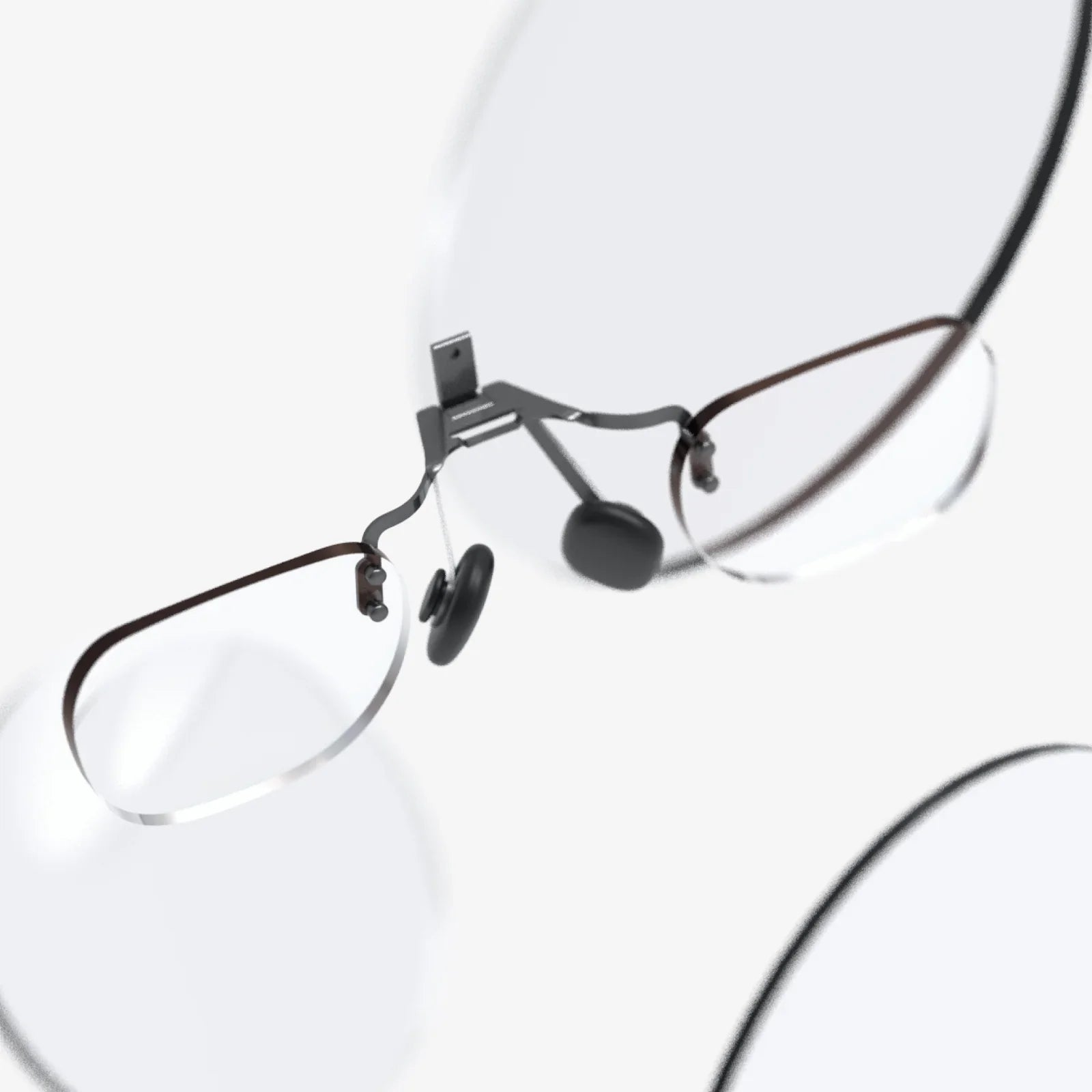
The most visible output of an AR technology company is often its hardware. This encompasses the devices through which users experience augmentation. These range from sophisticated headsets, often referred to as smart glasses, which are designed for all-day enterprise use, to more consumer-friendly wearable devices. The engineering challenges are immense: packing powerful processors, high-resolution displays, advanced cameras, and a suite of sensors (LiDAR, depth, inertial measurement units) into a form factor that is lightweight, comfortable, and socially acceptable. The holy grail is a device that feels as natural as a pair of everyday eyewear but possesses the computational power of a high-end computer.
Software and Platforms: The Engine of Augmentation
If hardware is the body, software is the soul. AR software development kits (SDKs) and platforms provide the essential tools for creators to build AR experiences. These platforms handle the incredibly complex tasks of environmental understanding, a process known as simultaneous localization and mapping (SLAM). SLAM allows the device to understand its position in a room, recognize surfaces like floors and tables, and anchor digital objects persistently so they don't drift or float away. Furthermore, robust cloud-based services are crucial for managing the vast amounts of spatial data, delivering complex 3D models on demand, and enabling shared multi-user experiences where several people can see and interact with the same digital objects in real space.
Content and Ecosystem: The Reason to Augment
Technology is meaningless without compelling use cases. A successful AR technology company must foster a vibrant ecosystem of developers, enterprise partners, and content creators. This involves creating accessible tools that allow people without deep technical expertise to design AR experiences, establishing app stores or marketplaces for distributing these experiences, and building robust business models that incentivize continuous innovation. The goal is to move beyond novelty demos to create indispensable tools that solve real-world problems and create genuine value.
Transforming Industries: The Enterprise Revolution
While consumer applications often capture the public's imagination, the most profound and immediate impact of AR technology companies is happening within the enterprise sector. Here, AR is moving from a experimental technology to a core component of business infrastructure, driving tangible ROI in several key areas.
Manufacturing and Field Services
On the factory floor or at a remote wind turbine, AR is a game-changer. Technicians wearing AR glasses can have schematic diagrams, instruction manuals, or animated repair guides superimposed directly onto the machinery they are servicing. This "see-what-I-see" capability allows a remote expert to see the technician's live view and annotate the real world with arrows, circles, and notes to guide them through a complex procedure, drastically reducing downtime, minimizing errors, and negating the need for costly expert travel. For assembly line workers, digital work instructions can be projected onto the assembly station, highlighting the next part to install and the correct tools to use, thereby improving efficiency and reducing training time.
Healthcare and Medicine
The stakes in healthcare are high, and AR technology companies are rising to the challenge. Surgeons can use AR overlays to visualize a patient's anatomy in 3D before making an incision, with critical structures like nerves and blood vessels highlighted based on pre-op scans. During procedures, this data can be projected onto the patient, acting as a navigational guide that improves precision and safety. Medical students can move beyond textbooks to learn anatomy by exploring life-sized, interactive 3D models of the human body. Furthermore, AR is revolutionizing patient care by providing innovative tools for physical therapy, where patients can follow guided movements, and for explaining complex medical conditions in an easily digestible visual format.
Retail and E-Commerce
The retail landscape is being reshaped by the ability to "try before you buy" in an entirely new dimension. Furniture retailers allow customers to use their smartphone or tablet to see how a new sofa would look and fit in their living room at true-to-life scale. Fashion brands are enabling virtual try-ons for glasses, makeup, and even clothing. This not only enhances consumer confidence and reduces return rates but also creates a novel and engaging shopping experience that bridges the gap between online convenience and in-store reassurance. For in-store staff, AR can provide real-time inventory data, product information, and promotional offers, empowering them to deliver superior customer service.
Design and Architecture
For architects, engineers, and interior designers, AR obliterates the limitations of blueprints and 2D screens. They can walk clients through a full-scale, photorealistic 3D model of a building that hasn't yet been constructed, allowing for immersive reviews of spatial relationships, lighting, and materials. During the construction phase, AR can project building plans directly onto the construction site, ensuring accuracy and allowing for the early detection of potential clashes between structural elements, electrical systems, and plumbing.
The Future Trajectory: Where Do We Go From Here?
The current state of AR is impressive, but it is merely the foundation. The trajectory points towards a future where AR becomes increasingly seamless, contextual, and intelligent.
The Convergence with Artificial Intelligence
The true power of AR will be unlocked through its integration with Artificial Intelligence (AI). An AI-powered AR system won't just display information; it will understand the context and intent behind it. It could recognize objects and people, translating foreign text on a menu in real-time or providing the name and details of a colleague you met once at a conference. It could analyze a machine's sound and visuals to predict maintenance needs before a failure occurs. This fusion of AI and AR will create a proactive, intelligent layer of computing that anticipates our needs.
The Path to the Spatial Web
AR technology companies are the primary builders of the next iteration of the internet: the Spatial Web or Web 3.0. This envisions a world where digital information is not trapped on the pages of websites but is spatially mapped and anchored to locations, objects, and people in the real world. You could point your device at a historic monument to see a reenactment of its history, or leave a digital note for a friend pinned to a specific table in a cafe. This persistent digital layer over our physical world will require new protocols for security, privacy, and interoperability, challenges that these companies are already tackling.
Ethical Considerations and Societal Impact
As with any transformative technology, the rise of AR brings profound questions. How do we manage privacy in a world where devices are always watching and analyzing our environment? What are the psychological effects of a permanently mediated reality? How do we prevent the creation of a digital divide between those who can afford advanced AR wearables and those who cannot? The responsibility on AR technology companies is immense. They must pioneer not only new technologies but also ethical frameworks that ensure this powerful tool is used to enhance humanity, not exploit it. Building trust through transparent data policies, inclusive design, and a commitment to user well-being will be just as important as building the next generation of hardware.
The architects of our augmented world are not just coding and soldering; they are making deliberate choices that will shape society for decades to come. The potential is staggering—a future of limitless information, effortless collaboration, and enhanced human capability. The device that delivers this future may be the last screen we ever need to buy, because it will replace them all by making the entire world your screen. The question is no longer if this will happen, but how quickly we can adapt to a reality forever changed by the invisible hand of the AR technology company.
Share:
Digital Media Interactive Design: The Art of Crafting Dynamic User Experiences
Augmented Reality Product Visualization Benefits: Transforming Shopping from Click to Experience