


Imagine a world where digital information doesn't live behind a screen but is seamlessly woven into the fabric of your physical reality—where instructions float over a complex machine you're repairing, historical figures reenact battles on the very ground they were fought, and the line between your digital identity and physical self begins to blur. This is not a distant sci-fi dream; it is the imminent future being built today, driven by the relentless and explosive AR technology trend. This movement is transitioning from novelty to necessity, promising to become as fundamental to our daily lives as the smartphone, fundamentally altering how we work, learn, play, and connect.
The Foundation: Understanding the AR Ecosystem
At its core, Augmented Reality (AR) is a technology that superimposes a computer-generated overlay—be it images, video, text, or 3D models—onto a user's view of the real world. Unlike Virtual Reality (VR), which creates a completely immersive digital environment, AR enhances reality by adding a digital layer to it. The power of this trend lies not in the concept itself, which has existed for decades, but in the convergence of several critical technologies that have finally matured enough to make it viable, scalable, and profoundly useful.
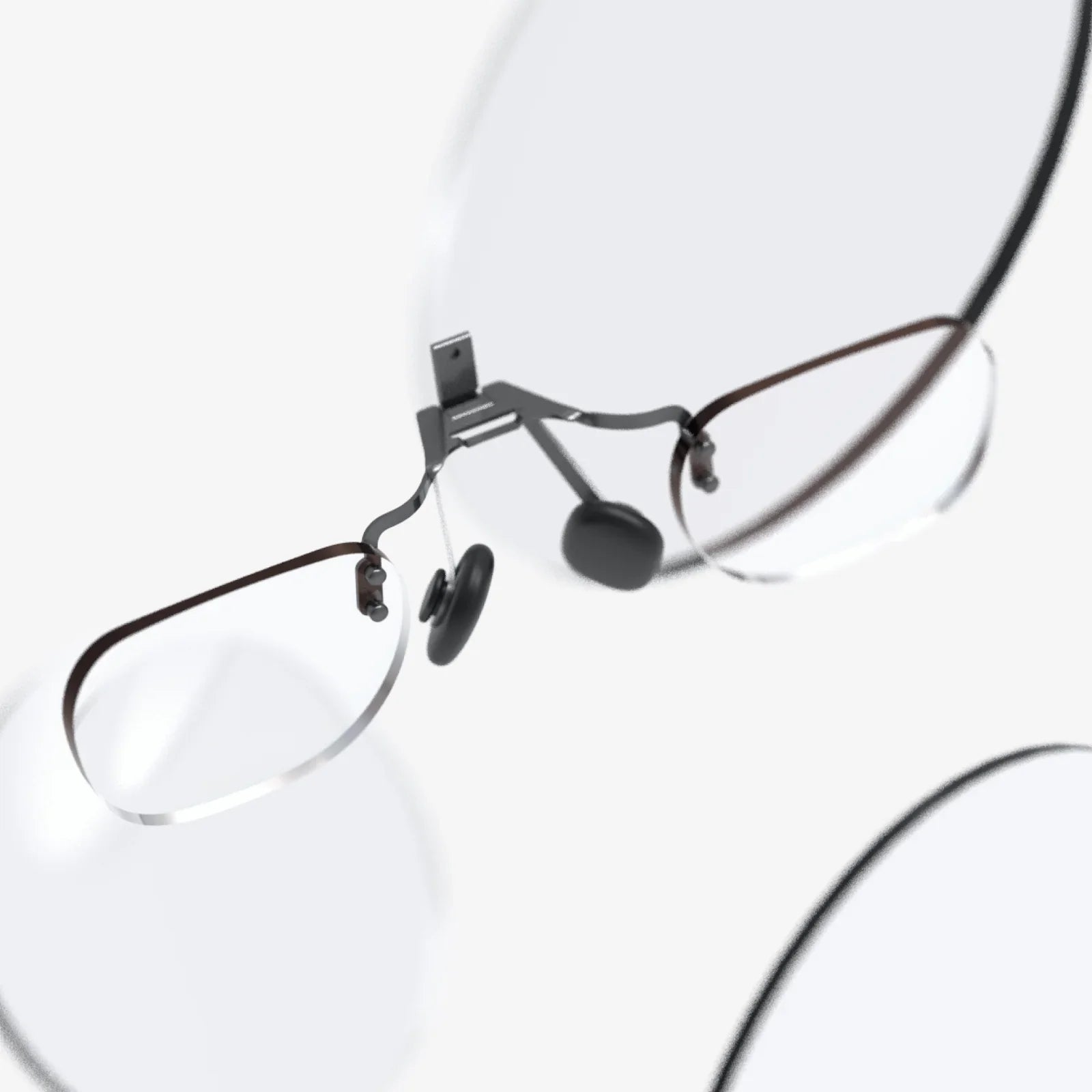
The hardware landscape is diversifying rapidly. While early AR was largely experienced through smartphone cameras, the trend is decisively moving toward wearable, hands-free devices. Smart glasses are becoming lighter, more powerful, and socially acceptable, with displays that can project high-resolution imagery directly onto the user's retina or into their field of view. These devices are packed with a suite of sophisticated sensors—LiDAR scanners for depth mapping, high-resolution cameras for spatial recognition, inertial measurement units (IMUs) for tracking movement, and microphones for voice commands. This sensor fusion is what allows the digital world to understand and interact with the physical one in real-time.
On the software side, the development of robust software development kits (SDKs) and powerful game engines has democratized AR creation. Developers can now build complex experiences that understand surfaces, occlude digital objects behind real ones, and persist content in a specific location. Furthermore, the advent of 5G and edge computing is solving the critical latency issue; for AR to feel real, the digital overlay must respond instantaneously to user movement, a feat requiring immense processing power and lightning-fast data transmission.
The Enterprise Arena: Where AR is Driving Tangible Value
While consumer applications often grab headlines, the most significant and immediate impact of the AR technology trend is occurring within enterprise and industrial sectors. Here, AR is not a gimmick; it is a powerful tool solving real-world problems, boosting efficiency, reducing errors, and saving millions.
In manufacturing and field service, AR-powered smart glasses are revolutionizing complex assembly, maintenance, and repair procedures. A technician can look at a malfunctioning engine and see animated, step-by-step instructions overlaid directly onto the components they need to manipulate. Remote experts thousands of miles away can see what the on-site technician sees and annotate their field of view with arrows, notes, and diagrams, guiding them through the process without ever boarding a plane. This "see-what-I-see" remote assistance drastically reduces downtime, cuts travel costs, and empowers less experienced workers to perform like veterans.
The design and architecture industries have been transformed by AR's ability to visualize the unbuilt. Architects can project full-scale 3D models of new buildings onto empty plots of land, allowing stakeholders to walk through and experience the design before a single foundation is poured. Interior designers can place virtual furniture, art, and fixtures into a client's living room, enabling them to see how everything fits and looks in their actual space, mitigating costly purchasing mistakes. This digital prototyping saves immense time and resources while fostering better collaboration and client satisfaction.
Logistics and warehouse management is another area reaping massive rewards. AR vision-picking systems guide warehouse workers to the exact shelf and bin location for items, displaying the optimal route and verifying the correct item through barcode scanning overlays. This has been shown to increase picking speed and accuracy by over 15%, a monumental improvement in an industry driven by margins of seconds and cents.
Transforming the Social and Consumer Landscape
Beyond the factory floor, the AR technology trend is quietly reshaping how we interact with the world and each other as consumers. The catalyst for this was the viral explosion of a social media filter, which demonstrated the mass-market appeal of augmenting one's face and environment. This opened the floodgates for a new form of creative expression and communication.
Retail is undergoing a seismic shift thanks to AR. "Try before you buy" is being redefined. Consumers can now see how a pair of glasses looks on their face, how a new shade of lipstick matches their skin tone, or how a sofa fits in their apartment—all from their phone. This immersive shopping experience drastically reduces purchase hesitation and product return rates, building consumer confidence and engagement. Virtual try-ons and in-place previews are quickly becoming an expected feature rather than a novelty.
Education and storytelling are being reinvented. Imagine a history lesson where students can point their device at a textbook image and watch a historical event play out in 3D on their desk. Medical students can practice complex surgical procedures on detailed, interactive holograms of the human body. Museums are creating AR tours where exhibits come to life, providing deeper context and a more engaging narrative. This trend moves learning from passive absorption to active exploration, making information visceral and memorable.
Navigation is set to become infinitely more intuitive. Instead of staring at a 2D map on a phone, future AR glasses will project floating directional arrows, points of interest, and street names directly onto the road ahead. Finding your gate in a massive airport or a specific product in a large supermarket will become a simple matter of following the digital path laid over reality. This contextual, heads-up guidance is safer and more natural than current methods.
On the Horizon: The Future Shaped by AR
The current applications are merely the first chapter. The long-term trajectory of the AR technology trend points toward a future where the technology becomes ambient, contextual, and perceptual—a constant, intelligent companion that enhances our perception and cognition.
The ultimate goal is the development of a true AR platform, often referred to as the spatial web or the metaverse. This is a persistent, shared digital layer over the entire physical world. In this future, your AR glasses will recognize a restaurant and instantly display its menu and reviews. They could translate a foreign street sign in real-time or identify a plant species just by looking at it. The world itself becomes the interface, and information is presented contextually based on what you're looking at and what you need to know at that moment.
Advancements in Artificial Intelligence are the engine for this future. AI will be crucial for understanding the immense amount of visual and sensor data collected by AR devices. It will enable real-time object recognition, scene understanding, and predictive assistance. Your AR device, powered by AI, could warn you of a potential hazard you didn't see, suggest a recipe based on the ingredients in your fridge, or remind you of a person's name at a networking event by recognizing their face.
However, this exciting future is not without its significant challenges and ethical considerations. The collection of continuous visual and audio data raises monumental privacy concerns. Who owns the data collected by your glasses? How do we prevent persistent surveillance? The concept of attention is also at stake. With a constant stream of digital information vying for our focus, we risk further fracturing our attention spans and becoming disconnected from the immediate physical world and the people in it. Furthermore, the potential for new forms of advertising spam—digital graffiti plastered over our reality—is a dystopian possibility that must be addressed through thoughtful design and regulation.
Despite these challenges, the momentum is undeniable. The AR technology trend represents a fundamental shift in human-computer interaction, moving us from looking at technology to looking through it at our world, which is now enhanced, annotated, and alive with data. It is a tool of immense power, and its trajectory suggests it will become deeply embedded in the infrastructure of our society, changing what it means to see, to know, and to experience reality itself.
The revolution will not be televised; it will be projected onto your retinas. The devices are getting smaller, the software smarter, and the networks faster, converging to make the augmented world an inevitable part of our tomorrow. This isn't just about playing games or trying on virtual clothes; it's about building an invisible layer of intelligence over our entire existence, one that promises to amplify human potential in ways we are only beginning to imagine. The question is no longer if AR will redefine our reality, but how quickly we will adapt to and shape this powerful new paradigm.
Share:
Three Advantages of Virtual Meetings: Reshaping the Modern Workspace
Use Cases for Augmented Reality Smart Glasses: Transforming Industries and Daily Life