


- by wangfred
AR Technology Uses: Transforming Industries and Redefining Human Experience
- by wangfred
Imagine a world where digital information doesn't just live on a screen but is seamlessly woven into the fabric of your physical reality, enhancing everything from complex surgical procedures to the simple act of trying on a new pair of shoes—this is the powerful and transformative promise of augmented reality technology uses, a paradigm shift that is already reshaping our present and defining our future.
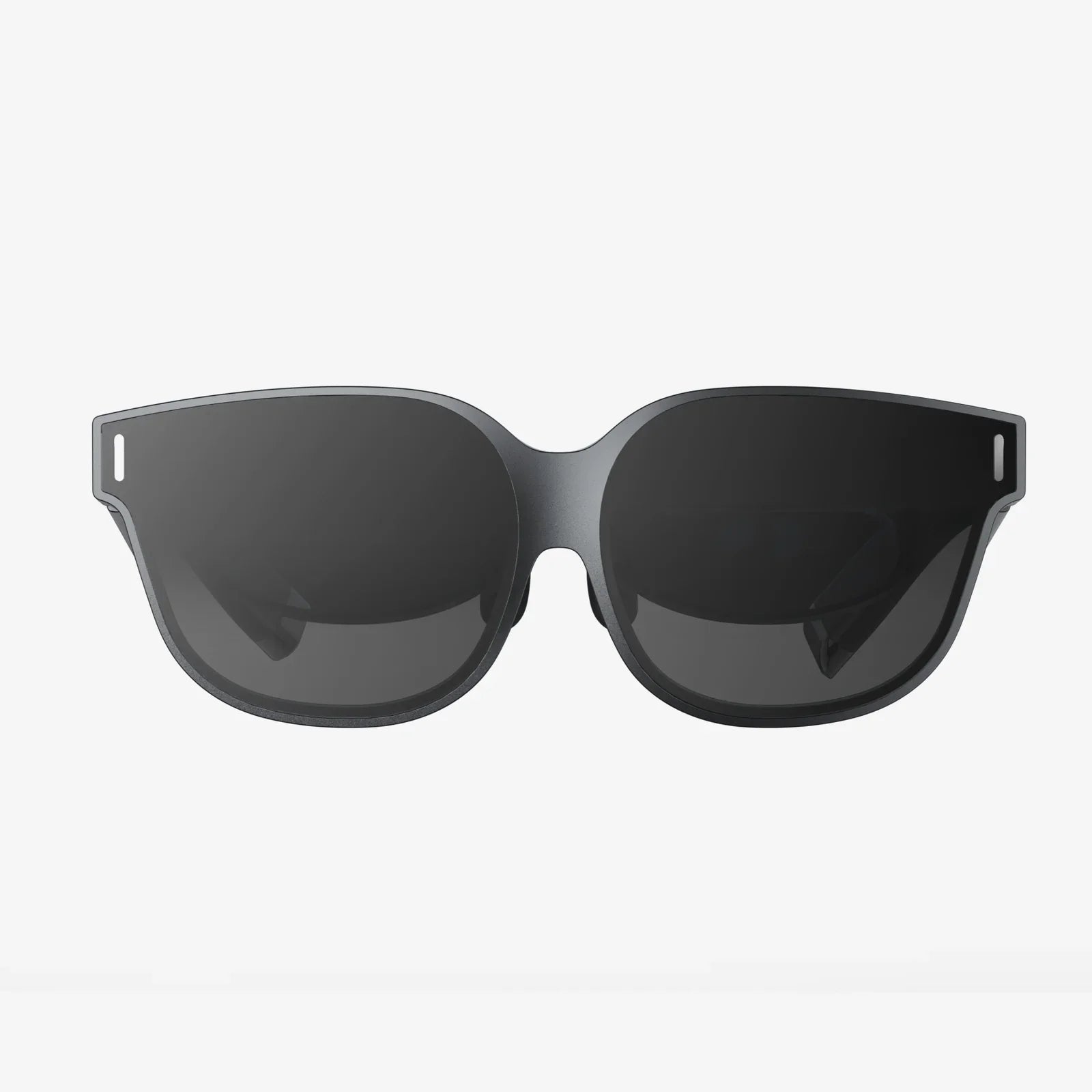
Before delving into the vast array of applications, it is crucial to understand what Augmented Reality (AR) truly is. Unlike Virtual Reality (VR), which creates a completely immersive, computer-generated environment, AR overlays digital information—such as images, video, 3D models, and data points—onto the user's real-world view. This blending is achieved through devices like smartphones, tablets, smart glasses, and heads-up displays (HUDs). The core principle is contextuality; the digital content is relevant to and interacts with the physical environment the user is in. This is powered by a sophisticated combination of technologies including computer vision, simultaneous localization and mapping (SLAM), depth tracking, and advanced sensors, all working in concert to understand and augment the world around us.
One of the most significant and financially impactful arenas for AR technology uses is within industry and manufacturing. Here, AR is not a gimmick but a critical tool for enhancing efficiency, accuracy, and safety.
Technicians working on intricate machinery, from aircraft engines to industrial printers, can use AR glasses to see digital instructions and 3D animations overlaid directly onto the physical components they are handling. This hands-free guidance can highlight the next step, show the correct torque for a bolt, or display wiring diagrams in real-time, drastically reducing errors, shortening training times for new employees, and speeding up complex procedures. Remote experts can also see what an on-site technician sees and annotate their field of view with arrows and notes, providing expert guidance from anywhere in the world, which minimizes travel costs and downtime.
Engineers and designers are leveraging AR to visualize and interact with 3D prototypes at full scale before a single physical part is manufactured. A car designer can project a life-sized model of a new vehicle into an empty studio, walk around it, and make adjustments to the design in real-time. Architects can project their digital building models onto a physical empty lot, allowing stakeholders to literally walk through the design and understand spatial relationships in a way 2D blueprints could never convey. This accelerates the design iteration process and leads to better-informed decisions.
In massive distribution centers, AR is transforming order picking and packing. Warehouse workers wearing smart glasses can receive order information directly in their line of sight. The AR system can then calculate the most efficient route through the warehouse and visually guide them to the exact shelf location, highlighting the correct item and confirming the quantity to be picked. This leads to a dramatic reduction in walking time, a near-elimination of picking errors, and a substantial boost in overall operational throughput.
The applications of AR in medicine are perhaps some of the most profound, offering the potential to save lives and improve patient outcomes.
Surgeons can use AR to overlay critical information such as CT or MRI scans directly onto a patient's body during procedures. For instance, a surgeon performing a tumor removal can see the precise boundaries and location of the tumor visualized on the patient's anatomy, allowing for more accurate and less invasive surgery. This enhances precision and can minimize damage to surrounding healthy tissue. Medical students can also use AR to practice procedures on hyper-realistic digital holograms, gaining valuable experience without risk.
AR provides an unparalleled tool for anatomical education. Instead of relying solely on textbooks and cadavers, students can use AR applications to explore detailed, interactive 3D models of the human body. They can isolate specific systems—nervous, circulatory, muscular—and see how they interact, deepening their understanding in an engaging and immersive way. This technology is also used for patient education, helping doctors explain complex conditions and treatment plans in a visually intuitive manner.
AR applications are making physical therapy more engaging and measurable. Patients recovering from an injury can perform exercises while an AR system tracks their movements and provides real-time feedback on their form. Gamified AR experiences can motivate patients to complete repetitive motions by turning them into interactive games, thereby improving adherence to therapy regimens and potentially speeding up recovery.
The retail sector has been quick to adopt AR to bridge the gap between online and in-store shopping, creating exciting and personalized experiences for consumers.
One of the most popular consumer-facing AR technology uses is the ability to "try before you buy" from the comfort of home. Shoppers can use their smartphone cameras to see how a pair of glasses, a watch, or even makeup will look on their own face. Similarly, furniture retailers offer apps that allow customers to place true-to-scale 3D models of sofas, tables, and decor into their living room to see how they fit with the existing space and style. This reduces purchase uncertainty and minimizes return rates.
Inside large retail stores, customers can use an AR app on their phone to navigate the aisles. By simply pointing their camera, they can see digital arrows guiding them to the product they need. When they point the camera at a product, they can see additional digital information overlaid, such as customer reviews, nutritional information, or comparable items, enriching the shopping experience and empowering consumer choice.
Beyond medical school, AR is revolutionizing pedagogical approaches across all levels of education and corporate training.
Textbooks become living documents with AR. A student studying astronomy can point their tablet at a page about the solar system to see a full 3D model of the planets orbiting the sun, which they can rotate and explore. History students can point their devices at a historical photograph or landmark to see reenactments or reconstructions of events. This interactive, visual learning caters to different learning styles and makes abstract concepts tangible.
From technical schools to corporate training rooms, AR provides a safe and cost-effective environment to practice dangerous or expensive skills. Trainee mechanics can learn to repair complex engine parts on a digital hologram. Employees can practice safety and emergency procedures in a realistic AR simulation of their workplace, preparing them for real-world scenarios without any associated risk.
AR is set to fundamentally change how we navigate both indoor and outdoor spaces. Instead of looking down at a 2D map on a phone screen, pedestrians can hold up their device and see digital arrows and directions overlaid onto the real streets in front of them, showing exactly which way to turn. Inside complex venues like airports, museums, or subway stations, AR wayfinding can guide users to their gate, a specific exhibit, or the correct train platform with intuitive visual cues, reducing stress and saving time.
Despite its incredible potential, the widespread adoption of AR faces hurdles. These include technical challenges like improving battery life, processing power, and creating more comfortable, socially acceptable wearable hardware. There are also significant concerns regarding user privacy, data security, and the potential for digital spam or visual pollution in our physical spaces. Furthermore, creating high-quality, meaningful AR content requires new skill sets and investment.
However, the trajectory is clear. As the technology matures, we will see AR become more integrated into our daily lives. The convergence of AR with 5G connectivity, Artificial Intelligence (AI), and the Internet of Things (IoT) will unlock even more powerful applications. Imagine smart glasses that recognize people's faces and display their name and recent conversation topics, or AI-powered AR assistants that can translate foreign language signs in real-time or identify constellations in the night sky. The line between the physical and digital worlds will continue to blur, creating a new, augmented layer of reality that enhances human capability and redefines our experience of the world.
The true power of AR technology uses lies not in replacing our reality, but in enriching it, providing a dynamic digital lens through which we can work smarter, learn deeper, see further, and engage with our environment in ways we are only just beginning to imagine.
Share:
What Does It Mean to Have a Virtual Meeting: The New Architecture of Human Connection
Disadvantages of Using Virtual Office: The Hidden Costs of a Digital Workspace