


- by wangfred
AR: The Invisible Revolution Reshaping Our Reality
- by wangfred
Imagine a world where the line between the digital and the physical doesn't just blur—it disappears. Where the information you need doesn't live on a screen in your hand but is painted onto the world itself, accessible with a glance, a gesture, or a spoken word. This isn't the premise of a science fiction novel; it is the burgeoning reality being built today through the rapid advancement of Augmented Reality. This technology, often lurking in the shadow of its more immersive cousin, virtual reality, is poised to become the most pervasive and transformative computing interface of our time, fundamentally reshaping how we work, learn, connect, and perceive everything around us.
At its core, Augmented Reality is a technology that superimposes a computer-generated overlay—comprising images, sound, video, and data—onto a user's view of the real world. Unlike Virtual Reality, which creates a completely artificial environment, AR starts with the real world and adds to it. The goal is not to escape reality but to enhance it, to make it more informative, more efficient, and more engaging.
The magic of AR lies in its three fundamental capabilities: combination, interaction, and registration. Combination is the seamless blending of digital and real-world elements. Interaction refers to the user's ability to manipulate and engage with the augmented elements in real-time. Registration, perhaps the most technically challenging aspect, is the precise alignment of digital content with the physical world, ensuring that a virtual dragon lands correctly on your living room table or that repair instructions stay fixed on the specific engine part you're examining.
The conceptual seeds of AR were sown much earlier than most realize. In 1968, computer scientist Ivan Sutherland created "The Sword of Damocles," a head-mounted display system so primitive and heavy it had to be suspended from the ceiling, yet it laid the foundational groundwork for all AR and VR to follow. Through the 1990s and early 2000s, AR was largely confined to multimillion-dollar industrial, military, and academic labs, where it was used for tasks like aircraft wiring diagrams and battlefield visualization.
The first major leap into the public consciousness came with the rise of smartphones. Suddenly, everyone had a powerful computer in their pocket equipped with a camera, sensors, and a screen—the perfect platform for basic AR. Early applications were often simple and gimmicky, overlaying digital masks on faces or making cartoon characters appear in parks. However, they proved the concept and, more importantly, began acclimating the public to the idea of an augmented world.
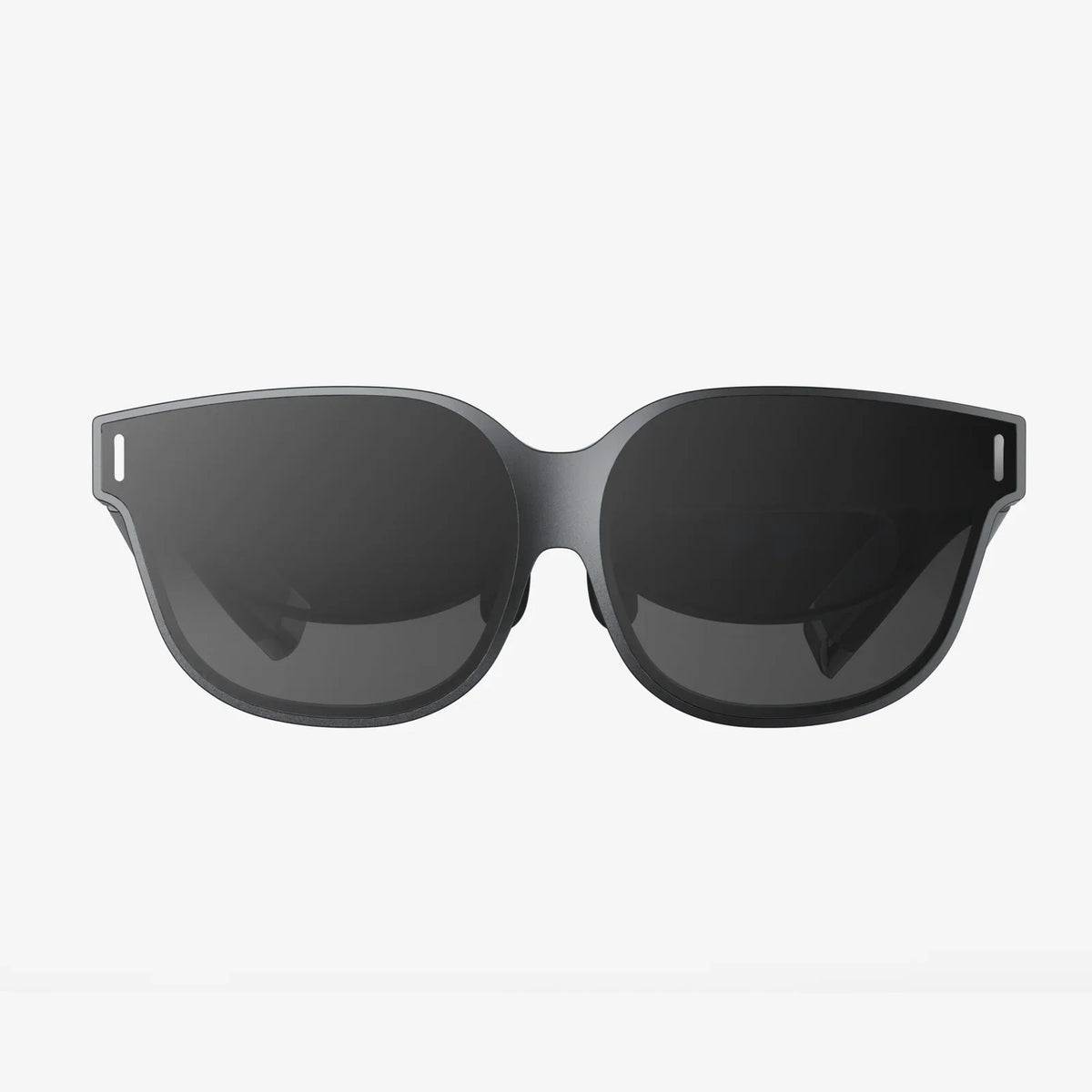
Today, we stand on the precipice of the next major shift: the move from hand-held AR to head-worn and eventually eyewear AR. This evolution promises a move away from the intrusive "zombie" mode of looking at the world through a phone screen toward a more natural, always-available, and context-aware experience. This is the path to AR becoming an invisible, indispensable layer on top of our reality.
Creating a convincing augmented experience is a complex dance of hardware and software. The process typically involves several key steps:
The potential applications for AR are virtually limitless, extending far beyond gaming and entertainment. It is already delivering tangible value and revolutionizing workflows in numerous sectors.
This is where AR is having its most immediate and profound impact. Engineers and technicians can use AR headsets or tablets to see digital schematics overlaid directly onto the physical machinery they are assembling or repairing. Annotations and arrows can guide them through complex procedures step-by-step, drastically reducing errors, training time, and the need to consult bulky physical manuals. Remote experts can see what an on-site worker sees and draw instructions directly into their field of view, enabling expert guidance from anywhere in the world.
In medicine, AR is saving lives and improving outcomes. Surgeons can use AR to visualize a patient's anatomy, such as CT scans or MRI data, projected directly onto the patient's body during surgery, acting as a GPS for complex procedures. This enhances precision and minimizes invasiveness. Medical students can practice procedures on virtual patients, and nurses can use AR to locate veins more accurately for injections.
The "try before you buy" paradigm is being completely reimagined. Customers can use their smartphones to see how a new sofa would look in their living room, how a pair of glasses fits their face, or how a shade of paint changes the ambiance of a room. This not only enhances consumer confidence and reduces return rates but also creates a novel and engaging shopping experience.
AR brings learning to life. Instead of reading about the Roman Empire, students can walk around a virtual Colosseum reconstructed in their classroom. Mechanics-in-training can practice disassembling a complex virtual engine. Chemistry students can manipulate virtual molecules floating in front of them. This shift from abstract to experiential learning dramatically improves comprehension and retention.
Artists and creators are using AR as a new medium. They can attach digital sculptures to physical locations, creating public art that only exists when viewed through a device. Museums are overlaying additional information, reconstructions, and animations onto exhibits. Storytellers are crafting narratives that unfold in your own environment, breaking the fourth wall between the story and the audience.
As with any powerful technology, the rise of AR brings with it a host of serious challenges and ethical dilemmas that society must confront.
The ultimate destiny of AR is to become invisible. The technology will shrink from bulky headsets to sleek eyeglasses and eventually to contact lenses or even direct neural interfaces. The interface will evolve from clumsy controllers to intuitive hand gestures, eye tracking, and voice commands. The goal is for the technology to recede into the background, making the augmentation feel like a natural extension of our own cognition and perception.
We are moving toward a world of ambient computing, where technology is everywhere yet nowhere, seamlessly integrated into our environment. In this future, your AR system will be a constant, intelligent companion, proactively offering you the right information at the right time, translating street signs in a foreign language, reminding you of a colleague's name as you walk into a meeting, or guiding you through assembling a piece of furniture without you ever needing to search for instructions.
This is not a distant dream. The foundational research is being done now. The hardware is getting lighter, the software smarter, and the networks faster. The revolution is not coming; it is already here, being built piece by piece in research labs and corporate strategy meetings. It will change what it means to be human in a technologically mediated world, challenging our concepts of memory, attention, and reality itself.
The world is about to get a software update. The familiar physical landscape of your daily life—your home, your workplace, your city—is poised to become a dynamic canvas for information, storytelling, and connection. This invisible layer of augmented intelligence won't just change how we use technology; it will redefine how we see, how we think, and how we interact with the very fabric of reality. The question is no longer if this future will arrive, but how we will choose to shape it, ensuring it enhances our humanity rather than diminishes it. The next time you look at the world around you, remember: you are only seeing a fraction of what it could be.