


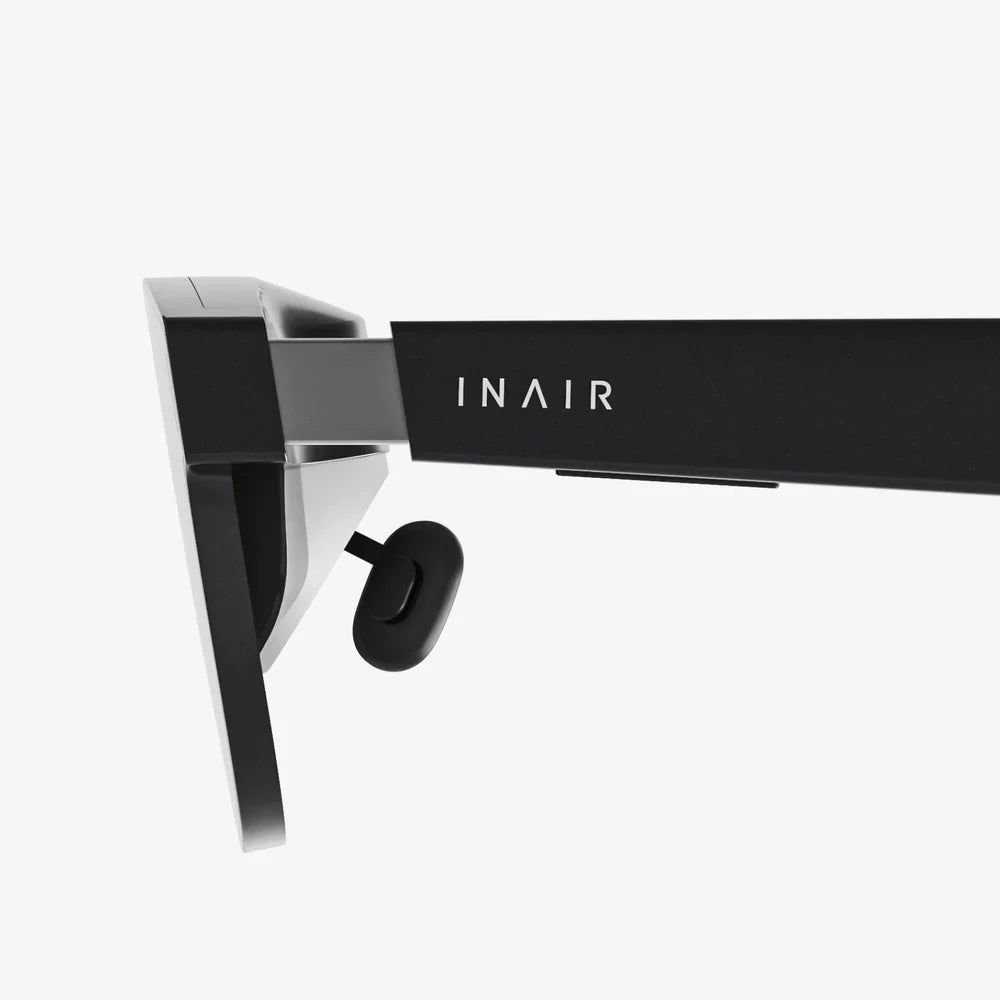
Imagine a world where instructions float seamlessly over the engine you’re repairing, where historical figures narrate their stories as you stand on the battlefield, and where your navigation path is painted onto the sidewalk itself. This is the promise of Augmented Reality (AR), a technology not of distant science fiction, but of our imminent future. Yet, for all its potential, the true magic—and the greatest challenge—lies not in the dazzling graphics, but in the silent, seamless, and profoundly intuitive orchestration of the AR User Experience. It is this invisible framework that will ultimately determine whether AR becomes an indispensable extension of our capabilities or just another technological novelty relegated to the sidelines.
The Fundamental Shift: From Looking At to Living In
Traditional user experience, whether on a desktop or a smartphone, is confined to a rectangular screen. It’s a portal we look into. AR UX shatters this paradigm. It’s not about looking at an interface; it’s about living within a digitally augmented environment. The interface ceases to be a separate entity and becomes an integrated layer of your reality. This shift from a 2D, screen-bound interaction to a 3D, spatially-aware one is the most radical change in human-computer interaction since the advent of the graphical user interface.
This new paradigm demands a new set of design principles. The designer is no longer just an artist or a programmer; they are an architect of reality. They must consider the user’s physical space, their movement, their focus, and even their social context. The goal is to create an experience that feels less like using a tool and more like possessing a new sense—a sense that allows you to perceive digital information that is contextually relevant to your immediate surroundings.
Pillars of a Seamless AR User Experience
Crafting this seamless experience rests on several critical pillars, each one a complex challenge in its own right.
Spatial Awareness and Environmental Understanding
At the heart of any compelling AR experience is the device's ability to understand the world around it. This goes far beyond simple GPS location. Advanced AR systems use a combination of cameras, sensors, and algorithms to create a real-time 3D map of the environment—a process known as simultaneous localization and mapping (SLAM). This allows digital objects to not just appear in your space, but to interact with it convincingly. A virtual character can sit on your real couch, a digital ball can bounce off your actual wall, and an information panel can align perfectly with the physical machine it describes.
Without precise spatial awareness, the illusion breaks. Digital objects will drift, float incorrectly, or occlude现实世界 objects poorly, leading to a jarring and unusable experience. The AR user experience is fundamentally tied to the fidelity of this environmental understanding.
Intuitive Input and Interaction
How do you interact with a world that doesn’t physically exist? The point-and-click metaphor of the mouse, or the tap-and-swipe of a touchscreen, are inadequate for a 3D space. AR user experience designers are exploring a rich tapestry of interaction modalities:
- Gesture Control: Using hand and finger movements to select, move, and manipulate digital objects. This must be precise, learnable, and fatigue-free.
- Voice Commands: A natural and powerful way to issue complex commands without cluttering the visual field with buttons. It allows for a "show me" or "move that here" style of interaction.
- Gaze and Dwell: Simply looking at an object for a moment can select it, reducing the need for constant gesturing.
- Contextual UI: The interface itself must be minimal and context-aware. Buttons and menus should appear only when and where they are needed, attached to the objects they control rather than fixed to the screen's edges.
The most effective AR user experience will likely blend these methods, allowing the user to choose the most natural interaction for the task at hand.
Visual Design and Information Hierarchy
In AR, bad UI isn’t just ugly; it’s dangerous. Placing a critical alert in the wrong part of the user’s field of view could literally cause them to walk into a wall. AR visual design must prioritize clarity, legibility, and safety above all else.
Information must be layered and prioritized. Critical alerts should be placed centrally, while secondary information resides in the periphery. Designers must use contrast, color, and scale to guide the user’s attention without overwhelming them. Crucially, digital content must never fully obscure the user’s view of the real world, especially when the user is mobile. This requires elegant techniques for indicating occluded objects and ensuring the user maintains situational awareness at all times.
The Human Factor: Overcoming the UX Challenges
The path to perfect AR is littered with significant hurdles that directly impact the user experience.
Social Acceptance and Etiquette
Walking down the street while gesturing wildly at the air is socially awkward. Talking to an invisible assistant draws stares. A major part of the AR user experience is designing for social comfort. This might involve more subtle interactions, like a flick of the wrist or a whispered command, or hardware designed to be less obtrusive. The technology must adapt to human social norms, not the other way around.
Accessibility and Inclusivity
AR must be built for everyone. How does a blind person experience an AR world reliant on visual overlays? How do those with motor impairments perform precise gestures? True innovation in AR user experience will come from solving these challenges, perhaps through audio-based AR (spatial soundscapes) or alternative input methods, ensuring the technology amplifies human ability for all users, regardless of their physical capabilities.
Privacy and the Ethical Dimension
An AR device is, by its nature, a sensor-rich platform that is constantly capturing data about your environment. This raises profound privacy questions. The UX must include clear, intuitive, and ever-present indicators of what data is being collected and when. Users need transparent control over their digital footprint in AR, a challenge that extends far beyond traditional app permissions into the very fabric of our augmented lives.
Beyond the Novelty: Real-World Applications Redefined by UX
The true test of AR user experience is its application in solving real-world problems. The technology fades into the background, and the enhanced human capability takes center stage.
- Industrial and Manufacturing: A technician sees an animated overlay guiding them through a complex repair, with part numbers and torque specs hovering directly on the components. The AR user experience here is about reducing error, speeding up training, and providing hands-free access to information.
- Healthcare: A surgeon visualizes a 3D model of a patient’s anatomy superimposed on their body during a procedure. Medical students can practice on virtual cadavers. The UX is a matter of life and death, requiring absolute precision, stability, and reliability of information.
- Education and Training: History lessons unfold around students as they explore ancient ruins. Mechanics of a complex engine become visible and interactive. The UX transforms learning from a passive to an active, exploratory process.
- Retail and Commerce: Visualizing how a new sofa will look in your living room at true scale before you buy it. Trying on clothes or glasses virtually. The UX removes the uncertainty of online shopping and bridges the gap between digital browsing and physical ownership.
The Invisible Interface: A Glimpse into the Future
The ultimate goal of AR user experience design is to create what is often called the "invisible interface." It’s an experience so natural and integrated that the technology itself disappears from the user's consciousness. We don’t think about the mechanics of our senses; we simply see, hear, and feel. The perfect AR interface should aspire to the same level of intuitive immediacy.
Future advancements will push us closer to this ideal. Think of neural interfaces that could allow us to manipulate digital objects with a thought, or photorealistic rendering that makes it impossible to distinguish the digital from the physical. The hardware will evolve from today’s headsets and phones to sleek, socially acceptable glasses and eventually to contact lenses or more direct biological integration. At each step, the user experience will be the critical factor determining adoption and utility.
The journey of AR is not merely a hardware arms race or a software feature list. It is a deep, philosophical, and design-centric exploration of how humanity will coexist with and be enhanced by pervasive digital information. It’s about building a layer of intelligence over our world that feels less like a computer and more like a cognitive extension of ourselves. The companies and designers who master the art and science of the AR user experience will not just be creating apps; they will be defining the next chapter of human reality. The screen is fading, and the world is waking up, ready to be augmented. The question is no longer if this future will arrive, but how beautifully and seamlessly we will choose to build it.
We stand on the precipice of a reality where every surface can be a screen, every object can hold a story, and information is woven into the very fabric of our existence. The success of this revolution won't be measured in teraflops or field of view, but in the effortless, almost magical, way it integrates into the flow of human life. The next time you look at the world around you, try to imagine the hidden layers of data waiting to be unlocked—the ultimate user interface is being painted onto reality itself, and it’s being designed for you.
Share:
How Do You Do AI: A Comprehensive Guide to Understanding and Implementing Artificial Intelligence
Why Does AI Matter: The Unseen Force Reshaping Our World