


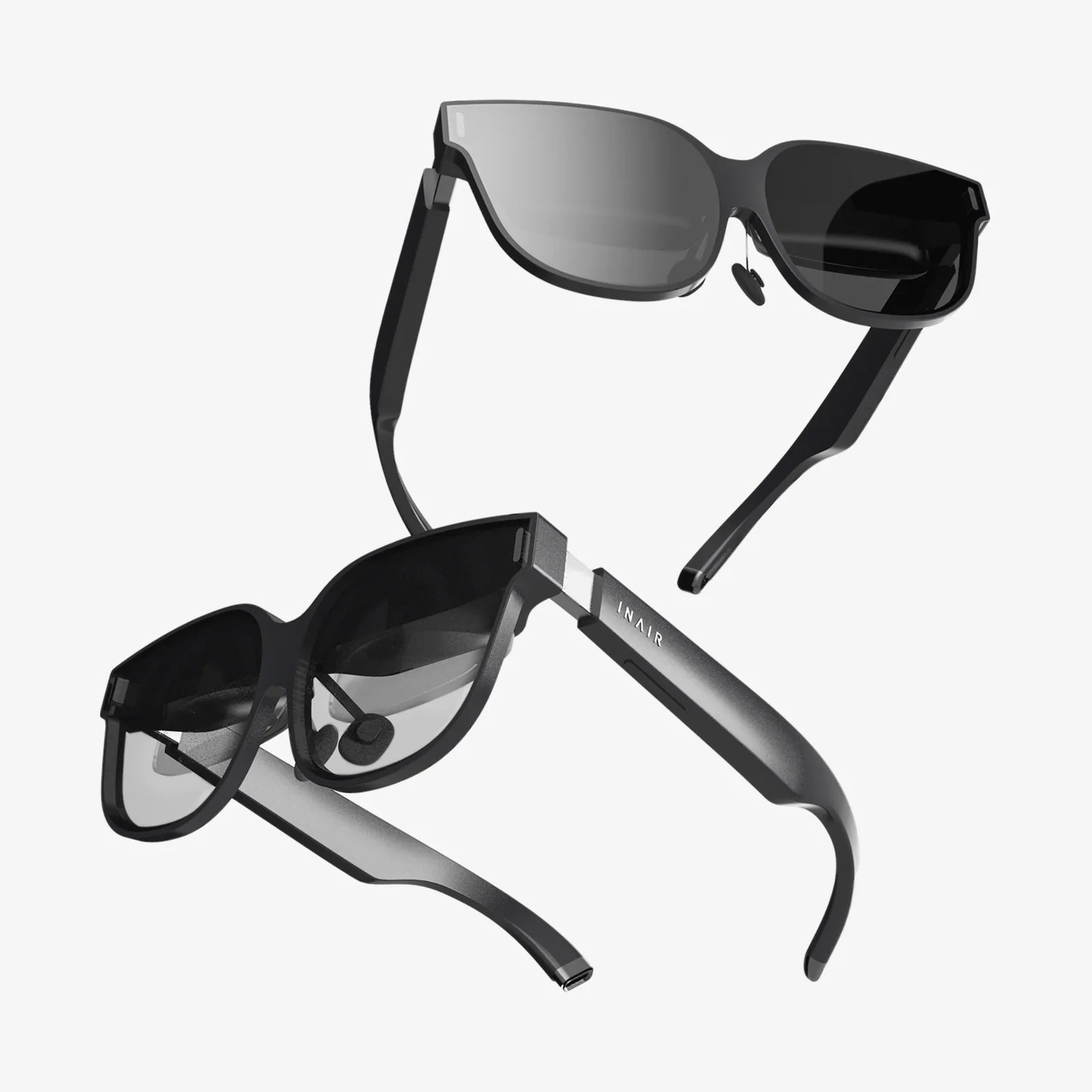
Imagine a world where the line between the digital and the physical doesn't just blur—it disappears. Where information doesn't live on a screen in your hand but is painted onto the very fabric of reality itself. This is the promise of AR Vision, a technological leap that is quietly, yet profoundly, beginning to reshape everything from how we work and learn to how we connect and perceive the world around us. It’s more than a gadget; it’s a new layer of human understanding, and it’s arriving faster than most of us realize.
Beyond the Hype: Defining the AR Vision Ecosystem
At its core, AR Vision is the seamless integration of digital information—images, data, 3D models, text—with a user's real-world environment in real-time. Unlike its cousin, Virtual Reality (VR), which aims to replace reality with a fully digital one, AR aims to augment and enhance it. The goal is to make the computer an invisible but intelligent partner in your daily life.
The technological stack that makes this possible is complex and multifaceted. It begins with sophisticated sensors—cameras, LiDAR, depth sensors, and IMUs (Inertial Measurement Units)—that constantly scan and map the environment. This spatial data is then processed by powerful onboard algorithms and chipsets that perform simultaneous localization and mapping (SLAM). SLAM allows the device to understand its precise position in a space and anchor digital objects to physical points with astonishing accuracy.
The final piece is the display technology, which projects the digital overlay into the user's field of view. This can range from simple smartphone screens, which use the camera viewfinder as a window, to more advanced optical see-through displays found in smart glasses. These displays use waveguides, holographic optical elements, and micro-LED projectors to beam light directly into the retina, creating the illusion that digital content exists in the real world. This fusion of sensor, compute, and display is what creates the magic of a cohesive AR Vision.
The Industrial Metaverse: AR Vision on the Factory Floor
While consumer applications often grab headlines, the most significant and immediate impact of AR Vision is occurring in industrial and enterprise settings. Here, the technology is not for entertainment; it's a critical tool for boosting efficiency, safety, and precision.
In complex manufacturing and assembly, technicians wearing AR smart glasses can see digital work instructions overlaid directly onto the machinery they are repairing. Animated arrows can show the exact sequence of steps, torque values can be displayed next to specific bolts, and safety warnings can flash if a procedure is performed incorrectly. This hands-free access to knowledge reduces errors, slashes training time, and empowers less experienced workers to perform complex tasks with expert-level guidance.
For design and prototyping, AR Vision is revolutionary. Engineers can project full-scale, interactive 3D models of new products into a physical space. They can walk around them, peer inside them, and even see how a new part would fit into an existing assembly line before a single physical component is ever fabricated. This "digital twin" capability saves millions in prototyping costs and dramatically accelerates the design iteration process.
Remote assistance is another killer app. A field engineer stuck on a difficult problem can stream their first-person view to a specialist thousands of miles away. The expert can then draw annotations and diagrams that appear directly in the field engineer's field of view, pointing precisely to the component that needs attention. This collapses geographical barriers, reduces travel costs, and ensures problems are solved faster.
A New Lens on Health: AR Vision in Medicine and Surgery
The stakes in healthcare are incredibly high, and AR Vision is rising to the challenge, offering new ways to see the human body and improve patient outcomes.
Medical training is being transformed. Instead of cadavers or static textbooks, students can use AR to explore detailed, interactive, and layered 3D models of human anatomy. They can peel back layers of muscle, isolate the circulatory system, or examine the structure of the heart—all in a shared, collaborative space. This provides an intuitive understanding of spatial relationships that 2D images simply cannot match.
In the operating room, surgeons are beginning to use AR overlays to visualize critical information without looking away from the patient. Pre-operative scans from CT or MRI can be projected directly onto the patient's body, acting as an X-ray vision tool that highlights tumors, blood vessels, or surgical pathways. This enhanced visualization can lead to smaller incisions, more precise excisions, and reduced operation times, all of which contribute to better patient recovery.
Furthermore, AR can assist in rehabilitation by turning physical therapy exercises into immersive games, guiding patients through correct movements with visual cues and providing motivational feedback, thereby improving adherence to treatment plans.
Rewiring Daily Life: The Consumer and Social Promise
The long-term vision for AR is its seamless integration into our everyday lives. The smartphone, a device we must consciously pull out and interact with, may eventually be replaced by always-available, context-aware visual assistance.
Navigation will evolve from a blue dot on a map to giant, floating arrows painted onto the street guiding you to your destination. You could look at a restaurant and instantly see its reviews and menu highlights floating beside it. In your home, you could place virtual art on your walls or preview how a new piece of furniture would look in your living room at full scale before you buy it.
The social implications are equally profound. AR Vision promises a new form of persistent, shared communication. Instead of video calls on a flat screen, you could have a life-sized, 3D hologram of a loved one sitting on your couch, able to interact with your environment. Shared experiences, from watching movies to playing games, would take place in a blended space, creating a sense of presence that current technology lacks.
The Invisible Challenge: Ethical, Social, and Practical Hurdles
For all its potential, the path to a ubiquitous AR Vision future is fraught with challenges that extend far beyond technical hurdles.
The most pressing concern is privacy. An always-on, camera-equipped device worn on your face represents a paradigm shift in data collection. It could continuously capture everything and everyone you see. Who owns this data? How is it stored and used? The potential for surveillance, both by corporations and governments, is unprecedented. Robust ethical frameworks and regulations will be essential to prevent a dystopian future of constant monitoring.
There are also profound social questions. Will AR create a new digital divide between those who can afford this enhanced reality and those who cannot? How will we manage attention in a world flooded with digital stimuli? Will we become more disconnected from the physical world and each other, even as digital layers bring us closer to information?
On a practical level, device design remains a barrier. For AR to be adopted widely, the hardware must become socially acceptable—as lightweight and stylish as regular eyeglasses—with all-day battery life and incredible processing power packed into an impossibly small form factor. This is a monumental engineering challenge that the industry is still grappling with.
The Future Lens: Where AR Vision is Headed
The ultimate endpoint of AR Vision is often described as the "Mirrorworld" or the "Metaverse"—a perfect, real-time digital copy of the physical world that we can interact with and manipulate. This would be the final erasure of the digital-physical divide.
The next leaps will be driven by advancements in Artificial Intelligence. AI will be the brain that makes sense of the vast sensor data, understanding context and intent to deliver the right information at the right time without being asked. It will power more natural interaction models, moving beyond controllers to gesture, gaze, and eventually, direct neural interfaces.
As the technology matures, we will see the emergence of a new kind of digital literacy and a new creative medium. Artists will design experiences that exist in our parks and city squares, and developers will build applications we haven't even begun to imagine, all layered on top of our shared reality.
The journey of AR Vision is not about escaping our world, but about enriching it. It’s a tool for unlocking human potential, amplifying our intellect, and connecting us with information and with each other in ways that feel magical, intuitive, and profoundly human. The challenge ahead is not just to build it, but to build it right—ensuring this powerful new lens focuses on empowering humanity, not diminishing it.
The world you see today is about to gain a hidden dimension, a digital nervous system that will whisper information onto your retina and transform empty space into a canvas for creativity, productivity, and connection. The question is no longer if this future will arrive, but how quickly we can adapt to its incredible possibilities and navigate its profound responsibilities—are you ready to see the unseen?
Share:
AR Glasses Replace Monitor: The Future of Personal Computing is on Your Face
Human Computer Interface Meaning: The Digital Bridge Reshaping Our World