Imagine a world where the digital and physical realms are no longer separate, but seamlessly intertwined. Where you can see how a new sofa fits in your living room before you buy it, train for complex surgery without a physical patient, or visualize the inner workings of a machine simply by pointing your device at it. This is no longer the stuff of science fiction; it is the tangible, transformative reality being built by AR visualization platforms. These powerful tools are fundamentally altering our perception of reality, reshaping industries, and redefining the boundaries of human-computer interaction. The future is here, and it’s being overlaid onto our world.
The Core Mechanics: How AR Visualization Platforms Work Their Magic
At their essence, AR visualization platforms are sophisticated software ecosystems that enable the creation, management, and display of digital content within a user's real-world environment. The magic happens through a complex interplay of several key technologies.
Computer Vision: The Eyes of the Platform
The foundation of any AR experience is the platform's ability to see and understand the world. This is the role of computer vision. Using the camera on a device, the platform employs advanced algorithms to identify features, surfaces, and objects. Techniques like SLAM (Simultaneous Localization and Mapping) allow the platform to not only map the environment in real-time but also understand its own position within that space. This precise spatial awareness is crucial for anchoring digital objects so they appear stable and interact convincingly with the physical world, whether it's a virtual vase sitting on a real table or an animated character hiding behind a real chair.
3D Rendering Engines: Bringing Digital Objects to Life
Once the environment is understood, the platform must generate and display the digital content. This is the job of powerful 3D rendering engines. These software components are responsible for creating photorealistic or stylized 3D models, applying textures and lighting that match the ambient conditions of the real world, and ensuring everything is displayed at a high frame rate. The goal is to achieve a convincing blend where virtual objects cast accurate shadows, reflect real light, and occlude (or are occluded by) physical objects, creating a believable illusion of coexistence.
Deployment Modalities: From Smartphones to Smart Glasses
AR visualization platforms are agnostic in their delivery, offering experiences across a spectrum of devices, each with its own advantages.
-
Mobile AR (Smartphones and Tablets): This is the most accessible form of AR, leveraging the powerful cameras and processors in ubiquitous mobile devices. Experiences are typically viewed through the screen, using it as a window into the augmented world. This modality has been instrumental in democratizing AR for consumer applications like retail and gaming.
-
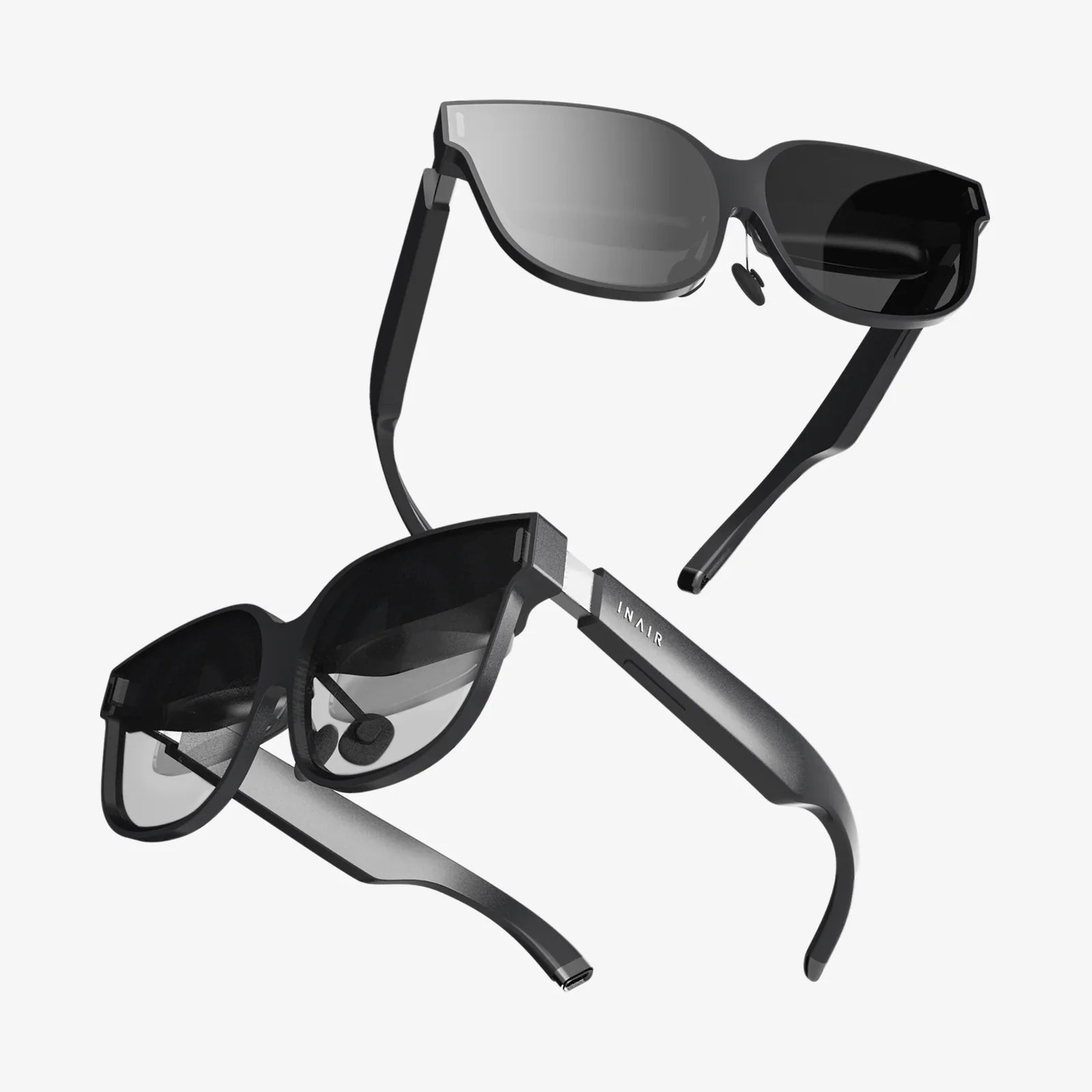
Standalone AR Headsets (Smart Glasses): These wearable devices offer a hands-free, truly immersive experience. They project digital imagery directly onto the user's field of view, either through optical see-through displays that layer graphics onto transparent lenses or video see-through that uses cameras to capture the real world and blend it with digital content. This is the preferred modality for enterprise applications where workers need both hands free.
-
WebAR: A rapidly growing segment, WebAR allows users to access AR experiences directly through a web browser without the need to download a dedicated application. This drastically lowers the barrier to entry, enabling users to engage with AR content through a simple URL link, making it ideal for marketing campaigns and widespread consumer reach.
A Universe of Applications: Where AR Visualization is Making an Impact
The versatility of AR visualization platforms means their applications are limited only by imagination. They are already delivering profound value across numerous sectors.
Revolutionizing Retail and E-Commerce
The retail landscape is being utterly transformed. Customers can now use their smartphones to see how a piece of furniture will look and fit in their home, try on watches, glasses, or makeup virtually, and even visualize entire kitchen redesigns with new cabinets and appliances. This "try before you buy" capability significantly reduces purchase hesitation and product return rates, while providing an engaging and interactive shopping experience that bridges the gap between online and in-store retail.
Empowering Industrial and Manufacturing Excellence
In industrial settings, AR visualization platforms are moving beyond novelty to become critical tools for productivity and safety. Technicians can use smart glasses to see step-by-step repair instructions overlaid directly on the equipment they are servicing. Engineers can visualize complex CAD models at full scale on the factory floor to identify potential issues before production begins. Remote experts can see what a field worker sees and provide guidance by annotating the real world with arrows, notes, and diagrams, drastically reducing travel time and resolving issues faster.
Transforming Education and Training
AR brings abstract concepts to life, creating immersive and interactive learning experiences. Medical students can practice procedures on detailed, interactive 3D models of the human body. History students can walk through ancient Roman ruins rebuilt in AR right in their classroom. Mechanics-in-training can learn the components of an engine by exploring a virtual model that they can dismantle and reassemble. This hands-on, visual approach enhances comprehension and retention in ways textbooks never could.
Reimagining Architecture, Engineering, and Construction (AEC)
For the AEC industry, AR visualization is a game-changer for design review, project planning, and client presentations. Architects can project their full-scale building designs onto a vacant lot, allowing stakeholders to literally walk through the virtual structure before a single foundation is poured. This enables the early detection of design clashes, facilitates better spatial understanding, and helps clients make more informed decisions, saving immense time and cost downstream.
Navigating the Challenges: The Hurdles on the Path to Ubiquity
Despite their immense potential, the widespread adoption of AR visualization platforms faces significant technical and social hurdles that must be overcome.
Technical Limitations: Hardware and Connectivity
The dream of lightweight, all-day smart glasses with high-resolution displays, a wide field of view, and powerful onboard processing remains just out of reach. Battery life is a constant constraint. Furthermore, rendering complex, photorealistic 3D models in real-time requires significant computational power and, often, robust network connectivity for cloud processing, which can be a barrier in remote or bandwidth-limited environments.
The Content Conundrum: Creation and Standardization
High-quality 3D content is the lifeblood of AR, but it can be expensive and time-consuming to create. There is also a lack of universal standards for 3D asset formats and AR experiences, which can lead to fragmentation and compatibility issues. The industry is working towards solutions like USDZ and glTF to create a more interoperable ecosystem, but widespread adoption is still evolving.
Privacy, Security, and the Ethical Dimension
AR devices, by their very nature, are data collection machines. They have cameras, microphones, and sensors constantly scanning the environment. This raises profound questions about data privacy, surveillance, and security. Who has access to this data? How is it stored and used? Furthermore, as digital content blends with reality, new ethical concerns emerge, from digital vandalism to the potential for realistic but dangerous misinformation, often called the "AR misinformation" problem.
The Future is Overlaid: What Lies Ahead for AR Visualization
The trajectory of AR visualization platforms points towards a future even more integrated into our daily lives. We are moving towards a world where a persistent, shared digital layer—often referred to as the spatial web or the metaverse—will coexist with our physical reality. In this future, your directions will be painted onto the street in front of you, historical information will pop up as you look at a monument, and your virtual workspace will be anchored to your physical desk. Advancements in AI will make these platforms more contextual and intelligent, understanding not just where things are, but what they are and how they relate to you. The convergence of AR with 5G/6G connectivity, edge computing, and more sophisticated wearables will erase the current technical barriers, making seamless, all-day augmentation a practical reality.
The door to a new layer of reality is now open, and AR visualization platforms are the key. They are not just changing screens; they are redefining our very interaction with information, space, and each other. The potential to enhance human capability, drive efficiency, and spark creativity is staggering. This is more than a technological shift; it is a fundamental evolution in how we perceive and shape our world. The question is no longer if this future will arrive, but how quickly we will choose to step through and embrace the augmented age.