


- by wangfred
AR Visualization: The Invisible Layer Reshaping Our Reality
- by wangfred
Imagine looking at a complex machine and seeing its internal components pulse with life, its maintenance history floating beside it, and animated instructions for repair superimposed directly onto its casing. Picture walking through a bare, empty room and watching it furnish itself in real-time with your chosen decor, or gazing at the night sky to see the constellations traced out with mythical figures and scientific data. This is the promise and the power of AR visualization, a technology that is quietly, yet profoundly, weaving a digital layer of intelligence over the fabric of our physical world. It’s not about escaping reality; it’s about enhancing it, making the invisible visible and the complex comprehensible. This transformative capability is moving from science fiction to indispensable tool, and it’s poised to change everything.
At its essence, AR visualization is the process of generating and superimposing computer-generated sensory inputs—primarily visual and auditory—onto a user's view of the real world. This creates a composite view where digital objects coexist and interact with the physical environment in real-time. The technological symphony that makes this possible involves several key components working in perfect harmony.
The first step for any AR visualization system is to understand the environment. This is achieved through a suite of sensors, most notably cameras. These cameras act as the eyes of the system, continuously capturing the user's surroundings. Advanced algorithms then process this visual data to perform critical tasks like simultaneous localization and mapping (SLAM). SLAM allows the device to both map an unknown environment and track its own position within that map simultaneously. This is the foundational step that enables digital objects to stay anchored to a specific point in the real world, rather than drifting aimlessly across the screen.
Once the environment is mapped, the system's processing unit takes over. This is where the heavy computational lifting occurs. The processor integrates data from other sensors, such as accelerometers, gyroscopes, and GPS, to refine the device's understanding of its position and orientation. It then calculates the precise perspective, angle, and lighting conditions required to render a digital object so that it appears to be a natural part of the scene. This involves complex 3D rendering, ensuring that a virtual chair, for instance, casts an appropriate shadow and gets occluded correctly if a real person walks in front of it.
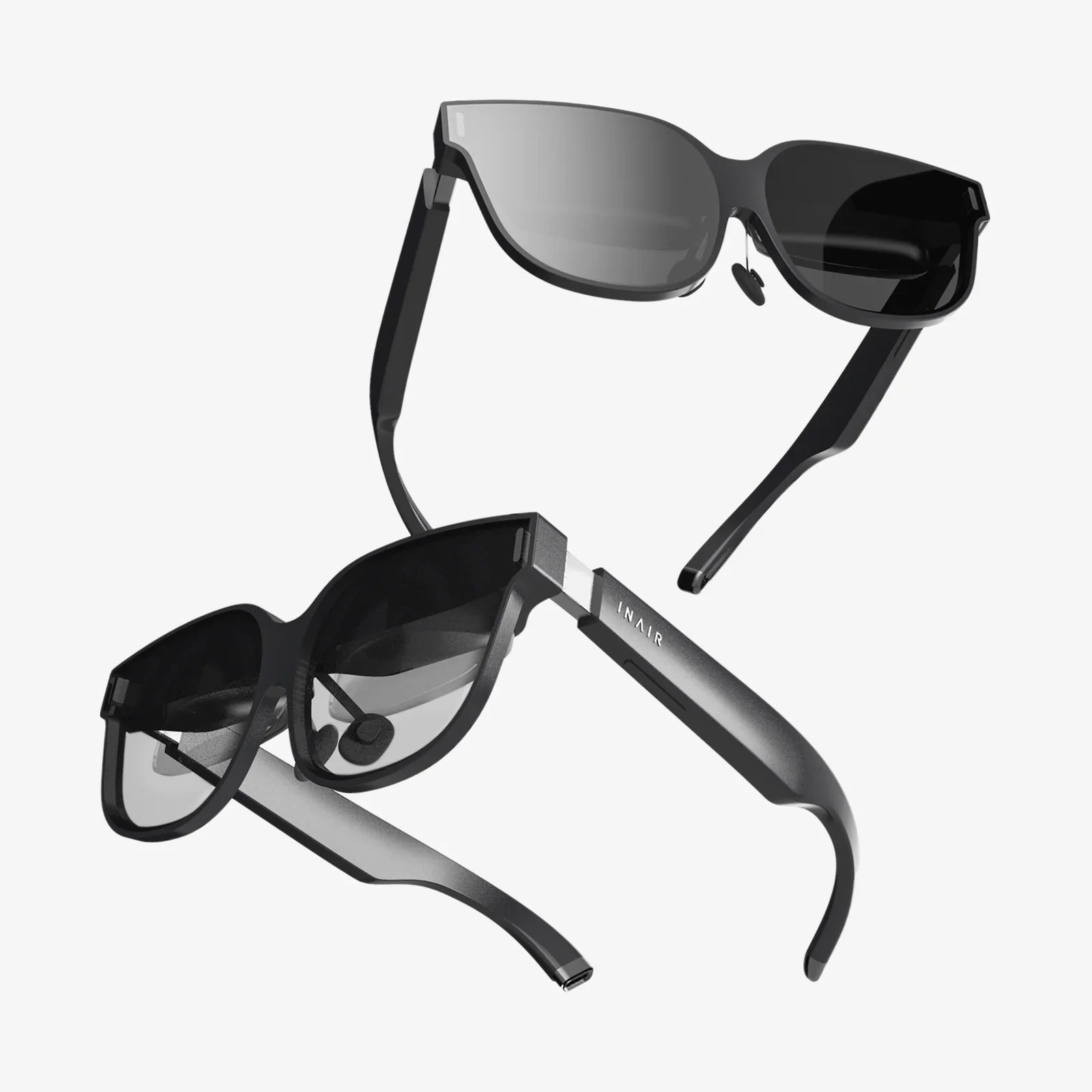
The final step is presenting the augmented view to the user. This is done through display technology, which ranges from smartphone screens and tablets to more immersive heads-up displays (HUDs) and smart glasses. Modern AR systems also incorporate intuitive methods of interaction. These go beyond simple touchscreens to include voice commands, hand gesture recognition, and even eye-tracking, allowing users to manipulate virtual objects as if they were physically present.
While playful filters and games brought AR visualization into the public consciousness, its true value lies in its profound practical applications. It is solving real-world problems, increasing efficiency, enhancing safety, and improving outcomes across a diverse range of sectors.
In industrial design and manufacturing, AR visualization is a game-changer. Engineers and designers can now project full-scale, photorealistic 3D models of products onto a physical space. This allows for unparalleled prototyping: assessing the ergonomics of a new car's dashboard, evaluating the fit of aircraft components before they are physically built, or visualizing the assembly line layout to identify potential bottlenecks. Technicians on the factory floor can use AR glasses to see wiring diagrams overlaid directly on machinery, receive step-by-step guidance for complex assembly tasks, and instantly access performance data and diagnostics, drastically reducing errors and training time.
The medical field is witnessing some of the most impactful uses of AR visualization. Surgeons can use it to overlay CT scans or MRI data directly onto a patient's body during procedures, effectively giving them "X-ray vision" to see beneath the skin and navigate critical anatomy with greater precision. Medical students can practice complex procedures on detailed, interactive holograms of the human body, accelerating their learning curve without risk. Furthermore, AR can assist in physical therapy by guiding patients through correct movement patterns and providing real-time feedback on their form.
AR visualization is closing the gap between online shopping and the in-store experience. Customers can now use their smartphones to see how a piece of furniture would look in their living room, how a new shade of paint would transform their walls, or how a pair of glasses would fit their face. This "try before you buy" capability drastically reduces purchase uncertainty and product return rates, building consumer confidence and driving sales. In physical stores, AR can provide additional product information, showcase related items, or offer exclusive digital promotions when a customer points their device at a product or display.
Education is being transformed from a passive to an active experience through AR. Instead of reading about ancient Rome, students can walk through a digitally reconstructed Forum on their tablets. Mechanics-in-training can practice disassembling and reassembling a complex engine with virtual guides. This immersive, hands-on approach caters to different learning styles, improves knowledge retention, and makes learning engaging and memorable. It provides a safe, cost-effective environment to practice dangerous or expensive procedures.
For architects, engineers, and construction professionals, AR visualization allows them to walk clients through a building long before the foundation is even poured. They can project digital blueprints onto the physical construction site, ensuring accuracy and allowing for on-the-fly comparisons between the planned design and the actual work. This helps in identifying clashes, resolving design conflicts, and facilitating better communication among all stakeholders, ultimately saving time and reducing costly rework.
Despite its immense potential, the widespread adoption of AR visualization faces several significant hurdles that must be overcome.
For AR to be truly seamless, the hardware needs to be powerful, lightweight, socially acceptable, and have all-day battery life. While smartphones are capable, the ultimate goal is comfortable, stylish smart glasses that don't compromise on computational power or field of view. Furthermore, processing vast amounts of visual data and streaming complex 3D models often requires robust, high-speed connectivity, which can be a limitation in certain environments. Edge computing is emerging as a key solution, processing data locally on the device to reduce latency and bandwidth demands.
A poorly designed AR experience can be confusing, frustrating, and ultimately useless. Creating intuitive user interfaces (UI) and user experiences (UX) for a technology that blends two worlds is a unique challenge. Designers must ensure that digital overlays provide value without creating information overload or obscuring critical real-world details. There is also a risk of a digital divide, where access to advanced AR tools is limited to those who can afford them, potentially creating disparities in education and workforce training.
AR devices, with their always-on cameras and sensors, collect unprecedented amounts of data about a user's environment. This raises profound privacy concerns. Who has access to this data? How is it stored and used? The potential for unauthorized surveillance is significant. Moreover, if AR systems become integral to critical operations—like guiding a surgeon or controlling machinery—they become a target for cyberattacks. Ensuring the security and integrity of these systems is paramount.
The evolution of AR visualization is accelerating, driven by advancements in artificial intelligence, 5G/6G connectivity, and hardware miniaturization. We are moving towards a future where persistent digital layers, often called the "digital twin" of our world, will be accessible to everyone. This spatial web will allow information and experiences to be tied to specific locations and objects, creating a new paradigm for how we interact with information and with each other.
AI is the engine that will supercharge AR. Machine learning algorithms will become better at understanding scenes in real-time, recognizing objects and their context to provide more relevant and intelligent overlays. AI will enable real-time translation of street signs, instant identification of plant species, or automatic highlighting of points of interest based on a user's personal preferences, making AR visualization more contextual and personalized than ever before.
The concept of the AR Cloud refers to a persistent, shared digital copy of the real world. It’s a universal framework that allows multiple users to experience the same AR content anchored to the same physical location simultaneously and persistently. This will unlock collaborative experiences on a massive scale, from multi-user gaming and social interactions to complex, distributed industrial projects where teams in different locations can interact with the same virtual model overlaid on a real-world site.
The line between what is real and what is digital is not being erased, but rather being elegantly blurred. AR visualization is building a bridge, offering a lens through which we can not only see the world as it is but also understand what it could be. It is empowering us with superhuman perception, turning every blank space into a canvas and every complex object into an open book. This is not just a new technology; it is the next chapter in human-computer interaction, and it’s already beginning to reshape our reality in ways we are only starting to imagine.