


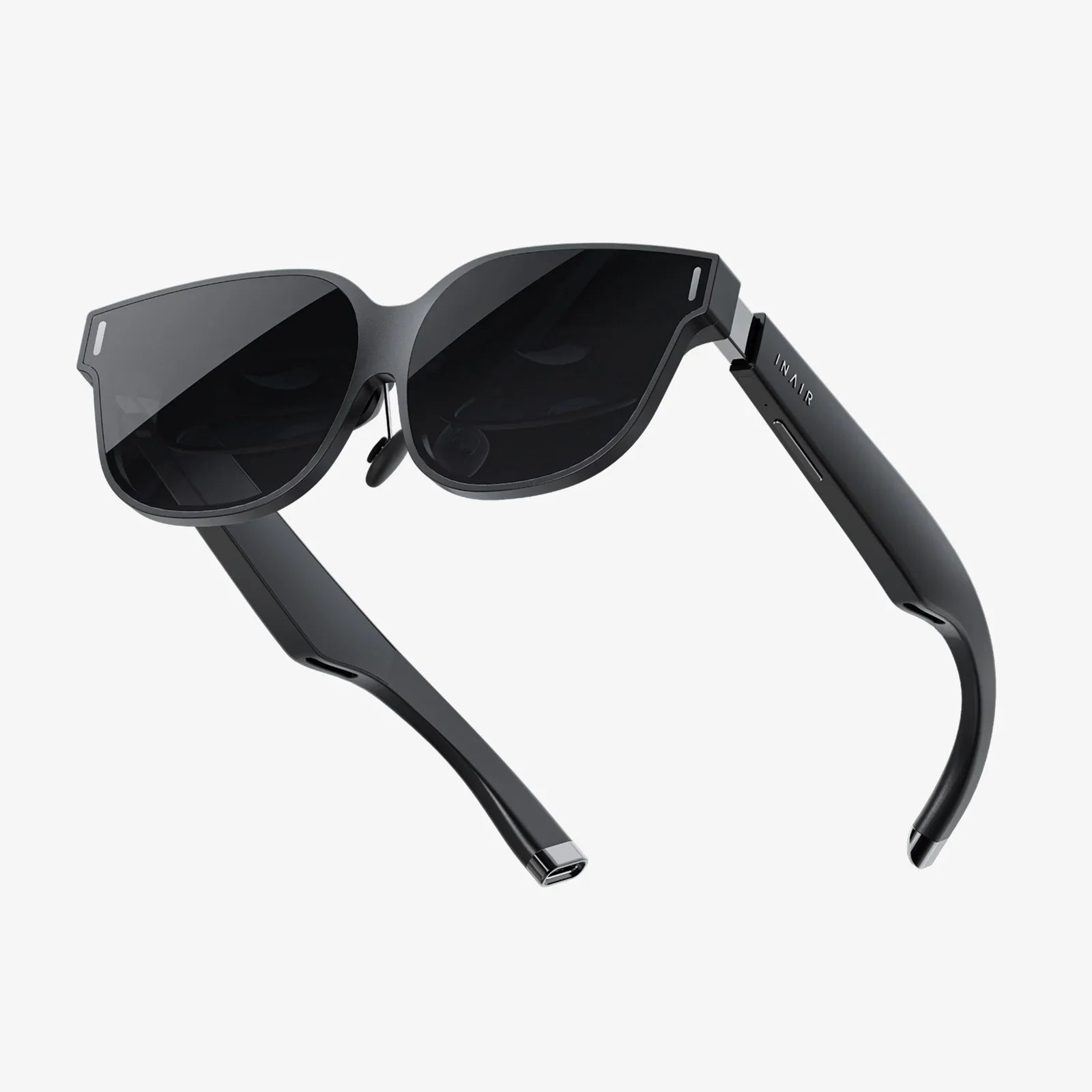
Imagine a world where your surroundings not only listen but understand, where digital information flows not from a screen but from the very air around you, guided by the most natural human instrument of all—your voice. This is not a distant science fiction fantasy; it is the emerging reality being built today through the powerful convergence of Augmented Reality (AR) and sophisticated voice processing technology. The meaning of this fusion, the AR voice process, extends far beyond a simple technical specification. It represents a fundamental shift in how we will interact with information, our environment, and each other, moving us toward a future where technology fades into the background, leaving our human experience enhanced and unobstructed.
Deconstructing the Terminology: More Than the Sum of Its Parts
To truly grasp the AR voice process meaning, we must first dissect its core components. It is a symbiotic relationship between two transformative technologies, each empowering the other to achieve something greater.
Augmented Reality: Overlaying Context on Reality
At its heart, Augmented Reality is the technological layer that superimposes computer-generated perceptual information onto the user's view of the real world. Unlike Virtual Reality (VR), which creates a completely artificial environment, AR starts with the real world and adds to it. This can include visual elements like 3D models, text, and animations, but also auditory, haptic, and other sensory feedback. The key value proposition of AR is context. It delivers information that is directly relevant to what the user is seeing and doing at that precise moment. For instance, looking at a historical monument through a device could overlay a reconstruction of its ancient form; examining a complex engine could reveal animated instructions for repair layered directly onto the physical components.
Voice Processing: The Bridge of Natural Communication
Voice processing, or speech technology, is the field concerned with enabling computers to recognize, understand, and respond to spoken language. This is a multi-stage pipeline:
- Automatic Speech Recognition (ASR): The first step, where spoken words are converted into digital text.
- Natural Language Understanding (NLU): This is where the magic of comprehension happens. NLU algorithms parse the text to determine the user's intent and extract key pieces of information (entities). It moves beyond literal words to grasp meaning, context, and nuance.
- Dialogue Management: The system decides how to respond to the user's request, accessing databases, triggering actions, or formulating a reply.
- Text-to-Speech (TTS) Synthesis: Finally, the system's response is converted from text back into audible, often natural-sounding, speech.
When combined, these two fields cease to be separate tools and become a unified interface. AR provides the eyes, and voice processing provides the ears and the voice, creating a complete, hands-free, and context-aware interaction model.
The Symphony of Interaction: How AR and Voice Work in Concert
The true AR voice process meaning is revealed in the elegant dance between the visual and the auditory. The interaction is typically initiated in one of two ways, both designed for seamless, intuitive use.
Voice-First Initiation: Speaking Your Intent into Existence
The most common paradigm is voice-first. The user, immersed in an AR experience, simply speaks a command or asks a question. A wake word like "Hey [Assistant]" often activates the system. For example, a technician wearing AR glasses while repairing a wind turbine could say, "Show me the torque specifications for this bolt." The voice process understands the request, and the AR system immediately overlays the precise numerical data directly onto their field of view, aligned with the bolt they are looking at. The user never touched a screen, navigated a menu, or broke their concentration. The information manifested exactly when and where it was needed.
Gaze-and-Speak: The Power of Visual Context
An even more powerful and natural method is gaze-or gesture-triggered voice interaction. Here, the user looks directly at an object or a specific point in the AR environment and then issues a voice command. The user's gaze provides critical contextual data, dramatically narrowing the scope of the request. Imagine looking at a restaurant in a city street view through your AR device and asking, "What are the reviews for this place?" The system knows that "this place" refers to the establishment currently in the center of your visual field. You don't need to know its name or address. The combination of visual focus and vocal command creates an incredibly efficient and intuitive query.
Unlocking Human Potential: The Transformative Applications
The practical applications of this technology are vast and are already beginning to revolutionize numerous sectors, demonstrating the profound real-world impact of the AR voice process.
Revolutionizing Industrial and Field Work
In industrial settings, the AR voice process is a game-changer for efficiency, safety, and accuracy. Field service engineers, assembly line workers, and maintenance crews can access schematics, manuals, and expert guidance without ever putting down their tools. They can perform complex procedures with animated instructions superimposed on the machinery, controlled entirely by voice. This hands-free access to information reduces errors, slashes training time, and empowers a single worker to perform tasks that previously required a team or a remote expert guiding them over a phone call.
Redefining the Learning and Training Landscape
Education and training are being transformed from passive to active, experiential learning. Medical students can practice procedures on virtual anatomy overlays, asking the system questions about specific organs or systems. Mechanics-in-training can interact with a 3D model of an engine, using voice commands to disassemble it and query the function of each part. This creates a rich, interactive, and self-directed learning environment that dramatically improves knowledge retention and understanding.
Creating Immersive Consumer and Retail Experiences
For consumers, AR voice process technology is creating new forms of shopping and entertainment. Users can point their device at a product in a store and ask for comparison reviews, inventory checks, or tutorial videos. In the home, trying on clothes virtually or visualizing how a new piece of furniture would look in your living room becomes a conversational experience. You can simply say, "Try that chair in blue," or "Move the sofa to the other wall," and the AR environment responds instantly.
Enhancing Accessibility and Navigation
This technology holds immense promise for enhancing accessibility. For individuals with visual impairments, an AR system could describe their surroundings, read signs, and identify obstacles, all navigated through voice. For everyone else, navigation becomes a layered experience. Instead of looking down at a phone map, directions can be painted onto the street itself, with voice guidance providing turn-by-turn instructions, all while keeping the user's head up and aware of their environment.
Navigating the Challenges: The Path to a Flawless Interface
Despite its immense potential, perfecting the AR voice process is a monumental technical challenge. Its ultimate meaning hinges on solving these critical hurdles.
The Daunting Problem of Noise and Acoustics
Real-world environments are noisy. A factory floor, a busy street, a windy construction site—these are acoustically chaotic places. For a voice assistant to function here, it requires incredibly robust speech recognition capable of filtering out background noise and isolating the user's voice (a technology known as beamforming). This remains one of the most significant barriers to widespread, reliable adoption in non-controlled environments.
The Imperative of Contextual Understanding
For the interaction to feel truly magical, the system must achieve a deep level of contextual awareness. It must understand not just the words, but the environment. If a user looks at a car and says, "How does this work?" does they mean the engine, the infotainment system, or the door handle? The NLU models must be trained on vast datasets to correctly interpret ambiguous commands based on the visual scene, user history, and the specific task at hand.
The Delicate Balance of Privacy and Always-On Sensing
An AR device with an always-listening microphone and a camera that sees everything you see raises profound privacy concerns. The very features that make it powerful—its persistent awareness of your environment—also make it a potential privacy nightmare. Manufacturers and developers must implement robust privacy-by-design principles: clear user consent, on-device processing where possible, transparent data policies, and clear physical indicators when the camera or microphone is active. Building trust is not optional; it is a prerequisite for adoption.
The Quest for Low Latency and Real-Time Response
Any lag between a user's command and the system's response or visual update will break the sense of immersion and make the technology feel clunky and unreliable. The entire pipeline—from capturing audio, to processing it in the cloud (or on-device), generating the AR content, and rendering it in perfect alignment with the real world—must happen in milliseconds. This requires immense computing power and highly optimized algorithms.
The Future is Spoken: Where Do We Go From Here?
The evolution of the AR voice process is steering toward even greater seamlessness and intelligence. We are moving toward a future where the technology becomes an invisible, ambient layer of our existence.
The Shift to On-Device AI and Edge Computing
To solve latency and privacy issues, more of the voice and visual processing will move from the cloud to the device itself. Powerful, specialized AI chips will handle complex NLU and AR rendering locally, ensuring faster responses and keeping sensitive environmental data from being transmitted over the internet.
Hyper-Personalization and Predictive Assistance
The system will evolve from reactive to proactive. By learning a user's preferences, routines, and habits, it will anticipate needs. Walking through a grocery store, it might highlight a recipe's ingredients you commonly buy. In a museum, it might offer deeper information on artists it knows you admire, all without a explicit command being issued.
The Metaverse and Spatial Audio
As concepts like the metaverse gain traction, the AR voice process will be the primary interface for navigating these blended digital-physical worlds. Coupled with spatial audio—where digital sounds seem to emanate from specific locations in your environment—the experience will become profoundly immersive, making digital interactions feel as tangible and real as physical ones.
Emotional Intelligence and Multimodal Sensing
Future systems will move beyond understanding words to understanding the speaker. By analyzing vocal tone, pitch, and pace, and perhaps even combining it with visual cues from micro-expressions, the technology could gauge user emotion and frustration, adapting its responses to be more empathetic and effective. This multimodal sensing—combining voice, gaze, gesture, and environment—will create a holistic understanding of user intent.
The true meaning of the AR voice process is the culmination of a decades-long quest to make technology conform to humanity, rather than forcing humanity to conform to technology. It’s about building a world where information is ambient, context is king, and our hands and eyes are free to engage with the physical world, aided by an intelligent, conversational digital companion that understands not just what we say, but what we mean, and, ultimately, what we need. This is the promise of the next great user interface—one that is not seen or held, but heard and experienced, woven so perfectly into the fabric of our daily lives that it becomes indistinguishable from magic itself.
Share:
Low Competition Digital Products 2025: The Ultimate Guide to Untapped Niches
Affordable Smart Board: Revolutionizing Collaboration Without Breaking the Bank