


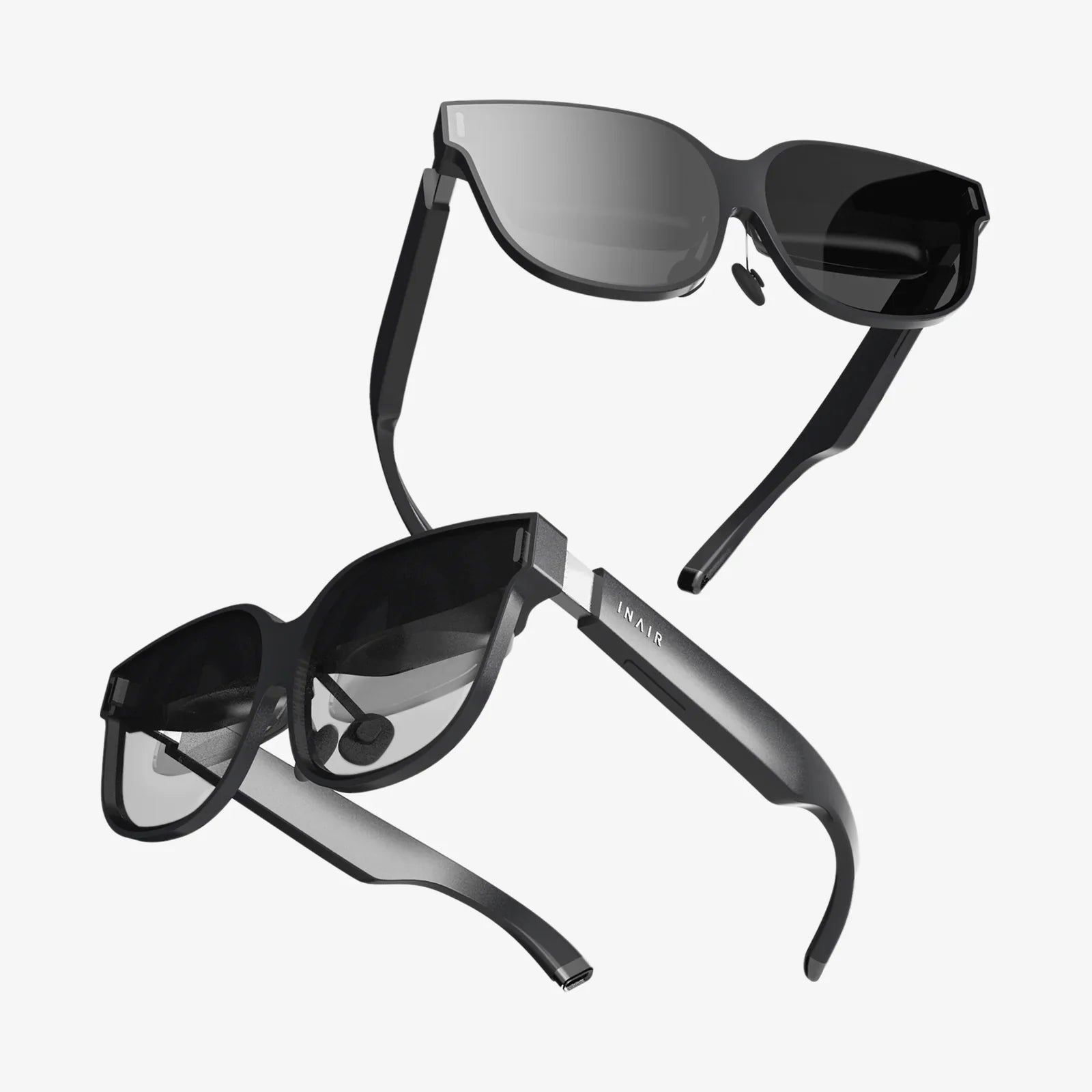
Imagine a world where the digital and physical seamlessly intertwine, where your living room becomes a battlefield, your surgical field gains a transparent overlay of vital data, and your morning run is guided by fantastical creatures only you can see. This is not a distant science fiction fantasy; it is the rapidly unfolding present, powered by the relentless evolution of augmented reality (AR), virtual reality (VR), and a host of other screen-based technologies that are fundamentally altering our perception of reality itself. The screen is no longer a window we look through; it is becoming a layer we live within.
The Foundational Pillars: Defining the Digital Spectrum
To understand the breadth of this technological revolution, we must first define its core components. While often grouped together, these technologies exist on a spectrum known as the virtuality continuum, a concept that ranges from the completely real to the entirely virtual environment.
Virtual Reality (VR) represents the far end of this spectrum. It is a fully immersive, computer-generated simulation that replaces the user's environment. By wearing a headset that tracks head and sometimes body movements, the user is transported into a digital world, completely occluding the physical one. The primary goal of VR is to create a convincing sense of presence—the undeniable feeling of "being there." This is achieved through high-resolution displays, precise motion tracking, and immersive spatial audio. Applications range from gaming and interactive storytelling to complex training simulations for pilots, surgeons, and engineers.
Augmented Reality (AR) sits closer to the real world. Instead of replacing reality, it enhances it by superimposing digital information—images, text, 3D models—onto the user's view of their physical surroundings. This is most commonly experienced today through smartphone cameras and increasingly via smart glasses. The magic of AR lies in its contextuality; the digital content is anchored to and interacts with the real world. For instance, pointing your device at a museum exhibit might bring up historical information, or viewing a piece of machinery through AR glasses could reveal its internal components and operational data.
Mixed Reality (MR) is a more advanced evolution of AR where digital and physical objects not only coexist but can interact in real-time. In a true MR experience, a user could place a virtual coffee cup on a physical table, walk around it, and see it from different angles, with the virtual object obeying the laws of physics and occlusion (e.g., the table would block the view of the bottom of the virtual cup). This requires highly advanced sensors and environmental understanding, making it the current frontier of screen-based immersion.
Beyond these, other screen-based technologies are emerging. Extended Reality (XR) serves as an umbrella term encompassing all these environments, from AR and VR to everything in between. Furthermore, developments in holographic displays and volumetric capture are pushing the boundaries, creating 3D images that can be viewed without headsets and capturing real-world objects or people in three dimensions for stunningly realistic playback.
From Science Fiction to Mainstream: The Accelerating Evolution
The journey of these technologies from niche curiosities to powerful tools has been accelerated by breakthroughs in several key areas. The most significant is the astronomical increase in computing power, following Moore's Law. Rendering complex, high-fidelity 3D environments in real-time requires immense graphical processing power, which has only recently become available in mobile and compact form factors.
Simultaneously, advancements in display technology have been crucial. Early VR headsets suffered from low resolution, high latency (causing motion sickness), and the dreaded "screen door effect." Today's displays offer high refresh rates, 4K+ resolution per eye, and miniaturized OLED or MicroLED panels that deliver crisp, vibrant visuals. For AR, the development of waveguide optics and micro-projectors has been essential for creating glasses that are both functional and socially acceptable to wear.
Finally, the sensor suite has become the eyes and ears of these devices. Inside-out tracking, using cameras and sensors on the headset itself to map the environment and track movement, has eliminated the need for external beacons. LiDAR scanners, depth sensors, and high-resolution cameras allow devices to understand the geometry of a room, recognize surfaces, and place digital objects with astonishing accuracy. This convergence of powerful compute, brilliant displays, and intelligent sensing has finally made these technologies viable for widespread use.
Transforming Industries: The Practical Applications
The impact of AR and VR extends far beyond entertainment, permeating and revolutionizing core sectors of the global economy.
Healthcare and Medicine
In medicine, these technologies are saving lives and improving outcomes. Surgeons use AR overlays to visualize a patient's anatomy—such as veins, tumors, or bone structures—directly on their body during procedures, increasing precision and reducing risk. VR is a powerful tool for medical training, allowing students to practice complex surgeries in a risk-free simulator. Furthermore, VR has proven highly effective in pain management, physical therapy, and treating psychological conditions like PTSD and phobias through controlled exposure therapy.
Manufacturing and Engineering
The industrial sector has been an early and enthusiastic adopter. AR smart glasses enable workers on the factory floor or in the field to access schematics, instruction manuals, and remote expert guidance hands-free, dramatically improving efficiency and reducing errors. VR is used for prototyping and design review, allowing engineers to explore and interact with full-scale 3D models of cars, buildings, or products long before a physical prototype is built, saving millions in development costs.
Education and Training
Education is being transformed from a passive to an experiential endeavor. Instead of reading about ancient Rome, students can take a VR field trip to walk its streets. Medical students can dissect virtual cadavers. AR can bring textbook diagrams to life, showing a beating heart in 3D above the page. This immersive learning enhances retention and engagement, catering to diverse learning styles.
Retail and Remote Collaboration
Retailers are leveraging AR to allow customers to "try before they buy" in an unprecedented way—visualizing how furniture will look in their home, how clothes will fit, or how makeup will appear on their skin. Perhaps one of the most transformative applications is in remote collaboration. VR and AR enable a sense of shared presence, where colleagues from across the globe can meet in a virtual boardroom, or an expert can see what a field technician sees and annotate their reality to guide them through a repair.
The Human and Societal Implications: A Double-Edged Sword
As with any powerful technology, the rise of immersive screens presents profound challenges and ethical dilemmas that society must confront.
The Privacy Paradox
These devices, by their very nature, are data collection powerhouses. To function, they must continuously scan, map, and record the user's environment. This raises critical questions: Who owns the 3D map of your home? Could this data be used for surveillance? How is facial recognition data handled when your glasses can identify everyone you meet? The potential for a unprecedented invasion of privacy is immense, demanding robust ethical frameworks and stringent data protection laws.
The Blurring of Realities
As digital overlays become more convincing, distinguishing between what is real and what is computer-generated may become difficult. This has implications for trust and authenticity. Could AR be used to manipulate perceptions in public spaces, altering advertisements or even people's appearances in real-time? The potential for misuse in spreading misinformation or creating deepfake-like environments is a serious concern.
Access and the Digital Divide
There is a real risk that these immersive technologies could exacerbate existing social and economic inequalities. High-end equipment remains expensive, potentially creating a divide between those who can afford to augment their reality and those who cannot. If crucial services, education, and social interactions increasingly move into these virtual spaces, those without access could be left further behind.
Psychological and Health Effects
Prolonged use of fully immersive VR can lead to dissociation, a temporary feeling of disconnection from one's physical body and surroundings, known as "VR hangover." The long-term psychological effects of frequently switching between realities are not yet fully understood. Furthermore, while AR is grounded in the real world, it could contribute to continuous partial attention, reducing our ability to be present in the moment and deepening our dependence on digital stimulation.
Gazing into the Crystal Ball: The Future is Already Here
The trajectory of these technologies points towards a future where the line between our digital and physical lives will become increasingly irrelevant. We are moving towards always-on, lightweight AR glasses that will eventually replace the smartphone as our primary interface with digital information. These devices will offer a persistent layer of contextually relevant data and functionality over our world—a concept often referred to as the metaverse or spatial computing.
In this future, your glasses could translate street signs in real-time, display navigation arrows on the road itself, and identify people you meet with a discreet name tag (with their permission). VR will achieve photorealistic graphics and haptic feedback so convincing that virtual meetings and social gatherings will feel nearly indistinguishable from their real-world counterparts. Brain-computer interfaces are the next frontier, potentially allowing us to control these digital layers with our thoughts, eliminating the need for controllers altogether.
The screen, in its traditional form, is destined to fade away, not by disappearing, but by expanding to encompass everything we see. Our entire field of vision will become a dynamic, interactive canvas. This represents a fundamental shift in human-computer interaction, moving from something we hold in our hand to something we wear and experience as an integral part of our perception.
The promise of AR, VR, and their kin is a world of enhanced productivity, boundless creativity, and deeper connection. Yet, this promise is inextricably linked to peril—the peril of eroded privacy, manipulated reality, and societal fracture. The shape of this future is not predetermined by the technology itself, but by the choices we make today. It is up to developers, policymakers, and users to steer this powerful force toward a future that amplifies our humanity rather than diminishes it, ensuring that these emerging screens serve as windows to a brighter world, not barriers to the one we already have.
Share:
What's a Virtual Office Space? The Definitive Guide to the Modern Business Address
Computer Virtual Meeting: The Complete Guide to Mastering Digital Collaboration