


- by wangfred
AR VR Applications in Business: Transforming Industries and Redefining Enterprise
- by wangfred
The digital frontier is no longer a distant concept on the horizon; it has arrived, and it is being built layer by layer, pixel by pixel, within the very fabric of our daily business operations. For the forward-thinking executive, the curious developer, and the innovative employee, understanding this shift is not just about keeping pace—it's about seizing a transformative advantage. The technologies of Augmented Reality (AR) and Virtual Reality (VR) have shed their skin as mere novelties for entertainment and are now powerful, practical tools driving efficiency, innovation, and profitability in the corporate world. This is not a glimpse into a far-off future; this is the new reality of business, and it is already here.
While often mentioned in the same breath, AR and VR serve distinct purposes and offer different value propositions for enterprises.
Virtual Reality (VR) immerses the user completely in a digitally constructed environment. By wearing a headset, the user is transported away from their physical surroundings into a simulated world. This world can be a replica of a real place, a fantastical landscape, or a detailed 3D model of a complex machine. The key is the sense of presence—the feeling of actually being there. For business, this immersion is invaluable for training, design prototyping, and virtual collaboration.
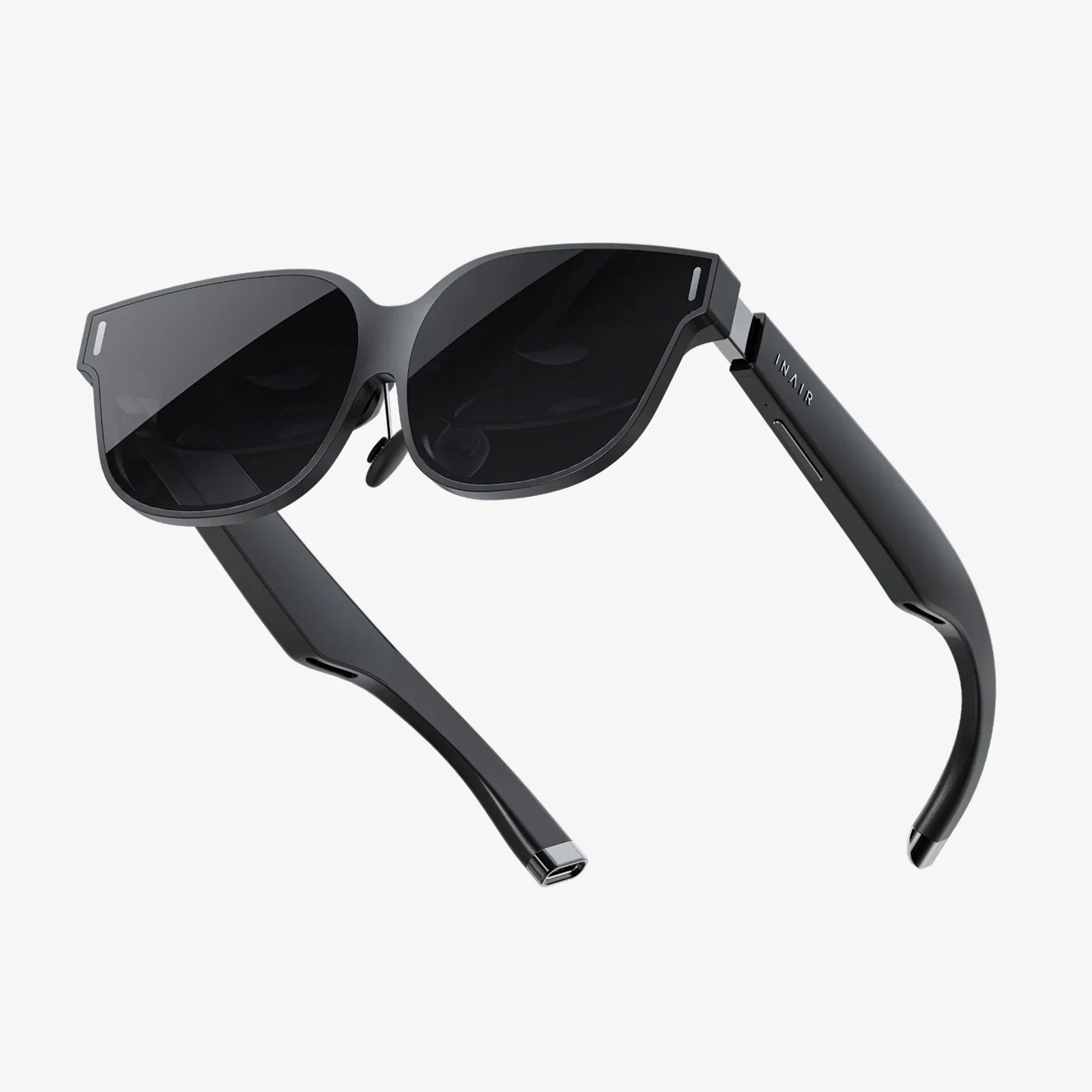
Augmented Reality (AR), by contrast, overlays digital information onto the user's view of the real world. Through a smartphone, tablet, or smart glasses, users see computer-generated images, text, and data superimposed on their physical environment. Instead of replacing reality, AR enhances it. This technology acts as a contextual digital layer, providing real-time information, instructions, or visual guides exactly where they are needed most. Its power lies in bridging the gap between the digital and physical realms, making it ideal for field service, logistics, and retail.
One of the most immediate and impactful applications of immersive technology is in the realm of human capital development. Traditional training methods often struggle with engagement, scalability, and the effective teaching of complex or dangerous tasks.
VR creates a risk-free sandbox for employees to practice and master skills. Surgeons can perform intricate procedures, mechanics can disassemble and rebuild complex engines, and public speakers can practice presentations in front of a virtual audience—all without any real-world consequences. This "learning by doing" in a simulated environment dramatically accelerates skill acquisition and improves knowledge retention compared to watching videos or reading manuals.
For industries like construction, manufacturing, and oil and gas, safety is paramount. VR can simulate high-risk scenarios—a chemical spill, a fire on an oil rig, a fall from height—allowing workers to learn emergency protocols and practice their response in a completely safe, controlled, yet highly realistic setting. This prepares them mentally and procedurally for potential real-life incidents far more effectively than any textbook ever could.
Beyond technical skills, VR is being used to train crucial soft skills. Employees can be placed in challenging conversational simulations, such as delivering difficult feedback, negotiating a contract, or de-escalating a conflict with a customer. These experiences provide a safe space to practice, make mistakes, and receive feedback, building confidence and competence.
The design and manufacturing cycle has been utterly transformed by digital tools, and AR/VR represents the next evolutionary leap, collapsing both time and distance.
Instead of building expensive physical prototypes, engineering and design teams can create and interact with full-scale 3D models in a shared virtual space. Architects can walk clients through a building before the foundation is poured. Automotive designers can sit inside the cockpit of a new car model, examining the placement of every dial and switch. This collaborative virtual prototyping identifies design flaws early, saves enormous amounts of money on materials and logistics, and significantly shortens the time-to-market.
On the factory floor, AR is becoming an indispensable tool for workers. Smart glasses can project digital work instructions directly onto the assembly line, showing exactly which part to install and where, reducing errors and speeding up production. For quality control inspectors, AR can overlay schematics and tolerance data onto a physical component, instantly highlighting any deviations or potential faults that the naked eye might miss.
When a complex piece of machinery fails, every minute of downtime costs money. AR empowers field technicians by overlaying animated repair guides, technical specifications, and remote expert advice directly onto the equipment they are fixing. A technician wearing AR glasses can have their hands free to work while seeing step-by-step instructions, potentially connected to a senior engineer on another continent who can see their view and annotate the real world with digital arrows and notes to guide them.
How products and services are presented and sold is undergoing a seismic shift thanks to immersive technologies, creating deeper emotional connections and empowering customer decision-making.
Businesses are no longer constrained by physical showroom space. A furniture company can allow customers to use their smartphone to see how a new sofa would look and fit in their actual living room. An automotive brand can offer a virtual test drive of a new model from the comfort of a customer's home. This "try before you buy" experience at scale builds consumer confidence and reduces purchase hesitation.
AR and VR offer unprecedented ways to tell a brand's story and create memorable, interactive campaigns. A travel company can transport potential tourists to a beach resort through a VR experience. A cosmetic brand can offer an AR filter that lets users try on different shades of lipstick. These campaigns generate higher engagement, virality, and emotional resonance than traditional advertising.
At trade shows and conferences, AR/VR booths are powerful magnets for attention. They can demonstrate large-scale industrial equipment that is impossible to bring to a convention center or create interactive, gamified experiences that educate visitors about a company's services in a fun and memorable way, ensuring the brand stands out in a crowded marketplace.
The rise of remote and hybrid work models has created a new challenge: how to foster the same level of collaboration and spontaneous connection as a physical office. Immersive technology provides a compelling answer.
VR platforms are emerging that create persistent virtual office spaces. Employees, represented by avatars, can meet in conference rooms, work at virtual desks alongside colleagues, and even have informal "water cooler" conversations. This sense of shared presence helps combat the isolation of remote work and recreates the serendipitous interactions that often spark innovation.
For data scientists, engineers, and analysts, VR offers a revolutionary way to interact with complex data sets. Instead of looking at spreadsheets or 2D charts, teams can step inside a 3D visualization of their data, walking around it, manipulating it with their hands, and identifying patterns and correlations that would be invisible on a flat screen. This collaborative, immersive analysis can lead to breakthrough insights.
Despite the immense potential, implementing AR/VR is not without its hurdles. A successful strategy must address several key challenges.
Deploying enterprise-grade immersive solutions requires robust hardware, high-bandwidth networks, and often significant computing power, either locally or in the cloud. Companies must invest in the right technology stack to ensure a smooth and reliable user experience.
The value of AR/VR is entirely dependent on the quality of the content and software. Developing custom, high-fidelity 3D models and applications requires specific expertise and can be resource-intensive. Furthermore, this new data and these new workflows must be seamlessly integrated with existing enterprise systems like ERP, CRM, and PLM to maximize ROI.
As with any new technology, user resistance can be a barrier. Some employees may be hesitant to use headsets or may experience motion sickness. A clear change management plan that focuses on demonstrating tangible benefits, providing thorough training, and starting with pilot programs for specific use cases is essential for driving widespread adoption.
Justifying the investment requires defining clear metrics for success from the outset. This could be a reduction in training time, a decrease in assembly errors, an increase in sales conversions, or a reduction in equipment downtime. Establishing these KPIs and diligently tracking them is crucial for proving the value of the initiative and securing ongoing executive support.
The integration of AR and VR into business processes is no longer a speculative experiment; it is a strategic imperative for those looking to lead in the next decade. The barriers to entry are lowering as hardware becomes more affordable and software more accessible, while the proven benefits across every vertical—from retail to robotics, healthcare to heavy industry—continue to mount. The businesses that will thrive are those that look past the novelty of the technology and see it for what it truly is: a fundamental new interface between humans, data, and the physical world. The question is no longer if your company will adopt these tools, but how quickly you can master them to outpace the competition and redefine what's possible.
Share:
Recognition Based Augmented Reality: The Invisible Engine Reshaping Our World
Augmented Reality Popularity: From Niche Novelty to Mainstream Phenomenon