


The digital and physical worlds are colliding at an unprecedented pace, and if you're not paying attention to the latest AR VR developer news today, you risk being left behind in a wave of immersive innovation that is reshaping everything from how we work to how we play. The landscape is shifting daily, with breakthroughs in hardware, software, and core philosophy creating a fertile ground for developers willing to dive into the metaverse, the industrial floor, and the consumer space. This isn't just about gaming anymore; it's a fundamental shift in human-computer interaction, and the architects of this new reality are the developers whose code brings the impossible to life.
The Hardware Horizon: Beyond the Headset
For developers, the hardware ecosystem is the canvas upon which they paint their immersive experiences. The recent news cycle has been dominated by a significant trend: the move towards more accessible, powerful, and diverse form factors. While standalone VR headsets continue to advance with higher-resolution displays, improved field of view, and more intuitive controllers, the real excitement is in the proliferation of Mixed Reality (MR). These devices, equipped with high-fidelity passthrough cameras, are blurring the line between AR and VR, allowing developers to create applications that seamlessly blend digital objects with the user's real environment. This opens up a new frontier for productivity apps, remote assistance, and complex design visualization that was previously confined to clunky AR glasses or screen-based mobile AR.
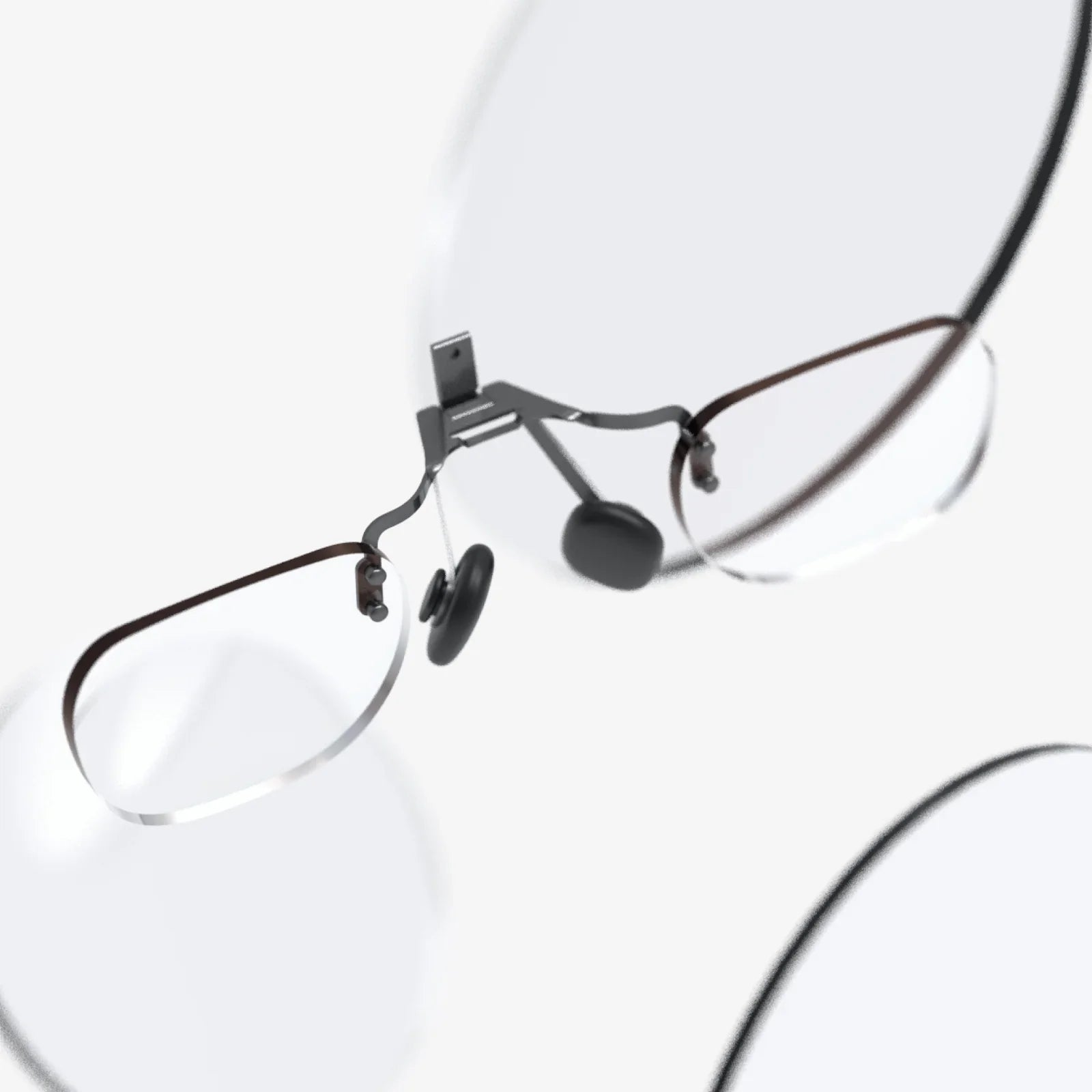
On the AR front, the developer community is abuzz with anticipation for the next generation of smart glasses. The industry is moving past the early days of limited field-of-view and bulky designs. News from key industry players suggests a strong push towards consumer-friendly eyewear that offers all-day battery life, compelling visual overlays, and a focus on contextual information rather than fully immersive 3D environments. For developers, this means a pivot in design thinking. It's no longer about creating overwhelming AR worlds but about developing subtle, useful, and glanceable information that enhances reality without obstructing it. The development kits for these platforms are becoming more sophisticated, offering better spatial mapping, object occlusion, and understanding of real-world geometry, which are critical for building believable experiences.
Software & SDK Evolution: Building Blocks of the Metaverse
The tools available to AR/VR developers are evolving at a breakneck speed, lowering the barrier to entry and empowering smaller teams to create world-class content. A major piece of news for developers today is the continued maturation and integration of core SDKs from the industry's leading platforms. These toolkits are increasingly focusing on cross-platform functionality, recognizing that the ecosystem's growth depends on experiences that can travel between different headsets and devices. This is a godsend for developers who can now write code once and deploy it across multiple major hardware platforms, significantly reducing development time and cost.
Another monumental shift is the rise of AI-powered development tools within these SDKs. We're seeing the integration of generative AI models directly into game engines and 3D creation suites. Developers can now use natural language prompts to generate complex 3D models, textures, and even snippets of code, dramatically accelerating prototyping and asset creation. Furthermore, AI is being used to create more intelligent and responsive virtual characters. Through new APIs, developers can imbue NPCs with conversational speech, emotional intelligence, and the ability to understand and react to player intent in real-time, moving beyond pre-scripted dialogue trees. This is pushing the boundaries of storytelling and user engagement in immersive environments.
Industry Applications: Beyond Entertainment
While gaming remains a powerhouse driver of VR adoption, the most compelling developer news today often revolves around enterprise and industrial applications. Corporations are investing heavily in immersive technology for training, design, and remote collaboration. Developers with skills in creating accurate simulations for high-risk jobs—such as surgery, aircraft maintenance, or heavy machinery operation—are in extremely high demand. These applications require a deep understanding of physics, networking for multi-user sessions, and a relentless focus on user safety and comfort.
The architecture, engineering, and construction (AEC) industry has become a hotbed for AR development. Tools that allow architects to project their digital blueprints onto physical construction sites using AR tablets or MR headsets are becoming standard practice. For developers, this means opportunities to work on complex CAD integration, real-time data visualization, and cloud-based collaboration platforms. The ability to translate BIM (Building Information Modeling) data into an interactive, life-size AR overlay is a highly specialized and valuable skill set. Similarly, the retail and marketing sectors are leveraging AR for virtual try-ons, interactive product demonstrations, and in-store navigation, creating a steady stream of projects for developers skilled in mobile AR development.
The Skills in Demand: What It Takes to Succeed
For those looking to break into the field or stay relevant, the required skill set is a fascinating blend of traditional software engineering and cutting-edge specializations. Proficiency in engines like Unity and Unreal Engine is practically mandatory, but that's just the foundation. The developer news today highlights a growing need for expertise in:
- 3D Math and Physics: A strong grasp of linear algebra, vectors, quaternions, and physics simulations is non-negotiable for creating believable interactions.
- Spatial Computing: Understanding how to map digital content to physical spaces, handle occlusion, and work with spatial anchors is unique to AR/VR development.
- UX/UI for Immersive Environments: Designing user interfaces for 3D space is radically different from designing for a 2D screen. It requires an understanding of depth, scale, and user comfort to prevent simulator sickness and ensure intuitive interaction.
- Multiplayer Networking: As the metaverse concept grows, so does the need for developers who can build stable, low-latency synchronous experiences for dozens or even hundreds of users.
- Performance Optimization: Pushing high framerates on mobile chipsets or standalone headsets is one of the biggest challenges. Mastery of profiling, rendering optimization, and efficient asset management is critical.
Challenges and Ethical Considerations
Amidst the excitement, the developer community is also grappling with significant challenges. Privacy and data security are paramount concerns, especially as devices with always-on cameras and microphones enter homes and workplaces. Developers are now having to build privacy-first frameworks, ensuring user data from spatial mapping is anonymized and secure. There's also an ongoing discussion about digital wellness—preventing addiction, ensuring psychological safety, and mitigating the effects of simulator sickness through thoughtful design.
Furthermore, the industry is facing a hardware fragmentation issue similar to the early days of mobile. While cross-platform tools help, developing for the unique features of one headset versus another still requires specialized work. The economic model for many AR/VR apps is also still being proven outside of gaming and enterprise, making it a risky venture for indie developers and startups. Navigating these challenges requires not just technical skill but also a strong ethical compass and business acumen.
The pulse of AR VR developer news today beats with a rhythm of relentless innovation and expanding possibility. From the AI-infused tools that are democratizing creation to the enterprise solutions solving real-world problems, the field is maturing at a staggering rate. The developers who will thrive are those who are perpetual students, constantly adapting to new hardware, mastering new software paradigms, and always keeping the human experience at the center of their virtual creations. The door to the next computing platform is wide open, and the code to build its future is being written right now.
Share:
Most Advanced Glasses: Seeing the Future Through Smart Lenses
Best Virtual Office Suites: The Ultimate Guide to a Seamless Digital Workspace