


- by wangfred
AR & VR in Wearable Devices: The Next Frontier of Human-Computer Interaction
- by wangfred
Imagine a world where digital information seamlessly overlays your physical reality, where virtual training simulations feel indistinguishable from real-world experience, and where the line between our digital and physical selves begins to blur. This is not a distant science fiction fantasy; it is the imminent future being built today through the powerful convergence of augmented reality (AR) and virtual reality (VR) in wearable devices. This technological synergy is poised to revolutionize everything from how we work and learn to how we connect and play, fundamentally altering the fabric of human-computer interaction.
While often mentioned in the same breath, AR and VR represent distinct points on a spectrum of immersive experiences, and wearable devices are the crucial gateway to both.
Virtual Reality (VR) wearables, typically in the form of headsets, completely occlude the user's view of the physical world, transporting them to a fully digital, computer-generated environment. The primary goal is immersion—making the user feel present in a virtual space. This is achieved through stereoscopic displays, precise head-tracking, and immersive spatial audio. The wearables act as a vessel, carrying the user's senses into a crafted digital realm for applications like gaming, sophisticated training simulations, and virtual tourism.
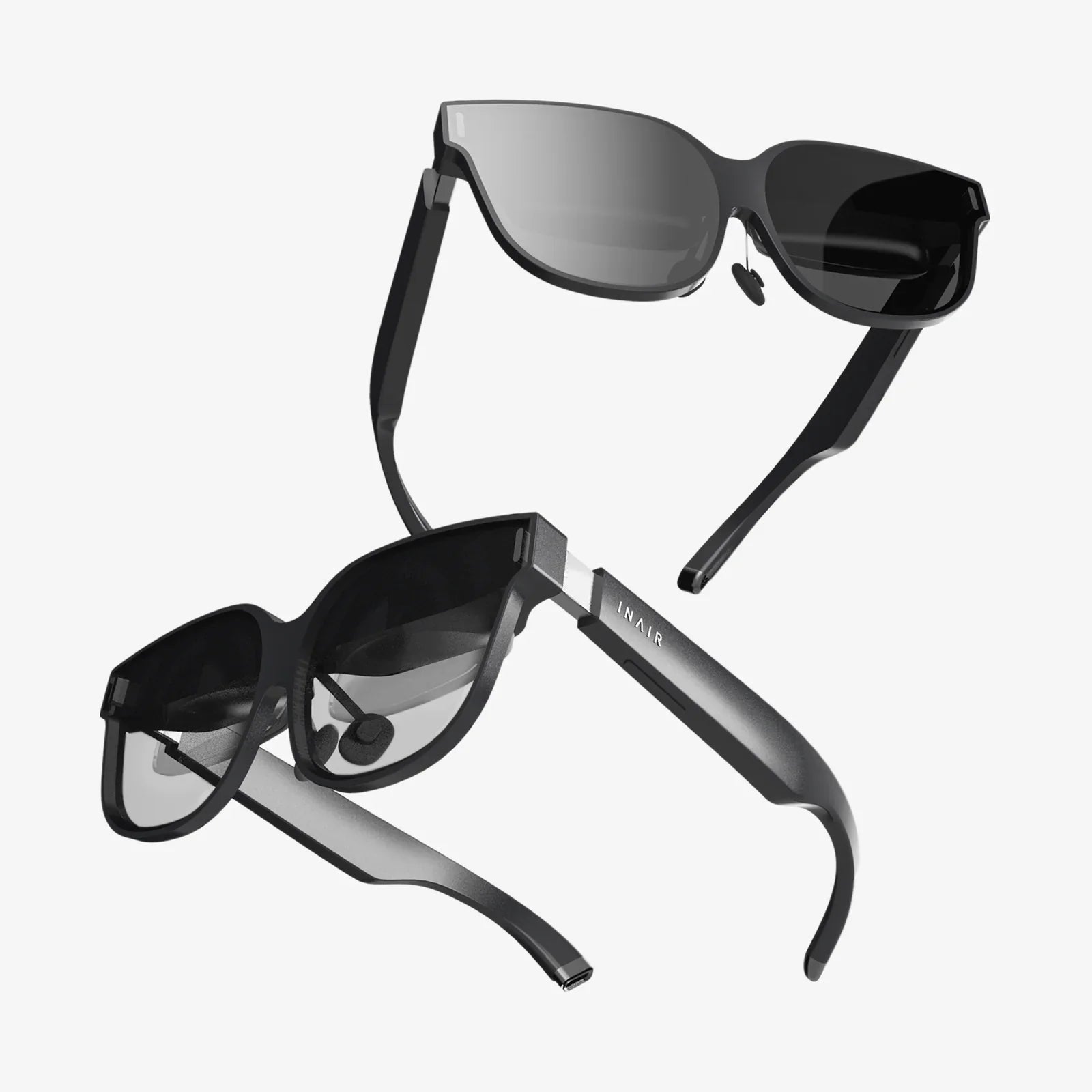
Augmented Reality (AR) wearables, which include smart glasses and more experimental forms like contact lenses, take a different approach. Instead of replacing reality, they enhance it. Digital information—text, images, 3D models—is superimposed onto the user's field of view, allowing them to interact with both the physical and digital worlds simultaneously. The wearable device becomes a dynamic layer of intelligence applied to the real world, providing context-specific information for tasks like navigation, equipment repair, or data visualization.
Bridging these two is a concept often referred to as Mixed Reality (MR). MR wearables are the most advanced, capable of understanding and interacting with the physical environment in real-time. They allow digital objects to be anchored to real-world surfaces and enable users to manipulate both physical and virtual items together. This represents the ultimate fusion of AR and VR, creating a hybrid environment where both realities coexist and interact.
The popular image of AR and VR is dominated by headsets, but the ecosystem of wearable devices is rapidly diversifying. The future of immersive technology lies in moving beyond bulky head-mounted displays towards more integrated, socially acceptable, and comfortable form factors.
This proliferation of form factors signifies a shift from occasional, dedicated use to constant, ambient computing. Wearables are becoming less of a device we put on and more of an always-available layer of our perception.
The value of AR and VR wearables extends far beyond entertainment. They are powerful tools driving efficiency, safety, and innovation across numerous sectors.
In medicine, AR wearables are transforming surgical planning and execution. Surgeons can wear glasses that project a patient's MRI data or critical vitals directly into their field of view during an operation, eliminating the need to look away at a monitor. Medical students can practice complex procedures on virtual patients through VR simulations, gaining invaluable experience without risk. Furthermore, AR can assist in precise vein visualization for injections or provide physical therapists with real-time feedback on a patient's movements.
This is one of the most impactful applications. A technician repairing a complex machine can wear AR glasses that overlay digital schematics, step-by-step instructions, and animated guides directly onto the equipment. This reduces errors, slashes training time, and allows less experienced workers to perform complex tasks. Remote experts can see what an on-site technician sees and annotate their view in real-time to guide them, eliminating travel time and costs.
VR wearables create unparalleled experiential learning. History students can walk through ancient Rome; biology students can travel through the human bloodstream; mechanics can disassemble and reassemble a virtual engine. This learning-by-doing in a risk-free environment dramatically improves knowledge retention and engagement. AR can bring textbooks to life, with 3D models of planets or dinosaurs appearing to leap off the page.
AR and VR are dismantling geographical barriers for collaboration. With wearables, teams can meet in a shared virtual office, interact with 3D models of products they are designing, or train together in a simulated environment, all while feeling as if they are in the same room. This "telepresence" has profound implications for remote work, enabling a level of connection and teamwork that video calls cannot match.
As this technology becomes more woven into our daily lives, it raises significant questions that society must address.
For AR and VR wearables to move from niche applications to mainstream adoption, several critical technological and design challenges must be overcome.
Battery Life and Processing Power: Rendering high-fidelity, complex digital worlds requires immense processing power, which drains batteries quickly. The ideal wearable needs to be lightweight and last all day, necessitating breakthroughs in low-power chipsets and battery technology. Edge computing and 5G connectivity may offload processing to the cloud, but this introduces latency, which can break immersion.
Display Technology and Form Factor: Current displays can suffer from issues like screen-door effect (seeing the lines between pixels), limited field of view, and inability to properly accommodate all eye prescriptions. The ultimate goal is a device that is as small, light, and socially acceptable as a pair of everyday glasses, which requires miniaturizing components like waveguides, projectors, and batteries.
User Interface and Interaction Paradigms: How do we intuitively interact with these digital layers? Controllers break the immersion of AR. Voice commands are not always practical. Hand-tracking and gesture control are promising but must become flawless and fatigue-free. The interface needs to be invisible and intuitive, understanding user intent without a steep learning curve.
The Killer App: Every transformative technology has a "killer app" that drives its initial adoption. For VR, it was gaming. For AR, it has yet to be definitively found. It could be a revolutionary social platform, an indispensable enterprise tool, or a new form of storytelling that captivates the masses.
The journey of AR and VR in wearable devices is a testament to human ingenuity, pushing the boundaries of how we perceive and interact with information. We are standing at the precipice of a new era, one where our tools are not just in our hands or pockets, but integrated into our very perception. The devices are evolving from clunky prototypes into sleek, powerful portals to new dimensions of experience. The potential to enhance human capability, democratize knowledge, and connect us in ways previously unimaginable is immense, waiting only for us to take the next step and truly see the world through a new lens.
Share:
Interactive Panel: The Digital Heart of the Modern Collaborative Workspace
AI Features: The Invisible Revolution Reshaping Our Digital World