


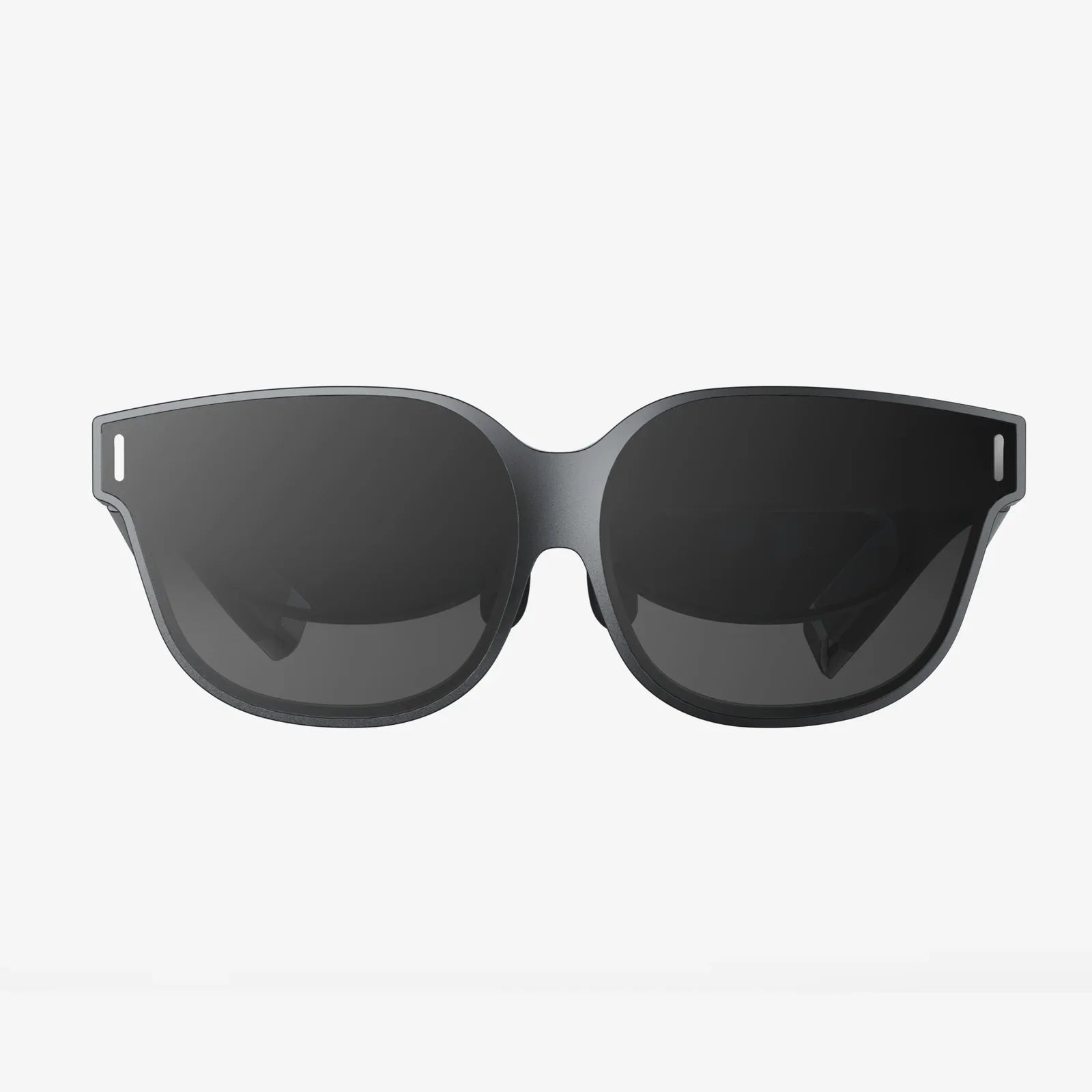
- by wangfred
AR VR Innovation: Reshaping Reality and Redefining Human Experience
- by wangfred
Imagine a world where the line between the digital and the physical isn't just blurred—it's erased. Where learning history means walking through ancient Rome, consulting a manual means seeing holographic instructions overlaid on a broken engine, and connecting with a loved one across the globe feels as natural as sitting across the kitchen table. This is not a distant sci-fi fantasy; it is the palpable, accelerating reality being built today through relentless AR VR innovation. This technological revolution is poised to fundamentally alter every facet of our lives, from how we work and play to how we perceive reality itself. The journey beyond the screen has begun, and it promises to be the most immersive leap in human-computer interaction we have ever witnessed.
While often mentioned in the same breath, Augmented Reality (AR) and Virtual Reality (VR) represent two distinct, yet increasingly interconnected, approaches to innovation.
Virtual Reality is the art of total immersion. Through a head-mounted display, it constructs a completely synthetic, digital environment that replaces the user's physical surroundings. The core innovation here is the creation of a convincing sense of presence—the undeniable feeling of being somewhere else. This is achieved through a combination of precise head-tracking, stereoscopic 3D visuals, and immersive spatial audio. The goal is to trick the brain into accepting the virtual world as real, enabling experiences that are otherwise impossible, dangerous, or prohibitively expensive.
Augmented Reality, by contrast, is about enhancement rather than escape. It superimposes digital information—images, data, 3D models—onto the user's view of the real world. The innovation lies in its contextual relevance and seamless integration. Using cameras and sensors, AR devices understand the environment and anchor digital content to it. This allows a surgeon to see a patient's vital stats floating beside them, a mechanic to see the internal components of a machine, or a shopper to see how a new sofa would look in their living room. The magic of AR is that it makes the physical world your interface.
The current explosion in AR VR innovation is not happening in a vacuum. It is being propelled by rapid advancements in several critical technological domains.
The race for higher resolution, wider fields of view, and faster refresh rates is relentless. Early headsets were plagued by the "screen door effect," where users could see the gaps between pixels. Innovations in micro-displays, including mini-LED and OLEDoS (OLED on Silicon), are dramatically increasing pixel density, making virtual scenes incredibly sharp and lifelike. Furthermore, advancements in varifocal and light field displays aim to solve the vergence-accommodation conflict—a primary source of eye strain—by mimicking how light behaves in the real world, making long-term immersion comfortable and natural.
Immersion is broken the moment a virtual hand fails to align with your real one or when you reach out to touch a virtual object and feel nothing. Inside-out tracking, using onboard cameras and sensors to map the environment without external beacons, has been a monumental innovation, making high-quality VR more accessible and robust. Simultaneously, the development of haptic technology is creating a new language of touch. From simple rumble motors in controllers to advanced gloves and suits that simulate pressure, texture, and temperature, haptic innovation is adding a critical layer of sensory feedback that deepens the illusion of reality.
Rendering complex, photorealistic worlds in real-time requires immense computational power. While standalone headsets are becoming more capable, the true frontier of visual fidelity often relies on tethering to powerful computing systems. The advent of 5G and future 6G connectivity promises to untether these experiences entirely. Cloud-based rendering, where the heavy computational lifting is done on remote servers and the results are streamed to the headset with ultra-low latency, is a key innovation that could make high-end AR and VR accessible to anyone with a capable device and a strong connection.
AI is the silent powerhouse supercharging AR VR innovation. Computer vision algorithms allow AR devices to understand and segment the environment, recognizing floors, walls, objects, and even people. Machine learning enables real-time gesture recognition, eye-tracking for foveated rendering (which drastically reduces processing load by rendering only the area you're looking at in high detail), and the creation of intelligent, responsive virtual characters. AI is what makes these worlds not just visually impressive, but smart and interactive.
The true measure of any technology's innovation is its impact. AR and VR are moving beyond entertainment and demonstrating profound utility across the professional spectrum.
This is perhaps the most powerful application of AR VR innovation. Instead of reading about cellular biology, medical students can take a journey through a human bloodstream. Instead of watching a safety video, apprentice welders or pilots can practice their skills in a zero-risk virtual environment, making mistakes that would be catastrophic in reality without any real-world consequence. This experiential learning dramatically improves knowledge retention, skill acquisition, and muscle memory, creating a safer, more effective, and more engaging training paradigm.
From pre-operative planning, where surgeons use AR to visualize a patient's anatomy in 3D before making an incision, to revolutionary therapeutic applications, the impact is life-changing. VR exposure therapy is successfully treating PTSD, phobias, and anxiety disorders by allowing patients to confront their triggers in a controlled, safe setting. AR is assisting individuals with low vision by enhancing contrast and highlighting obstacles in their path. These tools are becoming invaluable instruments in the medical toolkit.
The concept of the "virtual office" is being redefined. Teams spread across the globe can meet in a shared virtual space, interacting with 3D models of products they are designing as if they were in the same physical room. Field technicians wearing AR glasses can receive remote expert guidance, with an annotator drawing arrows and circles directly into their field of view to help solve a complex problem. This saves immense time, reduces travel costs, and preserves institutional knowledge in a tangible, accessible way.
The try-before-you-buy concept has been supercharged. Customers can use AR on their smartphones to see how furniture fits and looks in their home, how a new shade of paint changes a room's ambiance, or how a pair of glasses fits their face. In architecture and interior design, VR allows clients to take a full walkthrough of an unbuilt property, providing feedback on the design long before the foundation is poured. This reduces uncertainty, increases consumer confidence, and minimizes costly returns and redesigns.
With such transformative power comes immense responsibility. The path of AR VR innovation is fraught with complex questions that society must grapple with.
Always-on AR glasses equipped with cameras and microphones represent a unprecedented data collection platform. They continuously scan and interpret our homes, workplaces, and public spaces. The potential for surveillance, data misuse, and advertising intrusion is staggering. Establishing clear ethical guidelines, robust data ownership laws, and transparent user consent models is not optional; it is a prerequisite for the widespread adoption of always-on AR wearables.
There is a genuine risk that these technologies could exacerbate social and economic inequalities. Will access to immersive education and advanced training tools become a luxury, creating a gap between those who can afford these experiences and those who cannot? Furthermore, as virtual worlds become more compelling than reality for some, we must be mindful of escapism and addiction, ensuring these technologies augment our lives rather than replace them entirely.
As we spend more time in virtual spaces with digital avatars representing ourselves, what happens to nuance, empathy, and the unspoken communication of body language? While these technologies can connect us across vast distances, they also fundamentally mediate our interactions. The innovation challenge is not just technical but sociological: how to design these virtual spaces and avatars to foster genuine human connection and prevent further social isolation.
The most exciting frontier is not AR or VR in isolation, but their convergence, often referred to as Mixed Reality (MR) or the broader concept of spatial computing. The future headset will likely not be exclusively for one or the other; it will seamlessly blend them. You might be working in a virtual office, but when your pet walks into the room, a pass-through camera will show them to you. You could be playing a virtual game that uses your real couch as a fortress. The device will understand context and intellig decide what is digital and what is physical, creating a holistic, unified experience. This ultimate synthesis, combined with advancements in brain-computer interfaces, points toward a future where the digital layer is so seamlessly integrated into our perception that it becomes an invisible, indispensable extension of our own cognition.
The promise of AR VR innovation is a world less limited by physical constraints, where information is contextual, expertise is democratized, and human potential is unlocked in ways we are only beginning to imagine. It is a canvas for human creativity that is no longer confined to a screen but is painted onto the world itself. The next chapter of human experience is being written not on pages, but in the very space around us, waiting for us to reach out and interact.
Share:
AR VR Marketing Campaigns: The Ultimate Guide to Immersive Brand Storytelling
AR VR Marketing Campaigns: The Ultimate Guide to Immersive Brand Storytelling