


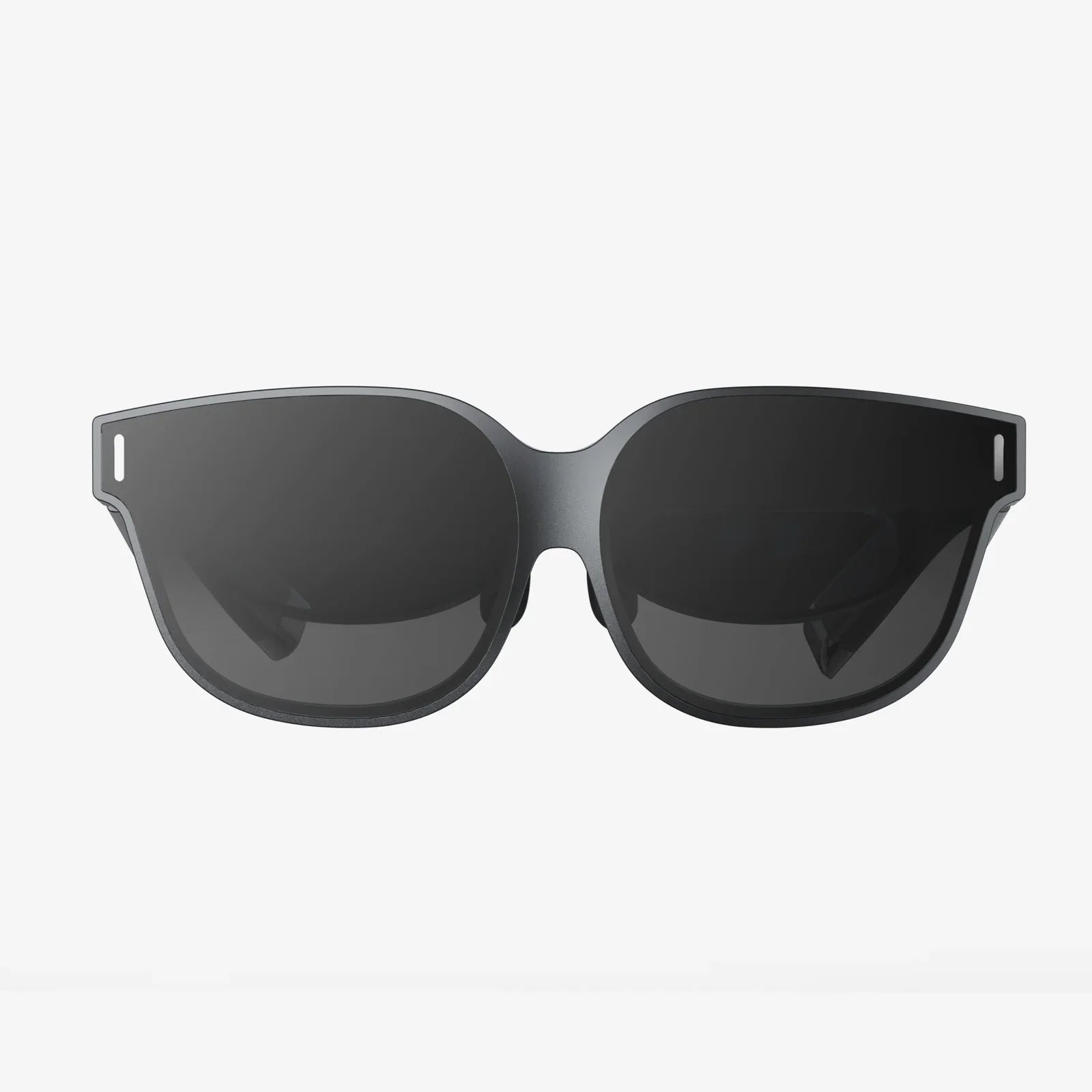
Imagine a world where your surroundings are not just static objects but a dynamic canvas of information, where digital guides and companions understand your intent, and where you can step into fully realized, intelligent simulations for work, play, or learning. This is no longer the realm of science fiction; it is the imminent future being forged by the powerful convergence of three revolutionary technologies: Augmented Reality, Virtual Reality, and Machine Learning. This fusion is creating a new paradigm of computing, one that is spatial, contextual, and profoundly intelligent, promising to reshape every facet of our lives from the factory floor to the operating room, and from the classroom to the living room.
The Individually Powerful Pillars
Before we can fully appreciate the symphony of their convergence, we must first understand the unique strengths of each instrument.
Augmented Reality: Overlaying the Digital on the Physical
Augmented Reality (AR) acts as a digital layer superimposed onto our physical world. Through the lens of a smartphone, tablet, or, more immersively, smart glasses, AR enhances our perception of reality by adding computer-generated information, objects, and annotations. Its primary power lies in context. It provides data and visuals that are directly relevant to what the user is looking at and doing at that precise moment. Whether it's navigation arrows painted onto the street in front of you, the name of a constellation when you point your phone at the night sky, or the dimensions of a new sofa projected into your living room, AR bridges the gap between the digital and physical, making information instantly accessible and actionable within your environment.
Virtual Reality: Crafting Entirely New Worlds
In contrast, Virtual Reality (VR) is an exercise in transportation. By donning a head-mounted display, users are fully immersed in a computer-generated, 360-degree environment. This complete sensory isolation from the physical world is VR's greatest asset. It allows for unparalleled levels of focus, presence, and empathy. A user can be trained to perform complex heart surgery in a risk-free simulator, walk on the surface of Mars as part of an educational program, or sit courtside at a virtual basketball game from the other side of the globe. VR's ability to create and control every aspect of an experience makes it a powerful tool for simulation, training, entertainment, and remote collaboration.
Machine Learning: The Engine of Intelligence
Machine Learning (ML) is the silent, intelligent force that powers modern artificial intelligence. At its core, ML involves training algorithms on vast amounts of data, allowing them to learn patterns, make predictions, and perform tasks without being explicitly programmed for every scenario. It is the technology behind facial recognition, language translation, recommendation engines, and autonomous vehicles. ML algorithms can identify objects in images, understand and generate human speech, predict user behavior, and continuously improve their performance over time. It is the brain that can make sense of the chaotic, unstructured data of the real world.
The Synergistic Fusion: A Trifecta of Transformation
While each technology is powerful alone, their true revolutionary potential is unlocked when they are combined. They form a virtuous cycle: AR and VR generate rich, multimodal data (visual, auditory, positional), which ML algorithms analyze to understand the user and the environment. This understanding then allows the AR/VR system to deliver a more intelligent, adaptive, and personalized experience. This synergy is transforming the capabilities of immersive technologies from being merely visual to becoming truly cognitive.
Machine Learning as the Perceptual Engine for AR and VR
One of the most critical roles ML plays is in enabling AR and VR systems to perceive and understand the world. This is achieved through a subset of ML called computer vision.
- Scene Understanding and Occlusion: For a digital dragon to convincingly hide behind your real-world couch, the AR system must understand the 3D geometry of your room. ML algorithms can analyze the video feed from a device's camera to create a detailed depth map and 3D mesh of the environment. This allows digital objects to interact realistically with physical ones, respecting physics and perspective, which is fundamental for a believable AR experience.
- Object and Gesture Recognition: ML models can be trained to identify specific objects—be it a piece of industrial machinery, a product on a shelf, or a human hand. This allows for intuitive interaction. Instead of a controller, a user can simply use hand gestures, which the ML model recognizes and translates into commands. A technician could point at a malfunctioning engine part, and the AR system, recognizing the component, could instantly display its service manual and diagnostic data.
- Simultaneous Localization and Mapping (SLAM): SLAM is the technology that allows a device to understand its own position within an unmapped space while simultaneously building a map of that space. ML enhances SLAM by making it faster, more accurate, and more robust to changing lighting conditions or dynamic obstacles, which is essential for both AR navigation and untethered VR experiences.
Personalization and Predictive Experiences
ML algorithms excel at predicting user needs based on past behavior. In an immersive context, this creates a deeply personalized experience.
- Adaptive Content and Interfaces: An educational VR application could use ML to analyze a student's gaze-tracking and performance data. If the student is struggling with a particular concept, the system could automatically adapt the lesson, offering a different explanation or a supplementary interactive model. The user interface itself could change, prioritizing tools and information the user accesses most frequently.
- Intelligent Avatars and Non-Player Characters (NPCs): In social VR or training simulations, ML can power incredibly lifelike NPCs. Instead of following pre-scripted dialogues, these characters can use natural language processing (a branch of ML) to understand and respond to a user's spoken questions in real-time, making role-playing scenarios for soft-skills training or customer service far more effective and realistic.
Enhancing Realism and Fidelity
ML is also being used to overcome technical limitations and push the boundaries of realism.
- Super-Resolution and Foveated Rendering: Rendering high-fidelity graphics in VR is computationally intensive. ML can help by using a technique called foveated rendering. An ML model tracks the user's eye gaze and renders only the central area of vision in high detail, while the peripheral vision is rendered at a lower resolution. This drastically reduces the processing power required without the user perceiving any drop in quality. Similarly, ML super-resolution can upscale lower-resolution images in real-time, making visuals sharper without the performance cost.
- Generative Content and Environments: Generative AI models can create entirely new 3D assets, textures, and even entire environments on the fly. This could lead to infinitely variable VR worlds for gaming or design, or allow an AR system to generate custom instructional animations tailored to a specific task or user's learning style.
Real-World Applications Reshaping Industries
The theoretical potential of this trifecta is already materializing in tangible, impactful ways across numerous sectors.
Revolutionizing Enterprise and Industrial Training
This is perhaps the most mature and valuable application today. Companies are using ML-powered AR and VR for:
- Step-by-Step Guided Assistance: A field service engineer wearing AR smart glasses looks at a complex piece of equipment. The ML-powered system recognizes the model and overlays animated, step-by-step repair instructions directly onto the physical components. The system can also understand the engineer's progress and offer the next step automatically, hands-free.
- Proactive Hazard Detection: In a warehouse or construction site, an AR system can use ML to continuously analyze the environment, identify potential safety hazards (e.g., a spill, an unsecured load, a person in a dangerous zone), and immediately alert workers with visual warnings overlaid on their field of view.
- Procedural Skill Assessment: In a VR training simulation for surgeons or pilots, ML algorithms don't just run the simulation; they analyze the trainee's every move—precision, timing, and technique. It can provide detailed, objective feedback and score performance far more accurately than a human observer, identifying subtle errors that could lead to problems in the real world.
Transforming Healthcare and Medicine
The stakes are high, and the benefits are profound.
- Enhanced Surgical Planning and Assistance: Surgeons can use AR to overlay a patient's 3D medical scans (from CT or MRI) directly onto their body during surgery, providing an "X-ray vision" effect to precisely locate tumors, blood vessels, or critical structures. ML can help segment these scans automatically and align the digital model with the patient's body in real-time, even as tissues shift.
- Rehabilitation and Therapy: VR combined with ML-powered motion tracking is creating engaging physical and cognitive rehabilitation programs. The system can precisely measure a patient's range of motion, provide corrective feedback, and adapt the difficulty of exercises in real-time based on their performance, turning tedious rehab into an immersive game.
- Mental Health Treatment: VR exposure therapy for phobias or PTSD is being made more effective by ML. The system can monitor a patient's physiological responses (via biometric sensors) and subtly adjust the intensity of the virtual exposure scenario to ensure it remains therapeutic without being overwhelming.
Redefining Retail and Consumer Experiences
- Virtual Try-On and Personalized Shopping: ML algorithms analyze a user's body from a camera feed to create a accurate avatar, allowing them to virtually try on clothes, glasses, or makeup in AR with high accuracy. Furthermore, the system can learn a user's style preferences and recommend items that are not only the right size but also align with their taste.
- Intelligent In-Store Navigation: In a large store, an AR app on your phone can guide you directly to the item you need. ML helps by recognizing products on shelves and providing additional information, reviews, or alternative suggestions as you browse.
Challenges and the Path Forward
Despite the immense promise, the path is not without significant hurdles.
- Hardware Limitations: For truly seamless AR, we need lightweight, powerful, and socially acceptable smart glasses with all-day battery life. Processing complex ML models on-device without latency is a major challenge that requires continued advances in chip design.
- Data Privacy and Security: These technologies collect an unprecedented amount of sensitive data—what you look at, how you move, your facial expressions, your physical environment. Ensuring this data is anonymized, secure, and used ethically is paramount.
- The Algorithmic Bias Problem: ML models are only as good as the data they are trained on. If training data is biased, the resulting AR/VR experiences can perpetuate and even amplify those biases, particularly in areas like facial recognition or gesture interpretation across different demographics.
- User Acceptance and the "Digital Uncanny Valley": Creating interactions that feel natural and intuitive is difficult. Clunky interfaces or unrealistic avatars can break immersion and hinder adoption.
Addressing these challenges requires a multidisciplinary effort from technologists, ethicists, designers, and policymakers. The focus must be on developing robust, privacy-first frameworks and creating hardware that feels less like a tool and more like a natural extension of ourselves.
The convergence of AR, VR, and Machine Learning is not merely an incremental upgrade to existing technology; it is a fundamental shift in how humans interact with information and with each other. We are moving from a world of screens and keyboards to one of spaces and contexts, from retrieving information to experiencing intelligence. This powerful trifecta is building a bridge to a future where our digital and physical realities are not separate realms but a single, integrated, and intelligent continuum, poised to unlock new levels of human productivity, creativity, and connection that we are only beginning to imagine.
Share:
Augmented Reality Price - The True Cost of Immersing Your World
AI Glasses Capabilities: Redefining Reality Through Augmented Intelligence