


Imagine a world where the digital and physical seamlessly intertwine, where surgeons practice complex procedures on holographic patients, where factory floors are overlaid with real-time data streams, and where your living room transforms into a front-row seat at a concert happening across the globe. This is not a distant science fiction fantasy; it is the palpable future being built today, a future whose economic magnitude is captured in one staggering phrase: the AR VR market size projection for 2030. This figure represents more than just financial growth; it signifies a fundamental shift in how we compute, communicate, and experience reality itself. The numbers on the spreadsheet are a proxy for a revolution, and understanding them is key to understanding the next decade of technological evolution.
The Foundation: Defining the Reality Spectrum
Before delving into the projections, it is crucial to understand the landscape. Augmented Reality (AR) and Virtual Reality (VR), often grouped together as spatial computing or extended reality (XR), offer distinct experiences.
Virtual Reality (VR) immerses users in a completely digital environment, typically accessed through a headset that blocks out the physical world. It is a gateway to fully synthetic worlds, used for gaming, simulation, training, and social interaction in virtual spaces.
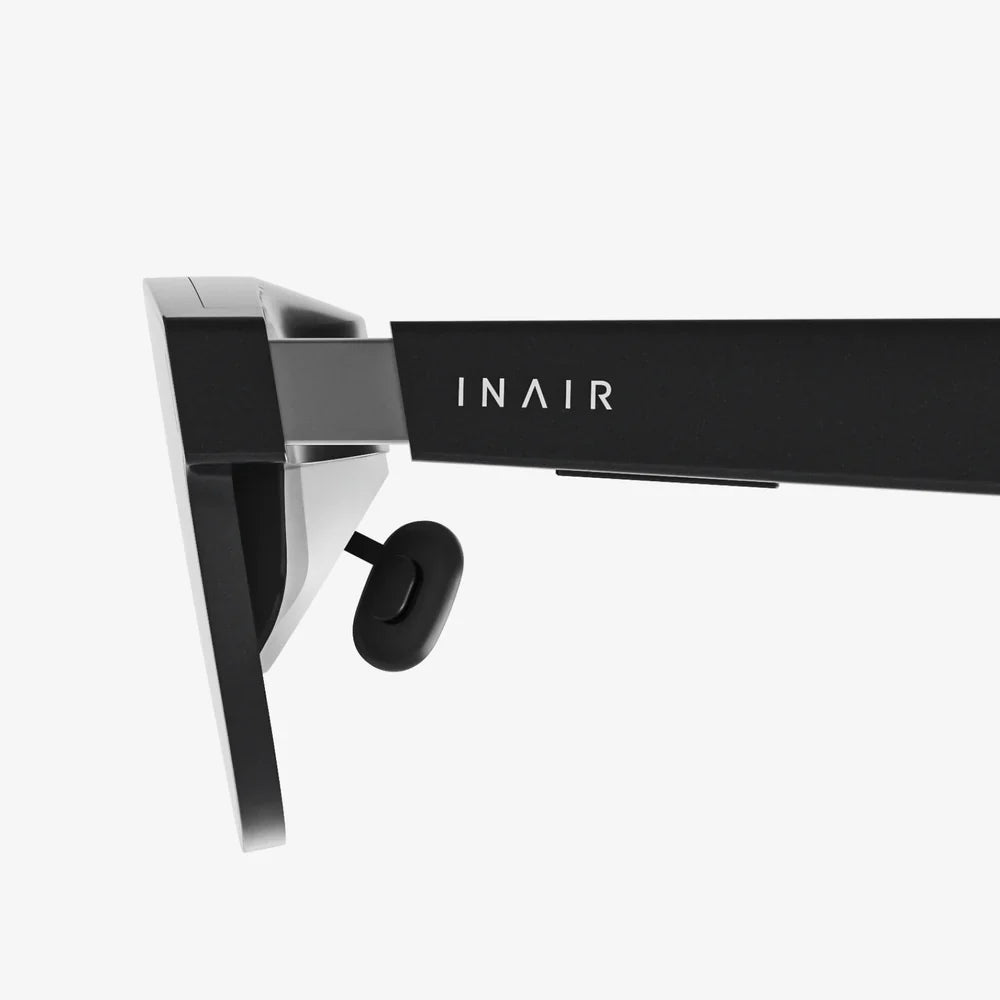
Augmented Reality (AR) overlays digital information—images, text, 3D models—onto the user's view of the real world. This can be experienced through smartphones, tablets, smart glasses, and increasingly, through sleek, consumer-friendly eyewear. AR enhances reality rather than replacing it.
The market encompasses the hardware (headsets, glasses, haptic devices), software (platforms, development engines, applications), and services (deployment, support, content creation) that power these experiences. The convergence of these technologies is creating a continuum of mixed reality (MR) experiences, further blurring the lines and expanding the market's potential.
The Numbers: A Look at the Staggering Projections
While various analyst firms publish slightly different figures, the consensus is overwhelmingly positive and points to exponential growth. The global AR and VR market, valued in the tens of billions in the early 2020s, is universally projected to skyrocket into the hundreds of billions by 2030. Some conservative estimates place the figure comfortably above $300 billion, while more aggressive projections surpass $1 trillion when accounting for the entire ecosystem, including related AI and connectivity infrastructure.
This growth is not a simple linear progression. It is expected to follow a classic S-curve, with accelerating adoption as technology improves, prices fall, and a powerful library of compelling use cases emerges. The compound annual growth rate (CAGR) for the period leading up to 2030 is consistently forecast to be well above 30%, a testament to the transformative potential investors and industry leaders see in this space.
The Engine Room: Key Drivers Fueling Meteoric Growth
This monumental projection is not happening in a vacuum. It is being fueled by a powerful confluence of technological, economic, and social factors.
1. Hardware Evolution: Beyond the Bulky Headset
The first generation of VR headsets was often cumbersome and tethered. AR glasses were clunky prototypes. The road to 2030 is paved with rapid hardware innovation. We are witnessing the rise of:
- Standalone and Wireless Devices: Untethered freedom is crucial for mass adoption. All-in-one headsets and glasses with onboard processing are becoming the norm.
- Smaller, Lighter, and More Powerful Form Factors: Advances in micro-OLED displays, pancake lenses, and battery technology are leading to devices that resemble everyday eyewear, making them socially acceptable and comfortable for prolonged use.
- Haptic Feedback and Sensory Integration: The experience is moving beyond visual and auditory to include touch. Advanced haptic gloves and suits are adding a critical layer of immersion, which is vital for enterprise training and high-end simulation.
2. The Enterprise Revolution: The Primary Growth Catalyst
While consumer gaming gets much of the attention, the enterprise sector is arguably the most significant driver of the AR VR market size projection for 2030. Businesses are adopting these technologies to solve real-world problems, improve efficiency, and reduce costs. Key applications include:
- Design and Prototyping: Automotive, aerospace, and architecture firms use VR to create and walk through full-scale digital prototypes long before physical materials are used, saving millions.
- Training and Simulation: From training surgeons without risk to patients to preparing emergency responders for crisis scenarios, VR provides a safe, repeatable, and highly effective training environment. AR, on the other hand, can overlay step-by-step instructions for complex assembly or repair tasks directly onto machinery, drastically reducing errors and training time.
- Remote Assistance and Collaboration: A field technician wearing AR glasses can stream their point-of-view to an expert thousands of miles away, who can then annotate the technician's real-world view with arrows and diagrams to guide them through a fix. This "see-what-I-see" capability is revolutionizing field service and collaboration.
3. The Connectivity Backbone: 5G and Edge Computing
High-fidelity AR and VR require massive amounts of data to be processed and transmitted with incredibly low latency (delay). A laggy VR experience can cause nausea; a delayed AR overlay is useless for guiding a precise task. The rollout of 5G networks and edge computing is the critical infrastructure that will unlock the full potential of XR.
5G's high bandwidth and low latency allow for the streaming of complex experiences directly from the cloud, reducing the need for expensive onboard hardware. Edge computing processes data closer to the user, further reducing latency. This infrastructure will enable truly seamless and powerful wireless AR and VR experiences, a prerequisite for mass adoption.
4. The AI and Spatial Computing Symbiosis
Artificial Intelligence is the silent partner making AR and VR intelligent and context-aware. AI algorithms enable:
- Spatial Mapping: Devices can understand and map the physical environment in real-time, allowing digital objects to interact realistically with surfaces like tables and walls.
- Object Recognition: AR glasses can identify components on an assembly line or products on a retail shelf, pulling up relevant information instantly.
- Avatar and Interaction Realism: AI drives natural language processing for voice commands and creates more realistic and expressive avatars for social and professional interactions in virtual spaces.
Industry Transformations: Where the Money Will Flow
The impact of AR and VR will be felt across virtually every sector, each contributing to the overall market size.
- Healthcare: Projected to be one of the largest segments. Applications range from surgical planning and medical training to patient rehabilitation and phobia therapy through exposure in controlled virtual environments.
- Retail and E-commerce: AR is enabling "try before you buy" for everything from furniture (seeing a virtual sofa in your living room) to makeup and clothes. This reduces return rates and enhances customer confidence, directly impacting the bottom line.
- Manufacturing and Logistics: As mentioned, this is a cornerstone of enterprise adoption. AR for warehouse picking (showing workers the exact shelf location and item) can boost efficiency by over 30%.
- Education and Academia: Immersive learning experiences, from exploring ancient Rome in VR to interacting with complex molecular structures in 3D space, can dramatically improve engagement and knowledge retention.
- Real Estate and Tourism: Virtual property tours and immersive previews of travel destinations will become standard marketing tools.
Challenges on the Road to 2030
Despite the optimistic AR VR market size projection for 2030, significant hurdles remain. Addressing these is critical for the projections to be realized.
- Content Gap: The "killer app" for mass consumer adoption beyond gaming is still evolving. The ecosystem needs a continuous stream of high-quality, engaging content to keep users coming back.
- User Experience (UX) and Interoperability: Creating intuitive user interfaces for navigating 3D spaces is challenging. Furthermore, a lack of standardization can wall off users into specific platform ecosystems, hindering widespread collaboration.
- Social and Ethical Considerations: Issues of data privacy (these devices collect vast amounts of visual and spatial data), psychological effects of prolonged immersion, and the potential for a digital divide need to be proactively addressed by policymakers and industry leaders.
- Cost and Accessibility: While prices are falling, high-end hardware remains an investment. Making the technology affordable for consumers and small-to-medium-sized businesses is essential for democratization.
The Human Element: Beyond the Market Size
The AR VR market size projection for 2030 is ultimately a story about human potential. It's about breaking down geographical barriers to collaboration, making dangerous jobs safer, providing access to experiences previously unimaginable, and creating new forms of art and storytelling. The market's value is a measure of its utility to humanity—its ability to enhance our capabilities, enrich our lives, and solve complex problems.
The journey to 2030 will be one of relentless innovation, fierce competition, and inevitable growing pains. It will require not just technological leaps, but also thoughtful design and careful consideration of the societal implications. The companies and individuals who succeed will be those who focus not solely on the technology itself, but on the profound human needs it can fulfill. The numbers tell us a revolution is coming; it is now up to us to shape what that revolution will look like and ensure it benefits all.
The trillion-dollar question is no longer if AR and VR will redefine our world, but how quickly you will adapt to it. The market projections are a beacon, signaling a fundamental shift from 2D screens to immersive, 3D experiences that will transform every facet of industry and leisure. Whether you're a developer, a CEO, an educator, or simply a curious consumer, the next digital frontier is opening now, and its vast potential is limited only by our imagination. The era of spatial computing is dawning, and its economic and cultural impact will be felt far beyond the confines of a headset.
Share:
Best Affordable VR Glasses: Your Ultimate Guide to High-Value Immersive Technology
What Can I Do With VR Glasses - Exploring the Boundless Potential of Virtual Reality