


Imagine a world where the digital and physical seamlessly intertwine, where your morning meeting is held atop a virtual mountain peak, and your afternoon shopping involves trying on clothes projected into your living room. This is not a distant sci-fi fantasy; it is the palpable future being built today, and by 2025, a confluence of powerful trends will bring this vision into startling clarity. The evolution of Augmented Reality (AR), Virtual Reality (VR), and the broader metaverse is accelerating at an unprecedented pace, promising to redefine human interaction, commerce, and creativity. The journey into this next digital frontier is about to get a major upgrade, and the transformations will be nothing short of revolutionary.
The Convergence of Realities: Blurring the Lines Between Physical and Digital
The most significant overarching trend for 2025 is the move away from thinking of AR and VR as distinct, separate experiences. Instead, we are heading toward a spectrum of mixed reality (MR) where digital objects are not just overlays but persistent, interactive elements of our real-world environment. This is powered by rapid advancements in:
- Spatial Computing: Devices are becoming increasingly adept at understanding the geometry of a room, the position of objects, and even the presence of people. This allows digital content to behave realistically—occluding behind a sofa, rolling across a table, or responding to real-world physics.
- Volumetric Capture: Moving beyond flat video, this technology captures people and objects in three dimensions, creating holographic-like representations that can be inserted into virtual spaces. This will revolutionize telepresence, making remote interactions feel genuinely lifelike.
- Contextual Awareness: Your AR device will know you're in the kitchen and surface a recipe, then recognize you're looking at your car's engine and overlay a repair tutorial. This hyper-contextual, AI-driven assistance will become a core utility.
This convergence means the choice won't be between AR or VR, but rather a fluid movement along a slider of immersion, tailored to the task at hand.
The Hardware Revolution: Lighter, Smarter, and More Accessible
The clunky, tethered headsets of the past are giving way to a new generation of hardware that prioritizes comfort, style, and performance. By 2025, we can expect several key shifts in the devices we use to access the metaverse.
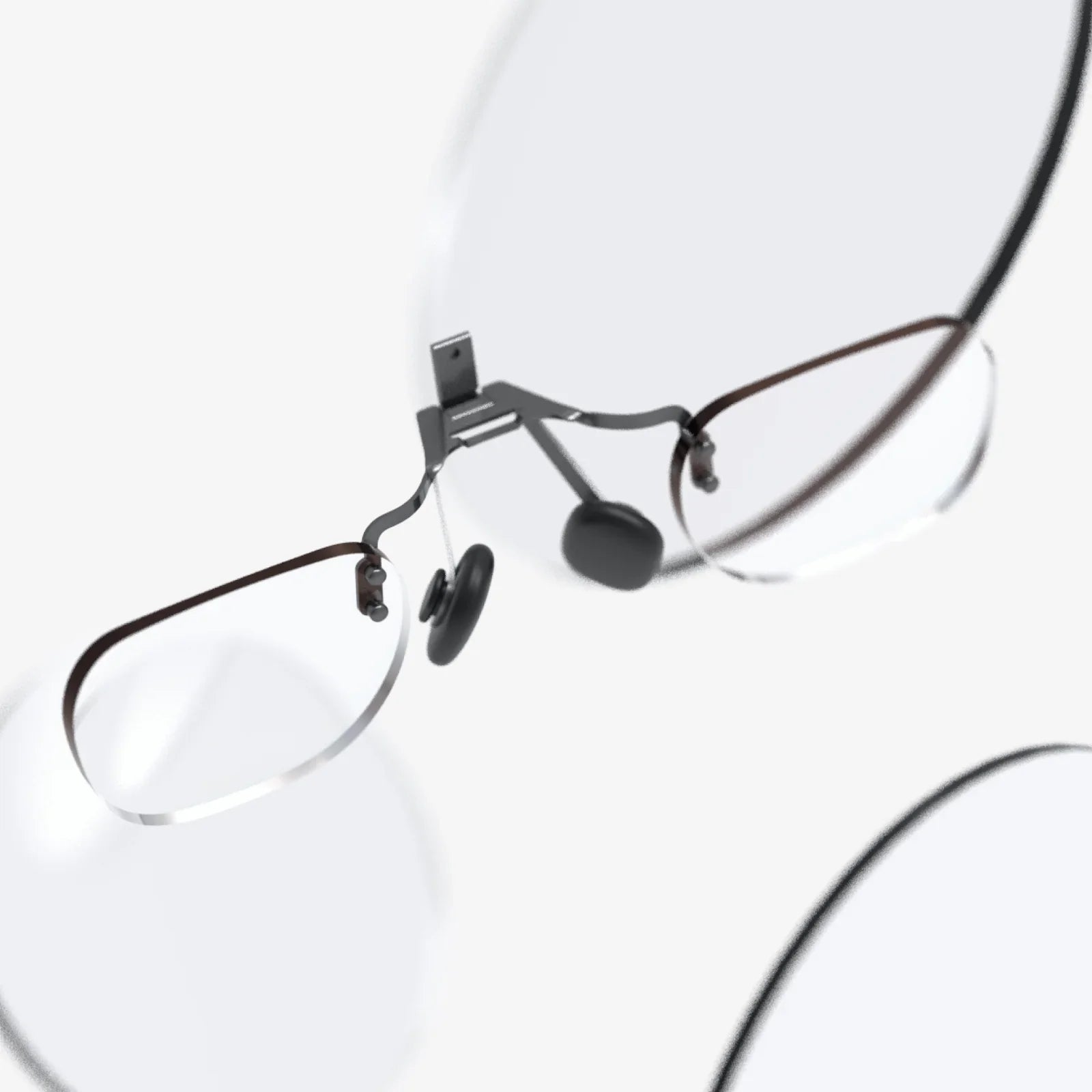
First, the form factor will diversify dramatically. While high-end, all-in-one VR headsets will continue to offer the most immersive experiences for gaming and simulation, the real growth will be in AR glasses. These will evolve from today's prototype-like designs into something approaching everyday eyewear—lighter, more power-efficient, and socially acceptable to wear in public. The goal is to make the technology fade into the background, becoming an invisible window to digital layer atop the world.
Second, the user interface will move beyond controllers. Eye-tracking, hand-tracking, and eventually neural interfaces will become standard, allowing for more intuitive and natural interaction with digital content. You will manipulate a 3D model with your hands, select a menu item with a glance, or even control an experience with subtle voice commands. This democratizes access, removing the learning curve associated with complex controller setups.
Finally, processing power will be distributed. Standalone devices will handle basic tasks, but for computationally intensive experiences like photorealistic rendering or complex AI interactions, they will seamlessly offload work to nearby edge computing nodes or powerful cloud servers. This will keep the hardware on your head light and cool while delivering stunning visual fidelity.
The Rise of the Industrial and Enterprise Metaverse
While consumer applications grab headlines, the most immediate and impactful adoption of AR/VR and metaverse principles will be in the enterprise sector. By 2025, the "industrial metaverse" will be a multi-billion dollar engine of efficiency and innovation.
This trend is built on several key use cases:
- Digital Twins: Factories, supply chains, and even entire cities will have real-time, virtual replicas. Engineers can simulate production line changes, managers can monitor global logistics, and urban planners can test the impact of new policies—all in a risk-free digital sandbox before implementing anything in the physical world. This predictive power will save billions and drastically reduce downtime.
- Remote Collaboration and Training: A specialist engineer located across the globe can see what a on-site technician sees through AR glasses, annotate their field of view, and guide them through a complex repair procedure step-by-step. Similarly, new employees can be trained on million-dollar equipment in a virtual environment, mastering procedures without risk to themselves or the machinery.
- Design and Prototyping: Automotive, aerospace, and architecture firms are already using VR to prototype and review designs at full scale. By 2025, this will be the standard workflow, drastically reducing the time and cost associated with physical prototyping and enabling more iterative, collaborative design processes.
The ROI here is too compelling to ignore, driving massive investment and solidifying the metaverse as a critical business tool.
Interoperability and The Open Metaverse: Breaking Down the Walled Gardens
The greatest threat to the metaverse's potential is its fragmentation into corporate-controlled "walled gardens" where digital assets and identities are locked into a single platform. The dominant trend through 2025 will be the intense push for interoperability—the ability for your avatar, clothing, and digital possessions to move seamlessly between different virtual worlds and experiences.
This will be driven by:
- Decentralized Protocols and Blockchain: Technologies like non-fungible tokens (NFTs) and decentralized identifiers (DIDs) provide a standards-based way to prove ownership of digital assets and identity across platforms. While the current NFT market is volatile, the underlying technology provides a blueprint for true digital property rights.
- Industry Consortiums: Major coalitions of tech firms, hardware makers, and software developers are forming to establish open standards for everything from 3D asset formats to avatar skeletons and communication protocols. Their success is critical to avoiding a repeat of the proprietary battles that plagued earlier tech eras.
- User Demand: Consumers will increasingly reject platforms that seek to trap them and their data. The expectation will be for a continuous digital experience, much like the web, rather than a series of disconnected apps.
The battle between open and closed models will be one of the defining narratives of 2025, with the outcome determining whether the metaverse becomes a single, interconnected network or a series of digital islands.
AI as The Invisible Engine: Personalization and World Building
Artificial Intelligence is the silent force that will make the metaverse feel alive, responsive, and personally relevant. It will operate on multiple levels:
- Procedural Content Generation: AI will be used to generate vast, unique, and compelling virtual environments on the fly. Instead of a team of artists manually designing every building in a virtual city, an AI could generate an entire planet's worth of diverse landscapes and structures, making exploration endlessly fascinating.
- Intelligent Avatars and NPCs: Digital humans and non-player characters (NPCs) will evolve from simple scripted entities to conversational agents powered by large language models. They will serve as guides, companions, customer service reps, and collaborators, capable of dynamic, unscripted interaction.
- Hyper-Personalization: AI will curate your metaverse experience based on your preferences, past behavior, and real-time context. The ads you see, the events you're notified about, and even the weather in your personal virtual space could be tailored specifically for you.
This pervasive use of AI will move the burden of creation from humans to machines, enabling a scale and depth of experience that was previously unimaginable.
The Social Fabric: Redefining Connection and Community
The metaverse is, at its heart, a social platform. The trends in 2025 will focus on enhancing the quality and depth of human connection within these digital spaces. We will see a move beyond the cartoonish avatars of today toward more expressive and empathetic representations of ourselves.
Advancements in photorealistic avatures, driven by facial tracking and volumetric capture, will allow for subtle nonverbal communication—a raised eyebrow, a smirk, a frown—to be transmitted accurately, restoring the rich subtext that is lost in today's video calls. Shared experiences will become more meaningful, from attending a virtual concert where the crowd's energy is palpable to collaborating on a 3D art project with friends across the globe as if you were standing side-by-side.
New communities will form around interests and identities, unconstrained by physical geography. This presents immense opportunity for connection but also significant challenges in governance, moderation, and ensuring these spaces remain safe and inclusive for all participants.
Navigating the Challenges: Privacy, Safety, and the Digital Divide
The path to this immersive future is not without significant obstacles. The very technologies that enable incredible experiences—always-on cameras, microphones, and eye-tracking—raise profound questions about privacy and data ownership. The amount of biometric data collected by these devices will be unprecedented, necessitating robust new frameworks for consent and data security.
Similarly, safety in immersive environments is paramount. The sense of "presence" that makes VR so powerful also means that harassment and abuse can feel more visceral and damaging than on traditional social media. Platforms will need to develop innovative tools for personal boundary control and effective moderation at scale.
Finally, the specter of a new digital divide looms. If crucial aspects of work, education, and social life migrate into high-fidelity immersive spaces, ensuring equitable access to the necessary hardware and high-bandwidth connectivity becomes a critical societal issue. The metaverse must be built to be accessible to all, not just a privileged few.
The year 2025 is poised to be a pivotal chapter in the story of AR, VR, and the metaverse, marking a transition from speculative hype to tangible, integrated utility. The trends point to a world where our digital and physical lives are no longer parallel tracks but a single, intertwined reality. The devices on our faces will become as unobtrusive as glasses, yet they will open windows to boundless creativity, global collaboration, and new forms of human expression. The foundations are being poured today for a future that is more connected, efficient, and astonishingly immersive—a future that is knocking on our door, ready to reshape everything we know.
Share:
Enterprise Augmented Reality Definition: The Ultimate Guide to Industrial AR
Are Virtual Glasses Worth It? An In-Depth Look at the Future on Your Face