


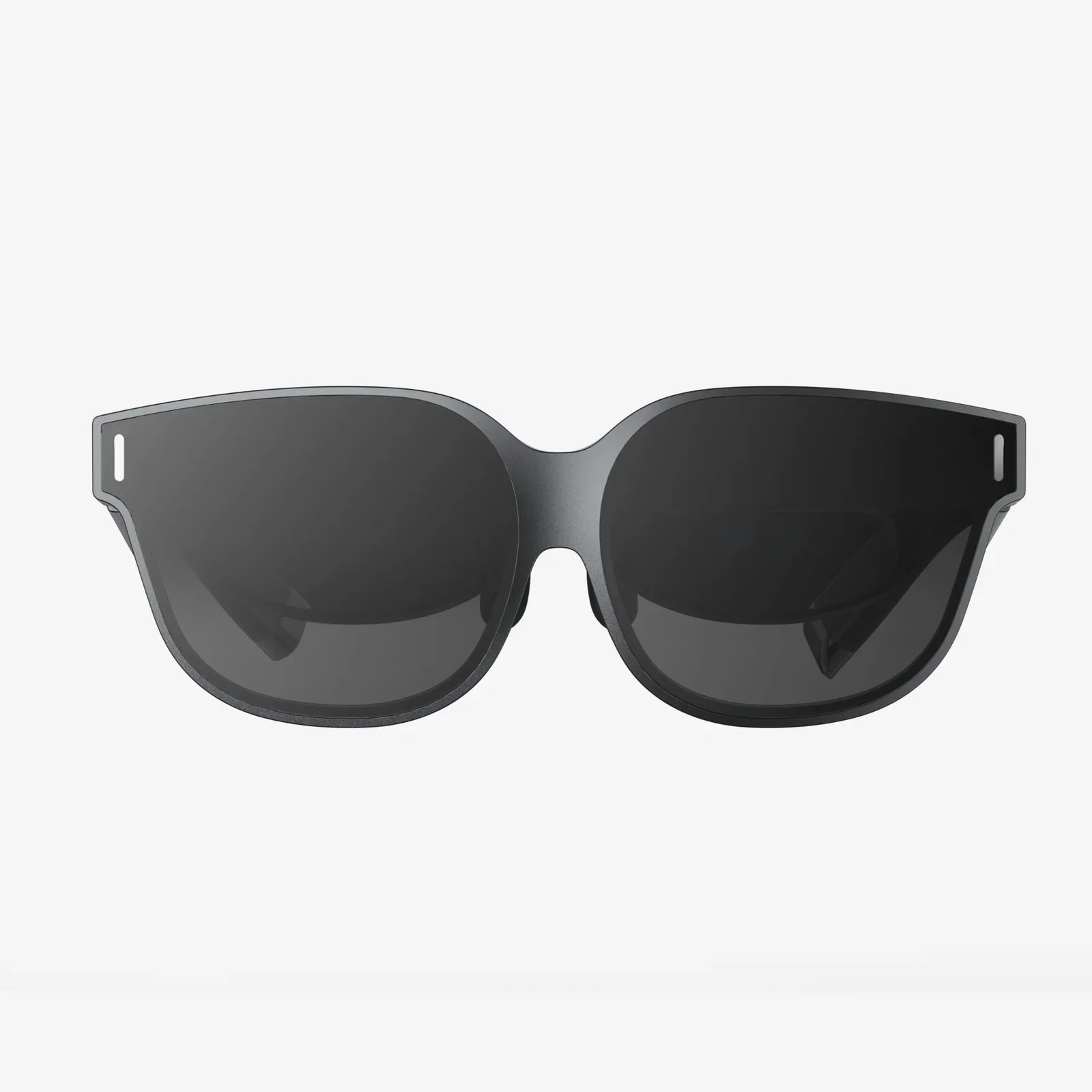
The digital and physical worlds are colliding in ways once confined to science fiction, and if you're not paying attention to the AR VR mixed reality news today, you're missing the blueprint for the next decade of human-computer interaction. This isn't about niche gaming headsets or fleeting social media filters anymore; it's a fundamental shift in how we will work, learn, connect, and perceive reality itself. The pace of innovation is breathtaking, with breakthroughs announced not yearly, but weekly, signaling that the immersive age is no longer on the horizon—it is here, and it is being built now.
The Semantic Web of Things: Blurring the Lines Between Bits and Atoms
The most significant trend dominating AR VR mixed reality news today is the move beyond simple visual overlays towards what experts are calling the 'semantic web of things.' Early AR might have shown you a floating polygon, but today's systems understand context. Through a combination of advanced computer vision, LiDAR scanning, and machine learning, modern headsets can scan a room, identify objects, understand their purpose, and integrate digital information seamlessly into the user's environment.
Imagine pointing your device at a complex industrial machine. Instead of a generic manual, you see animated, step-by-step repair instructions visually anchored to the exact components that need attention. Or walking through a supermarket and having your device highlight products that align with your dietary preferences, instantly comparing prices per unit. This contextual awareness is the cornerstone of true mixed reality, creating a world where information is not just displayed but is intrinsically tied to the physical objects it describes. This shift is powered by a relentless drive for more sophisticated environmental understanding, making every surface, object, and space a potential portal for digital interaction.
Enterprise Adoption: The Silent Revolution Reshaping Industries
While consumer applications grab headlines, the real transformation, and a constant feature in serious AR VR mixed reality news today, is happening on factory floors, in operating rooms, and within corporate boardrooms. Enterprises are deploying immersive technology at an unprecedented scale, driven by a clear return on investment.
- Design and Prototyping: Automotive and aerospace engineers are collaborating in shared virtual spaces, interacting with life-size 3D models of new designs long before a single piece of physical material is cut. This saves millions in prototyping costs and drastically accelerates development cycles.
- Remote Assistance and Training: A seasoned expert located thousands of miles away can see what a field technician sees through smart glasses, annotate the real-world view with arrows and notes, and guide them through a complex procedure. This expertise-on-demand model is revolutionizing fields from equipment repair to surgery, improving first-time fix rates and patient outcomes.
- Virtual Showrooms and Architecture: Real estate developers are offering virtual tours of unbuilt properties, and furniture retailers are allowing customers to see how a sofa will look and fit in their actual living room. This reduces uncertainty for buyers and minimizes returns for sellers.
This enterprise boom is fueling a hardware arms race, with companies developing specialized devices focused on durability, battery life, and specific use cases rather than pure consumer entertainment.
The Hardware Horizon: Lighter, Smarter, and More Powerful
The devices themselves are evolving at a staggering rate. The AR VR mixed reality news today is filled with announcements about next-generation hardware that addresses the critical barriers to mass adoption: size, weight, power, and processing capability.
The dream of sleek, socially acceptable glasses that can deliver high-fidelity experiences is getting closer. Advancements in micro-OLED displays offer stunning clarity in tiny packages, while new pancake lens designs are slimming down previously bulky optical stacks. Perhaps most importantly, the processing is increasingly shifting from the device on your face to powerful cloud servers, enabled by robust 5G and upcoming 6G connectivity. This cloud-rendering approach means the headset can be lighter and more comfortable, as the heavy computational lifting is done remotely and the results are streamed with minimal latency.
We are also seeing a diversification of form factors. There are dedicated VR headsets for deep immersion, lightweight AR glasses for all-day information display, and powerful MR headsets that try to master both. This spectrum of devices indicates a market maturing and understanding that one size does not fit all, with different tools emerging for different tasks.
The Spatial Web and Interoperability: The Next Great Digital Frontier
A persistent digital layer over our world is only useful if it's consistent and interconnected. A major focus in development circles, and a growing topic in AR VR mixed reality news today, is the creation of the 'spatial web'—a set of open standards and protocols that would allow digital objects and experiences to exist persistently in a location, accessible to anyone with a capable device, regardless of the software they are using.
Imagine a world where a virtual art installation placed in a city square by one artist can be seen by tourists using a different company's glasses and app. Or where navigation arrows to your gate at an airport remain anchored in the correct spot, served by the airport's system but visible on your personal device. This level of interoperability is the key to moving from isolated apps to a cohesive, shared immersive internet. Major tech consortia and standards bodies are now actively working on this very challenge, recognizing that without open standards, the metaverse risk becoming a collection of walled gardens, stifling innovation and user experience.
Ethical and Societal Considerations: Navigating the Uncharted Territory
With great power comes great responsibility, and the immersive power of AR, VR, and MR raises profound questions that society must grapple with. The AR VR mixed reality news today isn't all celebratory; it includes necessary debates about privacy, security, and the psychological impact of these technologies.
- Data Privacy: These devices are arguably the most intimate data-gathering tools ever created. They can map your home, track your eye gaze, record your interactions, and analyze your behavior. Who owns this data? How is it used? Robust regulatory frameworks are desperately needed to prevent a dystopian future of perpetual surveillance.
- Digital Addiction and Reality Blurring: If a curated, perfect augmented world is more appealing than your own reality, what are the psychological consequences? The risk of deeper social isolation or a retreat into artificial experiences is a serious concern that psychologists and ethicists are beginning to study in earnest.
- The Digital Divide: Will immersive technology become a great equalizer for remote education and work, or will it create a new chasm between those who can afford high-end gear and access premium digital experiences and those who cannot? Ensuring equitable access is a critical challenge.
These are not future problems; they are present-day dilemmas that developers, policymakers, and users must address as the technology proliferates.
What's Next? The Trends to Watch
Peering into the near future, several key trends emerge from the constant flow of AR VR mixed reality news today. Artificial Intelligence is becoming the invisible engine powering more intuitive and responsive experiences. Generative AI is already being used to create 3D assets and environments from simple text prompts, dramatically lowering the barrier to content creation.
Furthermore, the integration of haptic feedback technology is advancing rapidly. The goal is to move beyond visual and auditory immersion to let users 'feel' digital objects through advanced gloves and wearables, adding a crucial layer of tactile realism. Finally, brain-computer interfaces, though in early stages, represent the ultimate frontier—controlling digital interfaces with thought alone, potentially making keyboards and screens obsolete.
The stream of AR VR mixed reality news today is more than just a list of product launches; it is the live chronicle of a paradigm shift. We are building the bridge between our biological senses and the digital universe, creating a future where our reality is not replaced but enhanced, not escaped but amplified. The choices we make now—on technology, ethics, and accessibility—will determine whether this new reality is a utopia of connection and knowledge or something far more complex. One thing is certain: the world is about to put on a new lens, and nothing will look the same again.
Share:
Augmented Reality Possibility: Redefining Our World Through a Digital Lens
Mixed Reality Glasses News: The Dawn of a New Computing Era and What It Means for You