


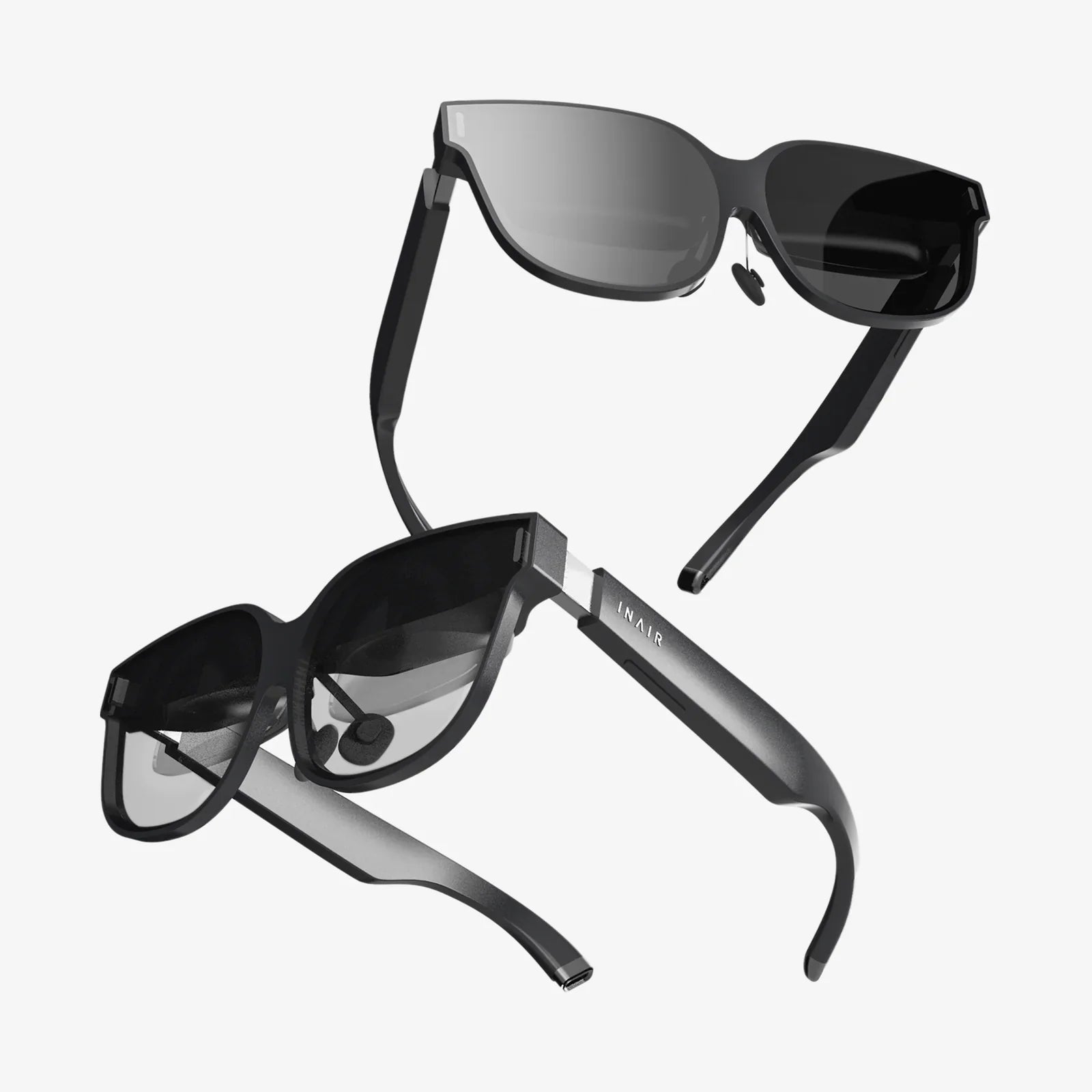
You've seen the headlines, watched the futuristic demos, and maybe even strapped on a headset yourself, but the swirling alphabet soup of immersive tech—AR, VR, MR, XR—leaves you more confused than enlightened. What truly separates them? Is it all just science fiction, or are these technologies already reshaping reality as we know it? This isn't just about gadgets; it's about a fundamental shift in how we interact with information, each other, and the world itself. Unraveling the distinctions is your first step into a new dimension of understanding, a frontier where the digital and physical collide with breathtaking consequences.
The Spectrum of Reality: From Purely Real to Purely Virtual
Before diving into the acronyms, it's crucial to understand that these technologies exist on a spectrum, often called the virtuality continuum. On one end, you have the reality we all inhabit—the physical environment. On the opposite end lies a fully digital, computer-generated world—a virtual environment. AR, VR, and MR are points along this spectrum, while XR is the umbrella term that encompasses them all. Grasping this continuum is the key to differentiating between these transformative technologies.
Defining the Realities: A Deep Dive into Each Term
Virtual Reality (VR): Total Digital Immersion
Virtual Reality is the technology that sits at the far end of the virtuality continuum. Its primary goal is to isolate the user from the physical world and transport them completely into a simulated, digital environment. This is achieved through a head-mounted display (HMD) that blocks out the external world, replacing it with a CGI landscape. VR is characterized by:
- Immersion: The user's visual and auditory senses are entirely occupied by the virtual world.
- Interactivity: Users can navigate and manipulate the virtual environment, often using handheld controllers or gesture tracking.
- Isolation: The experience is typically solitary, disconnecting the user from their immediate physical surroundings.
The applications for VR are vast and growing. It's the go-to technology for:
- Gaming and Entertainment: Providing deeply immersive gaming experiences and virtual concerts.
- Training and Simulation: Allowing pilots, surgeons, and soldiers to practice complex procedures in a risk-free environment.
- Architecture and Design: Enabling architects and clients to walk through a building before a single brick is laid.
- Therapy and Rehabilitation: Treating phobias, PTSD, and aiding in physical recovery through controlled exposure.
Augmented Reality (AR): Digital Overlays on the Real World
If VR replaces reality, Augmented Reality enhances it. AR superimposes computer-generated images, sounds, or data onto the user's view of the real world. The core principle of AR is that the physical world remains the central part of the experience, with digital elements adding a layer of information or interaction. AR is experienced through:
- Smartphone and Tablet Cameras: The most accessible form, using the device's screen to display the augmented view.
- Smart Glasses: Wearable devices that project information directly onto the user's field of vision.
- Heads-Up Displays (HUDs): Commonly used in aviation and automotive windshields.
AR's power lies in its contextuality and accessibility. Key applications include:
- Retail and E-commerce: Visualizing how furniture will look in your room or how clothes will fit before buying.
- Navigation: Overlaying directional arrows onto a live view of the street.
- Industrial Maintenance: Providing technicians with schematics and instructions overlaid on the machinery they are repairing.
- Education: Bringing textbooks to life with 3D models of historical artifacts or biological cells.
Mixed Reality (MR): The Seamless Blend of Real and Virtual
Mixed Reality is often the most misunderstood term, sometimes used interchangeably with AR. However, MR represents a significant evolution. It doesn't just overlay digital content; it anchors that content to the real world and allows for real-time interaction between the physical and digital objects. In a true MR experience, a virtual ball can bounce off a real-world table, and a digital character can hide behind your physical sofa. This requires advanced sensors and cameras to map and understand the environment in real-time. MR is defined by:
- Spatial Anchoring: Digital objects are pinned to specific locations in the physical space.
- Occlusion: Real-world objects can block the view of digital objects, creating a believable sense of depth and space.
- Environmental Understanding: The system recognizes surfaces, boundaries, and lighting conditions.
MR is the frontier of immersive computing, enabling profound applications:
- Collaborative Design and Engineering: Multiple users in different locations can interact with a full-scale 3D prototype as if it were physically present.
- Remote Assistance: An expert can see what a field technician sees and draw annotations that appear fixed in the technician's real-world space.
- Next-Generation Entertainment: Games where the entire living room becomes a playing field, integrating with physical objects.
Extended Reality (XR): The Universal Umbrella
Extended Reality is not a specific technology but a catch-all term that covers all real-and-virtual combined environments and human-machine interactions generated by computer technology and wearables. It includes AR, VR, MR, and any future immersive formats that might be developed. Think of XR as the entire category, much like "vehicles" includes cars, trucks, buses, and motorcycles. When someone refers to the "XR industry," they are talking about the entire ecosystem of companies, developers, and creators working across all these immersive technologies.
Side-by-Side Comparison: A Technical and Experiential Breakdown
The following table provides a clear, concise comparison of the core differentiators:
| Technology | Environment | User Experience | Hardware Requirements | Level of Immersion |
|---|---|---|---|---|
| Virtual Reality (VR) | Fully digital, computer-generated. | Completely isolated from the real world. User is transported to a new place. | High-end headset with dedicated processing, tracking, and controllers. | Full immersion. |
| Augmented Reality (AR) | Real-world with digital overlays. | Remains aware of and present in the physical world. Digital content adds context. | Smartphones, tablets, or simpler smart glasses. Lower processing power. | Partial immersion. |
| Mixed Reality (MR) | Seamless blend where physical and digital objects co-exist and interact. | The digital world is grafted onto the physical one, creating a new hybrid reality. | Advanced headsets with sophisticated sensors, cameras, and often onboard computing. | Blended immersion. |
| Extended Reality (XR) | Encompasses all of the above. | Varies based on the specific technology used. | Varies from smartphones to high-end headsets. | Spectrum of immersion. |
The Future is a Blend: The Convergence of Realities
The lines between these categories are not rigid and are beginning to blur. The future of immersive technology lies in contextual computing—systems that seamlessly shift between different modes of reality based on the user's task and environment. A single future headset might offer a VR experience for a morning workout, shift to AR for checking messages throughout the day, and then enable a powerful MR session for collaborative work in the afternoon. The hardware and software are evolving towards this flexibility, making the distinctions less about the device and more about the experience it delivers in a given moment.
Choosing the Right Reality for the Task
Understanding the differences is key to applying the right technology to solve a problem or create an experience. The choice depends on the desired outcome:
- Choose VR when you need complete focus, total control over the environment, or to simulate impossible or dangerous scenarios.
- Choose AR when you need to provide contextual information without removing the user from their environment, for navigation, or for quick, accessible interactions.
- Choose MR when the interaction between the physical and digital world is core to the experience, for complex design tasks, or for advanced remote collaboration.
The journey through the realities of AR, VR, MR, and XR is more than a technical exploration—it's a glimpse into the next chapter of human-computer interaction. This isn't a distant future; it's a layer of reality being built today, one innovation at a time, promising to transform everything from how we work and learn to how we connect and play. The door between worlds is now open, and the power to choose your reality is quite literally in your hands.
Share:
How to Build Augmented Reality: A Comprehensive Guide to AR Development
3D Augmented Reality: The Invisible Layer Reshaping Our World